
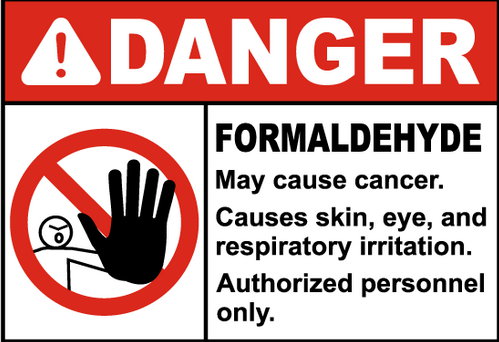
Now for some clarity on the side effects
Formaldehyde
Accroding to Cancer.org
Based on the available evidence, some of these expert agencies have evaluated the cancer-causing potential of formaldehyde.
The National Toxicology Program (NTP) is formed from parts of several different US government agencies, including the National Institutes of Health (NIH), the Centers for Disease Control and Prevention (CDC), and the Food and Drug Administration (FDA). The NTP lists formaldehyde as “known to be a human carcinogen.”
The International Agency for Research on Cancer (IARC) is part of the World Health Organization (WHO). Its major goal is to identify causes of cancer. IARC has concluded that formaldehyde is “carcinogenic to humans” based on higher risks of nasopharyngeal cancer and leukemia.
The Environmental Protection Agency (EPA) maintains the Integrated Risk Information System (IRIS), an electronic database that contains information on human health effects from exposure to various substances in the environment. The EPA has classified formaldehyde as a “probable human carcinogen.”
National Cancer Institute researchers have concluded that, based on data from studies in people and from lab research, exposure to formaldehyde may cause leukemia, particularly myeloid leukemia, in humans.
Furthermore, citing Drugs.com
What are some side effects that I need to call my doctor about right away?
WARNING/CAUTION: Even though it may be rare, some people may have very bad and sometimes deadly side effects when taking a drug. Tell your doctor or get medical help right away if you have any of the following signs or symptoms that may be related to a very bad side effect:
-
Signs of an allergic reaction, like rash; hives; itching; red, swollen, blistered, or peeling skin with or without fever; wheezing; tightness in the chest or throat; trouble breathing, swallowing, or talking; unusual hoarseness; or swelling of the mouth, face, lips, tongue, or throat.
-
Very bad skin irritation.

 The Loud Cry