
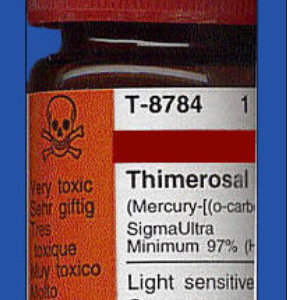
Now for some clarity on the side effects
Symptoms of mercury poisoning
The main route of human exposure to MeHg is oral ingestion of seafood; for ethylmercury, human exposure is mainly by injection of thimerosal-containing vaccines. As advised by A. Campbell, in Encyclopedia of Toxicology (Third Edition), 2014.
According to Healthline.com
Mercury is most notable for its neurological effects. In general, the U.S. Food and Drug AdministrationTrusted Source says that too much mercury can cause:
- anxiety
- depression
- irritability
- memory problems
- numbness
- pathologic shyness
- tremors
More often, mercury poisoning builds up over time. However, a sudden onset of any of these symptoms could be a sign of acute toxicity. Call your doctor right away if you suspect mercury poisoning.
Mercury poisoning symptoms in adults
Adults with advanced mercury poisoning might experience:
- hearing and speech difficulties
- lack of coordination
- muscle weakness
- nerve loss in hands and face
- trouble walking
- vision changes
Mercury poisoning symptoms in children and infants
Mercury poisoning can also disrupt fetal and early childhood development. Infants and young children who’ve been exposed to high levels of mercury may have delays in:
- cognition
- fine motor skills
- speech and language development
- visual-spatial awareness
High amounts of mercury can lead to long-term and sometimes permanent neurological changes. The dangers are especially notable in young children who are still developing.
Mercury exposure can lead to developmental problems in the brain, which can also affect physical functions such as motor skills. Some children who are exposed to mercury at a young age may develop learning disabilities, according to the Environmental Defense Fund.
Adults with mercury poisoning may have permanent brain and kidney damage. Circulatory failure is another possible type of complication.
According to SafeMinds.com
“The amount of mercury is negligible and couldn’t possibly hurt anyone.”
This is the sort of statement that could only be made by someone who hasn’t done the math. Let’s start with some facts:
- Thimerosal is about half ethyl-mercury (49.4%) by weight.
- There is very little data on the toxicokinetics of thimerosal (ethyl-mercury). Although the practice has been validated by the FDA, we are currently relying on population studies based on methyl-mercury exposure to guess the “safe” dose of ethyl-mercury, which is a different chemical compound.
- What data we have so far from human and primate studies indicates that, while ethyl-mercury clears the blood faster than methyl-mercury, ethyl-mercury also results in a higher amount of inorganic mercury in the brains of primates compared to primates exposed to comparable amounts of methyl-mercury (Burbacher et al. 2005). The half-life of inorganic mercury in different parts of the primate brain ranges from 227 to 540 days (Vahter et al. 1994, 1995).
- Mercury is bioaccumulative. It builds up in tissues over time.
Now let’s do some math:
A typical mercury-containing flu shot has 25 micrograms of mercury in a .5ml dose.
A typical adult female weighs about 150-pounds or 68.2kg.Recognizing the limitations of the methyl to ethyl comparison, the EPA’s recommended maximum daily consumption of methyl-mercury from fish is 0.1mcg/kg/day to prevent health effects in the woman. This 68.2 kg woman should not eat more than 6.82mcg of mercury from fish in a day, but she would be getting 25 mcg of mercury from the vaccine.
To look at one more comparison specific to this fall, the current recommendation is that children age 5-9 need two doses of H1N1 vaccine. If a parent doesn’t ensure that the vaccines are mercury-free, a 50 lb (22.7kg) child (whose maximum methyl-mercury dose from eating fish should be 2.27mcg of mercury daily) would, on two separate occasions, be getting 25 mcg of mercury from their vaccines. If they receive the seasonal flu shots at the same time (2 doses on each of two visits), they would be receiving about 20 times the EPA’s limit for ingested methyl-mercury at each visit!
If you don’t think this sounds like a good idea, the solution is simple. Insist on vaccines without mercury!
Furthermore, according to Gijsbert B. van der Voet, in Side Effects of Drugs Annual, 2010
Sensory systems
Thiomersal (sodium ethylmercurithiosalicylate) has been commonly used as a preservative in eyedrops and contact lens disinfecting solutions. However, it is a known sensitizer (SEDA-21, 255) and cases of allergy have been reported after application to the eyes (SEDA-23, 248). Although thiomersal is increasingly being withdrawn from pharmaceuticals because of toxicity, it is still used in some products. Unilateral total limbal stem failure and corneal opacification, secondary to thiomersal exposure from a contact lens solution, has further confirmed the need for restrictions in the use of thiomersal in ophthalmic formulations (42A).
Other links to consider
Thimerosal Linked To Immune System Dysfunction which states on it’s site
Thimerosal is a cheap and effective mercury-based preservative. Its potential effects on embryonic neuron development led to its removal from many pediatric vaccines. However, it is still used in influenza, diphtheria and tetanus vaccines, blood products and many over-the-counter pharmaceuticals.

 The Loud Cry