
Mohd Sharjeel, Sofi Aadil, Hamid Sami, Ullah Bhat
Highlights
RT-PCR has become the method of choice for diagnosis of human CoV, as multiplex real-time RT-PCR assays have been developed.•
SARS-CoV-2 is quite similar to bat-SARS such as coronavirus 3CLpro sharing 99.02% of sequence identity.•
The binding site for substrates is situated in a cleft between domain I and domain II in SARS-CoV-2 3CLpro.•
Global cooperation of government agencies, public health authorities, and healthcare professionals throughout the world is critical for managing the COVID-19 pandemic.
Abstract
The outbreak of the deadly virus (novel coronavirus or Severe Acute Respiratory Syndrome Coronavirus-2) that emerged in December 2019, remained a controversial subject of intense speculations regarding its origin, became a worldwide health problem resulting in serious coronavirus disease of 2019 (acronym COVID-19). The concern regarding this new viral strain “Severe Acute Respiratory Syndrome Coronavirus-2” (acronym SARS-CoV-2) and diseases it causes (COVID-19) is well deserved at all levels. The incidence of COVID-19 infection and infectious patients are increasing at a high rate. Coronaviruses (CoVs), enclosed positive-sense RNA viruses, are distinguished by club-like spikes extending from their surface, an exceptionally large genome of RNA, and a special mechanism for replication. Coronaviruses are associated with a broad variety of human and other animal diseases spanning from enteritis in cattle and pigs and upper chicken respiratory disease to extremely lethal human respiratory infections. With world health organization (WHO) declaring COVID-19 as pandemic, we deemed it necessary to provide a detailed review of coronaviruses discussing their 2019 Novel Coronavirus, history, current situation, coronavirus classification, pathogenesis, structure, mode of action, diagnosis and treatment, the effect of environmental factors, risk reduction and guidelines to understand the virus and develop ways to control it.
Keywords
Coronaviruses, RNA, viruses, SARS-CoV-2, COVID-19, Biocidal agents
1. 2019 Novel coronavirus
A novel coronavirus (termed 2019-nCoV) was reported in December 2019 from genomic screening of clinical samples from patients with viral pneumonia in Wuhan, China. The primary viral pneumonia patients were found to be epidemiologically linked to the Huanan seafood market in Wuhan City, Hubei Province, China, where other non-aquatic animals, such as bats, pangolins and rabbits, were on sale before the outbreak [[1], [2], [3]]. Through the use of next-generation sequencing, a new, human-infecting coronavirus, provisionally called 2019 novel coronavirus (2019-nCoV), was identified. Subsequently, on February 11, 2020, outbreak or disease previously known as “novel coronavirus” or 2019-nCoV was officially renamed as C-O-V-I-D-19 or COVID-19 and causal virus was named as “Severe acute respiratory syndrome-related coronavirus 2” or SARS-CoV-2 [4].
2. Historical perspective
The importance of the class of coronaviruses in both medical and economic terms has become much more palpable since the First International Congress was organized in Germany in 1980. The incorporation of modern molecular biology and immunology has aided in providing fresh acumens into explaining the nature of the viruses and the pathogenesis of the diseases they cause [5]. Since the very earliest stages of Coronavirology the virus invited the interests of veterinary, medical, as well as basic scientists and it revolved around the clear virulence that these viruses had for the gastrointestinal tract, respiratory system, and nervous system. Baudette and Hudson probably made the first scientific annotations in 1933, when they described chickens “gasping disease” and then communicated the disease to embryos [6]. Gasping disease has been seen as an appallingly deadly respiratory illness. This virus was subsequently recognized as an infectious bronchitis virus (IBV) that became the prototype of this family of viruses [7]. Isolation of the mouse hepatitis virus by Gledhill and Andrewes managed to draw the field for development [8]. They stated in their paper that the infectious agent they named as mouse hepatitis virus (MHV) would not have produced such extensive devastation in the event of gasping death. And thereafter important concerns were posed with the discovery of MHV. For example, combined infection with an otherwise harmless murine protozoan, Eperythrozoon coccids, lead to a lethal hepatitis. This resulted in the introduction of the concept that activation of the latent virus by different forms of stress is critical in disease pathogenesis [8,9]. The discovery that the human respiratory viruses, mouse hepatitis viruses as well as the prototype infectious chicken bronchitis virus had analogous manifestations resulted in a classic 1968 publication classifying such viruses as coronavirus [8]. The paper published by Almedia, Berry, Cunningham, Hamre, Hofstad, Mallucci, McIntosh and Tyrrell used the characterization of Tyrrell in that the viruses exhibited “a characteristic fringe of broad, distinctive, petal-shaped spikes resembling a crown like the corona spinarum in religious art” [9]. In 1975, the International Committee on Virus Taxonomy named a new family with one genus coronavirus, Coronaviridae. Additional viruses including canine coronavirus, feline peritonitis virus, human enteric coronavirus, and transmissible pig gastroenteritis virus (TGEV), neonatal calf diarrhoea coronavirus (BCV) and rat coronavirus (RCV) have been identified [10]. Mahy has been the author of a review of the First International Congress on Coronaviruses in 1980, “Coronavirus come of age” [11]. This symposium takes the field of animal virology one step further and brings the state of understanding of the coronavirus molecular biology to standards that will be followed by those researching the pathogenesis of both human and animal virus diseases [5].
3. Current situation
According to WHO situation report-59 (April 17th, 2020) COVID-19 is affecting 167 countries around the globe and 1 international conveyance [12]. The total number confirmed cases of the novel coronavirus, renamed as COVID-19, had gone up to more than 6.057853 million worldwide with 371,166 deaths. There are currently 3,087,529 active cases out of total confirmed cases worldwide with 3034, 131 (98%) in mild condition and 2% (53,398 cases) in critical condition. Out of the total closed cases, 2,924,078 (89%) have recovered/discharged with 377,888 (18%) deaths so far [13,14]. There have also been records of infections in medical workers and family clusters, and evidence of human-to-human transmission [4]. A few of the patients diagnosed had high fever and others had dyspnoea, with radiographs of the chest showing intrusive lesions in both lungs [[14], [15], [16]]. The average evolutionary rate for coronaviruses as a typical RNA virus is roughly 10–4 nucleotide substitutions per site per year [17], with mutations occurring during each replication cycle. The average evolutionary rate for SARS-CoV-2 as a typical RNA virus is roughly 8 × 10⁻⁴ nucleotide substitutions per site per year, with one mutation occurring in two weeks [18,19]. This occurrence is similar to that of two viruses of the same family, SARS and MERS [20].
The symptoms or signs of COVID-19 at the time of onset and over the course of disease include: fever or chills, coughing, breathlessness, fatigue, muscle ache, headache, nausea or vomiting, sore throat, congestion or running nose, diarrhoea, loss of smell (anosmia) and loss of taste (ageusia) [21,22]. The severity of the COVID-19 symptoms ranges from mild to critical: Mild (mild symptoms to mild pneumonia in 81%), severe (dyspnoea, hypoxia and 50% lung involvement in 14%) and critical (multi-organ failure, respiratory failure or shock in 5%). The fatality rate among critical cases was around 49% [23]. The fatality rate in COVID-19 was below and around 2% relative to the previous two epidemics (SARS and MERS), although only fewer than 15% of patients were requiring hospital services. Nevertheless, the SARS and MERS fatality levels were 10% and 34% respectively [24]. The overall case fatality rate for COVID-19 [25] was reported to be 2.3% from a study conducted in China and some studies showed that case fatality rate in Beijing, China was 0.9% [25]. In another study, Jung and colleagues have reported that COVID-19 has a 5.3% to 8.4% chance for fatality [27]. The case fatality rate in China was highest in age group of ≥80 (14.8%), 70–79 years (8.0%), 60–69 years (3.6%), 50–59 years (1.3%), 40–49 years (0.4%) and < 40 years (0.2%) [23,28]. According to U.S Epidemiological data, the case fatality rate was highest in age group of ≥85 (10–27%), 65–84 years (3–11%), 55–64 years (1–3%) and < 55 years (<1%) [29]. The median time of dyspnoea from onset of diseases or symptoms was between 5 and 8 days, the average time for acute respiratory distress (ARDS) from disease onset was 8 to 12 days and the mean time the patients received ICU from the onset of disease or the symptoms ranged between 10 and 12 days [30; 31]. In China, the average case fatality of patients without reported underlying medical problems was 0.9%. The fatality was greater for comorbidity: 10.5% for cardiovascular diseases, 7.3% for diabetes, and about 6% for chronic respiratory disorder or cancer [22; 31]. In mainland China, the median time from onset of symptoms to recovery rate in case of mild or severe patients ranges from 2 and 3–6 weeks. Moreover, the time from the onset of symptoms and developing severe hypoxia is one week. The studies conducted outside mainland China, the time from the onset of symptoms to recovery was 22.2 days at 95% confidence interval 18–83. Furthermore, the time from the onset of symptoms to death varies from 20.2 days (95% confidence interval 15.1–29.9) to 22.3 days (95% confidence interval 18–82) [27].
One effective tactics in the battle against COVID-19 is to keep the public informed about the progress through media, maps and graphics. Gao et al. [32] used cartograms for visualizing COVID-19 expansion and spread. Their study included 31 Chinese provinces (except Hong Kong, Macau, and Taiwan) for the same source of data, namely provincial health commissions. After employing an area cartogram, they identified three main categories: contiguous, non-contiguous and circular. After testing all the three major types, circular was found to be the most appropriate in their case. Circular cartograms were coloured using proper scientific scheme with some minor constraints: (a) adjoining circles do not have the same color, and (b) each province’s color remained constant between different cartograms. Each cartogram has two important characteristics: a circle in each cartograms represents the province and its size is directly proportional to the number of COVID-19 cases reported from that province. Gao et al. [32] concluded from their study that the COVID-19 probably originated in Hubei and then spread to the other provinces. Another important study to map the changing internet attention to the spread of COVID-19 in China was carried out by Zhang et al. [33]. The investigators used cartograms to visualize the spread of COVID-19 and people’s internet attention in China based on diffusion method [34], effective in spatial data representation [35]. Zhang et al. [33] concluded from their study that the number of searches and COVID-19 cases showed a different pattern, probably because people not only refer to internet but use different social media platforms to share the disease information. Authors further argued that the number of searches decreased drastically in most provinces leading to reduced anxiety, provinces paid much attention towards the COVID-19 after declared public health emergency of international concern (PHEIC) indicating WHO as a vital functionary in fight against COVID-19 and number of searches from Hubei province wasn’t outstanding from other provinces.
4. Coronavirus classification
Coronaviruses (CoVs) are the Nidovirales order’s largest group of viruses, including Coronaviridae, Arteriviridae, Roniviridae, and Mesoniviridae. The Coronavirinae forms one of two subfamilies in the family Coronaviridae, other one being the Torovirinae. Coronavirinae are divided into four categories: Alpha, Beta, Gamma, and Delta coronaviruses [36] (Figure 1). Initially, the viruses were divided into those groups based on serology, but are now distinguished by phylogenetic clustering. Both viruses are classified, in the class Nidovirales, non-segmented positive-sense RNA viruses. They all contain significant genomes for RNA viruses, with Coronavirinae having the largest known genomes for RNA, containing approximately 30 kilobase (kb) genomes. The main differences among the Nidovirus families are the number, shape, and scale of the structural proteins. Such differences cause significant changes in the structure and morphology of nucleocapsids and virions [[37], [38], [39], [40]].

5. Pathogenesis
Until the SARS-CoV outbreak, coronaviruses were only thought to cause mild, self-limiting respiratory infections in humans. Four of the known human coronaviruses are α-coronaviruses (HCoV-229E and HCoV-NL63), and the four others are β-coronaviruses (HCoV-OC43 and HCoV-HKU1). One important feature of these viruses is the variability in susceptibility to genetic variations. HCoV-229E isolates have only marginal sequence divergence [41] whereas HCoV-OC43 isolates from the same region but are isolated in different years display significant genetic variability [42]. That explains the failure of HCoV-229E to cross the species boundary to infect mice while HCoV-OC43 and the strongly related bovine coronavirus (BCoV) can infect mice and other ruminants. SARS-CoV, a 2b β-coronavirus species, was identified as the causative agent for the 2002–2003 outbreak of Severe Acute Respiratory Syndrome (SARS) in China’s Guangdong Province. It is generally accepted that SARS-CoV originated in bats, because a large number of Chinese horseshoe bats exhibit sequences of SARS-related CoVs and provide serological evidence of an earlier CoV infection [43,44] SARS-CoV primarily infects the epithelial cells within the lung. The virus can invade macrophages and dendritic cells but only progresses to an abortive infection [45,46]. Nonetheless, infection of these cell types may be necessary for the activation of pro-inflammatory cytokines that can lead to disease [47]. The exact mechanism of lung damage and the cause of serious illness remains undetermined in humans. Globally, based on hospitalization data, the incubation period for SARS-CoV-2 ranges from 5.1 to 14 days, and about 80% of patients with mild or asymptomatic, 15% severe (needed oxygen) and 5% critical (needed ventilation) [14,48]. Cough, fever and fatigue are among the most common symptoms [14]. The S protein and the SARS-CoV-2 N protein during infection are the two most immunogenic and predominantly expressed proteins [49].
6. Structure
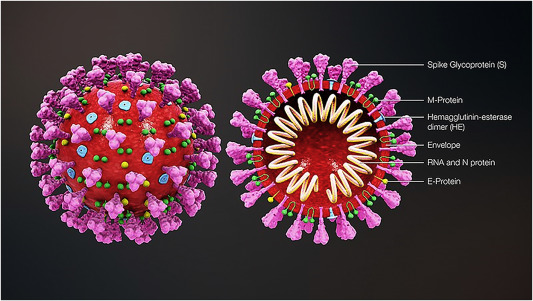
Coronavirus virions are spherical with diameters of roughly 125 nm, as described by cryo-electron tomography and cryo-electron microscopy studies [50,51]. The very well-known feature of coronaviruses is spike club-shaped projections emerging from the surface of the virions. These spikes are a defining characteristic of the virion and give them the look of a solar corona by inspiring the name coronaviruses. Nucleocapsid lies inside the virion envelope. Coronaviruses possess helically symmetric nucleocapsids, which are uncommon in positive-sense RNA viruses, but are much more common in negative-sense RNA viruses. Coronavirus virus particles contain four primary structural proteins. These are the spike (S), membrane (M), envelope (E), and nucleocapsid (N) proteins all coded inside the viral genome’s 3′ end. The S protein (available at 150 kDa), controls the signal sequence of the N-terminals to reach the ER. The M protein is by far the most abundant structural protein present in the virion. It is an integral part of its shape and is a tiny protein with 3 transmembrane domains (25 to 30 kDa) [52]. Recent studies suggest that M protein exists as a dimer in the virion, and may adopt two different configurations to promote membrane curvature as well as nucleocapsid binding [53]. In small amounts within the virion, the E protein (first 8 to 12 kDa) is contained. E coronavirus protein is widely divergent but usually have common structural design [54]. E protein’s membrane topology is not completely known but most evidence says it’s a transmembrane protein. This allows the virus to be installed and published but has other benefits as well. For example, E protein is not required for viral replication in the operation of ion channels in SARS-CoV but is required for pathogenesis [55]. The single protein contained in nucleocapsid is the N protein. It consists of two separate domains, an N-terminal domain (NTD) and a C-terminal domain (CTD), both capable of binding RNA in vitro but each domain uses multiple modes to bind RNA. A fifth structural protein, hemagglutinin-esterase (HE), is found in a subset of β-coronaviruses. The protein acts as a hemagglutinin that binds sialic acids to surface glycoproteins, and has an acetyl-esterase activity [56]. These behaviours are suggested to enhance the entry of S protein-mediated cells and the spread of virus through the mucosa [57].
A most recent research to examine SARS-CoV-2’s structural basis showed that its viral 3-chymotrypsin-like cysteine protease (3CLpro) is retained in SARS-CoV-2 (Figure 2) [58]. Furthermore, the investigators find that the SARS-CoV-2 is quite similar to bat-SARS such as coronavirus 3CLpro sharing 99.02% of sequence identity, with key differences from other beta-coronaviruses [59]. SARS-CoV-2 3CLpro also holds a certain sequence identity with SARS-CoV (96.08%), MERS-CoV (87.00%), Human-CoV (90.00%), and Bovine-CoV (90.00%). SARS-CoV-2 3CLpro’s physico-chemical characteristics showed that it contains 306 amino acid long polypeptides with a molecular weight of 33,796.64 Da and a Gravy score of −0.019 [[58], [59], [60], [61]]. Protein has also been described as stable, hydrophilic and able to form hydrogen bonds based on physico-chemical analysis [58]. BLAST analysis found 12 point mutations between SARS-CoV and SARS-CoV-2 3CLpro enzymes, with the exception of Leu being replaced by Ala in position 286. Such mutations are likely to affect 3CLpro’s structure and function. SARS-CoV-2 3CLpro’s 3D various morphological analyses showed that the structural design is compatible with the SARS-CoV crystal structure, with root mean square deviation between homology model and prototype approximately 0.629 Å. The binding site for substrates is situated in a cleft between domain I and domain II in SARS-CoV-2 3CLpro. A residue loop 184 to 199 crosses the domains N-terminal and Domain III which is also 135 called the domain C-terminal and includes a five-helix anti-parallel cluster [58].

7. Mode of action
The virions link to the host cell is triggered by interactions between the S protein and its receiver. Spots of receptor binding domains (RBD) inside the S1 region of a coronavirus S protein depend largely on the virus, with several having the RBD at the N-terminus of S1 (MHV) whereas others (SARS-CoV) have the RBD at the C-terminus of S1 [62,63]. The S-protein / receptor interaction is the key determinant for a coronavirus to invade a host species and also controls the tissue tropism of the virus. Some coronaviruses use peptidases as their cell receptor. Most α-coronaviruses use aminopeptidase N (APN) as their receptor, SARS-CoV and HCoV-NL63 use angiotensin-converting enzyme 2 (ACE2) as the receptor, MHV comes in through CEACAM1, and the newly mentioned MERS-CoV binds to dipeptidyl-peptidase 4 (DPP4) to infect human cells [64]. Upon binding the receptor, the virus must have access to the host cell’s cytosol. Acid-dependent proteolytic cleavage of the S protein is usually achieved by a cathepsin, TMPRRS2 or other proteases, accompanied by viral and cellular membrane fusion. S protein cleavage occurs at two sites inside the S2 fragment of the protein, with the very first important cleavage for separating the RBD and fusion domains of the S protein [65] and the second important for revealing the fusion peptide (cleavage at S2′). Fusion usually occurs within acidified endosomes, however some coronaviruses, including MHV, can fuse in at the plasma membrane. Cleavage at S2′ shows a fusion peptide that incorporates into to the membrane, followed by two heptad repeats in S2 that produce an antiparallel array of six helixes [10]. The composition of this kit allows for the mixing of viral and cellular membranes, leading in a fusion and ultimately release into the viral genome cytoplasm. The next step in the coronavirus lifecycle is the gene replicase translation from of the genomic virion RNA. The replicase gene encodes two large ORFS, rep1a and rep1b, encoding two co-terminals of polyproteins, pp1a and pp1ab. The virus uses a slippery sequence (5′-UUUAAAC-3′) and an RNA pseudoknot to produce both polyproteins, allowing ribosomal frameshifting from the rep1a read frame into the rep1b ORF. The nsps 1–11 and 1–16 contain pp1a and pp1ab polyproteins, respectively. In pp1ab, nsp11 from pp1a becomes nsp12 following extension of pp1a into pp1b. There is no comparable nsp1 in π-coronaviruses however. Then these polyproteins are clogged into the individual nsps [66]. The nsps integrate into the Replicase-Transcriptase Complex (RTC) to create an environment that is conducive to RNA synthesis, and are liable for the replication and transcription of subgenomic RNAs. Synthesis of Viral RNA requires the transcription and assembly of complexes connected to viral replicas. The Viral RNA synthesis generates both genomic and subgenomic RNAs. Subgenomic RNAs serve as mRNAs for the structural and accessory genes residing downstream of replicas of polyproteins. Both genomic and subgenomic RNAs are produced in the negative-strand using intermediates. Many cis-acting sequences are essential for a replication of viral RNA. Within the genome’s 5′ UTR, there are seven stem-loop structures which can stretch into the replicase 1a gene [[67], [68], [69], [70]].
The 3′ UTR comprises a bulged stem-loop, a pseudoknot, and hypervariable area [[71], [72], [73], [74]]. Ironically, at the 3′ end, the stem-loop and the pseudoknot overlap, and therefore cannot develop at the same time [[72], [73], [74], [75]]. Thus, these structures are suggested to handle alternate stages of RNA synthesis, although it is still unknown exactly what stages are regulated and their exact mechanisms involved. The novelistic feature of coronavirus replication is how the leader and body TRS segments fused during subgenomic RNA evolution. This was originally estimated to result during positive-strand synthesis and is now reported to cause during discontinuous extension of the negative-strand RNA [76]. The current model suggests that the RdRp pauses at each of the body’s TRS sequences (TRS-B); after this pause the RdRp either continues to extend to the next TRS or moves to reinforce the leader sequence at the 5′ end of the genome guided by the complementarity of the TRS-B with the leader TRS (TRS-L). Several pieces of research currently support this theory, including the appearance on the 3′ end of subgenomic negative-strand RNAs of the anti‑leader sequence [77]. There are however several queries left to completely explain the pattern. After the RNA replication and subgenomic synthesis, the viral structural proteins, S, E, and M are encoded and incorporated into the endoplasmic reticulum (ER). Such proteins pass through the secretory pathway into the ERGIC (Endoplasmic Reticulum-Golgi Intermediate Compartment) [78,79]. There, viral genomes encapsidated by the N protein bud forming mature virions in ERGIC membranes that contain viral structural proteins [80]. In several coronaviruses, S protein which is not assembled into virions transits to the cell surface where it facilitates fusion between infected cells and adjacent, uninfected cells. This contributes to the creation of large, multi-nucleated cells which allow the virus to spread within an infected organism without the detection or neutralization of virus-specific antibodies.
8. Diagnosis and treatment
Also, diagnosis is important in areas where there is a severe CoV epidemic, as is currently the case in United States of America, India and Brazil. Cases recognizing will guide the effectiveness of new health strategies for disease prevention. RT-PCR has become the preferred method for human CoV diagnosis, because multiplex RT-PCR assays have been identified in real time, are able to detect all four respiratory HCoVs and could even be further adapted to new CoVs [81,82]. RT-PCR is used for testing of COVID-19 in real time. To present, there are no anti-viral therapies directly targeting human coronaviruses, so treatments are supportive in nature only. The interferons (IFNs) are selective only slightly against in vitro coronaviruses [83]. IFNs in fusion with ribavirin may well have improved in vitro activity against those coronaviruses compared to IFNs alone; however, the viability of this in vivo combination needs further evaluation [84].
As there is no proven treatment yet for the virus and pneumonia it causes, there are more than 70 drugs or combinations potentially worth trying [4]. An injectable drug named Remdesivir (Virus blocker by Gilead Sciences), a broad-spectrum antiviral drug is highly optimistic. It worked well in mice and monkeys infected with Middle East Respiratory Syndrome (MERS) but didn’t work well when administered to Ebola victims in the Congo basin 2008 [85]. According to the Centers for Disease Control and Prevention (CDC) treatments are mainly based on the kind of treatment given for influenza or flu and other severe respiratory illnesses called supportive care. This supportive care treatment especially treats symptoms like cough, fever and shortness of breath. In mild cases, acetaminophen (Tylenol) medication is used to reduce fever. Sometimes, COVID-19 patients are given antiviral drug Oseltamivir or Tamiflu, which suppresses virus reproduction in some cases. However, in the case of pneumonia treatment involves ventilation through a mask or tube injected directly into the windpipe [86]. Table 1 shows the potential drugs and mechanism for the treatment of COVID-19 diseases. Most information for the endemic human coronavirus strain (HCoV-) 229E suggest that it may remain infectious on different types of materials for 2 h to 9 days. Extremely pathogenic MERS-CoV (Middle East Respiratory Syndrome-Coronavirus), TGEV (Transmissible Gastroenteritis Virus) and MHV (Mouse Hepatitis Virus) survival times have been shortened by higher temperatures such as 30 °C or 40 °C. Nonetheless, the lifespan of TGEV and MHV can be increased to about 28 days at 4 °C. Few comparative data obtained with SARS-CoV (Severe Acute Respiratory Syndrome-Coronavirus) indicate a prolonged persistence with higher inocula [[87], [88], [89], [90], [91], [92]]. At room temperature, it was also shown that HCoV-229E survives better at 50% compared to 30% RH [93]. In order to avoid inanimate surface transmission and contamination, suspended biocidal agents such as ethanol (78–95%), 2-propanol (70–100%), a mixture of 45% 2-propanol with 30% 1-propanol, glutardialdehyde (0.5–2.5%), formaldehyde (0.7–1%) and povidone‑iodine (0.23–7.5%) were found to be effective in inactivating coronavirus infection. Sodium hypochlorite required a minimum concentration of at least 0.21% [[94], [95], [96]] to be more effective. However, biocidal agents in carrier tests such as Ethanol at concentrations between 62% and 71% decreased infectivity of the coronavirus on inanimate surfaces by 2.0–4.0 log10 within 1 min of exposure time. Concentrations of 0.1–0.5% sodium hypochlorite and 2% glutardialdehyde have also been quite effective with viral reduction of >3.0 log10. Conversely, 0.04% of benzalkonium chloride, 0.06% of sodium hypochlorite and 0.55% of orthophtaldehyde were less successful. Surface disinfection with 0.1% sodium hypochlorite or 62–71% ethanol seems to be promising in substantially decreasing surface contamination with coronavirus within 1 min of exposure. Kampf et al. [97] are highly optimistic that biocidal agents will show similar effects on SARS-CoV-2.
Table 1. List of potential drugs currently being applied for the treatment of COVID-19 disease.
| Potential Drug | Mechanism | Study |
|---|---|---|
| Hydroxychloroquine | HCQ a safe and effective treatment against COVID-19 | [[110], [111], [112]] |
| Chloroquine | Increasing endosomal pH, immunomodulating, autophagy inhibitors | [113,114] |
| Azithromycin | Significant reduction in viral load in COVID-19 patients | [110,115] |
| Human immunoglobulin | Contain natural antibodies and proteins representing the first line of defence against pathogens | [[116], [117], [118]] |
| Remdesivir | Blocks the replication of coronaviruses | [119,120] |
| Arbidol (umifenovir) | It blocks the entry of the virus into the host cell | [121,122] |
| Oseltamivir | Inhibitor of viral neuraminidase and consequently blocks the release of viral particles from the host cell | [120,121,123,124] |
| Lopinavir-ritonavir | Inhibiting HIV-1 protease for protein cleavage, resulting in non-infectious, immature viral particles | [125,126] |
| Darunavir-cobicistat combination | HIV protease inhibitor and Pharmacokinetic and Pharmacodynamics booster | [[127], [128], [129]] |
| Traditional Chinese Medicine (TCM) combination with lopinavir- ritonavir, α-interferon via aerosol | Under trial | [[130], [131], [132], [133]] |
| Recombinant human interferon α2β | Inhibits MERS-CoV and SARS-CoV | [82,126,132] |
| Danoprevir-ritonavir and interferon inhalation or lopinavir-ritonavir or TCM plus interferon inhalation | Under trial | [134,135] |
| Xiyanping | Significant antiviral and antibacterial effects | [[136], [137], [138]] |
| Combinations of Oseltamivir, favipiravir, and chloroquine | Under trial | [121] |
| Thalidomide | Degrades messenger RNA in blood cells and reduces tumor necrosis factor-α (TNFα) | [[139], [140], [141]] |
| Vitamin C | Antioxidant and reduces oxidative stress, inflammation, improves vasopressor synthesis and immune cell function | [142,143] |
| Methylprednisolone | Prolongs the survival time of the clinical cases | [144,145] |
| Bromhexine hydrochloride | Transmembrane protease serine inhibitor, responsible for activation of S-glycoprotein of MERS-CoV and SARS-CoV | [146,147] |
| Bevacizumab | Suppresses the edema in COVID-19 patients by reducing the levels of vascular endothelial growth factor (VEGF) | [148,149] |
| Fingolimod | Immunology modulator used in multiple sclerosis | [150] |
| Baricitinib | Binding to AP2-associated protein kinase 1 (AAK1) | [151] |
| Lithium | Probably by reducing apoptosis and inhibition of glycogen synthase kinase 3 beta (GSK-3β) | [152] |
| Angiotensin-converting enzyme inhibitors and Angiotensin1 receptor inhibitors | Rebalancing Renin-Angiotensin-Aldosterone System (RAAS) (might reduce the pulmonary inflammatory response and mortality) | [153] |
| Cepharanthine, selamectin and Mefloquine | Complete inhibition of cytopathic effects in cell culture by all three drugs | [154] |
| Qingfei paidu Decoction | Controlling of COVID-19 symptoms. | [155] |
| Pirfenidone | Anti-inflammatory and anti-oxidant by inhibiting IL-1β and IL-4 | [156] |
9. Effect of environmental factors on viruses
Various studies have identified the potential relationship between environment and respiratory infections, such as respiratory syncytial infection (RSV), which causes mild, cold-like side effects in adults and healthier children, SARS, and flu [[98], [99], [100]]. There is also some evidence that latitude may play a role in viral transmission, and there is considerable incongruity in the results of the study [100,101]. At least three factors have been attributed to viral transmission due to change in seasons.1. Infection tolerance to the host may be due to seasonal melatonin fluctuations [103] 2. Metabolites of diet D or a deficiency in vitamin D can also weaken human immunity [104] 3. A difference in ambient temperature and relative humidity (RH) impact virus survival [105]. Spending more time indoors is postulated to improve the transmissibility of influenza. Viral vulnerability to RH tends to be an independent characteristic of a virus. For instance, in the next few studies the incidence of RSV will increase with increasing temperature but with lowering temperatures in others and peaks in different parts of the world at both low and high temperatures [106]. RSV is correlated with peaks of high and low temperature activity and 45–65% RH, while one exclusive virus survives best at high RH and two others thrive best at low RH [107]. No link between survival and temperature has been found in a Swedish investigation [108]. RSV pastime was constant throughout the year in continuously warm and high humidity regions, as well as in areas where temperatures stayed cold throughout the year, but RSV operation was highest in temperate climates during the winter, associated with lower temperatures [98]. There is no definite proof that any single factor, be it a specific temperature, RH or geographic location, can be applied universally to a wide range of infectious viruses to reduce airborne or touch transmission, even though there is widespread evidence in the literature that perhaps the survival of viruses and various infectious agents depends to some extent on the RH levels [109].
10. Conclusion and perspective
The COVID-19 disease caused by SARS-CoV-2, that emerged in December 2019, remained a controversial subject of intense speculations regarding its origin, rapidly escalated into a global health emergency, posing a challenge to the existing health care system and scientific technology. Researchers have made significant progress in characterizing the SARS-CoV-2 and are working extensively on prospective vaccines and virus therapies. In this backdrop, integrated biological and behavioural surveillance will be of prime importance in identifying the potential hotspots COVID-19 [100]. Due to the absence of successful therapeutics or vaccinations, the best approaches for managing human coronaviruses are to build a steady system of public health surveillance combined with rapid diagnostic testing and quarantine when appropriate. We also believe that policies must be reviewed regarding the utilisation of wild birds and animals as source of food. As the COVID-19 pandemic is rapidly spreading throughout the world. The Case rates and Case fatality rates are continuously fluctuating. Thus it is important to understand the dynamics of the virus holistically to develop ways to control it. Further more cooperation of government agencies, public health authorities, and healthcare professionals throughout the world is critical for managing the COVID-19 pandemic.
Conflict of interest statement
The authors declare that there are no conflicts of interest.
Author contributions
Mohd Sharjeel Sofi: Conceptualization, Writing- Original draft preparation. Aadil Hamid: Conceptualization, Writing- Original draft preparation. Sami Ullah Bhat: Supervision, Writing- Reviewing and Editing.
Uncited references
References
[1]L. Dietz, H. Patrick F, C. David, F. Mark, J.A. Eisen, V.D.W. Kevin, 2020. 2019 novel coronavirus (COVID-19) pandemic: built environment considerations to reduce transmission. M. Systems. 5, e00245–20. doi.https://doi.org/10.1128/mSystems.00245-20.Google Scholar[2]W. Tan, X. Zhao, X. Ma, A novel coronavirus genome identified in a cluster of pneumonia cases—Wuhan, China 2019–2020. China CDC Weekly. 2 (2020) 61–62. doi.10.46234/ccdcw2020.017.Google Scholar[3]N. Zhu, D. Zhang, W. WangA novel coronavirus from patients with pneumonia in China, 2019N. Engl. J. Med., 382 (8) (2020), pp. 727-733, 10.1056/NEJMoa2001017CrossRefView Record in ScopusGoogle Scholar[4]World Health Organization (WHO), Novel Coronavirus(2019-nCoV) Situation Report – 22. https://www.who.int/docs/default-source/coronaviruse/situation-reports/20200211-sitrep-22-ncov.pdf, 2020 (accessed 13 April 2020).Google Scholar[5]L.P. WeinerCoronaviruses: A historical perspectiveM.M.C. Lai, S.A. Stohlman (Eds.), Coronaviruses, Advances in Experimental Medicine and Biology, Springer Boston, MA (1987), pp. 1-5, 10.1007/978-1-4684-1280-2_1CrossRefView Record in ScopusGoogle Scholar[6]F.R. Baudette, C.B. HudsonNew recognized poultry diseaseNorth American Vet., 14 (1933), pp. 50-54Google Scholar[7]F.R. Baudette, C.B. HudsonCultivation of the virus of infectious bronchitisJAVMA., 90 (1937), pp. 51-60Google Scholar[8]A.W. Gledhill, G.W.A. Dick, C.H. AndrewesProduction of hepatitis in mice by the combined action of two filterable agentsLancet., 2 (1952), pp. 509-511, 10.1016/s0140-6736(52)90292-4ArticleDownload PDFView Record in ScopusGoogle Scholar[9]A.W. Gledhill, J.S.F. NivenLatent virus as exemplified by mouse hepatitis virus (MHV)Veterinary Review and Annotations, 1 (1955), pp. 82-90View Record in ScopusGoogle Scholar[10]L.S. Sturman, K.V. HolmesThe molecular biology of coronavirusesAdv. Virus Res., 28 (1983), pp. 35-112, 10.1016/s0065-3527(08)60721-6ArticleDownload PDFView Record in ScopusGoogle Scholar[11]B.W.J. Mahy, Coronavirus come of age. Nature. 288 (1980) 536–338. doi.https://doi.org/10.1038/288536a0.Google Scholar[12]WHO, Coronavirus disease 2019 (COVID-19). Situation Report – 88. https://www.who.int/docs/default-source/coronaviruse/situation-reports/20200417-sitrep-88-covid-191b6cccd94f8b4f219377bff55719a6ed.pdf?sfvrsn=ebe78315_6 2020). (accessed 19 April 2020).Google Scholar[13]World Health Organization (WHO), Coronavirus disease 2019 (COVID-19). Situation Report-133. https://www.who.int/docs/default-source/coronaviruse/situation-reports/20200601-covid-19-sitrep-133.pdf?sfvrsn=9a56f2ac_4, 2020 (Accessed 02 June 2020).Google Scholar[14]Worldometer, http://www.worldometersinfo/coronavirus/#countries, 2020 (accessed 2 June 2020).Google Scholar[15]J.F.W. Chan, S.K.H. Yuan, A. KokA familial cluster of pneumonia associated with the 2019 novel coronavirus indicating person-to-person transmission: a study of a family clusterLancet., 395 (2020), pp. 514-523, 10.1016/S0140-6736(20)30154-9ArticleDownload PDFView Record in ScopusGoogle Scholar[16]C. Huang, Y. Wang, X. LiClinical features of patients infected with 2019 novel coronavirus in WuhanChina. Lancet., 395 (2020), pp. 497-506, 10.1016/S0140-6736(20)30183-5ArticleDownload PDFView Record in ScopusGoogle Scholar[17]S. Su, G. Wong, W. ShiEpidemiology, genetic recombination, and pathogenesis of coronavirusesTrends Microbiol., 24 (2016), pp. 490-502, 10.1016/j.tim.2016.03.003ArticleDownload PDFView Record in ScopusGoogle Scholar[18]D. Louis, Temporal signal of nCoV-2019 based on 30 genomes. https://virological.org/t/phylodynamic-analysis-of-ncov-2019-genomes-29-jan-2020/353/7, 2020 (accessed 13 Feb. 2020).Google Scholar[19]A. Rambaut, Phylodynamic Analysis | 176 genomes https://virological.org/t/phylodynamic-analysis-176-genomes-6-mar-2020/356, 2020 (accessed 13 Feb. 2020).Google Scholar[20]O.A. MacLean, R.J. Orton, J.B. Singer, D.L. Robertson, 2020. No evidence for distinct types in the evolution of SARS-CoV-2. Virus evolution. 6(1) (2020) veaa034 doi.https://doi.org/10.1093/ve/veaa034.Google Scholar[21]N. Chen, M. Zhou, X. Dong, et al.Epidemiological and clinical characteristics of 99 cases of 2019 novel coronavirus pneumonia in WuhanChina: a descriptive study. Lancet., 395 (2020), pp. 507-513, 10.1016/S0140-6736(20)30211-7ArticleDownload PDFView Record in ScopusGoogle Scholar[22]W.J. Guan, Z.Y. Ni, Y. Hu, et al.Clinical characteristics of coronavirus disease 2019 in ChinaNEJM., 382 (2020), pp. 1708-1720, 10.1056/NEJMoa2002032CrossRefView Record in ScopusGoogle Scholar[23]K.K. To, O.T. Tsang, W.S. Leung, et al.Temporal profiles of viral load in posterior oropharyngeal saliva samples and serum antibody responses during infection by SARS-CoV-2: an observational cohort studyLancet Infect. Dis., 20 (2020), pp. 565-574, 10.1016/S1473-3099(20)30196-1Google Scholar[24]D.L. Swerdlow, L. FinelliPreparation for possible sustained transmission of 2019 novel coronavirus: lessons from previous epidemicsJAMA., 323 (12) (2020), pp. 1129-1130, 10.1001/jama.2020.1960CrossRefView Record in ScopusGoogle Scholar[25]Z. Liu, X. Bing, X.Z. ZhiEpidemiology working group for NCIP epidemic responseChina CDC., 41 (2) (2020), pp. 145-151, 10.3760/cma.j.issn.0254-6450.2020.02.003CrossRefView Record in ScopusGoogle Scholar[26]S. Tian, N. Hu, J. Lou, K. Chen, X. Kang, Z. Xiang, H. Chen, D. Wang, N. Liu, D. Liu, G. Chen, Y. Zhang, D. Li, J. Li, H. Lian, S. Niu, L. Zhang, J. ZhangCharacteristics of COVID-19 infection in BeijingJ. Inf. Secur., 80 (4) (2020), pp. 401-406, 10.1016/j.jinf.2020.02.018ArticleDownload PDFView Record in ScopusGoogle Scholar[27]S-m. Jung, A.R. Akhmetzhanov, K. Hayashi, N.M. Linton, Y. Yang, B. Yuan, et al., Real-Time Estimation of the Risk of Death from Novel Coronavirus (COVID-19) Infection: Inference Using Exported Cases. MedRxiv. 9(2) (2020) 523. doi.https://doi.org/10.1101/2020.01.29.20019547Google Scholar[28]E. Livingston, K. BucherCoronavirus disease 2019 (COVID-19) in ItalyJAMA., 323 (14) (2020), p. 1335, 10.1001/jama.2020.4344CrossRefView Record in ScopusGoogle Scholar[29]R. Li, S. Pei, B. Chen, et al.Substantial undocumented infection facilitates the rapid dissemination of novel coronavirus (SARS-CoV-2)J. Sci., 368 (2020), pp. 489-493, 10.1126/science.abb3221CrossRefView Record in ScopusGoogle Scholar[30]C. Huang, Y. Wang, X. Li, et al.Clinical features of patients infected with 2019 novel coronavirus in WuhanChina. Lancet., 395 (2020), pp. 497-506, 10.1016/S0140-6736(20)30183-5ArticleDownload PDFView Record in ScopusGoogle Scholar[31]D. Wang, B. Hu, C. Hu, et al.Clinical characteristics of 138 hospitalized patients with 2019 novel coronavirus-infected pneumonia in WuhanChina. JAMA, 323 (2020), pp. 1061-1069, 10.1001/jama.2020.1585CrossRefView Record in ScopusGoogle Scholar[32]P. Gao, H. Zhang, Z. Wu, J. WangVisualizing the expansion and spread of coronavirus disease 2019 by cartogramsEnviron. Plan. A, 52 (2020), pp. 698-701, 10.1177/0308518X20910162CrossRefView Record in ScopusGoogle Scholar[33]H. Zhang, Y. Chen, P. Gao, Z. WuMapping the changing internet attention to the spread of coronavirus disease 2019 in ChinaEnviron. Plan. A, 52 (4) (2020), pp. 691-694, 10.1177/0308518X20922238CrossRefView Record in ScopusGoogle Scholar[34]M.T. Gastner, M.E. NewmanDiffusion-based method for producing density-equalizing mapsPNAS USA., 101 (20) (2004), pp. 7499-7504, 10.1073/pnas.0400280101View Record in ScopusGoogle Scholar[35]H. Sun, Z.L. LiEffectiveness of cartogram for the representation of spatial dataCartogr. J., 47 (1) (2010), pp. 12-21, 10.1179/000870409X12525737905169CrossRefView Record in ScopusGoogle Scholar[36]E. Gorbalenya, L. EnjuanesJ Ziebuhr, EJ. Snijder, Nidovirales: evolving the largest RNA virus genomeVirus Res., 117 (2006), pp. 17-37, 10.1016/j.virusres.2006.01.017View Record in ScopusGoogle Scholar[37]A.A.F. De Vries, M.C. Horzinek, P.J.M. Rottier, R.J. De GrootThe genome Organization of the Nidovirales: similarities and differences between Arteri-, Toro-, and coronavirusesSem. Virol., 8 (1) (1997), pp. 33-47, 10.1006/smvy.1997.0104ArticleDownload PDFView Record in ScopusGoogle Scholar[38]Y. Cong, D.S. Zarlenga, J.A. Richt, X. Wang, Y. Wang, S. Suo, J. Wang, Y. Ren, X. RenEvolution and homologous recombination of the hemagglutinin-esterase gene sequences from porcine torovirusVirus Genes, 47 (2013), pp. 66-74, 10.1007/s11262-013-0926-yCrossRefView Record in ScopusGoogle Scholar[39]N. Vasilakis, H. Guzman, C. Firth, N.L. Forrester, S.G. Widen, TG. Wood, S.L. Rossi, E. Ghedin, V. Popov, K.R. Blasdell, Mesoniviruses are mosquito-specific viruses with extensive geographic distribution and host range. Virol. J. 11 (2014) 97. doi.https://doi.org/10.1186/1743-422X-11-97Google Scholar[40]R.A. Fehr, P. StanleCoronaviruses: an overview of their replication and pathogenesisCoronaviruses., 1282 (2015), pp. 1-23, 10.1007/978-1-4939-2438-7_1CrossRefView Record in ScopusGoogle Scholar[41]D. Chibo, C. Birch, Analysis of human coronavirus 229E spike and nucleoprotein genes demonstrates genetic drift between chronologically distinct strains. J Gen. Virol. 87 (2006)1203–1208. doi.https://doi.org/10.1099/vir.0.81662-0Google Scholar[42]L. Vijgen, E. Keyaerts, P. LemeyCirculation of genetically distinct contemporary human coronavirus OC43 strainsVirol., 337 (2005), pp. 85-92, 10.1016/j.virol.2005.04.010ArticleDownload PDFView Record in ScopusGoogle Scholar[43]S.K. Lau, P.C. Woo, K.S. LiSevere acute respiratory syndrome coronavirus-like virus in Chinese horseshoe batsPNAS USA., 102 (2005), pp. 14040-14045, 10.1073/pnas.0506735102CrossRefView Record in ScopusGoogle Scholar[44]W. Li, Z. Shi, M. Yu, W. Ren, C. Smith, J.H. Epstein, H. Wang, G. Crameri, et al.Bats are natural reservoirs of SARS-like coronavirusesScience., 310 (2005), pp. 676-679, 10.1126/science.1118391CrossRefView Record in ScopusGoogle Scholar[45]J.S. Peiris, C.M. Chu, V.C. Cheng, et al.Clinical progression and viral load in a community outbreak of coronavirus-associated SARS pneumonia: a prospective studyLancet., 361 (2003), pp. 1767-1772, 10.1016/s0140-6736(03)13412-5ArticleDownload PDFView Record in ScopusGoogle Scholar[46]M. Spiegel, K. Schneider, F. Weber, et al.Interaction of severe acute respiratory syndrome- associated coronavirus with dendritic cellsJ. Gen. Virol., 87 (2006), pp. 1953-1960, 10.1099/vir.0.81624-0CrossRefView Record in ScopusGoogle Scholar[47]H.K. Law, C.Y. Cheung, H.Y. Ng, et al.Chemokine upregulation in SARS coronavirus infected human monocyte derived dendritic cellsBlood., 106 (2005), pp. 2366-2376, 10.1182/blood-2004-10-4166CrossRefView Record in ScopusGoogle Scholar[48]S. Lauer, K. Grantz, Q. Bi, F. Jones, et al.The incubation period of coronavirus disease 2019 (COVID-19) from publicly reported confirmed cases: estimation and applicationAnn. Inter. Med., 173 (2020), pp. 577-582, 10.7326/M20-0504CrossRefView Record in ScopusGoogle Scholar[49]V. Baruah, S. BoseImmuno informatics-aided identification of T cell and B cell epitopes in the surface glycoprotein of 2019-nCoVJ. Med. Virol., 92 (5) (2020), pp. 495-500, 10.1002/jmv.25698CrossRefView Record in ScopusGoogle Scholar[50]M. Barcena, G.T. Oostergetel, W. Bartelink, F.G. Faas, A. Verkleij, P.J. Rottier, A.J. Koster, B.J. BoschCryo-electron tomography of mouse hepatitis virus: insights into the structure of the coronavirionPNAS USA., 106 (2) (2009), pp. 582-587, 10.1073/pnas.0805270106CrossRefView Record in ScopusGoogle Scholar[51]B.W. Neuman, B.D. Adair, C. Yoshioka, J.D. Quispe, G. Orca, P. Kuhn, R.A. Milligan, Yeager, M. Buchmeier, M.J. Supramolecular architecture of severe acute respiratory syndrome coronavirus revealed by electron cryomicroscopy. J. Virol. 80(16) (2006) 7918–7928. doi.https://doi.org/10.1128/JVI.00645-06Google Scholar[52]J. Armstrong, H. Niemann, S. Smeekens, P. Rottier, G. WarrenSequence and topology of a model intracellular membrane protein, E1 glycoprotein, from a coronavirusNature., 308 (5961) (1984), pp. 751-752, 10.1038/308751a0CrossRefView Record in ScopusGoogle Scholar[53]B.W. Neuman, G. Kiss, A.H. Kunding, D. Bhella, M.F. Baksh, S. Connelly, Droese, B. J.P. Klaus, S. Makino, S.G. Sawicki, S.G. Siddell, D.G. Stamou, I.A. Wilson, P. Kuhn, M.J. Buchmeier, A structural analysis of M protein in coronavirus assembly and morphology. J. Struct. Biol. 174(1) (2011) 11–22. doi.https://doi.org/10.1016/j.jsb.2010.11.021.Google Scholar[54]M. Godet, R. L’Haridon, J.F. Vautherot, H. LaudeTGEV corona virus ORF4 encodes a membrane protein that is incorporated into virionsVirol., 188 (2) (1992), pp. 666-675, 10.1016/0042-6822(92)90521-PArticleDownload PDFView Record in ScopusGoogle Scholar[55]J.L. Nieto-Torres, M.L. Dediego, C. Verdia-Baguena, J.M. Jimenez-Guardeno, J.A. Regla-Nava, R. Fernandez-Delgado, C. Castano-Rodriguez, A. Alcaraz, J. Torres, V.M. Aguilella, L. EnjuanesSevere acute respiratory syndrome coronavirus envelope protein ion channel activity promotes virus fitness and pathogenesisPLoS Pathog., 10 (5) (2014), Article e1004077, 10.1371/journal.ppat.1004077CrossRefGoogle Scholar[56]A. Klausegger, B. Strobl, G. Regl, A. Kaser, W. Luytjes, R. VlasakIdentification of a coronavirus hemagglutinin-esterase with a substrate specificity different from those of influenza C virus and bovine coronavirusJ. Virol., 73 (5) (1999), pp. 3737-3743, 10.1128/JVI.73.5.3737-3743.1999CrossRefView Record in ScopusGoogle Scholar[57]L.A. Cornelissen, C.M. Wierda, F.J. van der Meer, A.A. Herrewegh, M.C. Horzinek, H.F. Egberink, R.J. de GrootHemagglutinin-esterase, a novel structural protein of torovirusJ. Virol., 71 (7) (1997), pp. 5277-5286https://www.ncbi.nlm.nih.gov/pmc/articles/PMC191764/CrossRefView Record in ScopusGoogle Scholar[58]T. Ul. Qamar, S.M. Alqahtani, M.A. Alamri, L.L. Chen, Structural basis of SARS-CoV-2 3CLpro and anti-COVID-19 drug discovery from medicinal plants. J. Pharm. Anal. 10 (2020) 313–319. doi.https://doi.org/10.1016/j.jpha.2020.03.009.Google Scholar[59]X. Xu, P. Chen, J. Wang, et al.Evolution of the novel coronavirus from the ongoing Wuhan 256 outbreak and modeling of its spike protein for risk of human transmissionSci. China Life Sci., 63 (2020), pp. 457-460, 10.1007/s11427-020-1637-5CrossRefView Record in ScopusGoogle Scholar[60]P. Zhou, X.L. Yang, X.G. Wang, et al.A pneumonia outbreak associated with a new 327 coronavirus of probable bat originNature., 579 (2020), pp. 270-273, 10.1038/s41586-020-2012-7CrossRefView Record in ScopusGoogle Scholar[61]N. Zhu, D. Zhang, W. Wang, et al.A novel coronavirus from patients with pneumonia in 261 China, 2019NEJM., 382 (2020), pp. 727-733, 10.1056/NEJMoa2001017CrossRefView Record in ScopusGoogle Scholar[62]H. Kubo, Y.K. Yamada, F. TaguchiLocalization of neutralizing epitopes and the receptor-binding site within the amino-terminal 330 amino acids of the murine coronavirus spike proteinJ. Virol., 68 (1994), pp. 5403-5410https://jvi.asm.org/content/jvi/68/9/5403.full.pdfCrossRefView Record in ScopusGoogle Scholar[63]P.K. Cheng, D.A. Wong, L.K. Tong, Ip. Sin Ming, A.CT. Lo, C.S. Lau, E.Y. Yeung, W.W. Lim, Viral shedding patterns of coronavirus in patients with probable severe acute respiratory syndrome. Lancet. 363(9422) (2004) 1699–1700. doi.https://doi.org/10.1016/S0140-6736(04)16255-7Google Scholar[64]B.J. Guan, H.Y. Wu, D.A. BrianAn optimal cis-replication stem-loop IV in the 5′ untranslated region of the mouse coronavirus genome extends 16 nucleotides into open reading frame 1J. Virol., 85 (11) (2011), pp. 5593-5605, 10.1128/JVI.00263-11View Record in ScopusGoogle Scholar[65]S. Belouzard, V.C. Chu, G.R. WhittakerActivation of the SARS coronavirus spike protein via sequential proteolytic cleavage at two distinct sitesPNAS USA., 106 (14) (2009), pp. 5871-5876, 10.1073/pnas.0809524106CrossRefView Record in ScopusGoogle Scholar[66]J. Ziebuhr, E.J. Snijder, A.E. GorbalenyaVirus-encoded proteinases and proteolytic processing in the NidoviralesJ. Virol., 81 (4) (2000), pp. 853-879, 10.1099/0022-1317-81-4-853CrossRefView Record in ScopusGoogle Scholar[67]C.G. Brown, K.S. Nixon, S.D. Senanayake, Brian, D.A. An RNA stem-loop within the bovine coronavirus nsp1 coding region is a cis-acting element in defective interfering RNA replication. J. Virol. 81(14) (2007) 7716–7724. doi.https://doi.org/10.1128/JVI.00549-07Google Scholar[68]S.L. Emery, D.D. Erdman, M.D. BowenReal-time reverse transcription polymerase chain reaction assay for SARS associated coronavirusEmerg. Infect. Dise., 10 (2004), pp. 311-316, 10.3201/eid1002.030759CrossRefView Record in ScopusGoogle Scholar[69]P. Liu, L. Li, S.C. Keane, D. Yang, J.L. Leibowitz, D.P. GiedrocMouse hepatitis virus stem-loop 2 adopts a uYNMG(U)a-like tetraloop structure that is highly functionally tolerant of base substitutionsJ. Virol., 83 (23) (2009), pp. 12084-12093, 10.1128/JVI.00915-09View Record in ScopusGoogle Scholar[70]S. Raman, P. Bouma, G.D. Williams, D.A. BrianStem-loop III in the 5′ untranslated region is a cisacting element in bovine coronavirus defective interfering RNA replicationJ. Virol., 77 (12) (2003), pp. 6720-6730, 10.1128/jvi.77.12.6720-6730.2003View Record in ScopusGoogle Scholar[71]Q. Liu, R.F. Johnson, J.L. LeibowitzSecondary structural elements within the 3′ untranslated region of mouse hepatitis virus strain JHM genomic RNAJ. Virol., 75 (24) (2001), pp. 12105-12113, 10.1128/JVI.75.24.12105-12113.2001View Record in ScopusGoogle Scholar[72]S.J. Goebel, T.B. Miller, C.J. Bennett, K.A. Bernard, P.S. Masters, A hypervariable region within the 3′ cis-acting element of the murine coronavirus genome is nonessential for RNA synthesis but affects pathogenesis. J. Virol. 81(3) (2007) 1274–1287. doi.0.1128/JVI.00803–06.Google Scholar[73]G.D. Williams, R.Y. Chang, D.A. BrianA phylogenetically conserved hairpin-type 3′ untranslated region pseudoknot functions in coronavirus RNA replicationJ. Virol., 73 (10) (1999), pp. 8349-8355, 10.1128/JVI.73.10.8349-8355.1999CrossRefView Record in ScopusGoogle Scholar[74]B. Hsue, P.S. MastersA bulged stem-loop structure in the 3′ untranslated region of the genome of the coronavirus mouse hepatitis virus is essential for replicationJ. Virol., 71 (10) (1997), pp. 7567-7578, 10.1097/DMP.0b013e3181493708CrossRefView Record in ScopusGoogle Scholar[75]B. Hsue, T. Hartshorne, P.S. MastersCharacterization of an essential RNA secondary structure in the 3′ untranslated region of the murine coronavirus genomeJ. Virol., 74 (15) (2000), pp. 6911-6921, 10.1128/JVI.74.15.6911-6921.2000View Record in ScopusGoogle Scholar[76]S.G. Sawicki, D.L. Sawicki, S.G. SiddellA contemporary view of coronavirus transcriptionJ. Virol., 81 (1) (2007), pp. 20-29, 10.1128/jvi.01358-06View Record in ScopusGoogle Scholar[77]P.B. Sethna, M.A. Hofmann, D.A. BrianMinus-strand copies of replicating coronavirus mRNAs contain antileadersJ. Virol., 65 (1) (1991), pp. 320-325, 10.1128/JVI.65.1.320-325.1991CrossRefView Record in ScopusGoogle Scholar[78]J. Krijnse-Locker, M. Ericsson, P.J.M. Rottier, G. GriffithsCharacterization of the budding compartment of mouse hepatitis virus: evidence that transport from the RER to the golgi complex requires only one vesicular transport stepJ. Cell Biol., 124 (1994), pp. 55-70, 10.1083/jcb.124.1.55View Record in ScopusGoogle Scholar[79]J. Tooze, S. Tooze, G. WarrenReplication of coronavirus MHV-A59 in sac- cells: determination of the first site of budding of progeny virionsEur. J. Cell Biol., 33 (2) (1984), pp. 281-293, 10.1016/S0140-6736(02)41295-0View Record in ScopusGoogle Scholar[80]C.A. de Haan, P.J. RottierMolecular interactions in the assembly of coronavirusesAdv. Virus Res., 64 (2005), pp. 165-230, 10.1016/S0065-3527(05)64006-7ArticleDownload PDFView Record in ScopusGoogle Scholar[81]K.E. Templeton, S.A. Scheltinga, M.F.C. Beersma, A.C.M. Kroes, E.C.J. ClaasRapid and sensitive method using multiplex real-time PCR for diagnosis of infections by influenza a and influenza B viruses, respiratory syncytial virus, and parainfluenza viruses 1, 2, 3, and 4J. Clin. Microbiol., 42 (2004), pp. 1564-1569, 10.1128/JCM.42.4.1564-1569.2004View Record in ScopusGoogle Scholar[82]E.R. Gaunt, A. Hardie, E.C. ClaasEpidemiology and clinical presentations of the four human coronaviruses 229E, HKU1, NL63, and OC43 detected over 3 years using a novel multiplex real-time PCR methodJ. Clin. Microbiol., 48 (2010), pp. 2940-2947, 10.1128/JCM.00636-10View Record in ScopusGoogle Scholar[83]J. Cinatl, B. Morgenstern, G. BauerTreatment of SARS with human interferonsLancet., 362 (2003), pp. 293-294, 10.1016/S0140-6736(03)13973-6ArticleDownload PDFView Record in ScopusGoogle Scholar[84]L.J. Stockman, R. Bellamy, P. GarnerSARS: systematic review of treatment effectsPLoS Med., 3 (2006), Article e343, 10.1371/journal.pmed.0030343CrossRefGoogle Scholar[85]A. Regalado, what are the best coronavirus treatments? MIT Technology Review. www.tecgnologyreview.com, 2020 (accessed on 05 March 2020).Google Scholar[86]S. Pappas, Is there a cure for the new coronavirus? Live Science. www.livescience.com, 2020. (accessed on 05 March 2020.Google Scholar[87]J. Sizun, M.W. Yu, P.J. TalbotSurvival of human coronaviruses 229E and OC43 in suspension and after drying on surfaces: a possible source of hospital-acquired infectionsJ. Hosp. Infect., 46 (2000), pp. 55-60, 10.1053/jhin.2000.0795ArticleDownload PDFView Record in ScopusGoogle Scholar[88]S.M. Duan, X.S. Zhao, R. F. Wen, J.J. Huang, G.H. Pi, S.X. Zhang, et al. Stability of SARS coronavirus in human specimens and environment and its sensitivity to heating and UV irradiation. Biomed. Environ. Sci. 16 (2003) 246–55. https://doi.org/CNKI:SUN:SWYX.0.2003-03-006.Google Scholar[89]M.Y. Lai, P.K. Cheng, W.W. LimSurvival of severe acute respiratory syndrome coronavirusClin. Infect. Dis., 41 (2005), pp. e67-e71, 10.1086/433186CrossRefGoogle Scholar[90]N. van Doremalan, T. Bushmaker V.J. Munster. Stability of Middle East respiratory syndrome coronavirus (MERS-CoV) under different environmental conditions. Euro Surveill. (2013)18. doi.https://doi.org/10.2807/1560-7917.es2013.18.38.20590.Google Scholar[91]L.M. Casanova, S. Jeon, W.A. Rutala, D.J. Weber, M.D. SobseyEffects of air temperature and relative humidity on coronavirus survival on surfacesAppl. Environ. Microbiol. Appl. Environ. Microbiol., 76 (2010), pp. 2712-2717, 10.1128/AEM.02291-09View Record in ScopusGoogle Scholar[92]S.L. Warnes, Z.R. Little, C.W. Keevil, Human coronavirus 229E remains infectious on common touch surface materials. MBio. 6 (2015) e01697–15. doi.https://doi.org/10.1128/mBio.01697-15.Google Scholar[93]M.K. Ijaz, A.H. Brunner, S.A. Sattar, R.C. Nair, C.M. Johnson-LussenburgSurvival characteristics of airborne human coronavirus 229EJ. Gen. Virol., 66 (1985), pp. 2743-2748, 10.1099/0022-1317-66-12-2743CrossRefView Record in ScopusGoogle Scholar[94]H.F. Rabenau, G, Kampf, J. Cinatl, H.W. Doerr, Efficacy of various disinfectants against SARS coronavirus. J. Infect. 61 (2005) 107–11. doi.https://doi.org/10.1016/j.jhin.2004.12.023Google Scholar[95]M, Saknimit, I. InatsukiI, Y. Sugiyama, K. Yagami, Virucidal efficacy of physico-chemical treatments against coronaviruses and parvoviruses of laboratory animals. Jikken Dobutsu. 37 (1988) 341–5. doi.https://doi.org/10.1538/expanim1978.37.3_341.Google Scholar[96]A. Siddharta, S. Pfaender, N.J. Vielle, R. Dijkman, M. Friesland, B. Becker, et al.Virucidal activity of World Health Organization- recommended formulations against enveloped viruses, including Zika, Ebola, and emerging coronavirusesJ. Infect. Dis., 215 (2017), pp. 902-906, 10.1093/infdis/jix046CrossRefView Record in ScopusGoogle Scholar[97]G, Kampf, D. Todt, S. Pfaender, E. Steinmann, Persistence of coronaviruses on inanimate surfaces and their inactivation with biocidal agents. J. Hosp. Infect. 104 (2020) 246–251 doi.https://doi.org/10.1016/j.jhin.2020.01.022Google Scholar[98]W.W. Thompson, D.K. Shay, E. WeintraubMortality associated with influenza and respiratory syncytial virus in the United StatesJAMA., 289 (2003), pp. 179-186, 10.1001/jama.289.2.179View Record in ScopusGoogle Scholar[99]W.W. Thompson, L. Comanor, D.K. ShayEpidemiology of seasonal influenza: use of surveillance data and statistical models to estimate the burden of diseaseJ. Infect. Dis., 194 (2006), pp. S82-S91, 10.1086/507558CrossRefView Record in ScopusGoogle Scholar[100]J.W. TangThe effect of environmental parameters on the survival of airborne infectious agentsJ. R. Soc. Interface, 6 (2009), pp. S737-S746, 10.1098/rsif.2009.0227View Record in ScopusGoogle Scholar[101]V. Cecile, J.A. Wladimir, S. LoneInfluenza in Tropical RegionsPLoS Med., 3 (2006) (2006), Article e89, 10.1371/journal.pmed.0030089Google Scholar[102]J.W. Tang, F.Y. Lai, F. Wong, K.L. HonIncidence of common respiratory viral infections related to climate factors in hospitalized children in Hong KongEpidemiol. Infect., 138 (2010), pp. 226-235, 10.1017/S0950268809990410View Record in ScopusGoogle Scholar[103]S.F. DowellSeasonal variation in host susceptibility and cycles of certain infectious diseasesEmerg. Infect. Dis., 7 (3) (2001), pp. 369-374, 10.3201/eid0703.010301View Record in ScopusGoogle Scholar[104]J.J. Cannell, R. Vieth, J.C. Umhau, M.F. Holick, W.B. Grant, S. Madronich, C.F. Garland, E. GiovannucciEpidemic influenza and vitamin DEpidemiol. Infect., 134 (6) (2006), pp. 1129-1140, 10.1017/S0950268806007175View Record in ScopusGoogle Scholar[105]J. Shaman, M. KohnAbsolute humidity modulates influenza survival, transmission, and seasonalityPNAS USA., 106 (2009), pp. 3243-3248, 10.1073/pnas.0806852106CrossRefView Record in ScopusGoogle Scholar[106]J.R. SongerInfluence of RH on the survival of some airborne virusesAppl. Microbiol., 15 (1967), pp. 35-42https://aem.asm.org/content/aem/15/1/35.full.pdfCrossRefView Record in ScopusGoogle Scholar[107]R.C. Welliver Sr.Temperature, humidity, and ultraviolet B radiation predict community respiratory syncytial virus activityPediatr. Infect. Dis., 26 (11) (2007), pp. S29-S35, 10.1097/INF.0b013e318157da59View Record in ScopusGoogle Scholar[108]A. Linde, M. Rotzén-Östlund, B. Zweygberg-Wirgart, S. Rubinova, M. Brytting, Does viral interference affect spread of influenza? Euro. Surveill. 14 (40) (2009), pii=19354. https://doi:10.1186/1475-2875-8-226Google Scholar[109]M. Farhad, Literature Review of the Effect of Temperature and Humidity on Viruses. ASHRAE Trans. 117(2) (2011). https://www.orf.od.nih.gov/TechnicalResources/Bioenvironmental/Documents/FINALPUBLISHEDPaperonHUMIDITYandViruses509.pdfGoogle Scholar[110]P. Gautret, J.C. Lagier, P. Parola, V.T. Hoang, L. Medde, M. Mailhe, B. Doudier, J. Courjon, V. Giordanengo, VE. Vieira, HT. Dupont, S. Honoré, P. Colson, E. Chabrière, BL. Scola, JM. Rolain, P. Brouqui, D. Raoulta, Hydroxychloroquine and azithromycin as a treatment of COVID-19: results of an open-label non-randomized clinical trial. Int. J. Antimicrob. 56(1) (2020) 105949 doi.https://doi.org/10.1016/j.ijantimicag.2020.105949.Google Scholar[111]J. Liu, R. Cao, M. Xu, et al., Hydroxychloroquine, a less toxic derivative of chloroquine, is effective in inhibiting SARS-CoV-2 infection in vitro. Cell Discov. 6 (2020)16. doi.https://doi.org/10.1038/s41421– 020-0156-0.Google Scholar[112]ClinicalTrials.gov [Internet]. Bethesda (MD): National Library of Medicine (US). 2020 Feb 18 – Identifier NCT01067417, Evaluation of the Efficacy of Hydroxychloroquine in Decreasing Immune activation in asymptomatic HIV-infected patients (HCQ01). https://clinicaltrials.gov/ct2/show/NCT01067417, 2020 (accessed 20 March 2020).Google Scholar[113]J.M. Rolain, P. Colson, D. RaoultRecycling of chloroquine and its hydroxyl analogue to face bacterial, fungal and viral infections in the 21st centuryInt. J. Antimicrob., 30 (4) (2007), pp. 297-308ArticleDownload PDFView Record in ScopusGoogle Scholar[114]ClinicalTrials.gov [Internet]. Bethesda (MD): National Library of Medicine (US). 2020 Mar 12 – Identifier NCT04303507, Chloroquine Prevention of Coronavirus Disease (COVID-19) in the Healthcare Setting (COPCOV). https://clinicaltrials.gov/ct2/show/NCT04291729?term=NCT04291729&draw=2&rank=1, 2020 (accessed 15 April 2020).Google Scholar[115]ClinicalTrials.gov [Internet]. Bethesda (MD): National Library of Medicine (US). 2020 Jan 22 – Identifier Treatment and Prevention of Traditional Chinese Medicines (TCMs) on COVID-19 Infection. https://clinicaltrials.gov/ct2/show/NCT04251871, 2020 (accessed 15 March 2020).Google Scholar[116]P. Cherin, I. Marie, M. Michallet, E. Pelus, J. Dantal, J.C. Crave et al., Management of adverse events in the treatment of patients with immunoglobulin therapy: a review of evidence. Autoimmun. Rev. 15(1): (2016) 71–81. http://dx.doi.org/10.1016/j.autrev.2015.09.002.Google Scholar[117]R. Varadarajan, S. Srinivasan, S. Maity, M. GhoshBroadly neutralizing antibodies for therapy of viral infectionsAntib. Technol. J., 6 (2016), pp. 1-15, 10.2147/ANTI.S92190CrossRefGoogle Scholar[118]ClinicalTrials.gov [Internet]. Bethesda (MD): National Library of Medicine (US). 2020 Mar 12 – Identifier NCT04261426, The Efficacy of Intravenous Immunoglobulin Therapy for Severe 2019-nCoV infected pneumonia. https://clinicaltrials.gov/ct2/show/NCT04261426, 2020 (accessed 20 April 2020).Google Scholar[119]O. Dyer, Two Ebola treatments halve deaths in trial in DRC outbreak. BMJ. 366 (2019) 15140. http://dx.doi.org/doi:10.1136/bmj.l5140.Google Scholar[120]M. Wang, R. Cao, L. Zhang, X. Yang, J. Liu, M. Xu, et al. Remdesivir and chloroquine effectively inhibit the recently emerged novel coronavirus (2019-nCoV) in vitro. Cell Res. 30 (2020) 269–271, http://dx.doi.org/10.1038/s41422-020-0282-0.Google Scholar[121]J. Blaising, SJ. Polyak, EI. Pecheur, Arbidol as a broad-spectrum antiviral: an update. Antivir. Res. 107(1) (2014) 84–94. http://dx.doi.org/10.1016/j.antiviral.2014.04.006.Google Scholar[122]ClinicalTrials.gov [Internet]. Bethesda (MD): National Library of Medicine (US). 2020 Mar 12 – Identifier NCT04260594, Clinical Study of Arbidol Hydrochloride Tablets in the Treatment of Pneumonia Caused by Novel Coronavirus. https://clinicaltrials.gov/ct2/show/NCT04260594, 2020 (accessed 21 April 2020).Google Scholar[123]ClinicalTrials.gov [Internet]. Bethesda (MD): National Library of Medicine (US). 2020 Mar 12 – Identifier NCT04303299, Various combination of Protease Inhibitors, Oseltamivir, Favipiravir, and Chloroquine for Treatment of COVID-19: A Randomized Control Trial (THDMS-COVID19). https://clinicaltrials.gov/ct2/show/NCT04291729?term=NCT04291729&draw=2&rank=1, 2020 (accessed 15 April 2020).Google Scholar[124]T.M. UyekiOseltamivir treatment of influenza in childrenClin. Infect. Dis., 66 (10) (2018), pp. 1501-1503, 10.1093/cid/cix1150CrossRefView Record in ScopusGoogle Scholar[125]K. Okubo, M. Isono, T. Asano, A. Sato, Lopinavir-ritonavir combination induces endoplasmic reticulum stress and kills urological cancer cells. Anticancer Res. 39(11) (2019) 5891–901. doi.10.21873/anticanres.13793.Google Scholar[126]Y.M. Arabi, A. Alothman, H.H. Balkhy, A. Al-Dawood, S. AlJohani, S. Al. Harbi, et al., Treatment of Middle East Respiratory Syndrome with a combination of lopinavir-ritonavir and interferon-β1b (MIRACLE trial): Study protocol for a randomized controlled trial. Trials. 19(1): (2018) 1–13. doi.https://doi.org/10.1186/s13063-019-3846-xGoogle Scholar[127]J.R. Santos, A. Curran, J. Navarro-Mercade. MF. Ampuero, P. Pelaez, N. Pérez-Alvarez, et al. Simplification of Antiretroviral Treatment from Darunavir/Ritonavir Monotherapy to Darunavir/Cobicistat Monotherapy: Effectiveness and Safety in Routine Clinical Practice. AIDS Res. Hum. Retroviruses. 35(6): (2019) 513–8. doi.https://doi.org/10.1089/AID.2018.0178.Google Scholar[128]AA. Mathias, P. German, BP. Murray, L. Wei, A. Jain, S. West, D. Warren, J. Hui, BP. Kearney, Pharmacokinetics and Pharmacodynamics of Cobicistat GS-9350: A Novel Pharmacokinetic Enhancer Without Anti-HIV Activity. Clin Pharmacol Ther. 87(3): (2010) 322–329. doi.https://doi.org/10.1038/clpt.2009.228.Google Scholar[129]ClinicalTrials.gov [Internet]. Bethesda (MD): National Library of Medicine (US). 2020 Mar 12 – Identifier NCT04252274. Efficacy and Safety of Darunavir and Cobicistat for Treatment of Pneumonia Caused by 2019-nCoV (DACO-nCoV). https://clinicaltrials.gov/ct2/show/NCT04252274, 2020 (accessed 12 April 2020).Google Scholar[130]ClinicalTrials.gov [Internet]. Bethesda (MD): National Library of Medicine (US). 2020 Mar 12 – Identifier NCT04251871, Treatment and Prevention of Traditional Chinese Medicines (TCMs) on2019-nCoV Infection. https://clinicaltrials.gov/ct2/show/NCT04251871, 2020 (accessed 12 April 2020).Google Scholar[131]Y. Luo, C.Z. Wang, J. Hesse-Fong, J.G. Lin, C.S. YuanApplication of Chinese medicine in acute and critical medical conditionsAm. J. Chin. Med., 47 (6) (2019), pp. 1223-1235, 10.1142/S0192415X19500629CrossRefView Record in ScopusGoogle Scholar[132]W.M. Schneider, M.D. Chevillotte, C.M. Rice, Interferon-Stimulated Genes: A Complex Web of Host Defences NIH Public Access. 32 (2015) 513–45. doi.https://doi.org/10.1146/annurev-immunol-032713-120231.Google Scholar[133]B. Cao, et al. A Trial of Lopinavir–Ritonavir in Adults Hospitalized with Severe Covid-19. 1–13 (2020). doi.https://doi.org/10.1056/NEJMoa2001282.Google Scholar[134]ClinicalTrials.gov [Internet]. Bethesda (MD): National Library of Medicine (US). 2020 Mar 12 – Identifier NCT04291729, Evaluation of Ganovo (Danoprevir) combined with ritonavir in the treatment of the novel coronavirus infection. https://clinicaltrials.gov/ct2/show/NCT04291729?term=NCT04291729&draw=2&rank=1, 2020 (accessed 20 April 2020).Google Scholar[135]A. Markham, S.J. KeamDanoprevir: First Global Approval. Drugs., 78 (2018), pp. 1271-1276, 10.1007/s40265-018-0960-0CrossRefView Record in Scopus[136]T. TangApplication of Xiyanping in treatment of infantile rotavirus diarrhoeaJ. Hainan Med. Univ., 22 (13) (2016), pp. 113-115http://www.hnykdxxb.com/PDF/201613/30.pdfView Record in ScopusGoogle Scholar[137]ClinicalTrials.gov [Internet]. Bethesda (MD): National Library of Medicine (US). 2020 Mar 12 – Identifier NCT04275388, Xiyanping injection for the treatment of new coronavirus infected pneumonia. https://clinicaltrials.gov/ct2/show/NCT04275388, 2020 (accessed 20 April 2020).Google Scholar[138]ClinicalTrials.gov [Internet]. Bethesda (MD): National Library of Medicine (US). 2020 Mar 12 – Identifier NCT04295551, Multicentre clinical study on the efficacy and safety of Xiyanping injection in the treatment of the new coronavirus infection pneumonia (general and severe). https://clinicaltrials.gov/ct2/show/NCT04295551?term=NCT04295551&draw=2&rank=1, 2020 (accessed 20 April 2020).Google Scholar[139]C. NewfieldNew medical indications for thalidomide and its derivatives new medical indications for thalidomide and its derivativesThe Science Journal of the Lander College of Arts and Sciences., 12 (1) (2018), pp. 11-19https://touroscholar.touro.edu/cgi/viewcontent.cgi?article=1201&context=sjlcasView Record in ScopusGoogle Scholar[140]ClinicalTrials.gov [Internet]. Bethesda (MD): National Library of Medicine (US). 2020 Mar 12 – Identifier NCT04273581, the efficacy and safety of thalidomide combined with low-dose hormones in the treatment of severe Covid-19. https://clinicaltrials.gov/ct2/show/NCT04273581?term=NCT04273581&draw=2&rank=1, 2020 (accessed 20 April 2020).Google Scholar[141]ClinicalTrials.gov [Internet]. Bethesda (MD): National Library of Medicine (US). 2020 Mar 12 – Identifier NCT04273529, The efficacy and safety of thalidomide in the adjuvant treatment of moderate new coronavirus (Covid-19) pneumonia. https://clinicaltrials.gov/ct2/show/NCT04273529?term=NCT04273529&draw=2&rank=1, 2020 (accessed 20 April 2020).Google Scholar[142]M.G. Kashiouris, M. Lheureux, C.A. Cable, B.J. Fisher, S.W. Leichtle, A.A. FowlerThe emerging role of vitamin C as a treatment for sepsisNutrients., 12 (2) (2020), pp. 1-16, 10.3390/nu12020292Google Scholar[143]ClinicalTrials.gov [Internet]. Bethesda (MD): National Library of Medicine (US). 2020 Mar 12 – Identifier NCT04264533, Vitamin C infusion for the treatment of severe 2019-nCoV infected pneumonia. https://clinicaltrials.gov/ct2/show/NCT04264533?term=NCT04264533&draw=2&rank=1, 2020 (accessed 20 April 2020).Google Scholar[144]Y. Long, Y. Xu, B. Wang, L. Zhang, D. Jia, F. Xue, et al.Clinical recommendations from an observational study on MERS: glucocorticoids was benefit in treating SARS patientsInt. J. Clin. Exp. Med., 9 (5) (2016), pp. 8865-8873View Record in ScopusGoogle Scholar[145]ClinicalTrials.gov [Internet]. Bethesda (MD): National Library of Medicine (US). 2020 Mar 12 – Identifier NCT04244591. Glucocorticoid Therapy for Novel Coronavirus Critically Ill Patients with Severe Acute Respiratory Failure (Steroids-SARI). https://clinicaltrials.gov/ct2/show/NCT04244591, 2020 (accessed 20 April 2020).Google Scholar[146]ClinicalTrials.gov [Internet]. Bethesda (MD): National Library of Medicine (US). 2020 Mar 12 – Identifier NCT04273763, Evaluating the efficacy and safety of Bromhexine hydrochloride tablets combined with standard treatment/standard treatment in patients with suspected and mild coronavirus pneumonia (COVID-19). https://clinicaltrials.gov/ct2/show/NCT04273763?term=NCT04273763&draw=2&rank=1 , 2020 (accessed 21 April 2020).Google Scholar[147]C.C. Li, X.J. Wang, H.C.R Wang, Repurposing host-based therapeutics to control coronavirus and influenza virus. Drug Discov. Today. 24(3): (2019) 726–36. doi.https://doi.org/10.1016/j.drudis.2019.01.018Google Scholar[148]Y. Wang, D. Fei, M. Vanderlaan, A. SongBiological activity of bevacizumab, a humanized anti-VEGF antibody in vitroAngiogenesis., 7 (4) (2004), pp. 335-345, 10.1007/s10456-004-8272-2CrossRefView Record in ScopusGoogle Scholar[149]ClinicalTrials.gov [Internet]. Bethesda (MD): National Library of Medicine (US). 2020 Mar 12 – Identifier NCT04275414, Bevacizumab in severe or critical patients with Covid-19 pneumonia (BEST-CP). https://clinicaltrials.gov/ct2/show/NCT04275414?term=NCT04275414&draw=2&rank=1, 2020 (accessed 25 April 2020).Google Scholar[150]ClinicalTrials.gov [Internet]. Bethesda (MD): National Library of Medicine (US). 2020 Mar 12 – Identifier NCT04280588, Fingolimod in COVID-19. https://clinicaltrials.gov/ct2/show/NCT04280588?term=NCT04280588&draw=2&rank=1, 2020 (accessed 25 April 2020).Google Scholar[151]P. Richardson, I. Griffin, C. Tucker, D. Smith, O. Oechsle, A. Phelan et al., 2020. Baricitinib as potential treatment for 2019-nCoV acute respiratory disease. Lancet. 395(10223), e30-e1. doi.https://doi.org/10.1016/S0140-6736(20)30304-4.Google Scholar[152]J.K. Nowak, J. Walkowiak, Is lithium a potential treatment for the novel Wuhan (2019-nCoV) coronavirus? A scoping review. F1000research. 9(93) (2020) 93. doi.10.12688/f1000research.22299.1Google Scholar[153]M. Sun. J. Yang, Y. Sun, G. Su, Inhibitors of RAS Might Be a Good Choice for the Therapy of COVID-19 Pneumonia. Zhonghua Jie He He Hu Xi Za Zhi. 16(43) (2020) E014. doi.https://doi.org/10.3760/cma.j.issn.1001-0939.2020.0014.Google Scholar[154]H.H. Fan, L-Q. Wang, W-L. Liu, X-P. An, Z-D. Liu, X-Q. He, L-H Song, Y-G Tong, repurposing of clinically approved drugs for treatment of coronavirus disease 2019 in a 2019-novel coronavirus (2019-nCoV) related coronavirus model. Chin. Med. J. 133 (2020) 1053–1056, doi.https://doi.org/10.1097/CM9.0000000000000797.Google Scholar[155]J.L. Ren, A-H. Zhang, X-J. Wang, Traditional Chinese medicine for COVID-19 treatment. Pharmacol. Res. 155 (2020) 104743, doi.https://doi.org/10.1016/j.phrs.2020.104743.Google Scholar[156]ClinicalTrials.gov [Internet]. Bethesda (MD): National Library of Medicine (US). 2020 Mar 12 – Identifier NCT04282902, A study to evaluate the efficacy and safety of Pirfenidone with novel coronavirus infection. https://clinicaltrials.gov/ct2/show/NCT04282902?term=NCT04282902&draw=2&rank=1, 2020 (accessed 20 April 2020).Google Scholar
- Blood clots in COVID-19 patients: Simplifying the curious mysteryMedical Hypotheses, 2020, Article 110371
Download PDFAir pollutants and risk of death due to COVID-19 in ItalyEnvironmental Research, 2020, Article 110459Download PDFIn Silico Screening of Potential Anti-COVID-19 Bioactive Natural Constituents from Food Sources by Molecular DockingNutrition, 2020, Article 111049Download PDF
12
Citing articles (0)
Social Media
- Shares, Likes & Comments: 6
- Tweets: 8


 The Loud Cry