All posts by The Loud Cry

Description Bible prophecy is being fulfilled daily. John the Baptist cried in the wilderness before the arrival of our Lord Jesus Christ in 27AD. Then, the Jewish religions failed to recognise their messiah. Almost 2000 years later, The Loud Cry urges the people of the world to turn to God, in a universal "Call To Repentance," Will world religions fail to see the world's redeemer at His Second Advent? [See the Three Angel's Messages(Rev 14:6-13)] Jesus died for the sins of the world. Repent of your sins to God, accept Jesus as your Lord & Saviour and sin no more. "Put them in fear, O LORD: that the nations may know themselves to be but men. Selah." (Psa 9:20) "And we know that we are of God, and the whole world lieth in wickedness. And we know that the Son of God is come, and hath given us an understanding, that we may know him that is true, and we are in him that is true, even in his Son Jesus Christ. This is the true God, and eternal life." (1Jn 5:19-20)

Treasure Series: Part One – Moses & The 18th Dynasty by Francois du Plessis

A series by Francois du Plessis considering ancient civilizations and biblical insights.

Part one considers Moses and the 18th dynasty of rulers in Egypt.

With Thanks to ClashOfMinds for permitting the redistribution of this material via The Loud Cry on rumble and via The Loud Cry on YouTube.

Comments, subscriptions, likes and rumbles are welcome on our channels:
The Loud Cry on Rumble: https://rumble.com/c/TheLoudCry
The Loud Cry – International on Rumble: https://rumble.com/c/TheLoudCryInternational
The Loud Cry Shorts on Rumble – https://rumble.com/c/c-2450752
The Loud Cry on YouTube: https://youtube.com/@theloudcry

These channels are not for profit.

Please share.

Thank you for watching.

Helping Hand

Choose Life.

Like the prophets in the Old Testament: Isaiah; Jeremiah; Jonah; the director presents a short video reminding us all that God is there to help us back to Him. He wants to save us all, because He loves us. BUT not all will be saved. For not all will choose God.

Continue reading Helping Hand

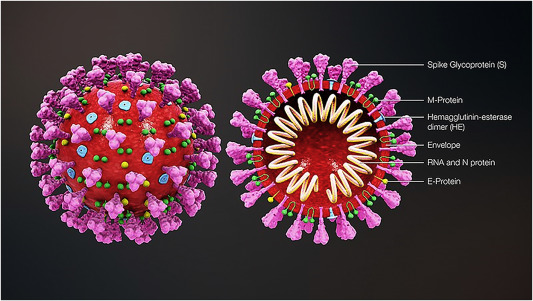
Coronavirus COVID- 19: A critical review of its history, pathogenesis, transmission, diagnosis and treatment

Mohd Sharjeel, Sofi Aadil, Hamid Sami, Ullah Bhat

What is Humanism?

How humanist are you?

Many people are humanists without even knowing it. If you are non-religious and look to science, reason, empathy, and compassion in order to live an ethical and meaningful life, please consider https://humanism.org.uk/

Bringing non-religious people together to develop their own views and an understanding of the world around them

Humanists are people who shape their own lives in the here and now, because we believe it’s the only life we have. We make sense of the world through logic, reason, and evidence, and always seek to treat those around us with warmth, understanding, and respect. https://humanism.org.uk/

Defining ‘Humanism’ – Humanism.org

Roughly speaking, the word humanist has come to mean someone who:

  • trusts to the scientific method when it comes to understanding how the universe works and rejects the idea of the supernatural (and is therefore an atheist or agnostic)
  • makes their ethical decisions based on reason, empathy, and a concern for human beings and other sentient animals
  • believes that, in the absence of an afterlife and any discernible purpose to the universe, human beings can act to give their own lives meaning by seeking happiness in this life and helping others to do the same.

According to Humanists.international, Humanism is:

In 1952, at the first World Humanist Congress, the founders of Humanists International agreed a statement of the fundamental principles of modern Humanism. They called it “The Amsterdam Declaration”. The statement is now translated into more than thirty languages.

The Amsterdam Declaration of 1952 was a child of its time. For example, it was set in the world of great power politics and the Cold War, and it asserted that “humanists have confidence that the present crisis can be surmounted”.

As befits the nature of Humanism — friendly to evolution, anathema to dogma — the statement was updated in 2002. The 50th anniversary World Humanist Congress in 2002, again meeting in the Netherlands, unanimously passed a resolution known as “The Amsterdam Declaration 2002”. Following the Congress, this updated declaration was adopted unanimously by the IHEU General Assembly, and thus became the official defining statement of World Humanism.


Amsterdam Declaration 2002

Humanism is the outcome of a long tradition of free thought that has inspired many of the world’s great thinkers and creative artists and gave rise to science itself.

The fundamentals of modern Humanism are as follows:

  1. Humanism is ethical. It affirms the worth, dignity and autonomy of the individual and the right of every human being to the greatest possible freedom compatible with the rights of others. Humanists have a duty of care to all of humanity including future generations. Humanists believe that morality is an intrinsic part of human nature based on understanding and a concern for others, needing no external sanction.
  2. Humanism is rational.It seeks to use science creatively, not destructively. Humanists believe that the solutions to the world’s problems lie in human thought and action rather than divine intervention. Humanism advocates the application of the methods of science and free inquiry to the problems of human welfare. But Humanists also believe that the application of science and technology must be tempered by human values. Science gives us the means but human values must propose the ends.
  3. Humanism supports democracy and human rights.Humanism aims at the fullest possible development of every human being. It holds that democracy and human development are matters of right. The principles of democracy and human rights can be applied to many human relationships and are not restricted to methods of government.
  4. Humanism insists that personal liberty must be combined with social responsibility. Humanism ventures to build a world on the idea of the free person responsible to society, and recognises our dependence on and responsibility for the natural world. Humanism is undogmatic, imposing no creed upon its adherents. It is thus committed to education free from indoctrination.
  5. Humanism is a response to the widespread demand for an alternative to dogmatic religion. The world’s major religions claim to be based on revelations fixed for all time, and many seek to impose their world-views on all of humanity. Humanism recognises that reliable knowledge of the world and ourselves arises through a continuing process of observation, evaluation and revision.
  6. Humanism values artistic creativity and imagination and recognises the transforming power of art. Humanism affirms the importance of literature, music, and the visual and performing arts for personal development and fulfilment.
  7. Humanism is a lifestance aiming at the maximum possible fulfilment through the cultivation of ethical and creative living and offers an ethical and rational means of addressing the challenges of our times. Humanism can be a way of life for everyone everywhere.

Our primary task is to make human beings aware in the simplest terms of what Humanism can mean to them and what it commits them to. By utilising free inquiry, the power of science and creative imagination for the furtherance of peace and in the service of compassion, we have confidence that we have the means to solve the problems that confront us all. We call upon all who share this conviction to associate themselves with us in this endeavour.

However – if you want to know the reason why you’re here?

Turn to God, ask for forgiveness of your sins – buy and read a King James Bible – the answers to life are held therein: no secret and no mystery. Just BELIEVE – Accept Jesus as your Lord and Saviour, turn away from sin. We will be together eternally!

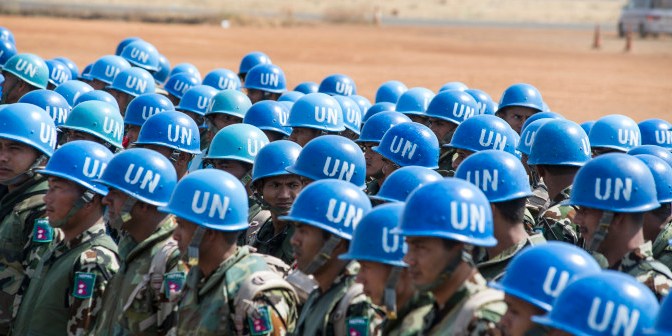
UN Peacekeeping – “The Contradiction”

INTERNATIONAL DIPLOMACY &PUBLIC POLICY CENTER,LLC

U.N.Peacekeeping: Few Successes, Many Failures, Inherent Flaws

by Thomas W. Jacobson

President, International Diplomacy & Public Policy Center, LLC

Visiting Fellow for, and brief published by, the Center for Sovereignty & Security, a division of Freedom Alliance

March-­‐April 2012

The United Nations Charter states that it was founded, in part, to

“to save succeeding generations from the scourge of war.”

Continue reading UN Peacekeeping – “The Contradiction”

Selling Sickness: The Pharmaceutical Industry and Disease Mongering

Moynihan, Ray & Heath, Iona & Henry, David. (2002). Selling Sickness: The Pharmaceutical Industry and Disease Mongering. BMJ (Clinical research ed.). 324. 886-91. A lot of money can be made from healthy people who believe they are sick. Pharmaceutical companies sponsor diseases and promote them to prescribers and consumers. Ray Moynihan, Iona Heath, and David Henry give examples of “disease mongering” and suggest how to prevent the growth of this practice.

Download the pdf

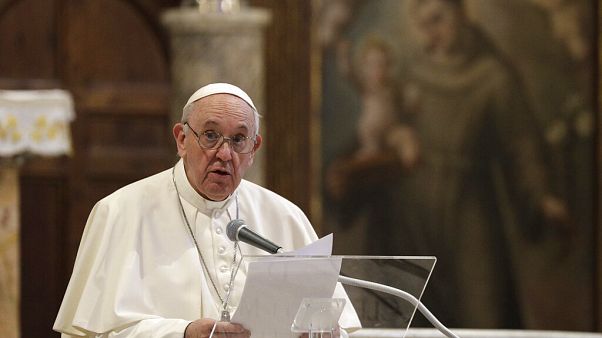
Pope Francis gives landmark endorsement of same-sex civil unions

Comments By Euronews and Associated Press  •  last updated: 22/10/2020 – 10:35

Pope Francis

Pope Francis   –   Copyright  Gregorio Borgia/AP

Pope Francis became the first pontiff to endorse same-sex civil unions on Wednesday, sparking cheers from gay Catholics and demands for clarification from conservatives given the Vatican’s official teaching on the issue. Continue reading Pope Francis gives landmark endorsement of same-sex civil unions

What’s in Vaccines? Sugar

Now for some clarity on the side effects

Sugar

According to Atkins.com

10 Reasons Why Sugar Is Bad for Your Health

The cornerstone of the Atkins lifestyle is limiting carbs—the compounds that make up the sugars in foods. But why is that sugar bad for you? We’re letting you in on some of the secrets behind the effects of sugar on the body.

Continue reading What’s in Vaccines? Sugar

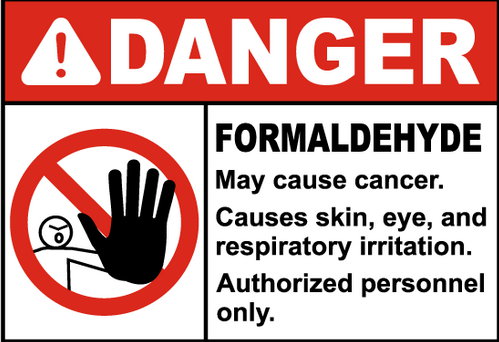
What’s in Vaccines? Formaldehyde

Now for some clarity on the side effects

Formaldehyde

Accroding to Cancer.org

Based on the available evidence, some of these expert agencies have evaluated the cancer-causing potential of formaldehyde.

The National Toxicology Program (NTP) is formed from parts of several different US government agencies, including the National Institutes of Health (NIH), the Centers for Disease Control and Prevention (CDC), and the Food and Drug Administration (FDA). The NTP lists formaldehyde as “known to be a human carcinogen.”

The International Agency for Research on Cancer (IARC) is part of the World Health Organization (WHO). Its major goal is to identify causes of cancer. IARC has concluded that formaldehyde is “carcinogenic to humans” based on higher risks of nasopharyngeal cancer and leukemia.

The Environmental Protection Agency (EPA) maintains the Integrated Risk Information System (IRIS), an electronic database that contains information on human health effects from exposure to various substances in the environment. The EPA has classified formaldehyde as a “probable human carcinogen.”

National Cancer Institute researchers have concluded that, based on data from studies in people and from lab research, exposure to formaldehyde may cause leukemia, particularly myeloid leukemia, in humans.

Continue reading What’s in Vaccines? Formaldehyde

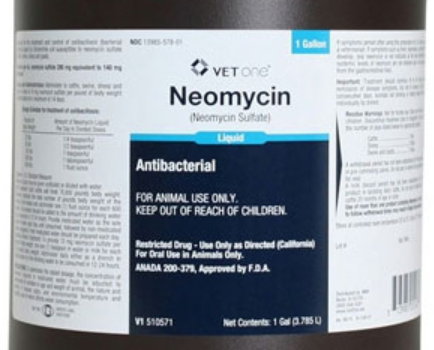
What’s in Vaccines? Neomycin

Now for some clarity on the side effects

Drugs.com reports the following

Neomycin side effects

Get emergency medical help if you have any of these signs of an allergic reaction: hives; difficult breathing; swelling of your face, lips, tongue, or throat.

Call your doctor at once if you have a serious side effect such as:

  • hearing problems, ringing in your ears, or a feeling of fullness in the ears;

  • spinning sensation, nausea, feeling like you might pass out;

  • loss of balance or coordination, trouble walking;

  • numbness or tingly feeling under your skin;

  • muscle twitching, seizure (convulsions);

  • urinating less than usual or not at all;

  • drowsiness, confusion, mood changes, increased thirst, loss of appetite, nausea and vomiting;

  • swelling, weight gain, feeling short of breath;

  • weak or shallow breathing; or

  • severe stomach cramps, diarrhea that is watery or bloody.

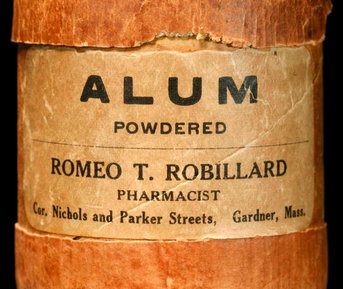
What’s in Vaccines? Aluminium

Now for some clarity on the side effects

As advised by SupplementPolice.com

There are numerous side effects and signs that are strongly linked to aluminum toxicity in the brain. Some of the notable ones include the following:

  • Feelings of irritability
  • Feeling of agitation or annoyance
  • Uneasiness or feelings of apprehension.
  • Aversion to odors, movement, touch, and noise
  • Abnormal sensitivity to both cold and hot temperatures
  • Heightened sensitivity to darkness and light
  • Breathing disorders
  • Urinary and bowel dysfunction
  • Sleep disorders
  • The exhibition of Parkinsonian symptoms
  • Dysfunction of organs such as the thyroid gland and kidney
  • Muscle weakness
  • Involuntary muscle twitches
  • Immune dysfunction
  • Imbalance
  • Ear disorders that may be characterized by hearing loss
  • Eye disorders
  • Extreme exhaustion or fatigue
  • Cardiac complications such as congestive heart failure
  • Osteoporosis

The above side effects and signs of aluminum toxicity in brains should never be ignored, as the difficulty in performing normal behaviors have the potential of escalating into violence. Aluminum consumption should also be immediately stopped.

Continue reading What’s in Vaccines? Aluminium

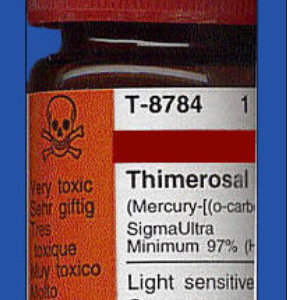
What’s in Vaccines? Thimerosal

Now for some clarity on the side effects

Symptoms of mercury poisoning

The main route of human exposure to MeHg is oral ingestion of seafood; for ethylmercury, human exposure is mainly by injection of thimerosal-containing vaccines. As advised by A. Campbell, in Encyclopedia of Toxicology (Third Edition), 2014.

Continue reading What’s in Vaccines? Thimerosal