The Global Warming Petition project;
Started by Dr Art Robinson in response to the false alarm over CO2;
http://www.petitionproject.org/seitz_…
and Continue reading 31,487 Scientists say NO to Climate Change Alarmists

The Global Warming Petition project;
Started by Dr Art Robinson in response to the false alarm over CO2;
http://www.petitionproject.org/seitz_…
and Continue reading 31,487 Scientists say NO to Climate Change Alarmists
By Julie Zauzmer March 15 2016
//www.washingtonpost.com/video/c/embed/70c9cb60-eadb-11e5-a9ce-681055c7a05f
In a first-of-its-kind case, prosecutors in Pennsylvania announced charges on Tuesday against three Franciscan friars who they say facilitated the abuse of dozens of children.
Prosecutors say that all three men knew about sexual abuse allegations against Brother Stephen Baker dating back to the 1980s but that the three friars continued to place Baker in jobs that gave him access to children, up until 2010. Continue reading In ‘groundbreaking’ case, Franciscan friars charged with allowing abuse of at least 80 kids
BY PROFESSOR JAMES ORR, D. D., United Free Church College, Glasgow, Scotland
In many quarters the belief is industriously circulated that the advance of “science,” meaning by this chiefly the physical sciences — astronomy, geology, biology, and the like has proved damaging, if not destructive, to the claims of the Bible, and the truth of Christianity. Science and Christianity are pitted against each other. Their interests are held to be antagonistic. Books are written, like Draper’s “Conflict Between Religion and Science,” White’s “Warfare of Science with Theology in Christendom,” and Foster’s “Finality of the Christian Religion,” to show that this warfare between science and religion has ever been going on, and can never in the nature of things cease till theology is destroyed, and science holds sole sway in men’s minds. Continue reading SCIENCE AND CHRISTIAN FAITH
BY ALGERNON J. POLLOCK, Weston-Super-Mare, England
I. ORIGIN AND GROWTH
Modern Spiritualism claims as its birthday March 31, 1848, and the place of its birth Hydesville, Wayne County, New York, U. S. A.; but it is in reality almost as old as the world’s history, and will go on to its close. That the number of adherents of Modern Spiritualism is amazingly large is borne out by Dr. F. Maack, of Hamburg, writing so recently as 1910. As an antagonist of Spiritualism, he is not likely to overstate the numbers. In Berlin alone, he says, there are probably 10,000 Spiritualists, among them exalted and court personages; 400 mediums, and from fifteen to twenty societies. In North America there are said to be 16,000,000 adherents; while in the whole world it was computed that in 1894 there were 60,000,000 Modern Spiritualists, with 200 journals exclusively devoted to the propaganda of this awful system. Continue reading MODERN SPIRITUALISM BRIEFLY TESTED BY SCRIPTURE
BY PROFESSOR JAMES ORR, D. D., United Free Church College, Glasgow, Scotland
It is well known that the last ten or twenty years have been marked by a determined assault upon the truth of the Virgin birth of Christ. In the year 1892 a great controversy broke out in Germany, owing to the refusal of a pastor named Schrempf to use the Apostles’ Creed in baptism because of disbelief in this and other articles. Schrempf was deposed, and an agitation commenced against the doctrine of the Virgin birth which has grown in volume ever since. Other tendencies, especially the rise of an extremely radical school of historical criticism, added force to the negative movement. The attack is not confined, indeed, to the article of the Virgin birth. It affects the whole supernatural estimate of Christ — His life, His claims, His sinlessness, His miracles, His resurrection from the dead. Continue reading THE VIRGIN BIRTH OF CHRIST
BY PROFESSOR GEORGE FREDERICK WRIGHT, D. D., L.L. D., Oberlin College, Oberlin, Ohio
The word evolution is in itself innocent enough, and has a large range of legitimate use. The Bible, indeed, teaches a system of evolution. The world was not made in an instant, or even in one day (whatever period day may signify) but in six days. Throughout the whole process there was an orderly progress from lower to higher forms of matter and life. In short there is an established order in all the Creator’s work. Continue reading THE PASSING OF EVOLUTION
BY AN OCCUPANT OF THE PEW
From The Herald and Presbyter, November 22, 1911, Cincinnati, Ohio.
We reprint this excellent paper as the remarkable utterance of a Christian layman on a most important subject. — Editor
Perhaps the most remarkable movement in philosophic thought that has occurred in any age was the rise and general acceptance by scientific circles of the evolutionary theory as propounded by Darwin, Huxley and Spencer. It was remarkable that men of science, whose peculiar boast it is that they deal only with established facts, should have so readily departed from this rule and accepted a system based upon hypothesis only, and which was, and is still after the lapse of forty years, without a single known fact to support it. Continue reading EVOLUTIONISM IN THE PULPIT
BY PROFESSOR CHARLES R. ERDMAN, D. D., Princeton Theological Seminary, Princeton, New Jersey
The return of Christ is a fundamental doctrine of the Christian faith. It is embodied in hymns of hope; it forms the climax of the creeds; it is the sublime motive for evangelistic and missionary activity; and daily it is voiced in the inspired prayer:
“Even so: Come, Lord Jesus.”
Continue reading THE COMING OF CHRIST
BY WILLIAM G. MOOREHEAD, D. D., President Of Xenia Theological Seminary, Xenia, Ohio
The glories of the Lord Jesus Christ are threefold: Essential, official and moral. His essential glory is that which pertains to Him as the Son of God, the equal of the Father. His official glory is that which belongs to Him as the Mediator. It is the reward conferred on Him, the august promotion He received when He had brought His great work to a final and triumphant conclusion. His moral glory consists of the perfections which marked His earthly life and ministry; perfections which attached to every relation He sustained, and to every circumstance in which He was found. His essential and official glories were commonly veiled during His earthly sojourn. His moral glory could not be hid; He could not be less than perfect in everything; it belonged to Him; it was Himself. This moral glory now illumines every page of the four Gospels, as once it did every path He trod. Continue reading THE MORAL GLORY OF JESUS CHRIST A PROOF OF INSPIRATION
BY HENRY H. BEACH, Grand Junction, Colorado
This paper is not a discussion of variations lying within the boundaries of heredity; nor do we remember that the Hebrew and Greek Scriptures reveal anything on that subject; nor do we think that it can be rationally discussed until species and genus are defined.
Failure to condition spontaneous generation by sterilized hay tea, arid a chronic inability to discover the missing link, have shaken the popularity of Darwinism. Will it recover? Or is it failing into a fixed condition of innocuous desuetude? Continue reading THE DECADENCE OF DARWINISM
by Sir Robert Anderson, KCB., LLD., Author of “The Bible and Modern Criticism,” London, England
In his “Founders of Old Testament Criticism” Professor Cheyne of Oxford gives the foremost place to Eichhorn. He hails him, in fact, as the founder of the cult. And according to this same authority, what led Eichhorn to enter on his task was “his hope to contribute to the winning back of the educated classes to religion.” The rationalism of Germany at the close of the eighteenth century would accept the Bible only on the terms of bringing it down to the level of a human book, and the problem which had to be solved was to get rid of the element of miracle which pervades it. Working on the labors of his predecessors, Eichhorn achieved this to his own satisfaction by appealing to the oriental habit of thought, which seizes upon ultimate causes and ignores intermediate processes. This commended itself on two grounds. It had an undoubted element of truth, and it was consistent with reverence for Holy Scripture. For of the founder of the “Higher Criticism” it was said, what cannot be said of any of his successors, that “faith in that which is holy, even in the miracles of the Bible, was never shattered by Eichhorn in any youthful mind.” Continue reading Christ and Criticism
BY CANON DYSON HAGUE, M. A.,
RECTOR OF THE MEMORIAL CHURCH, LONDON, ONTARIO. LECTURER IN LITURGICS AND ECCLESIOLOGY, WYCLIFFE COLLEGE, TORONTO, CANADA. EXAMINING CHAPLAIN TO THE BISHOP OF HURON.
What is the meaning of the Higher Criticism? Why is it called higher? Higher than what? At the outset it must be explained that the word “Higher” is an academic term, used in this connection in a purely special or technical sense. It is not used in the popular sense of the word at all, and may convey a wrong impression to the ordinary man. Nor is it meant to convey the idea of superiority. It is simply a term of contrast. It is used in contrast to the phrase, “Lower Criticism.” Continue reading THE HISTORY OF THE HIGHER CRITICISM
BY PROFESSOR GEORGE FREDERICK WRIGHT, D. D., LL. D., Oberlin College, Oberlin, Ohio
During the last quarter of a century an influential school of critics has deluged the world with articles and volumes attempting to prove that the Pentateuch did not originate during the time of Moses, and that most of the laws attributed to him did not come into existence until several centuries after his death, and many of them not till the time of Ezekiel. By these critics the patriarchs are relegated to the realm of myth or dim legend and the history of the Pentateuch generally is discredited. In answering these destructive contentions and defending the history which they discredit we can do no better than to give a brief summary of the arguments of Mr. Harold M. Wiener, a young orthodox Jew, who is both a well established barrister in London, and a scholar of the widest attainments. What he has written upon the subject during the last ten years would fill a thousand octavo pages; while our condensation must be limited to less than twenty. Continue reading THE MOSAIC AUTHORSHIP OF THE PENTATEUCH
by Franklin Johnson, D.D., LL.D.,
The errors of the higher criticism of which I shall write pertain to its very substance. Those of a secondary character the limits of my space forbid me to consider. My discussion might be greatly expanded by additional masses of illustrative material, and hence I close it with a list of books which I recommend to persons who may wish to pursue the subject further. Continue reading The Fallacies of the Higher Criticism
by Bettex, D.D.,Professor Emeritus, Stuttgart, Germany – Translated from the original German by David Heagle, D.D.
It is undeniable that the universe, including ourselves, exists. Whence comes it all? For any clear-thinking mind there are only three possibilities. Either the universe has existed always, it produced itself, or it was created by a Divine, a Supreme Being. Continue reading The Bible and Modern Criticism
BY JAMES M. GRAY, D. D., Dean Of Moody Bible Institute, Chicago, Ill.
In this paper the authenticity and credibility of the Bible are assumed, by which is meant
Continue reading THE INSPIRATION OF THE BIBLE — DEFINITION, EXTENT AND PROOF
 Pope Francis
Plenary Session on Evolving Concepts of Nature
24-28 October 2014
Casina Pio IV, Vatican City
Your Eminences,Dear Brothers in the Episcopate and in the Priesthood, Distinguished Ladies and Gentlemen!
A joyful emotion arose in my soul as the bust, which the Academics wished to have in the headquarters of the Pontifical Academy of Sciences as a sign of acknowledgment and gratitude, was unveiled. This bust of Benedict XVI brings dear Pope Ratzinger’s person and face back to the eyes of all. It also evokes his spirit: that of his teaching, of his example, of his opus, of his devotion to the Church, of his current “monastic” life. This spirit, far from crumbling over time, will appear from generation to generation ever greater and more powerful. Benedict XVI: a great Pope. Great in strength and intellectual insight, great in his significant contribution to theology, great in his love for the Church and for human beings, great in his virtue and his religiosity. As you well know, his love for the truth is not limited to theology and philosophy, but extends to science. His love for science spills over into regard for scientists, without distinction among race, nationality, culture or religion; care for the Academy, from the time St John Paul II appointed him a member. He knew how to honour the Academy with his presence and his words, and he appointed many of its members, including the current President, Werner Arber. Benedict XVI, for the first time, invited a president of this Academy, to participate in the Synod on the New Evangelization, cognizant of the importance of science in modern culture. It could certainly never be said of him that study and science withered his person and his love for God and neighbour; on the contrary, science, wisdom and prayer only expanded his heart and his spirit. Let us give thanks to God for the gift He gave to the Church and the world with the life and Pontificate of Pope Benedict. I thank everyone who so generously made this work of art and this event possible, especially the author of the bust, the sculptor Fernando Delia, your family, and all the Academics. I would like to thank all of you who are present here to honour this great Pope.
At the conclusion of your Plenary Session, dear Academics, I am glad to express my profound appreciation and my warm encouragement to move forward with scientific progress and the betterment of the standard of living of people, especially of those in the greatest poverty.
You are addressing the highly complex subject of the evolution of the concept of nature. I will not go into the scientific complexity, which you well understand, of this important and crucial question. I only want to underline that God and Christ are walking with us and are also present in nature, as the Apostle Paul stated in his discourse at the Areopagus: “In him we live and move and have our being” (Acts 17:28).
When we read the account of Creation in Genesis we risk imagining that God was a magician, complete with an all powerful magic wand.
But that was not so.
He created beings and he let them develop according to the internal laws with which He endowed each one, that they might develop, and reach their fullness.
He gave autonomy to the beings of the universe at the same time in which He assured them of his continual presence, giving life to every reality.
And thus Creation has been progressing for centuries and centuries, millennia and millennia, until becoming as we know it today, precisely because God is not a demiurge or a magician, but the Creator who gives life to all beings. The beginning of the world was not a work of chaos that owes its origin to another, but derives directly from a supreme Principle who creates out of love.
The Big Bang theory, which is proposed today as the origin of the world, does not contradict the intervention of a divine creator but depends on it. Evolution in nature does not conflict with the notion of Creation, because evolution presupposes the creation of beings who evolve.
As for man, however, there is a change and a novelty. When, on the sixth day in the account of Genesis, comes the moment of the creation of man, God gives the human being another autonomy, an autonomy different from that of nature, which is freedom. And he tells man to give a name to all things and to go forth through history.
He makes him the steward of Creation, even that he rule over Creation, that he develop it until the end of time.
Therefore the scientist, and especially
the approach of the Christian scientist is that of investigating the future of humanity and the earth, and, as a free and responsible being, to contribute to preparing it, to preserve it, and to eliminate any risks to the environment, both natural and manmade.
But, at the same time,
the scientist must be moved by the conviction that nature, in its evolutionary mechanisms, hides its potential which it leaves for intelligence and freedom to discover and actualize, in order to reach the development that is in the Creator’s design.
So then, no matter how limited,
the action of man partakes in the power of God and is capable of building a world adapted to his two-fold physical and spiritual life; to build a humane world for all human beings and not only for one group or one privileged class.
This hope and trust in God, the Creator of Nature, and in the capacity of the human spirit, are able to give the researcher a new impetus and profound peace. But it is also true that
the action of man, when his freedom becomes autonomy — which is not freedom, but autonomy — destroys Creation and man takes the place of the Creator.
And this is a grave sin against God the Creator.
I encourage you to continue your work and to carry out these happy theoretical and practical initiatives for the benefit of human beings, which do you honour.
It is with joy that I now consign the insignia, which Bishop Sánchez Sorondo will present to the new members. Thank you.
Source: Pontifical Academy of Sciences
 by George Lerner | Aug 25, 2012 |
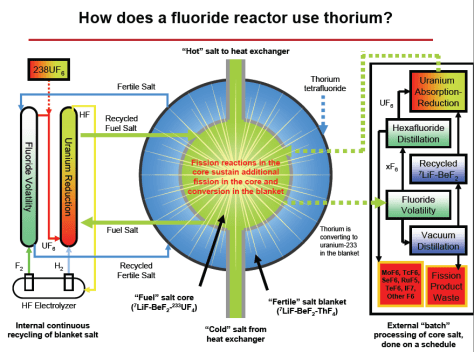
Nuclear power produces a million times as much energy as fossil fuels, per pound of fuel, without releasing pollution or affecting climate. People think nuclear power releases lots of radiation, but actually fossil fuels release more radioactive material.
We don’t have to use a Light Water Reactor to generate nuclear power. Though we’ve been using LWR almost exclusively, it is not the best type of nuclear reactor, it is the design that coal/oil companies, who owned and still own USA Congress, picked in the 1960s. Continue reading What is a LFTR? Molten-fueled, salt-cooled nuclear power | Molten Salt Reactors (incl Liquid Fluoride Thorium Reactor)
 Workshop 27-28 March 2017

When the term personalized medicine was coined by Leroy Hood and became part of our daily jargon less than a decade ago, the realization of this goal appeared to be the next inevitable milestone on the road of medical discovery. The journey began with the sequencing of the first human genome that lasted for several years, cost several hundred million dollars, and was completed in 2000. It continued with the sequencing of genomes of patients afflicted with particular diseases in numbers sufficient to unravel the mutations that underlie their pathogenesis. Once this vital information was available, the structure of the mutated proteins could be used to develop specific, individualized, mechanism-based drugs to modulate the activity of overly active proteins or replace the gene or gene product resulting from loss-of-function mutations. While some of the promise of this “simple” road-map view remains, the path has become more convoluted, and major road blocks have emerged. The promise of personalized medicine was initially painted with rosy colors in large part due to naiveté in the scientific community with respect to the complexity of the problem. In addition, some scientists were eager to convince the public and funding agencies that a defined roadmap toward new therapies for many diseases was around the corner, lacking only adequate funding.
We argue that while the goals of personalized medicine can still be achieved, a more realistic view of the obstacles and pitfalls is needed. Obstacles reside in each and every level of the road to this revolution – from scientific discovery to drug development by pharmaceutical companies, and from legal to administrative concerns to political, religious and ethical issues. Overcoming these obstacles will require a larger and more broadly focused research investment that employs both traditional and novel approaches. For example, at the level of identifying genomic mutations in DNA, we naively thought that the initial road blocks would be solved with rapid sequencing methodologies and better bioinformatic analysis of coding DNA. However, the recent ENCODE (Encyclopedia of DNA elements) project has shown how wrong we were even at this basic starting point. Most of what was regarded as “junk DNA” – which constitutes a large proportion of the genomic DNA – has turned out to be functional. Genome-wide association studies have recently shown that many noncoding sequences are associated with common pathologies. Furthermore, some of these regions are DNAse-sensitive and are active during fetal development where they may play a role in the development of disease states during adulthood. The resulting amount of DNA that must be incorporated into the ongoing analysis of the coding DNA will require not only more complex sequence and bioinformatics analyses but also the development of novel methodologies to analyze its significance. Additional obstacles include the need to examine regulatory pathways that act upstream and downstream from the genome – the RNAs, miRNAs, the proteome and the metabolome, each of which represents thousands of additional molecules. Development of proteomic analyses including methodologies that monitor dynamic changes in large populations of proteins and their numerous post-translational modifications (phosphorylation, acetylation, amidation, hydroxylation, ubiquitination and modification by ubiquitin-like proteins, nitrosylation, and others) have so far proven to be much more difficult than the analysis of nucleic acid sequence. Furthermore, technologies to dynamically analyzed small molecules – sugars, lipids, and other metabolic intermediates are in their infancy but will be required for the detailed view needed to truly understand disease causality.
One can argue that “personalized medicine” has been part of the medical profession from its inception. Physicians throughout history have applied different therapies to treat similar ailments through a process that involves careful patient observation and the selected use of ancillary data. While progress is uneven, this evolution of medicine has improved the quality of life and led to extended life and extended life in most societies. For example, excavations from Egyptian and pre-Columbian periods suggest that the average life expectancy did not exceed ~30 years and almost 4,000 years passed before the beginning of the 20th century when average life expectancy reached ~50 years. The last century marked the shortest span in history to increase life expectancy by almost 30 years in developed countries. Most of the improvements in mortality were attributable to reductions in infectious disease mortality resulting from safer sources of food and drinking water, improved understanding of the principles of hygiene, the discovery of antibiotics and vaccinations, the development of medical technologies such as imaging and surgery and an improved understanding of disease pathophysiology. This increased longevity has been beneficial for society but has also been associated with the emergence of diseases of aging, including chronic and ischemic heart disease, cancers, COPD, and degenerative diseases, including Parkinson’s and Alzheimer’s. These diseases represent a major challenge to the affected individual, the medical-scientific community, and society at large.
The treatment of diseases has evolved greatly, and currently we still use medications that were discovered by astute observers and practitioners of medicine during a time we call the era of incidental discoveries. Among those we can include the discovery of salicylic acid by Johann Buchner, Henri Leroux, Raffaele Piria, and Charles Gerhardt, which was commercialized by Bayer in the 20 century, after reformulation by Felix Hoffmann. Also, the discovery of insulin initiated by the observations of Paul Langherhans stimulated studies by Oscar Minkowski, which in turn led to its isolation by Fredrick Banting and Charles Best in 1921. In partnership with Ely Lilly, this led to the purification and mass production of insulin. Similarly, the era of antibiotics was heralded by the discovery and production of penicillin for which Alexander Fleming, Howard Florey, and Ernst Chain were awarded the Nobel Prize in 1945. In 1975, Akira Endo initiated the era of biochemical discovery using high throughput technology, with his work that culminated in discovery of the blockbuster statin drugs.
In many ways, the application of genomic data represents the next logical step in this tradition. The paradigm of P4 Medicine, proposes a personalized, predictive, preventive, and participatory practice of medicine based on a systems approach. An important challenge to the predictive part of this paradigm using genomics sequence information is that many highly prevalent diseases including asthma, COPD, mental health and metabolic disorders, are multigenic, and the phenotypic pathology depends on the penetrance of the different genes involved and their modulation by environmental factors. For example, Bert Vogelstein and colleagues used sequencing data from monozygotic twin pairs to estimate the attributable risk for 24 types of cancer that might be identified from whole genome sequencing. They found that only a small fraction of the risk could be identified based on genetic factors and that this paled in comparison with the risks associated with environmental factors including smoking and obesity (The Predictive Capacity of Personal Genome Sequencing Science Translational 2012). Even in patients in whom cancer has developed, genomic instability might cause driver mutation(s) to be masked or absent in the advanced stages of the disease. This elusive behavior of tumors has elicited a fierce debate on the therapeutic approach to cancer – whether for example in lung cancer, to target the specific mutations, which accumulate and become resistant to therapy, or to target major upper stream “switches” such as evasion of cell death, immune surveillance, growth suppressors, and deregulation of cellular energetics.
From the standpoint of drug development, a major concern is that personalized medicine will mark the end of the blockbuster era, where one or a few competing drugs can be used to treat an entire population with a disease. In this setting, current models of drug development become prohibitively expensive. For example, even the now familiar classification of patients with breast cancer based on expression of HER/Neu2, estrogen receptor mutation, progesterone receptor mutation is likely an oversimplification of this complex disease. In the future, an array of genomic, RNA, proteomic and metabolic data will likely be used to classify patients with cancer and to identify potential therapeutic approaches. A similar process is likely in other diseases including pulmonary fibrosis, COPD, pulmonary hypertension and other complex common diseases. Pharmaceutical companies are already reluctant to participate in the development of certain drugs (antibiotics for example), and maybe even less interested in the development of drugs targeted to a smaller number of patients. To respond to this problem, investment is needed to develop improved preclinical disease models that can be used to predict drug efficacy and toxicity. This process might be facilitated by using personalized medicine approaches to identify factors that might make individuals more or less sensitive to certain drugs.
Most difficult to resolve are the bioethical issues raised by personalized medicine. For example, genomic analysis of a blood or a tissue sample for clinical, research or even personal purposes might have multiple, unforeseen implications. Some “simple” questions relate to privacy and confidentiality with respect to the use of the information by employers, governments, or insurance companies to make decisions unrelated to health care. More complicated is the problem of how to address incidental information referring to a potential or evolving pathology of which the patient is unaware and for which the patient might not have consented, particularly, the discovery of predisposition of a disease that cannot be treated or prevented. This problem is even more complex when the information is discovered as part of prenuptial testing or in utero examinations of embryos. This information has the possibility to affect the physician-patient relationship, social networks, family structure, and parenthood in ways that are difficult to predict. These rapidly evolving ethical challenges will require continuously updated guidelines and legislation. The scientific community needs to proactively and clearly communicate the recent discoveries generated in laboratories to engage the political, philosophic, clerical, and judicial members of society to meet the challenges of ethical utilization of data and new technologies.
In conclusion, the road to personalized medicine is longer and much more tortuous than anyone imagined a decade ago. We find ourselves in the midst of an exciting era in medicine in which we can see that the promise of individualized prevention, early detection, and efficient treatment of diseases is possible. Realizing this goal will require innovative multidisciplinary approaches to address the scientific, commercial and ethical challenges posed by these new technologies and techniques. Like many endeavors in research, the next milestone in the road may not be around the corner and might come from an unexpected source. Continued investments in high quality research using both traditional and novel approaches in a wide field of study will be required to achieve these goals. As we do this, it is important to remember what our patients might think of when they hear the term “personalized medicine”. For example, Carolyn Bucksbaum recently provided $42 million (A $42 Million Gift Aims at Improving Bedside Manner. New York Times September 22, 2011) to establish a center to teach doctors “bedside manners” and to “preserve kindness and personalize” the patient-doctor relationship. Providing both the personalized medicine described by Dr. Hood and Ms. Bucksbaum represents an exciting challenge in the practice of medicine in the 21st Century.
by Aaron Ciechanover(see more about author below)
Source: Personalized Medicine

Date of Birth 1 October 1947
Place Haifa (Israel)
Nomination 12 February 2007
Field Biochemistry
Title Professor, Nobel laureate in Chemistry, 2004
Most important awards, prizes and academies
Awards: The Austria Ilse and Helmut Wachter Prize, University of Innsbruck (1999); The Jewish National Fund Alkales Award for Distinguished Scientific Achievements (2000); The Albert and Mary Lasker Award for Basic Medical Research (2000); The Michael Landau Israeli Lottery (Mifa’al Ha’Peis) Award for a significant breakthrough in Medical Sciences (2001); EMET (Truth) Prize (Israeli Prime Minister Prize), for Arts, Science and Culture (in Life Sciences and Medicine) (2002); The Israel Prize for Biology (2003); Japan Society for Promotion of Science (JSPS) (2003 & 2006); Distinguished Scientist Award (2003); Nobel Prize in Chemistry (shared with Drs. Avram Hershko and Irwin A. Rose) (2004). Fellowships: Fulbright Fellow, M.I.T., (Dr. Harvey Lodish’s Laboratory) (1981-4); Leukemia Society of America Fellow, M.I.T. (1981-3); Israel Cancer Research Fund (ICRF), USA Fellow, M.I.T. (1981-4); Medical Foundation and Charles A. King Trust Fellow, M.I.T. (1983-4); American Cancer Society Eleanor Roosevelt Memorial Fellow (1988-9). Academies and professional societies: American Association for Advancement of Science (AAAS); Member, Council of the European Molecular Biology Organization (EMBO) (1996-present); Member, Asia-Pacific IMBN (International Molecular Biology Network) (1999-present); Member, European Academy of Arts and Sciences (2004); Member, Israeli National Academy of Sciences and Humanities (2004); Fellow (Hon.), Royal Society of Chemistry RCS (UK), HonFRSC (2005); Foreign Member, American Philosophical Society (2005); Honorary Member, Society for Experimental Biology and Medicine (2006); Fellow, Federation of Asian Chemical Societies (FACS) (2006); Member, Pontifical Academy of Sciences (2007). Honours: Janet and David Polak Professor of Life Sciences, Technion-Israel Institute of Technology, Haifa, Israel (1996-present); University Distinguished Professor, Technion-Israel Institute of Technology, Haifa, Israel (2002-present); Professor, Israel Cancer Research Fund (ICRF), USA (2003-present); Cell Stress Society International – CSSi – Medal (2005); Sir Hans Krebs Medal, Federation of the European Biochemical Societies (FEBS) (2006). Honorary degrees: Honorary Doctorate (Doctor Philosophiae Honoris Causa; Ph.D. Hon.), Tel Aviv University, Tel Aviv, Israel (2001); Honorary Doctorate (Doctor Philosophiae Honoris Causa; Ph.D. Hon.), Ben-Gurion University, Beer Sheba, Israel (2004); Honorary Doctorate, City University of Osaka, Japan (2005); Honorary Doctorate, University of Athens, Greece (2005); Honorary Doctorate, National University of Uruguay, Montevideo, Uruguay (2005); Honorary Doctorate, Washington University, St. Louis, Missouri, USA (2006); Honorary Doctorate (Doctor Philosophiae Honoris Causa; Ph.D. Hon.), Cayetano Heredia University, Lima, Peru (2006); Honorary Professor, Capital University of Medical Sciences (CPUMS), Beijing, China (2006); Honorary Professor, Peking Union Medical College (PUMC), Beijing, China; Honorary Professor, Chinese Academy of Medical Sciences (CAMS), China (2006); Honorary Doctorate (Doctor Philosophiae Honoris Causa; Ph.D. Hon.), Hebrew University, Jerusalem, Israel (2007); Honorary Doctor and Foreign Fellow, Polish Academy of Medicine (2007); Honorary Doctorate (Doctor Philosophiae Honoris Causa; Ph.D. Hon.), Bar-Ilian University, Ramat Gan, Israel (2007); Honorary Doctorate (Doctor Honoris Causa), Universidad San Francisco, Quito, Ecuador (2008).
Summary of scientific research
Dr Ciechanover’s current research focuses on the regulation of transcriptional factors, tumour suppressors, and onco-proteins, and the development of novel modalities for the treatment of diseases such as malignancies and neurodegenerative disorders based on a known mechanism of action and aberrations in the activity of the ubiquitin system which he co-discovered.
Main publications
Hershko, A., Heller, H., Ganoth, D., and Ciechanover, A. (1978), Mode of degradation of abnormal globin chains in rabbit reticulocytes, Protein Turnover and Lysosome Function (H.L. Segal & D.J. Doyle, eds.) Academic Press, New York, pp. 149-69; Ciechanover A., Hod, Y., and Hershko, A. (1978), A heat-stable polypeptide component of an ATP-dependent proteolytic system from reticulocytes, Biochem. Biophys. Res. Common. 81, 1100-5; Ciechanover, A., Heller, H., Elias, S., Haas, A.L., and Hershko, A. (1980), ATP-dependent conjugation of reticulocyte proteins with the polypeptide required for protein degradation, Proc. Natl. Acad. Sci. USA. 77, 1365-8; Hershko, A., Ciechanover, A., Heller, H., Haas, A.L., and Rose, I.A. (1980), Proposed role of ATP in protein breakdown: Conjugation of proteins with multiple chains of the polypeptide of ATP-dependent proteolysis, Proc. Natl. Acad. Sci. USA 77, 1783-6; Ciechanover, A., Elias, S., Heller, H., Ferber, S. and Hershko, A. (1980), Characterization of the heat-stable polypeptide of the ATP-dependent proteolytic system from reticulocytes, J. Biol. Chem. 255, 7525-8; Hershko, A., Ciechanover, A., and Rose, I.A. (1981), Identification of the active amino acid residue of the polypeptide of ATP-dependent protein breakdown, J. Biol. Chem. 256, 1525-8; Ciechanover A., Heller H., Katz-Etzion R., Hershko A. (1981) Activation of the heat-stable polypeptide of the ATP-dependent proteolytic system, Proc. Natl. Acad. Sci. USA, Feb 78(2):761-5; Ciechanover, A., and Ben-Saadon R. (2004), N-terminal ubiquitination: More protein substrates join in, Trends Cell Biol. 14, 103-6; Ciechanover, A., Elias, S., Heller, H. & Hershko, A. (1982), ‘Covalent affinity’ purification of ubiquitin-activating enzyme,J. Biol. Chem. 257, 2537-42; Hershko, A., Heller, H., Elias, S., and Ciechanover, A. (1983), Components of ubiquitin-protein ligase system: Resolution, affinity purification and role in protein breakdown, J. Biol. Chem. 258, 8206-14; Hershko, A., Eytan, E., Ciechanover, A. and Haas, A.L. (1982), Immunochemical Analysis of the turnover of ubiquitin-protein conjugates in intact cells: Relationship to the breakdown of abnormal proteins, J. Biol. Chem. 257, 13964-70; Finley, D., Ciechanover, A., and Varshavsky, A. (1984), Thermolability of ubiquitin-activating enzyme from the mammalian cell cycle mutant ts85, Cell 37, 43-55; Ciechanover, A., Finley D., and Varshavsky, A. (1984), Ubiquitin dependence of selective protein degradation demonstrated in the mammalian cell cycle mutant ts85, Cell 37, 57-66; Ciechanover A., Finley D., Varshavsky A. (1984) Ubiquitin dependence of selective protein degradation demonstrated in the mammalian cell cycle mutant ts85, Cell, May 37(1):57-66; Ciechanover A., Wolin S.L., Steitz J.A., Lodish H.F. (1985), Transfer RNA is an essential component of the ubiquitin- and ATP-dependent proteolytic system, Proc. Natl. Acad. Sci. USA, Mar 82(5):1341-5; Ferber S., Ciechanover A. (1986) Transfer RNA is required for conjugation of ubiquitin to selective substrates of the ubiquitin- and ATP-dependent proteolytic system, J. Biol. Chem., Mar 5;261(7):3128-34; Ferber S., Ciechanover A. (1987) Role of arginine-tRNA in protein degradation by the ubiquitin pathway, Nature, Apr 23-29; 326(6115):808-11; Ciechanover A., Ferber S., Ganoth D., Elias S., Hershko A., Arfin S. (1988) Purification and characterization of arginyl-tRNA-protein transferase from rabbit reticulocytes. Its involvement in post-translational modification and degradation of acidic NH2 termini substrates of the ubiquitin pathway, J. Biol. Chem., Aug 15;263(23):11155-67; Mayer A., Siegel N.R., Schwartz A.L., Ciechanover A. (1989) Degradation of proteins with acetylated amino termini by the ubiquitin system,Science, Jun 23;244(4911):1480-3; Elias S., Ciechanover A. (1990) Post-translational addition of an arginine moiety to acidic NH2 termini of proteins is required for their recognition by ubiquitin-protein ligase, J. Biol. Chem., Sep 15;265(26):15511-7; Ciechanover, A., DiGiuseppe, J.A., Bercovich, B., Orian, A., Richter, J.D., Schwartz, A.L., and Brodeur, G.M. (1991), Degradation of nuclear oncoproteins by the ubiquitin system in vitro, Proc. Natl. Acad. Sci. USA 88, 139-43; Breitschopf K., Bengal E., Ziv T., Admon A., Ciechanover A. (1998) A novel site for ubiquitination: the N-terminal residue, and not internal lysines of MyoD, is essential for conjugation and degradation of the protein, EMBO J. Oct 15;17(20):5964-73; Glickman, M.H., and Ciechanover, A. (2002), The ubiquitin-proteasome pathway: Destruction for the sake of construction, Physiological Reviews 82, 373-428; Ciechanover, A. (2005), From the lysosome to ubiquitin and the proteasome, Nature Rev. Mol. Cell Biol. 6, 79-86; Ciechanover A. (2005). Intracellular protein degradation: from a vague idea, through the lysosome and the ubiquitin-proteasome system, and onto human diseases and drug targeting (Nobel lecture), Angew. Chem. Int. Ed. Engl. Sep 19;44(37):5944-67.
 22 October 1996
John Paul II refers to Pius XI’s hope that the Academy would become a Senatus scientificus. In relation to the origins of life and the universe the Pope asks: ‘How do the conclusions reached by the various scientific disciplines coincide with those contained in the message of Revelation? And if, at first sight, there are apparent contradictions, in what direction do we look for their solution?’ Continue reading Address to the Plenary Session on ‘The Origins and Early Evolution of Life’

Saturday, June 28, 2014 by: Paul Fassa
Just a very few years ago, Bill Gates publicly declared before a live audience that using vaccinations strategically may help reduce the world population by 15 percent. Many claimed it was a slip of tongue, like a verbal typo. The audience and mainstream media apparently ignored it.
However, actual worldwide events indicate that population control is part or the world vaccination agenda. Continue reading Worldwide humanitarian vaccination projects are for depopulation

| Publisher | Human Rights Watch |
| Publication Date | 1 January 1995 |
| Cite as | Human Rights Watch, Human Rights Watch World Report 1995 – Bosnia-Hercegovina, 1 January 1995, available at: http://www.refworld.org/docid/467fcaab7.html %5Baccessed 11 March 2016] |
| Disclaimer | This is not a UNHCR publication. UNHCR is not responsible for, nor does it necessarily endorse, its content. Any views expressed are solely those of the author or publisher and do not necessarily reflect those of UNHCR, the United Nations or its Member States. |
Events of 1994
Abuses against Bosnia’s three ethnic groups – Muslims, Serbs, and Croats – continued in late 1993 and early 1994 but the overwhelming majority continued to be perpetrated by Bosnian Serbs. Most of these abuses were associated with “ethnic cleansing,” whose main objective is the removal of an ethnic group from a given area through murder, population exchanges, forced displacement, and terrorization. Non-Serbs in northern Bosnia continued to be “cleansed” from their homes by Bosnian Serb authorities, while abuses between Bosnia’s Muslims and Croats noticeably decreased after the two groups ended their year-old war. Despite a lull in the fighting in Sarajevo, the city remained under siege by Bosnian Serb forces for much of 1994.
On February 5, a Bosnian Serb mortar attack killed sixty-three people in Sarajevo’s open market. By late February, a NATO ultimatum forced Bosnian Serb forces to pull back their weaponry around Sarajevo or place it under U.N. supervision and a weapons exclusion zone was established around the city. As a result, shelling in Sarajevo decreased and a general cease-fire remained in place until mid-year, although snipers continued to kill civilians in the city. By July, however, shelling and sniping increased in Sarajevo, and roads on Mount Igman, which had been open for commercial traffic since February, were once again too treacherous to transit.
In April, the Bosnian Serb army used indiscriminate and disproportionate force in retaliation against Bosnian army provocation in the Gorazde enclave, which had been designated as a “safe area” by the U.N. in 1993. Bosnian Serb forces eventually captured part of the Gorazde enclave and then prevented journalists and some U.N. personnel from entering the area to assess the material damage and loss of civilian life. In response to the Bosnian Serb attack, Muslim forces within Gorazde expelled some Serbs and placed under house arrest others who remained in the enclave. Bosnian Serb forces restricted access to the area throughout the year.
In October, a Bosnian army commando unit killed twenty Bosnian Serb soldiers and military medical personnel on Mount Igman, an area which had been declared a demilitarized zone by the U.N. in 1993. Soon after the attack, Bosnian Serb forces opened fire on a trolley car in Sarajevo, wounding eight civilians. The Bosnian army refused U.N. demands that it withdraw from Mount Igman, saying it would do so only if the U.N. guaranteed the opening of a road through which commercial traffic could enter Sarajevo. As of mid-November, a tunnel under the airport was Sarajevo’s primary link with the outside world.
Bosnian Serb forces were responsible for most of the attacks on humanitarian aid convoys throughout 1994. In October, they attacked a U.N. convoy and killed a U.N. driver near Gorazde. Bosnian Serb forces cut utilities to the Bosnian capital in mid-September and prevented opening of the Sarajevo airport in late September by refusing to guarantee the safety of U.N. relief flights.
“Ethnic cleansing” in Bosnian Serb-held areas continued during the early part of 1994 but decreased following international condemnation. However, in July, non-Serbs from the Bosanska Krajina and Bijeljina regions were once again expelled in large numbers and those who remained behind in Serbian-occupied territory were conscripted into work gangs and used as forced labor. Between July and October, more than 10,600 non-Serbs were expelled from northern Bosnia.
The war that raged between the mostly Muslim forces of the Bosnian army and the Bosnian Croat militia (HVO) after mid-1993 ended in late February 1994. On February 28 and March 1, the Bosnian Croats and the Bosnian government reconciled and formed a federation. At the same time, Bosnia and the Republic of Croatia, which supported the Bosnian Croats, also agreed to form a confederation. Following the formation of the federation, human rights abuses in central and southwestern Bosnia-Hercegovina decreased substantially. Despite the arrival of administrators from the European Union in mid-1994, abuses in the Croat-held part of Mostar continued, albeit to a lesser degree than in 1993. More than one-hundred Muslim families were evicted from Mostar after the signing of the Muslim-Croat federation. In an apparent assassination attempt on September 11, HVO soldiers launched a rocket-propelled grenade into the bedroom of Hans Koschnik, the E.U. administrator of Mostar. The Croatian authorities arrested four soldiers and removed the local police chief after the incident, but tensions between Muslims and Croats in the city remained high. Moreover, an ombudsman and court established by the federation to monitor human rights had not begun work as of early November. Repatriation of the displaced had not begun either, because minority populations in parts of the federation were not guaranteed safety.
Despite its past support for the Bosnian Serbs, Serbia closed its border with its Bosnian surrogates in September, following the Bosnian Serbs’ refusal to accept an internationally brokered peace plan. One hundred and thirty-five international observers were stationed along the Bosnia-Serbia border and, by mid-October, the Bosnian Serbs generally were denied fuel and military support from Serbia. As of this writing, no violations of international law by either Bosnian army or HVO forces during their latest offensives in the Bihac, Sarajevo or Kupres areas had been reported. However, thousands of Serbs fled the offensive and sought refuge in Serbian-held areas of Croatia and other parts of Bosnian Serb-held territory.
The Bosnian government and Bosnian Croat officials generally did not impede human rights monitoring by domestic and international organizations, but the Bosnian Croats continue to reject U.N. efforts to rectify the eviction of Muslims from their homes in west Mostar.
By contrast, human rights monitoring was severely restricted in Bosnian Serb-held areas. International monitors and much of the international press were banned from entering, or their movements were severely restricted within, Bosnian Serb territory. In August, a Human Rights Watch/Helsinki researcher attempted to interview Serbs who had left or been forced to leave Bosnian government-controlled areas of Sarajevo. Upon her arrival on August 26 in Pale, the headquarters of the Bosnian Serb authorities, the researcher was told by the “state security forces” to leave on the next bus. An advisor to Bosnian Serb leader Radovan Karadzic overruled this order and advised her to stay. The next day, she was again ordered by a plainclothes police officer to leave; the officer also threatened and insulted the researcher and accused her of espionage. Hours later, the officer told her that she was welcome to stay. Finally, forty-eight hours after she had arrived in Pale, the researcher was placed under armed guard in a car and not told where she was being taken. Finally, at 1:00 A.M. she was brought to the border with Serbia and expelled from Bosnian Serb territory.
With the notable exception of brokering a peace between Bosnia’s Muslims and Croats, the Clinton administration’s policy toward Bosnia was marked by indecision and policy reversals. Having distanced itself from the Bosnia crisis in late 1993, the U.S. reluctantly joined its allies in January 1994 calling on the NATO command to prevent the strangulation of Sarajevo and other U.N.-declared safe areas in Bosnia.
The Clinton administration’s major accomplishment in Bosnia during 1994 was the brokering of a peace agreement between Bosnian Croats and Muslims. In late September, the Clinton administration pledged $20 million in non-humanitarian aid to the federation. The aid was intended to rehabilitate housing and infrastructure primarily in central Bosnia. In late October, the U.S. announced that it would send approximately fifteen U.S. military officers to Bosnia to integrate the military alliance between Bosnian government forces and the HVO.
On March 30, Madeline Albright, U.S. representative to the U.N., and Gen. John Shalikashvili, chair of the Joint Chiefs of Staff, visited Sarajevo in a show of support for the Bosnian government. In a speech there, Ambassador Albright supported the sovereignty of Bosnia and announced that the U.S. would donate $10 million to the reconstruction of Sarajevo. The following day, however, the U.S. blocked passage of a U.N. Security Council resolution authorizing the deployment of 10,000 more peacekeeping troops to Bosnia, citing the financial strain of the U.N. field mission and the potential unwillingness of the U.S. Congress to approve the U.S. share of the bill. The U.S. sponsored instead a compromise resolution which approved an initial deployment of 3,500 peacekeepers and left the deployment of further troops for a later date.
The Clinton administration’s vacillations in the face of the Gorazde crisis in April were emblematic of U.S. policy toward Bosnia more generally. As Bosnian Serb forces began a new and vigorous offensive against the Bosnian government-controlled enclave of Gorazde, a U.N.-declared safe area, the Clinton administration faced the familiar situation of attempting to avoid military intervention while, at the same time, risking a potential loss of credibility as further Bosnian Serb abuses went unpunished. On April 3, following the start of the offensive against the encircled Bosnian town, U.S. Secretary of Defense William Perry stated that the U.S. would not use military power to prevent the fall of Gorazde. Perry’s statements seemed to jeopardize U.S. peace efforts in Bosnia by sending a “green light” to Bosnian Serb forces to do as they pleased. An embarrassed U.S. tried to provide a different impression of its intentions on April 7, when National Security Adviser Anthony Lake claimed that “neither the president nor any of his senior advisers rules out the use of NATO air power to help stop attacks such as those against Gorazde.”
On April 10, as Bosnian Serb troops stood on the verge of overrunning Gorazde, two U.S. jets flying a NATO mission attacked a Serbian command post outside the besieged town. The attack represented not simply the first NATO air strike of the Bosnian war, but the first air strike in NATO history. Bosnian Serb forces briefly halted their offensive, but by the next day they advanced once again. U.S. jets carried out a second mission, this time destroying a Bosnian Serb tank. On the same day, President Clinton announced that NATO would continue to use air power until the advancing forces withdrew from the Gorazde area.
The U.S.’s newfound resolve quickly dissipated. Faced with Russian criticism and dissension within U.N. ranks, NATO did not follow up on its first round of air strikes, even as Serb forces continued their offensive. Finally, on April 17, the Clinton administration announced that it would seek no new air strikes against Serb forces in Bosnia. Three days later, however, the administration endorsed a plan by which NATO would use air power to protect all six U.N.-declared safe areas in Bosnia as weapons-exclusion zones, which NATO had previously established in the Sarajevo area. A version of this plan became NATO policy on April 22.
In a major policy shift, U.S. officials signaled at the same time that they were ready to entertain European proposals gradually to phase out U.N.-imposed sanctions against Serbia in exchange for Serb cooperation in Bosnian talks. Previously, the Clinton administration had opposed any loosening of sanctions against Serbia and its surrogates in Bosnia and Croatia until, among other things, they demonstrated cooperation with the international tribunal established to adjudicate war crimes and crimes against humanity in the former Yugoslavia. Given the continuing assault on Gorazde, the apparent involvement of Yugoslav army troops from Serbia in that attack, and the Serbs’ unwillingness to accept the legitimacy of the tribunal, the Clinton administration’s new position on easing of sanctions against Serbia was particularly ill-timed.
On April 25, U.S., Russian, and British officials announced the establishment of a “contact group,” consisting of representatives from the U.S, the United Kingdom, Russia, Germany, and France, that would seek to broker an end to the Bosnian war. The contact group presented a map giving the Muslim-Croat federation control of 51 percent of Bosnia, and both the Bosnian government and the Bosnian Croats eventually accepted the proposal. Bosnian Serbs rejected the plan because it decreased their control of Bosnia from 70 percent to 49 percent. In light of Bosnian Serb rejection of the plan, Bosnian President Alija Izetbegovic withdrew his government’s support for the plan in late July. U.S. support for the contact group’s plan marked a departure from its long-articulated support for the territorial integrity of Bosnia. However, Viktor Jakovich, the U.S. Ambassador to Bosnia-Hercegovina, promised U.S. support for “an undivided Sarajevo and for a free and democratic Bosnia-Hercegovina within its internationally recognized borders” at the July 4 opening of the U.S. Embassy in Sarajevo.
The proposed plan focused solely on the territorial division of Bosnia; it offered no protection to minorities, particularly non-Serbs who continued to be persecuted in Bosnian Serb-held areas, nor was the right to repatriation mentioned. Though the contact group repeatedly threatened to adopt severe punitive measures against any party that refused to accept the proposed map, its members were far from united in their desire to punish the Bosnian Serb forces for their rejection of the plan. Indeed, in October, members of the contact group began considering new concessions to the Bosnian Serbs in exchange for their accession to the peace plan. In particular, Russia argued that the plan should be amended to allow the Bosnian Serbs to form a confederation with Serbia proper, as the Bosnians had done earlier in the year with Croatia.
For much of the year, the Clinton administration faced strong pressure from Congress to lift the arms embargo against the Bosnian government and confronted opposition to such action by the E.U. and Russia. Although President Clinton’s rhetoric signified his support for lifting the embargo, his public dithering on the issue and his vigorous campaign against Congressional initiatives showed that he was unwilling to differ with the European allies on the issue for much of the year.
On August 11, President Clinton declared that he would urge the U.N. Security Council to lift the arms embargo against the Bosnian government if the Bosnian Serbs failed to accept the contact group’s proposal by October 15. Despite E.U. rejection of such a proposal, the U.S. renewed calls for lifting the arms embargo in mid-October, this time saying it would consider lifting the arms embargo unilaterally.
Reportedly under pressure by the U.S., and in light of French and British threats to pull out their troops in Bosnia, Bosnian President Izetbegovic accepted a six-month postponement for lifting the arms embargo. Izetbegovic’s statement, made before the U.N. General Assembly on September 27, spared President Clinton the need to confront both the E.U. and the U.S. Congress. In late October, the Clinton administration introduced a resolution at the U.N. to lift the embargo in six months’ time unless the Bosnian Serbs accepted the contact group’s peace proposal by then. Then, in a decision bound to strain relations with NATO allies, the Clinton administration announced on November 10 that it had directed the U.S. military to stop enforcing the arms embargo against the Bosnian government as of November 12.
In 1994, the U.S. was forthcoming with humanitarian aid for victims of the war in Bosnia. In addition to the $10 million pledged for Sarajevo’s resconstruction and $20 million to support the Muslim-Croat federation, the U.S. gave a total of $387 million for humanitarian efforts in Bosnia-Hercegovina in the 1994 fiscal year.
In 1994, U.N. and NATO officials disagreed on their approach to Bosnian Serb violations of U.N. resolutions and NATO ultimatums: while NATO was generally willing to penalize Bosnian Serb violations, U.N. officials sought to accommodate Bosnian Serb demands.
Though existing Security Council resolutions mandated the use of force to protect peacekeepers and to ensure the delivery of humanitarian aid, military and civilian authorities of the U.N. Protection Force (UNPROFOR) were reluctant to exercise this option. This inaction drew criticism from two commanders of U.N. forces in Bosnia, one of whom was removed and the other resigned. On the occasions that the U.N. did use force, the action was typically marked by short-sightedness and lack of a broad-reaching strategy or goal. As a result, the U.N. suffered a devastating lack of credibility.
On January 19, a week after the NATO alliance had reasserted its willingness to carry out U.N.-requested air strikes, U.N. Secretary-General Bourtros Boutros-Ghali formally announced his opposition to air strikes in Bosnia, arguing that they would endanger the U.N. peacekeeping mission. Around the same time, the international press announced that both Britain and France were seriously considering withdrawing their troops from the U.N. mission in Bosnia.
Following the highly publicized February 5 marketplace massacre in Sarajevo, the international community responded to intense pressure to make good on its previous threats. On February 9, the NATO allies issued an ultimatum to the Bosnian Serb forces, demanding that by February 21 they either withdraw their heavy weaponry at least twenty kilometers from Sarajevo and place it under U.N. control, or face NATO air strikes. The ultimatum represented a bold new step in Western policy toward Bosnia, and, because the threat of military action seemed credible, Bosnian Serb troops complied with NATO’s demands.
By May 18, however, the U.N. was admitting to the presence of at least four Serb tanks and ten other heavy weapons within the NATO-declared weapons exclusion zone. Because NATO and the U.N. refused to enforce compliance with the weapons exclusion zone, Bosnian Serb leaders grew increasingly confident in their ability to test the world community’s resolve and resumed the siege of Sarajevo by mid-year.
On March 2, two U.S. aircraft under NATO command shot down four Serb jets near Banja Luka in northwestern Bosnia. Though an April 1993 U.N. resolution authorized the enforcement of a “no-fly zone” over Bosnia, the downing of the Serb jet represented the first enforcement after nearly 1,400 reported violations.
According to an April 22 NATO ultimatum, Bosnian Serb forces were ordered to immediately halt their attack on Gorazde, allow the free passage of displaced persons and relief personnel, and withdraw all troops from the town’s center. NATO threatened air strikes against Bosnian Serb heavy weaponry and other military targets found within a 12.4-mile radius of Gorazde’s center, and later extended the ultimatum to include the remaining U.N.-declared safe areas of Bihac, Srebrenica, Tuzla, and Zepa.
On April 24, when it appeared that Bosnian Serb forces were not complying with NATO demands, then-NATO Secretary-General Manfred Werner asked that the alliance begin conducting air strikes. After the U.N. extended their deadline, the Bosnian Serbs made significant strides in withdrawing its troops from the 1.9-mile zone, and both NATO and U.N. authorities stated that air strikes would not be necessary. NATO and U.N. leaders expressed satisfaction with the withdrawal, but a number of Serbian forces remained within the exclusion zone in violation of NATO’s demands.
In July, UNPROFOR forces found themselves under increasing attack by Bosnian Serb militias. On August 5, two U.S. war planes under NATO command bombed a Bosnian Serb antitank vehicle near Sarajevo after Serbian soldiers sneaked into a U.N. weapons collection point and removed heavy guns. In the fourth NATO attack in 1994, NATO war planes strafed and bombed an vacant Bosnian Serb tank near Sarajevo in retaliation for a Serb attack on French U.N. peacekeepers.
In October, Bosnian Serbs attacked a U.N. convoy and killed a U.N. driver, forcing British U.N. soldiers to return fire. The attack lasted two hours, but senior U.N. officials decided not to call for a NATO air strike for logistical reasons.
Throughout 1994, NATO and the U.N. were at odds over the use of force in Bosnia. NATO was more willing to use force when U.N. troops or safe areas were attacked, while the Russians and Lt. Gen. Sir Michael Rose, the commander of U.N. forces in Bosnia, were opposed to expanding the use of force or the role of NATO in the Balkans. On October 27, NATO and the U.N. reached a draft compromise that would allow unannounced air strikes when there is little danger of civilian casualties, and require warnings if the strikes could endanger civilians.
On August 15, South African Judge Richard Goldstone took office as prosecutor to the international war crimes tribunal established by the U.N. to adjudicate war crimes and crimes against humanity in Bosnia and Croatia. The prosecutor’s office began investigating specific cases of abuse in 1994 and, on November 8, it issued its first indictment against Dragan Nikolic, the former commander of the Bosnian Serb-run Susica camp. On the same day, the tribunal announced that it would ask Germany to extradite Dusko Tadic, a Serb accused of atrocities in the Omarska detention camp in 1992, who had been arrested in Munich in February. Other suspected war criminals from the former Yugoslavia had been apprehended in Denmark, Switzerland, and Austria by mid-November.
Throughout 1994, Human Rights Watch/Helsinki continued monitoring and reporting on violations of the rules of war in Bosnia, with a view to identifying by name those responsible for such abuses. We also urged international negotiators to address human rights concerns as part of an overall peace settlement.
In April, we reported on, and identified persons responsible for, crimes in the northern Bosnian town of Bosanski Samac. In June, we issued a report about continuing human rights violations in the Banja Luka area and criticized international peace negotiators’ disregard for continued “ethnic cleansing.” Indeed, on June 28, prior to a meeting of the G-7 leaders (Canada, France, Germany, Italy, Japan, United Kingdom, and United States), Human Rights Watch/Helsinki issued a press release warning the G-7 not to endorse the contact group’s peace proposal partitioning Bosnia until human rights concerns were made part of an overall peace settlement; we sent a similar letter to President Clinton. In early September, we issued a press release calling on the contact group to use its influence with Bosnian Serb authorities to stop “ethnic cleansing” in Bijeljina and other parts of northern Bosnia. We continued calling on the international community to respond to continued “ethnic cleansing” in northern Bosnia in a November newsletter. In a March letter to Jose Ayala Lasso, U.N. high commissioner for human rights, we suggested improvements in the UNPROFOR mission in Croatia and Bosnia-Hercegovina.
Human Rights Watch/Helsinki sent a mission to Sarajevo in May and June and issued a newsletter in October reporting on past and present human rights violations in the city. In September and October, Human Rights Watch/Helsinki sent a mission to central and southwestern Bosnia to investigate the status of human rights and accountability for past crimes in the Muslim-Croat federation. We met with E.U. administrators of Mostar in the field and in Brussels. Also in the fall, we researched the campaign to “ethnically cleanse” eastern Bosnia of Muslims and to identify persons who planned or perpetrated abuses in the area in 1992.
Throughout the year, Human Rights Watch/Helsinki kept up pressure for the establishment and support of the international tribunal to adjudicate war crimes and crimes against humanity in Bosnia and Croatia. In February, Human Rights Watch/Helsinki issued The War Crimes Tribunal: One Year Later, which called for the appointment of a prosecutor to the international war crimes tribunal and for the tribunal to begin its work. We also advocated for proper funding and staffing of the tribunal, and on February 25 sent a letter to U.N. Secretary-General Boutros-Ghali expressing concern over the failure to provide adequate funding. In March, we urged U.N. budgetary bodies to allocate sufficient funds to the tribunal. Prior to and after the appointment of Judge Goldstone, representatives of Human Rights Watch maintained regular contact with the prosecutor’s office and forwarded our documentation to the tribunal’s staff.
By Bill Van Auken, March 16, 2013
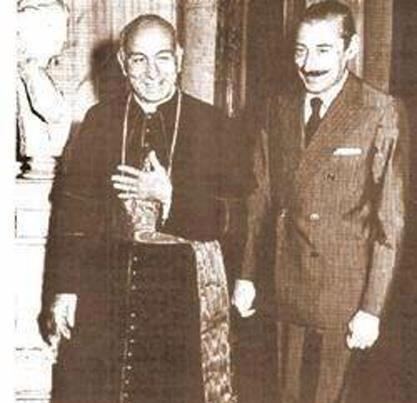
For over a week, the media has subjected the public to a tidal wave of euphoric banality on the Roman Catholic Church’s selection of a new pope.
This non-stop celebration of the dogma and ritual of an institution that for centuries has been identified with oppression and backwardness is stamped with a deeply undemocratic character. It is reflective of the rightward turn of the entire political establishment and its repudiation of the principles enshrined in the US Constitution, including the wall of separation between church and state.
What a far cry from the political ideals that animated those who drafted that document. Continue reading Jorge Mario Bergoglio: The “Dirty War” Pope
March 14, 2013 by Samuel Warde
Argentine President Cristina Fernández de Kirchner recently referred to Bergoglio as a relic of “medieval times and the Inquisition.” At the time, El Presidente was referring to the new Pope’s position on same sex marriage while serving as Archbishop of Buenos Aires back in 2010. But was that all she meant?
To understand, we need to go back to the time of the Dirty War in Argentina.
Argentina’s Dirty Wars Continue reading Is Pope Francis a Relic of ‘Medieval Times and the Inquisition’?
By Prof Michel Chossudovsky, September 25, 2015
In the course of the last two years, Pope Francis has been portrayed in chorus by the Western media as an antiwar activist and a left leaning champion of “Liberation Theology” committed to World peace and global poverty alleviation. His September 24 speech to the US Congress was described as “stunning in the breadth, depth, and conviction of its progressivism.” “If President Barack Obama had delivered the text of Pope Francis’s speech to Congress Thursday [September 24, 2015] as a State of the Union address, he would have risked being denounced by Republicans as a socialist.” Continue reading “Washington’s Pope”? Who is Pope Francis?
By MICHAEL WARREN March 14, 2013 5:47 PM
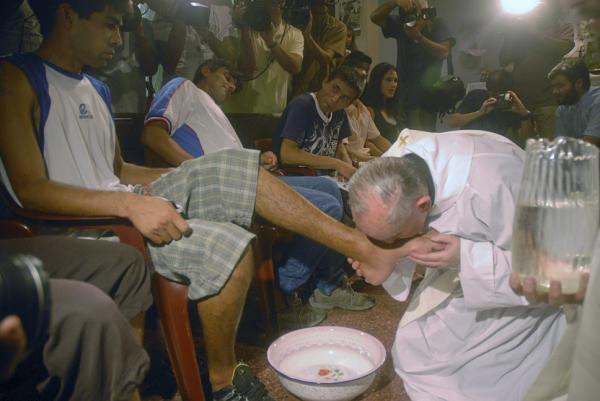
BUENOS AIRES, Argentina (AP) — It’s beyond dispute that Jorge Mario Bergoglio, like most other Argentines, failed to openly confront the 1976-1983 military junta as it kidnapped and killed thousands of people in a “dirty war” to eliminate leftist opponents.But human rights activists differ on how much responsibility Pope Francis personally deserves for the Argentine church’s dark history of supporting the murderous dictatorship. Continue reading New pope tied up in Argentina’s ‘dirty war’ debate
By LARRY ROHTER DEC. 14, 2004
BUENOS AIRES, Dec. 13 -A Chilean judge ruled Monday that Gen. Augusto Pinochet was competent to stand trial for human rights abuses that occurred during his nearly 17 years as Chile’s dictator and immediately charged him with nine counts of kidnapping and one of murder.
Judge Juan Guzmán Tapia also ordered that General Pinochet, 89, be placed under house arrest and confined to his mansion on the outskirts of Santiago, the Chilean capital. The former dictator’s lawyer, Pablo Rodríguez, accused the judge of trampling on the general’s human rights and announced that he would appeal the decision. Later Monday, General Pinochet’s defense team filed an injunction with the Santiago Court of Appeals, effectively freezing the house arrest until the court rules on it, according to Chilean news accounts.. Continue reading Chilean Judge Says Pinochet Is Fit for Trial

Read our report on conditions facing Guatemalans deported from the US.
(Information from August 2014)
Each week, an estimated 120 Guatemalan children, many unaccompanied, are arriving at the U.S. border. When they arrive in the U.S., they have already survived a long and perilous journey through Mexico, where extortion, kidnapping, rape, and murder are common; many survive these horrors only to die crossing the U.S. desert. Often these children make the journey north not by choice but because they face daily violence and life-threatening poverty; some are literally running for their lives. In a study by the UNHRC, almost 40% of Guatemalan children interviewed who had entered the U.S. unaccompanied and undocumented raised international protection concerns due to violence in society or abuse in the home; close to 30% spoke of deprivation.
In the face of this humanitarian crisis, the Guatemala Human Rights Commission/USA (GHRC) calls for the U.S. government to treat all migrants with dignity, and accept its legal and humanitarian responsibilities to protect refugee children and youth.
The root causes of forced migration in Guatemala are linked to a complex set of factors that include rampant violence, acute poverty, corruption and high rates of impunity — conditions long exacerbated by U.S. policies. GHRC condemns misguided or inhumane responses, such as expedited deportations, that will not only send children back to situations of dire violence, but will also contribute to a cycle of forced migration. Instead, the U.S. response must include deeper analysis of these root causes, including our own role in exacerbating forced migration.
GHRC calls for a humane U.S. response, in line with international protection obligations, to address the immediate needs of children and vulnerable populations.
GHRC calls for a long-term strategy that addresses the root causes of migration and focuses on helping people to stay in their communities, instead of a militarized or “mano dura” enforcement approach that will only provoke further fear and instability.
U.S. policies in the region have been a significant factor contributing to decades of forced migration from Guatemala.
GHRC has documented conditions in Guatemala for over three decades, during which time forced migration has been inextricably linked to social and political factors rooted in historic poverty, inequality and state-sponsored violence – conditions aggravated by U.S. policies, particularly over the last 60 years.
After backing a coup against Guatemala’s democratically elected president in 1954, the U.S. supported the reversal of democratic reforms for economic equality and, for the next forty years, funded, trained and supported the brutal violence unleashed against Guatemala’s civilian population. During Guatemala’s internal armed conflict, which reached the peak of brutality in the early 1980s, over one million people were forcibly displaced, and an estimated 200,000 fled to Mexico, the U.S. and other countries as war refugees.
The long-term legacy of this violence is complex and includes family and community disintegration, high rates of generalized violence, outmigration, and a myriad of related social problems. These challenges were not resolved with the signing of the 1996 Peace Accords and instead have become more acute over the past decade. A history of violence and impunity has also contributed to structural violence, as well as high levels of domestic violence, organized crime, corruption, and weak state institutions. These conditions often violate the universal right to life, liberty and security.
The U.S. response to post-war instability and violence in the region has in large part exacerbated the factors that contributed to forced migration.
1) The U.S. continues to fund security policies in Guatemala that have failed to reduce generalized violence in the region and, in some cases, has reduced Guatemalans’ sense of security. Bilateral and regional assistance has increased steadily from 2008 to today, including over 100 million dollars of security assistance to Guatemala through the Central American Regional Security Initiative (CARSI).
Over this same period, violent crime in the Northern Triangle (Guatemala, Honduras and El Salvador) has escalated and the region now has one of the highest homicide rates in the world. Guatemalan women suffer particularly high rates of domestic and sexual violence. In 2013 Guatemala registered the second highest rate of femicide [1]; over 50% of migrants from Guatemala that year were women [2] and GHRC has supported numerous asylum cases of women who fear persecution and violence if forced to return.
While U.S. support for the International Commission against Impunity in Guatemala (CICIG) has been important, aid to Guatemalan security forces has not succeeded in reducing overall levels of organized crime. Organized criminal networks continue to operate freely throughout Guatemala, trafficking drugs, guns, and human beings. Gangs control entire sections of Guatemala City and other urban areas through extortion, forced recruitment, and other acts of intimidation and violence.
Children are the most vulnerable of all. Every 17 hours a child or teen dies from gun violence. And every two hours a child younger than five years of age dies of preventable causes [3]. Children suffer widespread abuse, sexual exploitation, prostitution, and forced marriage [4]. Where gangs are present, children and youth are specifically targeted for forced recruitment and threatened with severe retaliation if they refuse to join gangs and perform criminal activities or serve as coerced sexual partners [5].
The Guatemalan government is often unable to offer its citizens protection from violence. Impunity for all crimes is one of the highest in the western hemisphere, and impunity for crimes committed against women, children and other vulnerable populations can reach 98%. The police are undertrained, understaffed, underpaid, and often corrupt. Rather than focus on reforming the civilian police, Guatemala has increasingly relied on the military for law enforcement, a strategy that has proven ineffective and, in many cases, counterproductive.
Moreover, there are credible allegations of collaboration between organized criminal groups and members of the Guatemalan military and police [6], as well as police and military involvement in serious crimes [7], exacerbating impunity and denying victims the right to security and justice. Such abuses are often not investigated or prosecuted.
The infiltration of Guatemala’s security forces by organized criminal networks also leads to concerns that ongoing U.S. aid to these institutions inadvertently strengthens the very groups it seeks to combat, and ultimately increases the risk of violence and human rights abuses against vulnerable populations.
2) U.S. economic policies have reinforced poverty and undermined employment opportunities, both of which continue to be important push factors for forced migration. According to the UNDP, more than 51% of Guatemalans live in poverty, with 17% surviving on less than US $1.25 per day [8]. Over half of children under age five suffer from stunting due to malnutrition and 23% of the entire Guatemalan population is undernourished. Chronic under-nutrition in indigenous areas reaches 70% [9].Guatemala continues to be one of the lowest spenders on social programs of any country in Central America, and many Guatemalans lack of access to basic healthcare, social services, and education.
U.S. economic policies such as the Central America-United States Free Trade Agreement (CAFTA) have further contributed to impoverishment and economic instability at the community level. CAFTA has failed to provide sustainable economic opportunity. Steady, long-term employment in many regions is few and far between; 75% of working people are employed in the informal sector, with no job benefits or security, and no guarantee of earning the minimum wage [10].
Many people in rural communities are heavily dependent on subsistence agriculture. CAFTA has increased the trade imbalance between the U.S. and Guatemala and imports of U.S. subsidized crops have undercut local markets [11], forcing people to find work elsewhere, including in the United States. Meanwhile, labor violations and abuse in the workplace are an ongoing reality for those employed in the textile and service sectors. The open CAFTA complaint against Guatemala, filed by U.S. and Guatemalan labor unions in 2009 for the government’s failure to address persistent and systematic labor rights violations, has not produced any results [12].
The U.S. has done little to address conflict in many rural and indigenous communities, which has spiked due to the rise of international investment in mining, hydroelectric power, petroleum extraction, and other large-scale commercial agriculture. These land-intensive projects create few jobs and leave immense environmental devastation in their wake. By means of community referendums Guatemalans have expressed their overwhelming opposition to this model of imposed “development,” yet the Guatemalan government has refused to recognize the results of these plebiscites and has even questioned their legitimacy. Meanwhile the government has neglected to carry out its own consultations with the indigenous populations affected by these projects, in direct violation of obligations under international law. Instead, the Guatemalan government has relied on repressive policies and, in some cases, martial law, to protect the economic interests of transnational companies rather than the safety of its citizens. Facing displacement, contaminated water, polluted environments, and repression from the government, Guatemalans may be forced to seek their livelihoods elsewhere.
3) The U.S. has not done enough to protect human rights defenders, many of whom are working to improve social and economic conditions at home. Those who seek to address root causes of migration – including violence, impunity, land rights and economic inequality – face defamation, persecution and targeted violence. In 2013, Human Rights Defenders Protection Unit of Guatemala documented 18 assassinations of human rights defenders. That same year, the International Trade Union Confederation called Guatemala the most dangerous country in the world to be a trade unionist, citing 68 documented assassinations of trade unionists since 2007. Suspects have been arrested in only one of the murder cases [13].
[1] UN Human Rights Council, Update Paper, World Model United Nations 2013. See also “Guatemala es el segundo país del mundo con más casos de femicidios, según ONU” lainformation.com, November 20, 2012. Available online at http://noticias.lainformacion.com/asuntos-sociales/conducta-abusiva/guatemala-es-el-segundo-pais-del-mundo-con-mas-casos-de-femicidios-segun-onu_qrUtoDkn9B83D3LYp9OGD7/.
[5]See, for example: Marked for Death: The Maras of Central America and those who Flee their Wrath, Jeffrey D. Corsetti, 20 Geo. Immigr. L.J. 407, 2005-2006. Available online at http://www.uscrirefugees.org/2010Website/5_Resources/5_3_For_Service_Providers/5_3_9_Gangs/MarkedForDeath_Part1.pdf
[6] Gonzalez, Rosmery Austria deniega permiso de venta de armas a gobierno de Otto Pérez, El Periodico, (May 2, 2014) available online at http://elperiodico.com.gt/es/20140502/pais/246662/
[7] U.S Department of State, Country Reports on Human Rights Practices for 2013
[8] UN Human Development Report 2013.
[9] World Food Program. “Guatemala.” 2013. Available at http://www.wfp.org/countries/guatemala
[10] Taken from World Bank at http://www.voxxi.com/latin-american-workers-swallowed-by-informal-employment-low-wages/
[11] See reports from the Stop CAFTA Coalition from 2006, 2007, 2008. Available online at http://www.ghrc-usa.org/resources/publications/other-publications/.
[12] See http://www.aflcio.org/Blog/Global-Action/Enforcement-Plan-Fails-to-End-Murders-Violence-Against-Trade-Unionists-in-Guatemala
[13] See http://es.panampost.com/marcela-estrada/2014/06/04/guatemala-tras-anos-de-impunidad-en-homicidios-de-68-sindicalistas-detienen-a-primeros-tres-sospechosos/
Source: ghrc-usa.org
STATISTICS ON BASIC CONDITIONS IN GUATEMALA:• Guatemala is one of the lowest spenders on social programs of any country in Central America: the national budget invests approximately 3% in education, 1% on health and 0.4% on housing.• Over 50% of children are chronically malnourished; chronic under-nutrition in indigenous communities is an estimated 70%.• 60% of the population lives on less than US $2/day. 26% of the population lives in multidimensional poverty.• 75% of working people are employed in the informal sector, with no job benefits or security, and no guarantee of earning the minimum wage.• The homicide rate of almost 40 murders per 100,000 inhabitants is one of the highest in the world.• 748 women suffered violent deaths in 2013, an average of 2 every day, which is a 10% increase from 2012. The impunity rate for these cases is 98%.• 68 labor activists have been killed since 2007, making Guatemala the most dangerous country in the world to be a trade unionist.• At least 54 drug trafficking organizations reportedly operate within the country.
Nueva York — El relato parece extraído de las historias de horror de Edgar Allan Poe, E.T. Hoffman, Guy de Maupassant o Bram Stoker.O más, de las transcripciones de los interrogatorios brutales en los campos nazis deconcentración de Dachau o Treblinka. Pero no lo es.
Tampoco es ficción de un literato dedicado a provocar estremecimientos de terror e insomnio en sus lectores. Es, simplemente, una página arran cada de la tragedia vivida en las ergástulas de las dictaduras militares de los años 70, instauradas, alegadamente, para defender la libertad y la democracia, amenazadas por la insurgencia de pueblos anhelantes de justicia social. La página siniestra vivida hace tres décadas por Luz de las Nieves Ayress Moreno, chilena, una activista comunitaria que reside desde hace 12 años en Nueva York, toma actualidad cuando una Comisión de la Verdad en Chile, acaba de entregar al presidente Ricardo Lagos un informe sobre la tortura ejercida por el régimen militar que encabezó por 17 años el general Augusto Pinochet Ugarte, quien, en una entrevista para una cadena de televisión hispana, en 2003, su autocalificó como “un ángel bueno”.
Lagos declaró sentirse “asqueado” de la lectura y el general Manuel Contreras, jefe la DINA, la policía política de Pinochet, dijo a los medios de prensa que “en la Dirección de Inteligencia Nacional no hubo ninguna política de tortura ni tampoco de detener gente para asesinarla, ni cosas por el estilo”.
Las reaccion es a esta declaración fueron desde la calificación de “cín i cas y perversas” hasta la de la ex ministra de Defensa, Michelle Bachelet, sobreviviente de las torturas en Villa Grimaldi, quien acusó a Contreras de ser “un cara de palo”.
Nieves Ayress tenía 23 años y era, según su relato, una joven estudiante que había sido influida, como casi todos los jóvenes de su generación, por la Revolución Cubana, el movimiento hippie, las reformas sociales, la guerra de Vietnam y los movimientos juveniles contestatarios de Francia que encabezaba Daniel Cohn Benditt o “Danny, el rojo”=. Lo que queríamos era un mundo más humano y igualitario, por eso me afilié al Ejército Nacional de Liberación en Bolivia en 1968 y trabajé con mujeres y niños en varias poblaciones pequeñas. Yo no maté a nadie, no robé, no cometí ningún delito. Mi pecado era ser joven, y apenas derrocado Allende los militares y los extremistas de derecha sospechaban de todo aquel que fuera joven” dice Nieves alinicio de su charla.
Su testimonio discurre fluido, haciendo difícil para su interlocutor conservar el pulso y la presión arterial normal al escuchar el lúgubre relato.
“El día del golpe yo estaba en casa. Sabíamos que la insurrección militar venía porque en mi familia se hacía política. Mis abuelos fueron los que junto a Recabarren fundaron los movimientos revolucionarios en Chile; mis padres, Virginia Moreno y Carlos Ayress, fundaron junto a Salvador Allende el Partido Socialista”.
“Mis cinco hermanos y yo pertenecimos siempre a movimientos sociales. El día 11 de septiembre de 1973 nos fuimos al barrio pobre de La Legua donde se produjeron enfrentamientos con los militares. Una semana después fui detenida por primera vez y llevada al Estadio Nacional. Estuve detenida por dos semanas y empecé a ser torturada. Permanecí enclaustrada en una torre, sola, y desde allí veía los golpes y las torturas a otros presos. Me pusieron en libertad sin darme ninguna explicación pero en enero de 1974 caí por segunda vez a órdenes de la DINA que dirigía el general Manuel Contreras.
Cuando me detuvieron yo estaba en la fábrica de mi padre. Me esposaron y me llevaron a la casa de nuestra familia en San Miguel y detuvieron también a mi padre, Carlos Ayress, y a mi hermano Tato. De allí me condujeron a un centro de torturas en el número 38 de la calle Londres, donde permanecí dos semanas sola e incomunicada y fui tratada salvajemente. Las torturas incluían golpes, choques eléctricos a las partes más sensibles del cuerpo como ojos, senos, ano, vagina, nariz, oídos y dedos. Un método muy común era el que ellos llamaban ‘pau de arara’, introducido por torturadores br
asileños que experimentaron con nosotros. Este consistía en amarrarnos de pies y manos y colgarnos cabeza abajo. En esa posición nos aplicaban choques eléctricos en el ano. Otra forma era ‘el teléfono’. Nos golpeaban con fuerza y simultáneamente los oídos. Desnuda y encapuchada fui torturada en presencia de mi padre y hermano e intentaron que tuviera relación sexual con ellos. También me obligaban a presenciar como torturaban a mi padre y de otros amigos que se encontraban presos. En los baños de la prisión de la calle Londres fui repetidamente violada”.
“Aunque no supe quienes eran mis torturadores en ese sitio, por sus voces pude entender que eran argentinos y paraguayos quienes me convencieron que estaba en Buenos Aires. En una sesión de torturas sufrí un colapso cardíaco. Los verdugos se asustaron y pidieron unas medicinas a un sitio de la calle Arturo Pratt. Fue así como supe que estaba en Santiago”. “Calculo que fue en febrero de 1974 cuando me llevaron a otra prisión en Tejas Verdes donde estuve incomunicada. Este era otro sitio de entrenamiento de torturadores y los recuerdos que tengo son de absoluta brutalidad. Me forzaron a realizar actos sexuales con un perro que había sido especialmente preparado para este tipo de abuso. También colocaban ratas dentro de mi vagina y luego me daban choques eléctricos. Las ratas, desesperadas, hundían sus garras en mi interior. Se orinaban y defecaban en mi cuerpo. Después me inocularon el virus de la toxoplasmósis. Fui violada constantemente y forzada a tener sexo oral con mis captores. Me cortaron las capas superficiales del vientre con un cuchillo y las orejas. Luego me ponían alcohol en las heridas y me aplicaban corriente eléctrica. Toda vía pueden verse las cicatrices en mi cuerpo. Me introdujeron botellas de Coca Cola por el ano y me gritaban ‘Esto es para que sientas el Imperio’”.
“El general Manuel Contreras ha declarado hace pocos días que en la DINA nunca se torturó a nadie. Yo puedo decir que en una ocasión fui torturada por el propio Manuel Contreras y una mujer alemana que estaba presa, de quien decían que nos parecíamos y debíamos ser hermanas. A Contreras lo pude ver porque la venda que cubría mis ojos estaba floja. Después lo reconocí en fotografías”. “Un ex agente. Samuel Fuenzalida Devia, declaró a un diario digital chileno que el general Manuel Contreras, quien acaba de ser condenado en su país a 12 años de prisión, supervisaba las torturas en Londres 38”.
“A las mujeres se les aplicaba corriente en los genitales y en los senos. También eran quemadas con cigarrillos”, dijo Fuenzalida y agregó que Contreras le dijo en una ocasión que “debía estar orgulloso de pertenecer a la DINA”.
“En abril de 1974, cuando había sido llevada a la Cárcel de Mujeres de la calle Vicuña Mackenna, que estaba administrada por una orden de monjas, caí en cuenta que estaba embarazada. Un doctor de apellido Mery, militar que ejercía en la Universidad Católica, me confirmó el embarazo y me dijo que yo debía estar orgullosa de tener ‘un hijo de la patria’, es decir un producto de violaciones de los militares. Mi situación causó una gran controversia internacional pues mi madre y toda mi familia había denunciado mi prisión y torturas. Fui entrevistada por la Cruz Roja Internacional, Amnistía Internacional, Comisión Kennedy, Comisión de Derechos Humanos de la OEA, el cardenal Silva Enríquez y esposas de los militares. Me ofrecieron la libertad si no denunciaba las violaciones y el embarazo. Las monjas ofrecieron ayudarme para pedir un permiso que me permitiera abortar. Tenía que elevar una solicitud al cardenal y éste elevarla al Papa. En Chile el aborto era penado por la ley y yo estaba en muy mala condición física, muy débil, así que decidí tener el hijo. Después de haber sobrevivido a tanto tiempo de detención y crueles maltratos, no iba a dar a los militares el gusto de morirme. Sin embargo en mayo tuve un aborto espontáneo pero no recibí atención médica ni medicinas”.
“De Vicuña Mackenna me llevaron a Tres Álamos, otro campo de concentración. Fui sometida nuevamente a violaciones, amenazas y hasta un simulacro de fusilamiento. En diciembre de 1976 salí expulsada de Chile junto a 17 presos políticos entre los que estaban mis compañeros Víctor Toro, Gladys Díaz, el doctor Luís Corbalán. El decreto de expulsión señalaba que no podíamos volver jamás a nuestra patria. Con la solidaridad de mucha gente conseguí quedarme a vivir en Berlín”.
“A fines de 1977 fui a Cuba. En el hospital Calixto García, sin tener que pagar un centavo, me trataron de la toxoplasmosis, me reconstruyeron la vagina y todo mi cuerpo para que pudiera engendrar, me trataron las infecciones vaginales, la descalcificación y la sordera provocada por ‘el teléfono’, me arreglaron las cicatrices del cuerpo y las orejas y me operaron los pies deformados por el maltrato. También me dieron terapia psicológica en una muestra de solidaridad de los cubanos imposible de pagar”.
“Pese a todo lo que me hicieron los sicarios de Pinochet pude sobrevivir. Tengo aún secuelas psicológicas por todo lo que me tocó vivir. Siento dolor permanente en el cuello, las manos, las rodillas y los pies; tengo marcas y cicatrices en todo mi cuerpo. Cuando veo una rata siento un dolor reflejo en la vagina. Siento ansiedad, pesadillas y depresión. He superado algunas de esas secuelas, por ejemplo el miedo al encierro surgido por las violaciones que sufrí en el baño de la prisión de la calle Londres, pero sigo siendo muy sensible emocionalmente. Mi familia fue dividida, destruida y toda mi vida cambió después del golpe militar”.
“Pero, al fin, yo estoy aquí, resucitada. Con mi esposo, Víctor Toro, preso y torturado igual que yo, tenemos una hija, Rosita, quien estudia en la Universidad de Nueva York. A los 21 años regresé a Chile con ella, y pude decir a mis torturadores militares: ¡Aquí estoy yo y aquí está mi hija. Me torturaron pero no me destruyeron, no me jodieron por que tuve una hija!”.
(*) Nieves Ayress enfatiza que su testimonio no persigue ninguna compasión. Sólo consignar
un ejemplo para que los sucesos de Chile, no se repitan nunca.
©CEME web productions 2005
Never forget these crimes. The devil walks the earth.



















 The Loud Cry
You must be logged in to post a comment.