All posts by The Loud Cry

Description Bible prophecy is being fulfilled daily. John the Baptist cried in the wilderness before the arrival of our Lord Jesus Christ in 27AD. Then, the Jewish religions failed to recognise their messiah. Almost 2000 years later, The Loud Cry urges the people of the world to turn to God, in a universal "Call To Repentance," Will world religions fail to see the world's redeemer at His Second Advent? [See the Three Angel's Messages(Rev 14:6-13)] Jesus died for the sins of the world. Repent of your sins to God, accept Jesus as your Lord & Saviour and sin no more. "Put them in fear, O LORD: that the nations may know themselves to be but men. Selah." (Psa 9:20) "And we know that we are of God, and the whole world lieth in wickedness. And we know that the Son of God is come, and hath given us an understanding, that we may know him that is true, and we are in him that is true, even in his Son Jesus Christ. This is the true God, and eternal life." (1Jn 5:19-20)

Morality Is The Basis Of Understanding

From ‘Role Of Morality’ a chapter of ‘A Study Of Our Decline’ by P Atkinson (January 2004)

Intelligence Is The Special Power Of Humanity

It is generally recognised that intelligence is the commodity that gives humanity its power over all other creatures, but what is not generally understood is the dependence of this facility upon a necessary foundation of unquestioned values. To grasp the meaning of any event requires using reason to apply our set of values to arrive at an interpretation of what occurred. That is, was a man’s death a good or a bad thing? Was the event an accident, a crime or the execution of justice? Our judgement must reflect our set of values. So all understanding arises from a basic set of values, or morality, which has to be part of every creature before they can understand anything.

Intelligence Allows Understanding But This Must Reflect A Morality

Because some values are supplied as part of all life, we forget that they are a value. Survive, eat, seem so obvious that such considerations seem part of the physical nature of life rather than a set of values, but this only emphasises the necessity of such values, for without them no life could exist. The combination of an ability to reason and a morality against which reason can be applied, is the essential requirements for perception.

Reason Needs Morality Like A Lever Needs A Fulcrum

Morality and reason are like a lever and a fulcrum; they can only function if they are both present. Just as a lever cannot be used to move anything unless there is a fulcrum to support the lever, reason cannot be applied unless there is a foundation of values to supply understanding. This makes the combination of reason and morality an essential part of all living things, including bacteria, insects and people.

A definition of life — “I think therefore I am alive

In other words all living things must have an understanding, which guides their behaviour, hence thinking is an essential part of being alive. The philosopher Reneé Descartes (1596-1650) stated “I think therefore I am” which is not quite correct. If a person dies and hence stops thinking, they still are, even if it is just as a corpse, and it is clear that things exist even though they do not think. Descartes words should have been “I think therefore I am alive“.

Morality Must Form Before Understanding

Morality must precede understanding because understanding can only develop after the underlying values have been formed. So the early values are the most important as they become the parent of all subsequent values; later additions though made with a more adult mind, must incorporate previous decisions as those prior decisions are beyond the force of reason. This arbitrary set of beliefs is the morality of the individual, beyond threat, promise or argument, and determines the way they see reality.

Morality Is Permanent

Morality cannot be changed by reason because to use your reason immediately means applying your values, which are your morality. This makes it impossible for people to change their founding morality. They may wish others to think they have changed their morality, but they are powerless to alter a single basic value, they cannot change their intentions, only their behaviour. A selfish person may wish to be thought unselfish but they can only form this desire if they are selfish, and nothing can reverse this crucial and early value.

Creating Human Values

In humans the set of values supplied at birth are extended by experience and upbringing; primitive instincts are built upon to form a sophisticated and complex set of beliefs. The strongest of these additions are formed in the first seven years of life (see “Early Warning On Character’ by Yvonne Martin The Sunday Mail, 16/5/1999”) and become the immutable foundations of personality.

Learnt Values Are Immutable

Imbuing values into children is like loading the software into a computer, however, unlike computers, with people it is an irreversible affair. Once the rules are set, they are set for life. Resulting behaviour may be changed, but not the driving motivations of the individual. Some people believe they can reverse a particular private value by reason or experience, but this is like claiming once the house is built the foundations can be changed; it is impossible but this myth is supported by the difficulty people have in realising their own basic values.

Our Own Basic Values Hard To Realise

My daughter was happy to inform me that a friend had just changed her mind about the death penalty. A sudden intimate association with violent crime had changed resistance into enthusiasm for capital punishment. Such a change in attitude, my offspring claimed, was experience moulding values, demonstrating that values could be altered. But in reality the initial declared value, opposing sentence of death, was incomplete. The girl had always believed that no one should be executed by the law unless private experience revealed crime posed a real threat to her own survival; the latter part of the belief being exposed only by events.

Simple Examples Of Immutable Values

An impression gained in early childhood that women cannot be trusted will not be changed by adult arguments that such a failing is only present in some women, or subsequent wide experience to the contrary. Mistrust will never be dispelled; the adult will merely expect their belief to be confirmed sooner or later. Much like being optimistic or pessimistic, the invariably random nature of events will have little lasting impact upon such attitudes; the optimist will keep expecting the best, and vice-versa. Just as those who buy lottery tickets cannot be dissuaded by rational explanation of the remoteness of success, nor by long experience of losing. They feel that next time they could well win. Personal beliefs—the morality of the individual—are not just the guiding forces of character and the interpreter of our experiences but they are immune to reason or experience.

Understanding Is Values + Reason

The combination of unchangeable values and reason are the mechanism of understanding for that is the way we recognise good and bad. Or as David Hume put it in his ‘Treatise on Human Understanding ‘:

So that when you pronounce any action or character to be [virtuous or] vicious, you mean nothing, but that from the constitution of your nature you have a feeling or sentiment of [approval or] blame from the contemplation of it. —(Bk iii, pt I, sect. I.)

And this is true not just for individuals but groups. It is the set of values (morality) adopted during infancy that dictate the nature of the adult understanding — the individual’s character; and the nature of the community’s understanding —its culture.

Basic Values Dictate The Strength Of An Understanding

As understanding is values and reason, and reason is mainly the exercise of a facility to connect cause and effect, which is almost mechanical, so reason must be considered the servant of values. Hence it is the set of values that control an understanding and so decide its strength. The significant difference between the understanding of the early Romans and their neighbours (a subject that so fascinated Polybius (200-118 B.C.) a Greek statesman, that he wrote a book The Rise Of The Roman Empire) was that of basic values (morality). The various peoples surrounding those ancient builders of civilization had the same ability to reason, access to the same technology and resources, but they became the vanquished as the Roman army conquered the world. The discipline and organisation allowed by Roman understanding created something that was superior to anything ever before seen in the world. The health, wealth and prosperity of humanity were hugely improved just by the appearance of the set of values making up Roman morality.

Roman Civilization Was Roman Understanding

Roman civilization was Roman understanding, which was founded upon Roman values. All civilizations are in effect a set of values, or morality. And like all civilizations, Ancient Rome thrived when it adhered to its basic values, it fell when it discarded them. Western Civilization is an understanding based upon the morality outlined in the bible, and it’s our adherence to this morality that controls the strength of our civilization.

Morality Is A Set Of Values Which Form The Basis Of An Understanding

There can be no intelligence, artificial or organic, that can exist without a set of values. It is an essential part of every creature’s mind, as it must be formed before that creature can use reason—understand. And this set of values is the Morality of the creature. Hence for us, Morality is not just a set of values, but a vital and permanent part of ourselves, formed in childhood before the age of reason, which dictates how we understand the world.

Evidence That UN Secretary General Kofi Annan Betrayed The West For Money

‘Why The UN Isn’t A Solution’ by Phyllis Schlafly (May 26, 2004)
Cited by Persecution Of The Dutiful by P Atkinson

Because of the hardships on Iraqi children from the sanctions imposed on Iraq after the Persian Gulf War, beginning in 1996 Iraq was allowed to sell limited amounts of oil to finance the purchase of goods and medicines for humanitarian purposes. This Oil-for-Food program was supposed to be under tight UN supervision, but the UN was the fox guarding the chicken coop.

The UN collected a 2.2 percent commission on every barrel of oil to pay for overseeing a flow of funds that totaled at least $67 billion, a task administered by ten UN agencies employing 1,000 staff. That was just the start of the giant Oil-for-Food rip-off.

The evidence is now pouring in that more than $10 billion in bribes and kickbacks were siphoned off under the noses of the UN monitors. Oil-for-Food was a giant scam that allowed Saddam Hussein to divert that incredible sum to finance his lavish lifestyle and to buy friends to keep himself in power.

The UN had no effective mechanisms of accounting or disclosure, and there never was any audit. Everything was secret: the price and quantity of the oil and of the goods for relief, the identities of the oil buyers, the quality of the food and medicines, the bank statements, and all financial transactions.

General Tommy Franks called the program Oil-for-Palaces. Others called it UNScam. But Saddam’s personal pocketing of an estimated $5 billion was only part of the racket; the rest of the illegal money financed a system of bribes to buy international support for his corrupt regime.

Now we know why the UN, and especially France and Russia, opposed our goal of toppling Saddam. It wasn’t because they are anti-American; it was because they were the chief beneficiaries of these secret deals with Saddam and they didn’t want to turn off the money spigot.

From 1996 to 2002, Oil-for-Food was a cover that invited and sustained huge transfers of corruption-laden transactions between Iraq and major UN members, particularly Russia, France and China. Their profitable party would still be going on if the United States hadn’t kicked Saddam out of power.

Here is how the scam worked. Saddam selected individuals, corporations and political parties to receive oil allotments at steep price discounts, which were then sold at the market price. Their part of the deal was to kick back a generous percentage of the profits to Saddam and to help keep him in power by giving him political support in the UN and elsewhere.

UN Secretary General Kofi Annan was a chief negotiator with Saddam. Annan’s secretariat collected fees of $1.4 billion to monitor, administer and audit the program, keep the records, and interact with Saddam, plus another $500 million for weapons inspection.

Annan picked UN Assistant Secretary General Benon Sevan to be Oil-for-Food’s executive director and report directly to him. He served for six years.

The Iraq Oil Ministry has now released a list of 270 companies and politicians from 46 countries, especially Russia and France, that profited from this scheme. The list includes former Iraqi officials, a former French Cabinet minister, a British member of Parliament, Benon Sevan who ran the program, a company with which Kofi Annan’s son was associated, and other UN personnel who were supposed to be monitoring the contracts.

The smoking gun is a letter to the former Iraqi oil minister obtained by ABC News. It describes the specifics of one deal that would have generated a profit of $3.5 million.

Some of the food delivered, mostly from Russia, was unfit for humans, and medicines were often out of date. Saddam also handed out vouchers instead of cash for other goods imported illegally in violation of UN sanctions.

The excuse for this program was an alleged desire to provide for needs of Iraqi people, but the people had no say in who bought or sold goods or food, what was bought, how it was distributed, or anything else. The deal was between the UN and Saddam.

Five investigations of what is probably the biggest financial fraud in history are now in progress. Two are by the U.S. House, one by the Senate, one by the Iraqi Governing Council, and one authorized by the UN and headed by former Federal Reserve Chairman Paul Volcker. A UN Security Council resolution calls on the 191 UN countries “to cooperate fully,” but much cooperation is unlikely since Volcker has no subpoena power.

The Folly Of The United Nations (U.N.) Peacekeeping

by Dale Van Atta
Readers Digest, November, 1995

Not only have its efforts to bring peace often been failures, but the organisation itself is riddled with waste, fraud and abuse.

AS THE United Nations approaches its fiftieth anniversary this year, Reader’s Digest assigned Roving Editor Dale Van Atta to examine U.N. operations and effectiveness. For four months he interviewed dozens of officials and poured over U.N. budget documents and confidential files. He found an institution in critical need of reform.

This article, on the U.N.’s peacekeeping operations; is the first of two reports. Part 2 will appear next month.

Sonja’s Kon-Tiki Café is a notorious Serbian watering hole ten kilometres north of Sarajevo. While Serb soldiers perpetrated atrocities in nearby Bosnian villages, local residents reported that U.N. peacekeepers from France, Ukraine, Canada and New Zealand regularly visited Sonja’s, drinking and eating with these very same soldiers — and sharing their women.

The women of Sonja’s, however, were actually prisoners of the Serb soldiers. As one soldier, Borislav Herak, would later confess, he visited Sonja’s several times a week, raping some of the 70 females present and killing two of them.

U.N. soldiers patronised Sonja’s even after a Sarajevo newspaper reported where the women were coming from. A U.N. spokesman excused the incident by saying no-one was assigned to read the newspaper. The U.N. soldiers who frequented Sonja’s also neglected to check out the neighbourhood. Just over 60 metres away, a concentration camp held Bosnian Muslims in inhuman conditions. Of 800 inmates processed, 250 disappeared and are presumed dead.

Tragically, Sonja’s Kon-Tiki illustrates much of what has plagued U.N. peacekeeping operations: incompetent commanders, undisciplined soldiers, alliances with aggressors, failure to prevent atrocities and at times even contributing to the horror. And the level of waste, fraud and abuse is overwhelming.

Until recently, the U.N. rarely intervened in conflicts. When it did, as in Cyprus during the 1960s and ’70s, it had its share of success. But as the Cold War ended, the U.N. became the world’s policeman, dedicated to nation building and peacekeeping. By the end of 1991, it was conducting 11 peacekeeping operations at an annual cost of $615 million. In three years, the numbers rose to 18 operations and $3.3 billion — with Australian taxpayers paying 1.5 per cent of the bill.

Have the results justified the steel cost? Consider the U.N.’s top four peacekeeping missions:

Bosnia In June 1991, Croatia declared its independence from Yugoslavia and was recognised by the U.N. The Serbian-dominated Yugoslav army invaded Croatia, ostensibly to protect its Serbian minority. After the Serbs agreed to a cease-fire, the U.N. sent in a 14,000-member U.N. Protection Force (UNPROFOR) to build a new nation. (The mission has since mushroomed to over 40,000 personnel, becoming the most extensive and expensive peacekeeping operation ever.)

After neighbouring Bosnia declared its independence in March 1992, the Serbs launched a campaign of “ethnic cleansing” against the Muslims and Croats who made up 61 per cent of the population. Rapidly the Serbs gained control of two-thirds of Bosnia, which they still hold.

Bosnian Serbs swept into Muslim and Croat villages and engaged in Europe’s worst atrocities since the Nazi Holocaust. Serbian thugs raped at least 20,000 women and girls. In barbed-wire camps, men, women and children were tortured and starved to death. Girls as young as six were raped while parents were forced to watch. In one case, three Muslim girls were chained to a fence, raped by Serb soldiers for three days, then drenched with petrol and set on fire.

While this was happening, the UNPROFOR troops stood by and did nothing to help. Designated military “observers” counted artillery shells — and the dead.

Meanwhile, evidence emerged that there was a serious corruption problem. Accounting procedures were so loose that the U.N. overpaid $2.3 million on a $28-million fuel contract. Kenyan peacekeepers stole 95,000 litres of fuel and sold it to the Serbs.

Corruption charges were routinely dismissed as unimportant by U.N. officials. Sylvana Foa, then spokesperson for the U.N. Human Rights Commission in Geneva, said it was no surprise that “out of 14,000 pimply 18-year-olds, a bunch of them should get up to hanky-panky” like blackmarket dealings and visiting brothels.

When reports persisted, the U.N. finally investigated. In November 1993 a special commission confirmed that some terrible but “limited” misdeeds had occurred. Four Kenyan and 19 Ukrainian soldiers were dismissed from the U.N. force.

The commission found no wrongdoing at Sonja’s Kon-Tiki, but its report, locked up at U.N. headquarters and never publicly released, is woefully incomplete. The Sonja’s Kon-Tiki incidents were not fully investigated, for example, because the Serbs didn’t allow U.N. investigators to visit the site, and the soldiers’ daily logbooks had been destroyed.

Meanwhile, Russian troop commanders collaborated with the Serb aggressors. According to U.N. personnel at the scene, Russian battalion commander Colonel Viktor Loginov and senior officer Colonel Aleksandr Khromchenkov attended lavish feasts hosted by a Serbian warlord called “Arkan,” widely regarded as one of the worst perpetrators of atrocities. It was also common knowledge that Russian officers directed that U.N. tankers unload petrol at Arkan’s barracks. During one cease-fire, when Serbian materiel was locked in a U.N. storage area, a Russian apparently gave the keys to the Serbs, who removed 51 tanks. Eventually, Khromchenkov was repatriated. Loginov, after finishing his tour of duty, joined Arkan’s Serbian forces.

Problems remained, however, under the leadership of another Russian commander, Major General Aleksandr Perelyakin. Belgian troops had been blocking the movement of Serb troops across a bridge in northeastern Croatia, as required by U.N. Security Council resolutions. Perelyakin ordered the Belgians to stand aside. Reluctantly they did so, permitting one of the largest movements of Serbian troops and equipment into the region since the 1991 cease-fire. According to internal U.N. reports, the U.N. spent eight months quietly trying to pressure Moscow to pull Perelyakin back, but the Russians refused. The U.N. finally dismissed him last April.

Cambodia In 1991, the China and the Soviet Union helped broker a peace treaty among three Cambodian guerrilla factions and the Vietnamese-installed Cambodian government, ending 21 years of civil war. To ease the transition to Cambodia’s first democratic government; the U.N. created the U.N. Transitional Authority in Cambodia, called UNTAC. In less than two years, about 20,000 U.N. peacekeepers and other personnel were dispatched at a cost of $2.4 billion.

Some of the Cambodian “peacekeepers” proved to be unwelcome guests — especially a Bulgarian battalion dubbed the “Vulgarians.” In northwest Cambodia, three Bulgarian soldiers were killed for “meddling” with local girls. One Bulgarian was treated for 17 different STDs. The troops’ frequent carousing once sparked a mortar-rifle battle with Cambodian soldiers at a brothel.

The Bulgarians were not the sole miscreants in Cambodia, as internal U.N. audits later showed. Requests from Phnom Penh included 6500 flak jackets — and 300,000 condoms. In the year after the U.N. peacekeepers arrived, the number of prostitutes in Phnom Penh more than tripled.

U.N. mission chief Yasushi Akashi waved off Cambodian complaints with a remark that “18-year-old hot-blooded soldiers” had the right to drink a few beers and chase “young beautiful beings.” Akashi did post an order: “Please do not park your U.N. vans near the nightclubs” (i.e., brothels). At least 150 U.N. peacekeepers got AIDS in Cambodia; 5000 of the troops came down with STDs. Meanwhile, more than 1000 generators were ordered, at least 330 of which, worth nearly $4 million, were never used for the mission. When U.N. personnel started spending the $300 million budgeted for “premises and accommodation,” rental costs became so inflated that locals could barely afford to live in their own country. Some $102 million was spent buying vehicles, including hundreds of surplus motorcycles and minibuses. When 100 12-seater minibuses were needed, 850 were purchased — an “administrative error,” UNTAC explained, that cost $10.6 million.

Despite the excesses, the U.N. points with pride to the free election that UNTAC sponsored in May 1993. Ninety per cent of Cambodia’s 4.7 million voters defied death threats from guerrilla groups and went to the polls.

Unfortunately, the election results have been subverted by the continued rule of the Cambodian People’s Party — the Vietnamese-installed communist government, which lost at the ballot box. In addition, the Khmer Rouge — the guerrilla group that butchered over a million countrymen in the 1970s — have refused to disarm and demobilise. So it was predictable that they would repeatedly break the cease-fire and keep up their killing. The U.N. has spent nearly $2.5 billion, but there is no peace in Cambodia.

Somalia When civil war broke out in this African nation, the resulting anarchy threatened 4.5 million Somalis — over half the population — with severe malnutrition and related diseases. U.N. Secretary General Boutros Boutros-Ghali, the first African (and Arab) to hold the position, argued eloquently for a U.N. peacekeeping mission to ensure safe delivery of food and emergency supplies. The U.N. Operation in Somalia (UNOSOM) was deployed to Mogadishu, the capital, in September 1992. It was quickly pinned down at the airport by Somali militiamen and was unable to complete its mission.

A U.S. task force deployed in December secured the Mogadishu area, getting supplies to the hungry and ill. After the Americans left, the U.N. took over in May 1993 with UNOSOM II. The $2.5-million-a-day operation transformed the former U.S. embassy complex into a 32hectare walled city boasting air-conditioned housing and a golf course. When U.N. officials ventured out of the compound, their “taxis” were helicopters that cost $640,000 a week.

The published commercial rate for Mogadishu—U.S. phone calls was $6.30 a minute, but the “special U.N. discount rate” was $10.78. Unauthorised personal calls totalled more than $2.5 million, but the U.N. simply picked up the tab and never asked the callers to pay.

Meanwhile, the peacekeeping effort disintegrated, particularly as warlord Mohammed Aidid harassed UNOSOM II troops. As the civil war continued, Somalis starved. But U.N. peacekeepers — on a food budget of from South America, beef from Australia and frozen fish from New Zealand and the Netherlands.

Thousands of metres of barbed wire arrived with no barbs; hundreds of light fixtures to illuminate the streets abutting the compound had no sockets for light bulbs. What procurement didn’t waste, pilferage often took care of. Peacekeeping vehicles disappeared with regularity. Egyptian U.N. troops were suspected of largescale black-marketing of minibuses.

But these losses were eclipsed in a single night by a thief who broke into a U.N. office in Mogadishu and took $5 million in cash. The office door was easy pickings: its lock could be jemmied with a credit card. The money, stored in a filing cabinet, had been easily visible to dozens of U.N. employees. While the case has not been solved, one administrator was dismissed and two others were disciplined. UNOSOM II itself was later shut down, leaving Somalia to the same clan warfare that existed when U.N. troops were first deployed two years before.

Rwanda Since achieving independence in 1962, Rwanda has erupted in violence between the majority Hutu tribe and minority Tutsis. The U.N. had a peacekeeping mission in that nation, but it fled as the Hutus launched a new bloodbath in April 1994. Only 270 U.N. troops stayed behind, not enough to prevent the butchery of at least 14 local Red Cross workers left exposed by the peacekeepers’ swift flight. The U.N. Security Council dawdled as the dead piled up, a daily horror of shootings, stabbings and machete hackings. The Hutus were finally driven out by a Tutsi rebel army in mid-1994.

Seven U.N. agencies and more than 100 international relief agencies rushed back. With a budget of some $256 million, the U.N. tried unsuccessfully to provide security over Hutu refugee camps in Rwanda and aid to camps in neighbouring Zaire.

The relief effort was soon corrupted when the U.N. let the very murderers who’d massacred half a million people take over the camps. Rather than seeking their arrest and prosecution, the U.N. made deals with Hutu thugs, who parlayed U.N. food, drugs and other supplies into millions of dollars on the black market.

Earlier this year the U.N. began to pull out of the camps. On April 22 at the Kibeho camp in Rwanda, the Tutsi-led military opened fire on Hutu crowds. Some 2000 Hutus were killed. Where was the U.N.? Overwhelmed by the presence of nearly 2000 Tutsi soldiers, the 200 U.N. peacekeepers did nothing. A U.N. spokesman informed Reader’s Digest, meekly, that the UN. was on the scene after the slaughter for cleanup and body burial.

With peacekeeping operations now costing over $3.8 billion a year, reform is long overdue. Financial accountability can be established only by limiting control by the Secretariat, which routinely withholds information about peacekeeping operations until the last minute — too late for the U.N.’s budgetary committee to exercise oversight. In December 1993, for example, the budget committee was given only one day to approve a $770-million budget that would extend peacekeeping efforts into 1994.

More fundamentally, the U.N. needs to re-examine its whole peacekeeping approach, for the experiment in nation building has been bloody and full of failure. Lofty ideas to bring peace everywhere in the world have run aground on reality: member states with competing interests in warring territories, the impossibility of lightly armed troops keeping at bay belligerent enemies, and the folly of moving into places without setting achievable goals.

“It has been a fundamental error to put U.N. peacekeepers in place where there is no peace to keep,” says Sam Nunn, a member of the US Senate Armed Services Committee.” We’ve seen very vividly that the U.N. is not equipped, organised or financed to intervene and fight wars.”

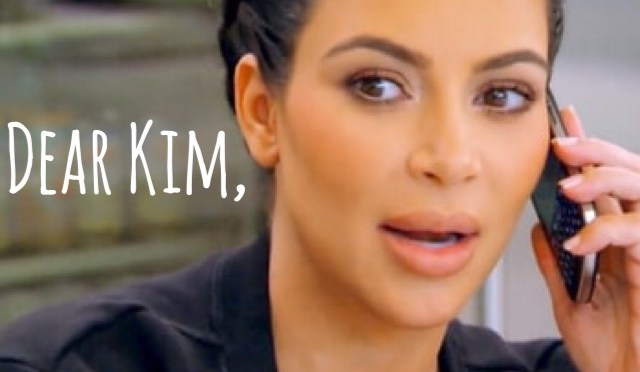
Dear Kim Kardashian West,

#WalkWithJesus

 So she discovered her whoredoms, and discovered her nakedness: then my mind was alienated from her, like as my mind was alienated from her sister. -Eze 23:18

 Who shall separate us from the love of Christ? shall tribulation, or distress, or persecution, or famine, or nakedness, or peril, or sword? -Rom 8:35

 I counsel thee to buy of me gold tried in the fire, that thou mayest be rich; and white raiment, that thou mayest be clothed, and that the shame of thy nakedness do not appear; and anoint thine eyes with eyesalve, that thou mayest see. -Rev 3:18

beautybeyondbones's avatarBeautyBeyondBones

In case you haven’t turned on your TV this week, or been online or on social media at all, then I’m sure you’ve heard about what the sweetheart of “America’s First Family” did recently.


(And please, I hope you can hear the sarcasm dripping from my lips…)

But good old’ Kim K posted a fully nude selfie on Instagram with just two minuscule black bars covering her goods.

Now. This is not going to be some bashing of Ms. Kardashian West. Frankly, she’s like cilantro: you either love her or you hate her.

I, however, am in the indifferent camp. I frankly don’t care one way or the other about her or her shenanigans.


So I’m not here to attack her.

But, this photo has caused quite the stir. I mean, even the great Bette Midler has chimed in with disapproval.

Personally, I wasn’t surprised. (Let’s remember how she got her fame…

View original post 540 more words

Francis

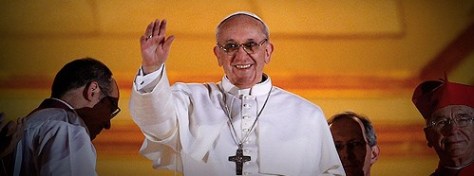
Pope Francis was born in Buenos Aires on 17 December 1936, the son of Italian immigrants.

His father Mario was an accountant employed by the railways and his mother Regina Sivori was a committed wife dedicated to raising their five children. He graduated as a chemical technician and then chose the path of the priesthood, entering the Diocesan Seminary of Villa Devoto. On 11 March 1958 he entered the novitiate of the Society of Jesus. He completed his studies of the humanities in Chile and returned to Argentina in 1963 to graduate with a degree in philosophy from the Colegio de San José in San Miguel. From 1964 to 1965 he taught literature and psychology at Immaculate Conception College in Santa Fé and in 1966 he taught the same subject at the Colegio del Salvatore in Buenos Aires. From 1967-70 he studied theology and obtained a degree from the Colegio of San José.

On 13 December 1969 he was ordained a priest by Archbishop Ramón José Castellano. He continued his training between 1970 and 1971 at the University of Alcalá de Henares, Spain, and on 22 April 1973 made his final profession with the Jesuits. Back in Argentina, he was novice master at Villa Barilari, San Miguel; professor at the Faculty of Theology of San Miguel; consultor to the Province of the Society of Jesus and also Rector of the Colegio Máximo of the Faculty of Philosophy and Theology.

On 31 July 1973 he was appointed Provincial of the Jesuits in Argentina, an office he held for six years. He then resumed his work in the university sector and from 1980 to 1986 served once again as Rector of the Colegio de San José, as well as parish priest, again in San Miguel. In March 1986 he went to Germany to write a doctoral thesis on Romano Guardini; his superiors then sent him to the Colegio del Salvador in Buenos Aires and next to the Jesuit Church in the city of Córdoba as spiritual director and confessor.

It was Cardinal Antonio Quarracino, Archbishop of Buenos Aires, who wanted him as a close collaborator. So, on 20 May 1992 Pope John Paul II appointed him titular Bishop of Auca and Auxiliary of Buenos Aires. On 27 May he received episcopal ordination from the Cardinal in the cathedral. He chose as his episcopal motto, miserando atque eligendo, and on his coat of arms inserted the ihs, the symbol of the Society of Jesus.

He gave his first interview as a bishop to a parish newsletter, Estrellita de Belém. He was immediately appointed Episcopal Vicar of the Flores district and on 21 December 1993 was also entrusted with the office of Vicar General of the Archdiocese. Thus it came as no surprise when, on 3 June 1997, he was raised to the dignity of Coadjutor Archbishop of Buenos Aires. Not even nine months had passed when, upon the death of Cardinal Quarracino, he succeeded him on 28 February 1998, as Archbishop, Primate of Argentina and Ordinary for Eastern-rite faithful in Argentina who have no Ordinary of their own rite.

Three years later at the Consistory of 21 February 2001, John Paul ii created him Cardinal, assigning him the title of San Roberto Bellarmino. He asked the faithful not to come to Rome to celebrate his creation as Cardinal but rather to donate to the poor what they would have spent on the journey. As Grand Chancellor of the Catholic University of Argentina, he is the author of the books: Meditaciones para religiosos (1982), Reflexiones sobre la vida apostólica (1992) and Reflexiones de esperanza (1992).

In October 2001 he was appointed General Relator to the 10th Ordinary General Assembly of the Synod of Bishops on the Episcopal Ministry. This task was entrusted to him at the last minute to replace Cardinal Edward Michael Egan, Archbishop of New York, who was obliged to stay in his homeland because of the terrorist attacks on September 11th. At the Synod he placed particular emphasis on “the prophetic mission of the bishop”, his being a “prophet of justice”, his duty to “preach ceaselessly” the social doctrine of the Church and also “to express an authentic judgement in matters of faith and morals”.

All the while Cardinal Bergoglio was becoming ever more popular in Latin America. Despite this, he never relaxed his sober approach or his strict lifestyle, which some have defined as almost “ascetic”. In this spirit of poverty, he declined to be appointed as President of the Argentine Bishops’ Conference in 2002, but three years later he was elected and then, in 2008, reconfirmed for a further three-year mandate. Meanwhile in April 2005 he took part in the Conclave in which Pope Benedict XVI was elected.

As Archbishop of Buenos Aires — a diocese with more than three million inhabitants — he conceived of a missionary project based on communion and evangelization. He had four main goals: open and brotherly communities, an informed laity playing a lead role, evangelization efforts addressed to every inhabitant of the city, and assistance to the poor and the sick. He aimed to re-evangelize Buenos Aires, “taking into account those who live there, its structure and its history”. He asked priests and lay people to work together. In September 2009 he launched the solidarity campaign for the bicentenary of the Independence of the country. Two hundred charitable agencies are to be set up by 2016. And on a continental scale, he expected much from the impact of the message of the Aparecida Conference in 2007, to the point of describing it as the “Evangelii Nuntiandi of Latin America”.

Source: Pontifical Academy of Sciences

Global Warming: Ten Facts and Ten Myths on Climate Change

Originally published by GR in 2009

Ten facts about climate change

1.     Climate has always changed, and it always will. The assumption that prior to the industrial revolution the Earth had a “stable” climate is simply wrong. The only sensible thing to do about climate change is to prepare for it.

2.    Accurate temperature measurements made from weather balloons and satellites since the late 1950s show no atmospheric warming since 1958.  In contrast, averaged ground-based thermometers record a warming of about 0.40 C over the same time period. Many scientists believe that the thermometer record is biased by the Urban Heat Island effect and other artefacts.

3.    Despite the expenditure of more than US$50 billion dollars looking for it since 1990, no unambiguous anthropogenic (human) signal has been identified in the global temperature pattern.

Continue reading Global Warming: Ten Facts and Ten Myths on Climate Change

Changing views of how to change the world

Homi Kharas | March 10, 2016 9:32am

europe_satelliteimage001_16x9
REUTERS/NASA – A nighttime view of Europe made possible by the ?day-night band? of the Visible Infrared Imaging Radiometer Suite (VIIRS) is seen in a global composite assembled from data acquired by the Suomi National Polar-orbiting Partnership (Suomi NPP) satellite in 2012 and released by NASA October 2, 2014 .

World leaders concluded three large agreements last year. Each represents a vision of how to change the world.

There is a common thread to these agreements. They each reflect a new theory of how to change the world that is not made explicit but has evolved as a matter of practice. Understanding this new theory is crucial to successful implementation strategies of the three agreements. Continue reading Changing views of how to change the world

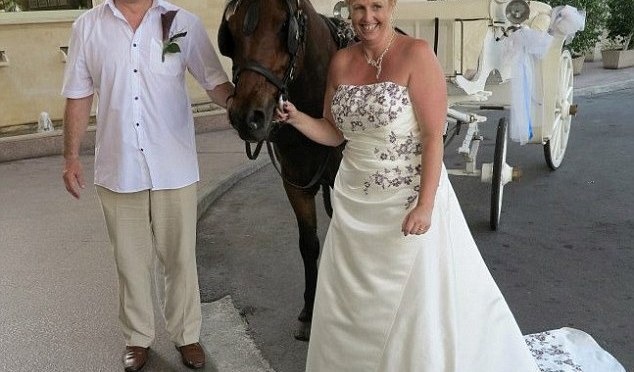
‘Every parent’s nightmare’: Married couple sexually abused a 13-month-old baby and took pictures while they were babysitting

#WalkWithJesus

But Jesus called them unto him, and said, Suffer little children to come unto me, and forbid them not: for of such is the kingdom of God.
(Luk 18:16)

A Voice's avatar

sexual assault
A husband and wife sexually assaulted a 13-month-old baby they were babysitting, a court heard today.

Michael Chase, 52, and wife Lara, 46, took pictures as they abused the baby girl left in their care in a case described by detectives as ‘every parent’s nightmare’.

He pleaded guilty to two counts of sexual assault and possession of indecent and extreme images last November but his wife denied the offences.

During a trial at Peterborough Crown Court, she claimed they are now separated after marrying in June 2014 and that she would like to see her husband ‘hung, drawn and quartered.’

But a jury dismissed her claims and found her guilty of two counts of sexual assault and the distribution of indecent images which Michael had already admitted taking.

Photos used during the trial included the victim being sexually assaulted by Michael Chase, with the jury deciding that Lara had been…

View original post 106 more words

Big Data and Science Relevance of Computational Sciences for Data Collection, Data Storage and Data Management in Basic and Applied Scientific Investigations

Relevance of Computational Sciences for Data Collection, Data Storage and Data Management in Basic and Applied Scientific Investigations

Workshop 17-18 November 2015 – One of the distinctive features of contemporary scientific research, in both basic and applied sciences, is the large amount of data that is continuously being produced. Continue reading Big Data and Science Relevance of Computational Sciences for Data Collection, Data Storage and Data Management in Basic and Applied Scientific Investigations

Power and Limitations of Artificial Intelligence

Power and Limitations of Artificial Intelligence

Workshop 30 November – 1 December 2016 – One of the key issues today concerns the place of the human person in a growing digital environment of increasing complexity that not only expands the range of his or her capacities, but also may compete with them or even replace them. Over the past fifty years, robots and computers have progressively supplemented humans, initially only in relatively simple computational and manipulation tasks, but more recently in higher cognitive tasks that used to be the prerogative of the human brain, including language, mathematics, probabilistic reasoning and decision making. Continue reading Power and Limitations of Artificial Intelligence

Put Yourself In God’s Shoes

#WalkWithJesus

A Voice's avatar

shoes
You may have asked yourself on several occasions as you go through hardships in particular the question “Why am I here?” The quick answer is because God willed it. Before you were born, you had no decision making abilities and right after you were born, you had no decision making abilities. You did not choose the womb, the location, your economic status, or whether you would be born right into slavery or set straight to the abortion mill. If you happen to past the age of fifteen you really want to know what is my purpose.

All of God’s creations are designed to worship and adore him. Don’t like your purpose? Well, you have a limited time to ignore God’s purpose with relative ease. Meaning, the consequences may not be so harsh for you. Some evil people live long healthy lives treating people like pawns on their chess board and…

View original post 273 more words

Top Ten Transhumanist Technologies

by Lifeboat Foundation Scientific Advisory Board member Michael Anissimov.

Overview

Transhumanists advocate the improvement of human capacities through advanced technology. Not just technology as in gadgets you get from Best Buy, but technology in the grander sense of strategies for eliminating disease, providing cheap but high-quality products to the world’s poorest, improving quality of life and social interconnectedness, and so on. Technology we don’t notice because it’s blended in with the fabric of the world, but would immediately take note of its absence if it became unavailable. (Ever tried to travel to another country on foot?) Technology needn’t be expensive — indeed, if a technology is truly effective it will pay for itself many times over. Transhumanists tend to take a longer-than-average view of technological progress, looking not just five or ten years into the future but twenty years, thirty years, and beyond. We realize that the longer you look forward, the more uncertain the predictions get, but one thing is quite certain: if a technology is physically possible and obviously useful, human (or transhuman!) ingenuity will see to it that it gets built eventually. As we gain ever greater control over the atomic structure of matter, our technological goals become increasingly ambitious, and their payoffs more and more generous. Sometimes new technologies even make us happier in a long-lasting way: the Internet would be a prime example. In the following list I take a look at what I consider the top ten transhumanist technologies. Continue reading Top Ten Transhumanist Technologies

Building Your Eternal Net Worth

#WalkWithJesus

A Voice's avatar

net_worth_home_vs_rent_There is not a man or woman alive without sin. Even when the light of God’s glorious gospel shines on you, within your flesh dwells no good thing. Paul stated “Oh wretched man that I am, who will deliver me from this body of death.” He hated the fact that though he pursued God that evil was always present. Not being dismayed by this; he put his trust in Christ and pressed toward the high mark of God’s call. He worked for his eternal net worth. I say net, because at judgment we will all have things that will be consumed in the fire when God is handing out his rewards.

We all know about worldly success. A recent report came out that said the U.S. added 300,000 new millionaires in 2015, bringing the total to a record 10.4 million people. Of course, a large percentage of these people could…

View original post 397 more words

Top doctor argues why breast cancer screening mammograms ‘do more harm than good’

By Professor Michael Baum and Dr Michael Michell For The Hippocratic Post Published: 13:03, 3 March 2016 | Updated: 18:44, 7 March 2016

Last week, it was revealed that the number of women attending a breast screening is the lowest in a decade. The proportion of eligible women aged 50-70 screened for breast cancer after their first invitation fell to 63.3 per cent in 2014-15, down from 70.1 per cent in 2004-5. And breast screening coverage – which is the overall number checked – has also fallen for the fourth year in a row, official NHS figures revealed. Under the programme, women are invited for their first routine check between the ages of 50 and 53 and are usually invited back every three years until the age of 70. Continue reading Top doctor argues why breast cancer screening mammograms ‘do more harm than good’

Rothschild Bank Now Under Criminal Investigation After Baron David De Rothschild Indictment

by Matt Agorist March 5, 2016

Last year, Baron David de Rothschild was indicted by the French government after he was accused of fraud in a scheme that allegedly embezzled large sums of money from British pensioners.

It has taken many years to bring this case against Rothschild and his company the Rothschild Financial Services Group, which trapped hundreds of pensioners in a bogus loan scheme between the years of 2005 and 2008. Continue reading Rothschild Bank Now Under Criminal Investigation After Baron David De Rothschild Indictment

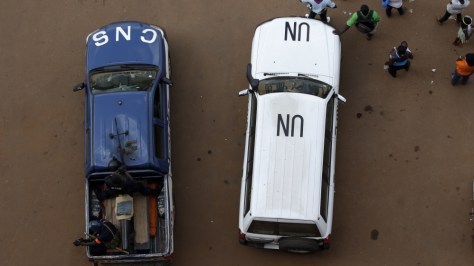
Are UN reforms enough to end sex abuse scandal?

The UN registered 99 sex abuse complaints against its peacekeeping forces in 2015 – a sharp rise from the year before.

Continue reading Are UN reforms enough to end sex abuse scandal?

Lectio Magistralis by Professor Jeffrey D. Sachs~how to achieve a holistic path to sustainable development.

1 July 2013

Source: Pontifical Academy of Sciences

Hillary Clinton caught buying Twitter followers- do you trust her?

Anna Giaritelli  Posted on April 8, 2014

Twitter page “Faith and Value Voters for Hillary Clinton 2016” — the verified @Faith4Hillary account — was caught last week after having allegedly purchased 12,000 fake followers, roughly 42 percent of its total following. Continue reading Hillary Clinton caught buying Twitter followers- do you trust her?

Abortion as a Moral Choice?

by Rev. Anne Fowler, Religious Coalition for Reproductive Choice December 6, 2007

In April of 1973 my husband left me, pleading that he had fallen in love with our upstairs tenant and wanted to spend his life with her. I was four months pregnant. Roe v. Wade had been decided three months earlier.

My obstetrician sent me to see a social worker to help me sort out my feelings and make my plans. She began every one of her questions or suggestions with, “if you want an abortion…”, until I finally shouted at her, “I DON’T want an abortion. ” “Well, ” she observed, “That solves that problem.” Continue reading Abortion as a Moral Choice?

Europe braces for major ‘humanitarian crisis’ in Greece after row over refugees

© AP A child holds a Greek flag as riot police look on during a protest on a highway at Tempe valley near the city of Larissa, Greece.

By Ian Traynor

European governments are bracing for a major humanitarian emergency in Greece amid rising panic that the EU’s fragmented efforts to cope with its migration crisis are nearing breakdown. Continue reading Europe braces for major ‘humanitarian crisis’ in Greece after row over refugees

‘Payout chart’ for molestation: Secret archive held chilling details of clergy abuse

By Michelle Boorstein and Julie Zauzmer March 3 2016

A Catholic diocese in Pennsylvania announced Thursday that it will post the names online of priests credibly accused of sexually abusing children, a decision that came two days after a dramatic grand jury report alleged a decades-long cover-up.

Advocates hope that the grand jury report, which was announced just two days after the movie “Spotlight” focused national attention on child sexual abuse by winning the Oscar for Best Picture, will lead to new legislation permitting more prosecutions of abusive priests and those who supervised them. Continue reading ‘Payout chart’ for molestation: Secret archive held chilling details of clergy abuse

USAID is openly financing the campaigns of homosexual candidates in pro-family countries

Wally Brewster, US Ambassador to the Dominican Republic, visits a school with his homosexual ‘spouse.’
Alexandria L. Panehal, Mission Director for USAID in the Dominican Republic

March 3, 2016 (LifeSiteNews) – Alexandria L. Panehal, Mission Director for USAID in the Dominican Republic, told reporters at a press conference yesterday in the capital of the Caribbean nation that the United States Agency for International Development will be spending $1 million to finance the promotion of the LGBT agenda, including contributions to LGBT politicians who wish to participate in the upcoming elections. Continue reading USAID is openly financing the campaigns of homosexual candidates in pro-family countries

Tilray Announces a Clinical Trial Partnership in Australia

The Government of New South Wales, the University of Sydney, Chris O`Brien Lifehouse, and Tilray announced a groundbreaking research partnership today to develop a novel treatment for chemotherapy-induced nausea and vomiting (CINV). Tilray is providing a proprietary capsule formulation for the proposed trial, which will allow researchers to test an investigational product containing two active ingredients extracted from the cannabis plant, cannabidiol (CBD) and tetrahydrocannabinol (THC). Continue reading Tilray Announces a Clinical Trial Partnership in Australia

Dose-related neurocognitive effects of marijuana use

by K.I. Bolla PhD, K. Brown MPH, D. Eldreth BA, K. Tate BA and J.L. Cadet MD

doi: http:/​/​dx.​doi.​org/​10.​1212/​01.​WNL.​0000031422.​66442.​49

Neurology November 12, 2002 vol. 59 no. 9 1337-1343

Background: Although about 7 million people in the US population use marijuana at least weekly, there is a paucity of scientific data on persistent neurocognitive effects of marijuana use.

Objective: To determine if neurocognitive deficits persist in 28-day abstinent heavy marijuana users and if these deficits are dose-related to the number of marijuana joints smoked per week.

Methods: A battery of neurocognitive tests was given to 28-day abstinent heavy marijuana abusers.

Results: As joints smoked per week increased, performance decreased on tests measuring memory, executive functioning, psychomotor speed, and manual dexterity. When dividing the group into light, middle, and heavy user groups, the heavy group performed significantly below the light group on 5 of 35 measures and the size of the effect ranged from 3.00 to 4.20 SD units. Duration of use had little effect on neurocognitive performance.

Conclusions: Very heavy use of marijuana is associated with persistent decrements in neurocognitive performance even after 28 days of abstinence. It is unclear if these decrements will resolve with continued abstinence or become progressively worse with continued heavy marijuana use.

Source: neurology.org

Adverse health effects of non-medical cannabis use

By Prof Wayne Hall PhD, Prof Louisa Degenhardt PhD

For over two decades, cannabis, commonly known as marijuana, has been the most widely used illicit drug by young people in high-income countries, and has recently become popular on a global scale.
Epidemiological research during the past 10 years suggests that regular use of cannabis during adolescence and into adulthood can have adverse effects.
Epidemiological, clinical, and laboratory studies have established an association between cannabis use and adverse outcomes. We focus on adverse health effects of greatest potential public health interest—that is, those that are most likely to occur and to affect a large number of cannabis users.
The most probable adverse effects include
  • a dependence syndrome,
  • increased risk of motor vehicle crashes,
  • impaired respiratory function,
  • cardiovascular disease, and
  • adverse effects of regular use on adolescent psycho-social development and
  • mental health.

Source: The Lancet

‘Serious failings’ at BBC let Jimmy Savile abuse 72 people

“Serious failings” at the BBC allowed Jimmy Savile to sexually abuse 72 people without detection for decades, according to a damning report published on Thursday, which insisted that the corporation still had lessons to learn from the affair.

Dame Janet Smith, who started the independent inquiry in October 2012, found that despite what had happened with Savile, those worked at the BBC were still worried about reporting potential abuse and taking on the broadcaster’s stars.

© Guardian Composite Dame Janet Smith found that although the criminal behaviour was largely the fault of the perpetrators, the BBC could have stopped it but failed to do so.

She concluded that “an atmosphere of fear still exists today in the BBC possibly because obtaining work in the BBC is highly competitive and many people no longer have the security of an employment contract”.

It was incumbent on the BBC to examine its culture today, Smith added, particularly when it came to the continued fear of speaking out and its attitudes towards “the talent”, or on-screen presenters.

In total, Savile sexually assaulted 57 females and 15 boys. Three incidents of rape and attempted rape took place on BBC premises, Smith said, and the youngest victim to whom Smith spoke was eight years old at the time of the offence.

The report, which runs to is 372,400 words, made for “sorry reading” for the BBC, said Smith, a former court of appeal judge.

It examines sexual abuse perpetrated by Savile and Stuart Hall, who was released in December after serving half of a five-year jail term for historical indecent assaults against girls aged between nine and 17.

A “macho culture” of sexism and sexual harassment and an “atmosphere of fear” led many employees to keep quiet about concerns, she wrote. She found BBC staff “more worried about reputation than the safety of children”.

Regarding abuse by stars and others at the BBC, Smith concluded that the criminal behaviour was largely the fault of the perpetrators, the broadcaster could have stopped it but failed to do so.

However, the report ultimately concludes that there is no evidence that the BBC as a corporate body was aware of Savile’s conduct and therefore cannot be convicted of any offence.

It also concludes that BBC staff failed to report Hall indulging in “inappropriate sexual conduct” partly because he was seen as an “untouchable” celebrity, a report found.

Staff at BBC Manchester knew the former It’s a Knockout host was taking women into his dressing room for sex, although not that some of them were under age, a report by former high court judge Dame Linda Dobbs found.

The report said he had abused 21 female victims at the BBC, with the youngest aged 10, between 1967 and 1991, but no complaints were passed on to senior management.

In conclusion, Smith writes: “The delivery of these reports presents an opportunity for the BBC to take steps to ensure that history cannot repeat itself.”

In a final verdict which may disappoint campaigners for victims, her “overarching recommendation” was that the BBC should carry out a further review and subsequent audit of its current management.

After speaking to more than 800 people, Smith concluded:

  • Cultural factors at the corporation prevented staff from reporting sexual complaints to senior staff – especially when concerning what she calls “the talent”, a problem which she suggests still exists today.
  • Some members of BBC staff – junior and middle-ranking – were aware of Savile’s inappropriate sexual conduct in connection with his work for the BBC but there is no evidence that any senior member of staff was aware of Savile’s conduct.
  • Several “wake-up calls” should have alerted BBC management to Savile’s behaviour as early as 1969 but did not.
  • No complaints were made about Savile to the BBC’s duty office, as would be the appropriate procedure, although there were eight occasions on which complaints were made in other ways.
  • The first complaint was made in the late 1960s and concerned Savile inappropriately kissing a member of staff in Manchester, while subsequent complaints related to sexual assault.
  • There were occasions when senior BBC staff did not find out about things which they ought to have found out about.
  • There was during the period covered by the investigation a culture within the BBC which made it difficult to complain or to “rock the boat”.

Although largely completed a year ago, the report was delayed by the police investigations and sent to the BBC itself a week ago.

In the report, Smith says: “The BBC should examine its attitude towards ‘the talent’. I have reported that the BBC appeared at least in the past to be tolerant of inappropriate conduct by the stars because they were more valuable to the BBC than the BBC’s own values.

“The BBC should leave members of the talent in no doubt as to the standards of the behaviour expected of them.”

“The first reason for this is because of a deference or even adulation which was, and still can be, accorded to celebrity in our society,” she says.

The report found that one complainant was told to “keep your mouth shut; he is a VIP” while talent were “treated with kid gloves and rarely challenged”.

The review found that Savile would “gratify himself whenever the opportunity arose” and in “virtually every one of the BBC premises at which he worked”, which included BBC Television Theatre, Television Centre, Broadcasting House, Egton House, Lime Grove studios and studios in Leeds, Manchester and Glasgow.

“Savile had a voracious sexual appetite,” Smith writes. “He was obsessively interested in sex.”

Smith said Savile’s tactic with young girls was to invite them to watch him perform either on radio or television as a “form of grooming”.

“He used his celebrity status, his entree to the BBC and his connections with other stars as bait with which to draw young girls into his sphere.”

In addition to unnamed supervisors and technical staff who worked on shows like Top of the Pops, Smith lists other examples of people who knew or suspected Savile was behaving inappropriately or illegally.

  • Canon Colin Semper, a producer of Speakeasy, worked with Savile and “clearly did think Savile had sex with a lot of girls, some of whom might have been underage”.
  • Louis Theroux became aware of a credible allegation that in the late 1960s or early 1970s Savile had sex with a 15-year-old. Theroux spoke to David Mortimer, an executive producer at the BBC.
  • Mark Lawson saw Savile assault a female member of Front Row staff. He told Front Row editor John Goudie.
  • Douglas Muggeridge, the controller of Radio 1 and Radio 2 heard rumours about Savile. He held a meeting with Savile, Derek Chinnery, head of programmes for Radio 1 and Doreen Davies, an executive producer.
  • Rodney Collins, a BBC Radio publicity officer, heard rumours too but had no hard evidence.

Source: The Guardian

BBC has sacked me, says veteran DJ Tony Blackburn

© Tony Blackburn in 2014 (Ian West/PA)

Press Association 25/2/2016

Tony Blackburn says he has been sacked by the BBC over his evidence to a sex abuse review.

The veteran DJ has pledged to take legal action against the corporation, which he claims is making him a “scapegoat” for the “cover-up” of abuse of an under-age girl.

His shock departure comes ahead of the publication on Thursday of a report into the BBC’s culture and practices during the years Jimmy Savile and fellow shamed presenter Stuart Hall worked at the corporation by former Court of Appeal judge Dame Janet Smith.

The presenter, 73, claims that “all relationships” he had with the BBC were “terminated with immediate effect” this week because his evidence to the review over an investigation in 1971 contradicts the BBC’s version of events in relation to an allegation of assault by the mother of a 15 year old who later took her own life.

He says he was never interviewed over the incident, but claims the BBC says he was interviewed twice.

Here is his statement in full:

“This week, two days before the publication of the Dame Janet Smith Report, the BBC informed me that all relationships I had with them were being terminated with immediate effect.

“I am told that the decision was taken, personally, by the Director General. Quite naturally, I am devastated. The reasons for the BBC taking this decision are that my evidence to Dame Janet Smith shows, I believe, that a cover-up took place – one that I had no knowledge of. This goes against what the BBC believe.”

“In 1971 allegations were made by the mother of a 15-year-old girl whose diary apparently contained suggestions that she had been seduced by celebrities including me. I am told that the mother told the BBC, a few weeks after her initial complaint, that her daughter had withdrawn the allegation against me.

“I have never seen the diary and neither has anyone at the BBC or the Dame Janet review. That same year this seemingly troubled teenager tragically took her own life.

“Dame Janet’s report makes no suggestion that I was guilty 45 years ago of any misconduct whatsoever with this girl. Nor did a coroner’s inquest or a subsequent police inquiry into her death.”

“The BBC have made clear that they are not terminating my relationship with them because of any misconduct. They are destroying my career and reputation because my version of events does not tally with theirs.

“I was not guilty of any inappropriate conduct; my lawyers will take immediate action against anyone suggesting that I was. According to BBC records seen by Dame Janet, I was allegedly interviewed about the girl’s diary before her death in 1971 by a very senior figure at the BBC, Bill Cotton Jr.

“I was also, supposedly, interviewed by Brian Neill QC as part of his report into the Payola scandal at the BBC. I have repeatedly told Dame Janet and the BBC I was never interviewed by either man in this context and the BBC records are either very vague or have, conveniently, disappeared.”

“Regardless of these facts, the BBC is axing me after five decades of broadcasting. Sadly what is happening to me now seems to be entirely in keeping with the past BBC culture of whitewash and cover-up.

“In 1967, I proudly opened Radio 1 for the BBC. Over the past 49 years I have enjoyed my time working for them immensely and I am grateful to my millions of listeners for their continued support over the decades.”

“Sadly, despite being aware of my evidence for many months, if not years, the BBC have decided to make me a scapegoat and have taken away any future opportunity I have to broadcast for them. Naturally, I am now left with no choice but to take legal action against the BBC.

“They have taken away a career I love and I will not allow them to destroy my reputation.”

The BBC declined to comment.

Source: PA

Broadcasters back Tony Blackburn after he is sacked from the BBC in sex abuse probe row

© Provided by Mirror

By Mark Jefferies 25/2/2016

Tony Blackburn’s broadcasting colleagues have spoken out to defend the star after he was sacked from the BBC.

The veteran DJ revealed last night how he was in talks with lawyers as he planned legal action against over the loss of contracts worth £200,000 a year.

Writing on Twitter, journalist Piers Morgan said: “Few nicer guys in show-business than @tonyblackburn. BBC treatment of him after 50yrs of brilliant broadcasting is outrageous.”

Presenter Eamonn Holmes referred to Jeremy Clarkson yesterday settling a racial discrimination and personal injury lawsuit brought by a former Top Gear producer.

He wrote on Twitter: “So @tonyblackburn MIGHT have and is taken off air. @JeremyClarkson DID Assault & Racism – his progs continue to be shown on the BBC. ?????”

Radio personality Tony this morning thanked fans and broadcasting colleagues after an “overwhelming” level of support.

He said: “Good morning,I just want to say thanks so much for your overwhelming support it means a lot to me. xxx

“I won’t be tweeting too much but I must say a big thanks for all the support from my fellow broadcasters, it is very kind of you.”

Sources close to the veteran DJ said he was the victim of a “real stitch-up”.

Presenter Danny Wallace wrote on Twitter: “I know @tonyblackburn, and as far as I can tell, every bone in his body is decent.”

Broadcaster Iain Lee wrote: “@tonyblackburn is one of the most decent and kind people I have ever met. Ever.”

LBC presenter Iain Dale added: “Sometimes the BBC disgusts me. They have sacked broadcasting legend @tonyblackburn from all his shows. Shame on them “

A new report backs the BBC’s claim that he was quizzed over a woman’s allegations.

But Blackburn said the interviews in 1971 never took place and he plans to sue the BBC.

Lawyers will be looking at taking action over “wrongful termination of contracts” and a libel law expert may be lined up to examine all aspects of the allegations.

In his statement, Blackburn, 73, said: “I am now left with no choice but to take legal action against the BBC. They have taken away a career I love and I will not allow them to destroy my reputation.”

Corporation bosses are alleged to have failed to properly interview the DJ after he was accused of a sexual encounter with Top of the Pops dancer Claire McAlpine.

The claims will be made public today in Dame Janet Smith’s review of the Jimmy Savile scandal.

Blackburn last night issued an extraordinary statement which said: “This week, two days before the publication of the Dame Janet Smith Report, the BBC informed me that all relationships I had with them were being terminated with immediate effect.

“I am told that the decision was taken, personally, by the Director General. Quite naturally, I am devastated.

“The reasons for the BBC taking this decision are that my evidence to Dame Janet Smith shows, I believe, that a cover up took place – one that I had no knowledge of. This goes against what the BBC believe.”

He goes on: “Dame Janet’s report makes no suggestion that I was guilty 45 years ago of any misconduct whatsoever with this girl. Nor did a coroner’s inquest into her death or a subsequent police inquiry.

“The BBC have made clear that they are not terminating my relationship with them because of any misconduct.

“They are destroying my career and reputation because my version of events does not tally with theirs.

“I was not guilty of any inappropriate conduct; my lawyers will take immediate action against anyone suggesting I was.”

And in a swipe at bosses, he added: “Sadly what is happening to me seems to be entirely in keeping with the past BBC culture of whitewash and cover-up.

“In 1967, I proudly opened Radio 1 for the BBC. Over the past 49 years I have enjoyed my time working for them immensely and I am grateful to my millions of listeners for their continued support over the decades.

“Sadly, despite being aware of my evidence for many months, if not years, the BBC have decided to make me a scapegoat and have taken away any future opportunity I have to broadcast for them.

“Naturally, I am now left with no choice but to take legal action against the BBC.

“They have taken away a career I love and I will not allow them to destroy my reputation.”

Source: The Mirror