GodSeesEverything says as it is written in scripture:
Then came to Jesus scribes and Pharisees, which were of Jerusalem, saying, Why do thy disciples transgress the tradition of the elders? for they wash not their hands when they eat bread. But he answered and said unto them, Why do ye also transgress the commandment of God by your tradition? For God commanded, saying, Honour thy father and mother: and, He that curseth father or mother, let him die the death. But ye say, Whosoever shall say to his father or his mother, It is a gift, by whatsoever thou mightest be profited by me; And honour not his father or his mother, he shall be free. Thus have ye made the commandment of God of none effect by your tradition.
“Serious failings” at the BBC allowed Jimmy Savile to sexually abuse 72 people without detection for decades, according to a damning report published on Thursday, which insisted that the corporation still had lessons to learn from the affair.
Dame Janet Smith, who started the independent inquiry in October 2012, found that despite what had happened with Savile, those worked at the BBC were still worried about reporting potential abuse and taking on the broadcaster’s stars.
She concluded that “an atmosphere of fear still exists today in the BBC possibly because obtaining work in the BBC is highly competitive and many people no longer have the security of an employment contract”.
It was incumbent on the BBC to examine its culture today, Smith added, particularly when it came to the continued fear of speaking out and its attitudes towards “the talent”, or on-screen presenters.
In total, Savile sexually assaulted 57 females and 15 boys. Three incidents of rape and attempted rape took place on BBC premises, Smith said, and the youngest victim to whom Smith spoke was eight years old at the time of the offence.
The report, which runs to is 372,400 words, made for “sorry reading” for the BBC, said Smith, a former court of appeal judge.
It examines sexual abuse perpetrated by Savile and Stuart Hall, who was released in December after serving half of a five-year jail term for historical indecent assaults against girls aged between nine and 17.
A “macho culture” of sexism and sexual harassment and an “atmosphere of fear” led many employees to keep quiet about concerns, she wrote. She found BBC staff “more worried about reputation than the safety of children”.
Regarding abuse by stars and others at the BBC, Smith concluded that the criminal behaviour was largely the fault of the perpetrators, the broadcaster could have stopped it but failed to do so.
However, the report ultimately concludes that there is no evidence that the BBC as a corporate body was aware of Savile’s conduct and therefore cannot be convicted of any offence.
It also concludes that BBC staff failed to report Hall indulging in “inappropriate sexual conduct” partly because he was seen as an “untouchable” celebrity, a report found.
Staff at BBC Manchester knew the former It’s a Knockout host was taking women into his dressing room for sex, although not that some of them were under age, a report by former high court judge Dame Linda Dobbs found.
The report said he had abused 21 female victims at the BBC, with the youngest aged 10, between 1967 and 1991, but no complaints were passed on to senior management.
In conclusion, Smith writes: “The delivery of these reports presents an opportunity for the BBC to take steps to ensure that history cannot repeat itself.”
In a final verdict which may disappoint campaigners for victims, her “overarching recommendation” was that the BBC should carry out a further review and subsequent audit of its current management.
After speaking to more than 800 people, Smith concluded:
Cultural factors at the corporation prevented staff from reporting sexual complaints to senior staff – especially when concerning what she calls “the talent”, a problem which she suggests still exists today.
Some members of BBC staff – junior and middle-ranking – were aware of Savile’s inappropriate sexual conduct in connection with his work for the BBC but there is no evidence that any senior member of staff was aware of Savile’s conduct.
Several “wake-up calls” should have alerted BBC management to Savile’s behaviour as early as 1969 but did not.
No complaints were made about Savile to the BBC’s duty office, as would be the appropriate procedure, although there were eight occasions on which complaints were made in other ways.
The first complaint was made in the late 1960s and concerned Savile inappropriately kissing a member of staff in Manchester, while subsequent complaints related to sexual assault.
There were occasions when senior BBC staff did not find out about things which they ought to have found out about.
There was during the period covered by the investigation a culture within the BBC which made it difficult to complain or to “rock the boat”.
Although largely completed a year ago, the report was delayed by the police investigations and sent to the BBC itself a week ago.
In the report, Smith says: “The BBC should examine its attitude towards ‘the talent’. I have reported that the BBC appeared at least in the past to be tolerant of inappropriate conduct by the stars because they were more valuable to the BBC than the BBC’s own values.
“The BBC should leave members of the talent in no doubt as to the standards of the behaviour expected of them.”
“The first reason for this is because of a deference or even adulation which was, and still can be, accorded to celebrity in our society,” she says.
The report found that one complainant was told to “keep your mouth shut; he is a VIP” while talent were “treated with kid gloves and rarely challenged”.
The review found that Savile would “gratify himself whenever the opportunity arose” and in “virtually every one of the BBC premises at which he worked”, which included BBC Television Theatre, Television Centre, Broadcasting House, Egton House, Lime Grove studios and studios in Leeds, Manchester and Glasgow.
“Savile had a voracious sexual appetite,” Smith writes. “He was obsessively interested in sex.”
Smith said Savile’s tactic with young girls was to invite them to watch him perform either on radio or television as a “form of grooming”.
“He used his celebrity status, his entree to the BBC and his connections with other stars as bait with which to draw young girls into his sphere.”
In addition to unnamed supervisors and technical staff who worked on shows like Top of the Pops, Smith lists other examples of people who knew or suspected Savile was behaving inappropriately or illegally.
Canon Colin Semper, a producer of Speakeasy, worked with Savile and “clearly did think Savile had sex with a lot of girls, some of whom might have been underage”.
Louis Theroux became aware of a credible allegation that in the late 1960s or early 1970s Savile had sex with a 15-year-old. Theroux spoke to David Mortimer, an executive producer at the BBC.
Mark Lawson saw Savile assault a female member of Front Row staff. He told Front Row editor John Goudie.
Douglas Muggeridge, the controller of Radio 1 and Radio 2 heard rumours about Savile. He held a meeting with Savile, Derek Chinnery, head of programmes for Radio 1 and Doreen Davies, an executive producer.
Rodney Collins, a BBC Radio publicity officer, heard rumours too but had no hard evidence.
Tony Blackburn says he has been sacked by the BBC over his evidence to a sex abuse review.
The veteran DJ has pledged to take legal action against the corporation, which he claims is making him a “scapegoat” for the “cover-up” of abuse of an under-age girl.
His shock departure comes ahead of the publication on Thursday of a report into the BBC’s culture and practices during the years Jimmy Savile and fellow shamed presenter Stuart Hall worked at the corporation by former Court of Appeal judge Dame Janet Smith.
The presenter, 73, claims that “all relationships” he had with the BBC were “terminated with immediate effect” this week because his evidence to the review over an investigation in 1971 contradicts the BBC’s version of events in relation to an allegation of assault by the mother of a 15 year old who later took her own life.
He says he was never interviewed over the incident, but claims the BBC says he was interviewed twice.
Here is his statement in full:
“This week, two days before the publication of the Dame Janet Smith Report, the BBC informed me that all relationships I had with them were being terminated with immediate effect.
“I am told that the decision was taken, personally, by the Director General. Quite naturally, I am devastated. The reasons for the BBC taking this decision are that my evidence to Dame Janet Smith shows, I believe, that a cover-up took place – one that I had no knowledge of. This goes against what the BBC believe.”
“In 1971 allegations were made by the mother of a 15-year-old girl whose diary apparently contained suggestions that she had been seduced by celebrities including me. I am told that the mother told the BBC, a few weeks after her initial complaint, that her daughter had withdrawn the allegation against me.
“I have never seen the diary and neither has anyone at the BBC or the Dame Janet review. That same year this seemingly troubled teenager tragically took her own life.
“Dame Janet’s report makes no suggestion that I was guilty 45 years ago of any misconduct whatsoever with this girl. Nor did a coroner’s inquest or a subsequent police inquiry into her death.”
“The BBC have made clear that they are not terminating my relationship with them because of any misconduct. They are destroying my career and reputation because my version of events does not tally with theirs.
“I was not guilty of any inappropriate conduct; my lawyers will take immediate action against anyone suggesting that I was. According to BBC records seen by Dame Janet, I was allegedly interviewed about the girl’s diary before her death in 1971 by a very senior figure at the BBC, Bill Cotton Jr.
“I was also, supposedly, interviewed by Brian Neill QC as part of his report into the Payola scandal at the BBC. I have repeatedly told Dame Janet and the BBC I was never interviewed by either man in this context and the BBC records are either very vague or have, conveniently, disappeared.”
“Regardless of these facts, the BBC is axing me after five decades of broadcasting. Sadly what is happening to me now seems to be entirely in keeping with the past BBC culture of whitewash and cover-up.
“In 1967, I proudly opened Radio 1 for the BBC. Over the past 49 years I have enjoyed my time working for them immensely and I am grateful to my millions of listeners for their continued support over the decades.”
“Sadly, despite being aware of my evidence for many months, if not years, the BBC have decided to make me a scapegoat and have taken away any future opportunity I have to broadcast for them. Naturally, I am now left with no choice but to take legal action against the BBC.
“They have taken away a career I love and I will not allow them to destroy my reputation.”
Tony Blackburn’s broadcasting colleagues have spoken out to defend the star after he was sacked from the BBC.
The veteran DJ revealed last night how he was in talks with lawyers as he planned legal action against over the loss of contracts worth £200,000 a year.
Writing on Twitter, journalist Piers Morgan said: “Few nicer guys in show-business than @tonyblackburn. BBC treatment of him after 50yrs of brilliant broadcasting is outrageous.”
Presenter Eamonn Holmes referred to Jeremy Clarkson yesterday settling a racial discrimination and personal injury lawsuit brought by a former Top Gear producer.
He wrote on Twitter: “So @tonyblackburn MIGHT have and is taken off air. @JeremyClarkson DID Assault & Racism – his progs continue to be shown on the BBC. ?????”
Radio personality Tony this morning thanked fans and broadcasting colleagues after an “overwhelming” level of support.
He said: “Good morning,I just want to say thanks so much for your overwhelming support it means a lot to me. xxx
“I won’t be tweeting too much but I must say a big thanks for all the support from my fellow broadcasters, it is very kind of you.”
Sources close to the veteran DJ said he was the victim of a “real stitch-up”.
Presenter Danny Wallace wrote on Twitter: “I know @tonyblackburn, and as far as I can tell, every bone in his body is decent.”
Broadcaster Iain Lee wrote: “@tonyblackburn is one of the most decent and kind people I have ever met. Ever.”
LBC presenter Iain Dale added: “Sometimes the BBC disgusts me. They have sacked broadcasting legend @tonyblackburn from all his shows. Shame on them “
A new report backs the BBC’s claim that he was quizzed over a woman’s allegations.
But Blackburn said the interviews in 1971 never took place and he plans to sue the BBC.
Lawyers will be looking at taking action over “wrongful termination of contracts” and a libel law expert may be lined up to examine all aspects of the allegations.
In his statement, Blackburn, 73, said: “I am now left with no choice but to take legal action against the BBC. They have taken away a career I love and I will not allow them to destroy my reputation.”
Corporation bosses are alleged to have failed to properly interview the DJ after he was accused of a sexual encounter with Top of the Pops dancer Claire McAlpine.
The claims will be made public today in Dame Janet Smith’s review of the Jimmy Savile scandal.
Blackburn last night issued an extraordinary statement which said: “This week, two days before the publication of the Dame Janet Smith Report, the BBC informed me that all relationships I had with them were being terminated with immediate effect.
“I am told that the decision was taken, personally, by the Director General. Quite naturally, I am devastated.
“The reasons for the BBC taking this decision are that my evidence to Dame Janet Smith shows, I believe, that a cover up took place – one that I had no knowledge of. This goes against what the BBC believe.”
He goes on: “Dame Janet’s report makes no suggestion that I was guilty 45 years ago of any misconduct whatsoever with this girl. Nor did a coroner’s inquest into her death or a subsequent police inquiry.
“The BBC have made clear that they are not terminating my relationship with them because of any misconduct.
“They are destroying my career and reputation because my version of events does not tally with theirs.
“I was not guilty of any inappropriate conduct; my lawyers will take immediate action against anyone suggesting I was.”
And in a swipe at bosses, he added: “Sadly what is happening to me seems to be entirely in keeping with the past BBC culture of whitewash and cover-up.
“In 1967, I proudly opened Radio 1 for the BBC. Over the past 49 years I have enjoyed my time working for them immensely and I am grateful to my millions of listeners for their continued support over the decades.
“Sadly, despite being aware of my evidence for many months, if not years, the BBC have decided to make me a scapegoat and have taken away any future opportunity I have to broadcast for them.
“Naturally, I am now left with no choice but to take legal action against the BBC.
“They have taken away a career I love and I will not allow them to destroy my reputation.”
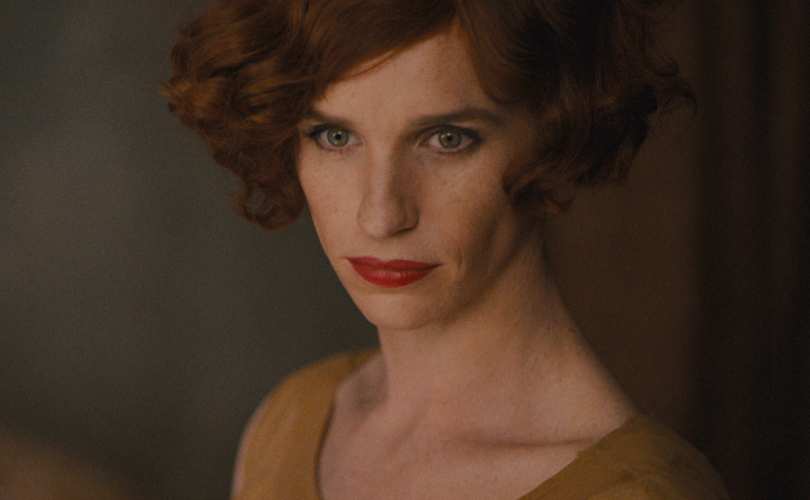
‘The Danish Girl’ fails to address the reality of life after sex reassignment surgery and the need to treat comorbid psychological disorders.
by Walt Heyer Wed Jan 13, 2016
(ThePublicDiscourse) — At times, I felt as if I were trapped in the audience of a never-ending timeshare resort sales pitch. When would the predictable sound bites be over?
The Danish Girl is stuffed with fluffy, gooey sentiments designed to convince “homophobic” or “transphobic” heterosexuals that the painful twists and turns of a transgender person’s life are really a healthy and courageous quest to embrace his or her true self. The film overflows with familiar LGBT talking points. At a key moment, the lead character exclaims, “I finally am who I am!” Continue reading The Danish Girl is nonsense. I would know. I was once a transgender woman.→
Unlike Iraq, the problem with LIBYA wasn’t just about oil, it was about GOLD as well -a commodity the U.S. doesn’t have in it’s federal reserve. Continue reading U.S. & UK destroy LIBYA→






 The Loud Cry