
WWF and Green Racism
Thanks to source: GWPF

Thanks to Source: Greens EFA
Continue reading Palestine – Protected by the U.N. – “Useless Nobodies”
Thanks to Source: ChurchMilitant Archives
GodSeesEverything says – and so it is written in the Word of God:
For the love of money is the root of all evil: which while some coveted after, they have erred from the faith, and pierced themselves through with many sorrows.
(1Ti 6:10)
So God created mankind in his own image, in the image of God he created them; male and female he created them (Genesis 1:27).
For a time is coming when people will no longer listen to sound and wholesome teaching. They will follow their own evil desires and will look for teachers who will tell them whatever their itching ears want to hear (2 Timothy 4:3).

No matter what voters say in the upcoming US election, a coalition of Attorney Generals intends to push for ‘even more aggressive’ climate action.
the March 29th press conference
Eric Schneiderman, New York state’s Attorney General, is a climate inquisitor. Last November, he subpoenaed Exxon Mobil. He says he’s trying to determine whether the oil giant misled shareholders and the public about climate change. The overarching allegation, advanced by green activists for years, is that Exxon supposedly possessed and suppressed secret knowledge connected to carbon dioxide emissions, thereby committing crimes against humanity. (See this overwrought Bill McKibben piece, the headline of which proclaims: ‘No corporation has ever done anything this big or bad’.)
As a November editorial at BloombergView.com observed, it’s unclear what Schneiderman “hopes to discover in the stack of climate-change documents he’s ordered Exxon Mobil to produce,” since his rationale is “pretty thin.”…
View original post 632 more words
Posted by EU Times on Mar 25th, 2016 
A recent tweet from Germany’s Left Wing Party, Die Linke, shows its true colors.
“Refugees are not the problem, the Germans are”
the official Die Linke Twitter account tweeted.
They tweeted this to an account called Firoze Manji, who claims to be a director of group which “promotes diversity“. Continue reading “Refugees are not the problem, the Germans are” – Leftist Party

Originally published by GR in 2009
1. Climate has always changed, and it always will. The assumption that prior to the industrial revolution the Earth had a “stable” climate is simply wrong. The only sensible thing to do about climate change is to prepare for it.
2. Accurate temperature measurements made from weather balloons and satellites since the late 1950s show no atmospheric warming since 1958. In contrast, averaged ground-based thermometers record a warming of about 0.40 C over the same time period. Many scientists believe that the thermometer record is biased by the Urban Heat Island effect and other artefacts.
Continue reading Fallacy and lies- “Cardinal Turkson on long term impact of Laudato Si’”
On November 19, 2008 something touched my life and changed it forever. I had just completed my second book, Outsmarting The Number One Killer (about how to prevent and reverse atherosclerotically-driven heart attacks and strokes) when I came across three seminal studies published earlier that year by internationally recognized research immunologist and molecular biologist, Nobuto Yamamoto, Ph.D. These pivotal papers—which I believe will change the course of medical history—blew me away: Yamamoto had apparently discovered a way to “outsmart” cancer, and was using the body’s own natural healing systems to do it.
“Holy cow!!!” I said to myself. “This guy has discovered a cure for early metastatic cancer. It appears to work 100% of the time!!! No one has ever done that before.”
Continue reading A Major Cancer Breakthrough That No One Has Heard Of
Let me preface this by saying I come from a science background myself, but all too often science gets hijacked and distorted for political or economic gain, or simply makes goofs which are perpetuated by arrogance! Continue reading CLIMATEGATE: A CRIME AGAINST HUMANITY

| Publisher | Human Rights Watch |
| Publication Date | 1 January 1995 |
| Cite as | Human Rights Watch, Human Rights Watch World Report 1995 – Bosnia-Hercegovina, 1 January 1995, available at: http://www.refworld.org/docid/467fcaab7.html %5Baccessed 11 March 2016] |
| Disclaimer | This is not a UNHCR publication. UNHCR is not responsible for, nor does it necessarily endorse, its content. Any views expressed are solely those of the author or publisher and do not necessarily reflect those of UNHCR, the United Nations or its Member States. |
Events of 1994
Abuses against Bosnia’s three ethnic groups – Muslims, Serbs, and Croats – continued in late 1993 and early 1994 but the overwhelming majority continued to be perpetrated by Bosnian Serbs. Most of these abuses were associated with “ethnic cleansing,” whose main objective is the removal of an ethnic group from a given area through murder, population exchanges, forced displacement, and terrorization. Non-Serbs in northern Bosnia continued to be “cleansed” from their homes by Bosnian Serb authorities, while abuses between Bosnia’s Muslims and Croats noticeably decreased after the two groups ended their year-old war. Despite a lull in the fighting in Sarajevo, the city remained under siege by Bosnian Serb forces for much of 1994.
On February 5, a Bosnian Serb mortar attack killed sixty-three people in Sarajevo’s open market. By late February, a NATO ultimatum forced Bosnian Serb forces to pull back their weaponry around Sarajevo or place it under U.N. supervision and a weapons exclusion zone was established around the city. As a result, shelling in Sarajevo decreased and a general cease-fire remained in place until mid-year, although snipers continued to kill civilians in the city. By July, however, shelling and sniping increased in Sarajevo, and roads on Mount Igman, which had been open for commercial traffic since February, were once again too treacherous to transit.
In April, the Bosnian Serb army used indiscriminate and disproportionate force in retaliation against Bosnian army provocation in the Gorazde enclave, which had been designated as a “safe area” by the U.N. in 1993. Bosnian Serb forces eventually captured part of the Gorazde enclave and then prevented journalists and some U.N. personnel from entering the area to assess the material damage and loss of civilian life. In response to the Bosnian Serb attack, Muslim forces within Gorazde expelled some Serbs and placed under house arrest others who remained in the enclave. Bosnian Serb forces restricted access to the area throughout the year.
In October, a Bosnian army commando unit killed twenty Bosnian Serb soldiers and military medical personnel on Mount Igman, an area which had been declared a demilitarized zone by the U.N. in 1993. Soon after the attack, Bosnian Serb forces opened fire on a trolley car in Sarajevo, wounding eight civilians. The Bosnian army refused U.N. demands that it withdraw from Mount Igman, saying it would do so only if the U.N. guaranteed the opening of a road through which commercial traffic could enter Sarajevo. As of mid-November, a tunnel under the airport was Sarajevo’s primary link with the outside world.
Bosnian Serb forces were responsible for most of the attacks on humanitarian aid convoys throughout 1994. In October, they attacked a U.N. convoy and killed a U.N. driver near Gorazde. Bosnian Serb forces cut utilities to the Bosnian capital in mid-September and prevented opening of the Sarajevo airport in late September by refusing to guarantee the safety of U.N. relief flights.
“Ethnic cleansing” in Bosnian Serb-held areas continued during the early part of 1994 but decreased following international condemnation. However, in July, non-Serbs from the Bosanska Krajina and Bijeljina regions were once again expelled in large numbers and those who remained behind in Serbian-occupied territory were conscripted into work gangs and used as forced labor. Between July and October, more than 10,600 non-Serbs were expelled from northern Bosnia.
The war that raged between the mostly Muslim forces of the Bosnian army and the Bosnian Croat militia (HVO) after mid-1993 ended in late February 1994. On February 28 and March 1, the Bosnian Croats and the Bosnian government reconciled and formed a federation. At the same time, Bosnia and the Republic of Croatia, which supported the Bosnian Croats, also agreed to form a confederation. Following the formation of the federation, human rights abuses in central and southwestern Bosnia-Hercegovina decreased substantially. Despite the arrival of administrators from the European Union in mid-1994, abuses in the Croat-held part of Mostar continued, albeit to a lesser degree than in 1993. More than one-hundred Muslim families were evicted from Mostar after the signing of the Muslim-Croat federation. In an apparent assassination attempt on September 11, HVO soldiers launched a rocket-propelled grenade into the bedroom of Hans Koschnik, the E.U. administrator of Mostar. The Croatian authorities arrested four soldiers and removed the local police chief after the incident, but tensions between Muslims and Croats in the city remained high. Moreover, an ombudsman and court established by the federation to monitor human rights had not begun work as of early November. Repatriation of the displaced had not begun either, because minority populations in parts of the federation were not guaranteed safety.
Despite its past support for the Bosnian Serbs, Serbia closed its border with its Bosnian surrogates in September, following the Bosnian Serbs’ refusal to accept an internationally brokered peace plan. One hundred and thirty-five international observers were stationed along the Bosnia-Serbia border and, by mid-October, the Bosnian Serbs generally were denied fuel and military support from Serbia. As of this writing, no violations of international law by either Bosnian army or HVO forces during their latest offensives in the Bihac, Sarajevo or Kupres areas had been reported. However, thousands of Serbs fled the offensive and sought refuge in Serbian-held areas of Croatia and other parts of Bosnian Serb-held territory.
The Bosnian government and Bosnian Croat officials generally did not impede human rights monitoring by domestic and international organizations, but the Bosnian Croats continue to reject U.N. efforts to rectify the eviction of Muslims from their homes in west Mostar.
By contrast, human rights monitoring was severely restricted in Bosnian Serb-held areas. International monitors and much of the international press were banned from entering, or their movements were severely restricted within, Bosnian Serb territory. In August, a Human Rights Watch/Helsinki researcher attempted to interview Serbs who had left or been forced to leave Bosnian government-controlled areas of Sarajevo. Upon her arrival on August 26 in Pale, the headquarters of the Bosnian Serb authorities, the researcher was told by the “state security forces” to leave on the next bus. An advisor to Bosnian Serb leader Radovan Karadzic overruled this order and advised her to stay. The next day, she was again ordered by a plainclothes police officer to leave; the officer also threatened and insulted the researcher and accused her of espionage. Hours later, the officer told her that she was welcome to stay. Finally, forty-eight hours after she had arrived in Pale, the researcher was placed under armed guard in a car and not told where she was being taken. Finally, at 1:00 A.M. she was brought to the border with Serbia and expelled from Bosnian Serb territory.
With the notable exception of brokering a peace between Bosnia’s Muslims and Croats, the Clinton administration’s policy toward Bosnia was marked by indecision and policy reversals. Having distanced itself from the Bosnia crisis in late 1993, the U.S. reluctantly joined its allies in January 1994 calling on the NATO command to prevent the strangulation of Sarajevo and other U.N.-declared safe areas in Bosnia.
The Clinton administration’s major accomplishment in Bosnia during 1994 was the brokering of a peace agreement between Bosnian Croats and Muslims. In late September, the Clinton administration pledged $20 million in non-humanitarian aid to the federation. The aid was intended to rehabilitate housing and infrastructure primarily in central Bosnia. In late October, the U.S. announced that it would send approximately fifteen U.S. military officers to Bosnia to integrate the military alliance between Bosnian government forces and the HVO.
On March 30, Madeline Albright, U.S. representative to the U.N., and Gen. John Shalikashvili, chair of the Joint Chiefs of Staff, visited Sarajevo in a show of support for the Bosnian government. In a speech there, Ambassador Albright supported the sovereignty of Bosnia and announced that the U.S. would donate $10 million to the reconstruction of Sarajevo. The following day, however, the U.S. blocked passage of a U.N. Security Council resolution authorizing the deployment of 10,000 more peacekeeping troops to Bosnia, citing the financial strain of the U.N. field mission and the potential unwillingness of the U.S. Congress to approve the U.S. share of the bill. The U.S. sponsored instead a compromise resolution which approved an initial deployment of 3,500 peacekeepers and left the deployment of further troops for a later date.
The Clinton administration’s vacillations in the face of the Gorazde crisis in April were emblematic of U.S. policy toward Bosnia more generally. As Bosnian Serb forces began a new and vigorous offensive against the Bosnian government-controlled enclave of Gorazde, a U.N.-declared safe area, the Clinton administration faced the familiar situation of attempting to avoid military intervention while, at the same time, risking a potential loss of credibility as further Bosnian Serb abuses went unpunished. On April 3, following the start of the offensive against the encircled Bosnian town, U.S. Secretary of Defense William Perry stated that the U.S. would not use military power to prevent the fall of Gorazde. Perry’s statements seemed to jeopardize U.S. peace efforts in Bosnia by sending a “green light” to Bosnian Serb forces to do as they pleased. An embarrassed U.S. tried to provide a different impression of its intentions on April 7, when National Security Adviser Anthony Lake claimed that “neither the president nor any of his senior advisers rules out the use of NATO air power to help stop attacks such as those against Gorazde.”
On April 10, as Bosnian Serb troops stood on the verge of overrunning Gorazde, two U.S. jets flying a NATO mission attacked a Serbian command post outside the besieged town. The attack represented not simply the first NATO air strike of the Bosnian war, but the first air strike in NATO history. Bosnian Serb forces briefly halted their offensive, but by the next day they advanced once again. U.S. jets carried out a second mission, this time destroying a Bosnian Serb tank. On the same day, President Clinton announced that NATO would continue to use air power until the advancing forces withdrew from the Gorazde area.
The U.S.’s newfound resolve quickly dissipated. Faced with Russian criticism and dissension within U.N. ranks, NATO did not follow up on its first round of air strikes, even as Serb forces continued their offensive. Finally, on April 17, the Clinton administration announced that it would seek no new air strikes against Serb forces in Bosnia. Three days later, however, the administration endorsed a plan by which NATO would use air power to protect all six U.N.-declared safe areas in Bosnia as weapons-exclusion zones, which NATO had previously established in the Sarajevo area. A version of this plan became NATO policy on April 22.
In a major policy shift, U.S. officials signaled at the same time that they were ready to entertain European proposals gradually to phase out U.N.-imposed sanctions against Serbia in exchange for Serb cooperation in Bosnian talks. Previously, the Clinton administration had opposed any loosening of sanctions against Serbia and its surrogates in Bosnia and Croatia until, among other things, they demonstrated cooperation with the international tribunal established to adjudicate war crimes and crimes against humanity in the former Yugoslavia. Given the continuing assault on Gorazde, the apparent involvement of Yugoslav army troops from Serbia in that attack, and the Serbs’ unwillingness to accept the legitimacy of the tribunal, the Clinton administration’s new position on easing of sanctions against Serbia was particularly ill-timed.
On April 25, U.S., Russian, and British officials announced the establishment of a “contact group,” consisting of representatives from the U.S, the United Kingdom, Russia, Germany, and France, that would seek to broker an end to the Bosnian war. The contact group presented a map giving the Muslim-Croat federation control of 51 percent of Bosnia, and both the Bosnian government and the Bosnian Croats eventually accepted the proposal. Bosnian Serbs rejected the plan because it decreased their control of Bosnia from 70 percent to 49 percent. In light of Bosnian Serb rejection of the plan, Bosnian President Alija Izetbegovic withdrew his government’s support for the plan in late July. U.S. support for the contact group’s plan marked a departure from its long-articulated support for the territorial integrity of Bosnia. However, Viktor Jakovich, the U.S. Ambassador to Bosnia-Hercegovina, promised U.S. support for “an undivided Sarajevo and for a free and democratic Bosnia-Hercegovina within its internationally recognized borders” at the July 4 opening of the U.S. Embassy in Sarajevo.
The proposed plan focused solely on the territorial division of Bosnia; it offered no protection to minorities, particularly non-Serbs who continued to be persecuted in Bosnian Serb-held areas, nor was the right to repatriation mentioned. Though the contact group repeatedly threatened to adopt severe punitive measures against any party that refused to accept the proposed map, its members were far from united in their desire to punish the Bosnian Serb forces for their rejection of the plan. Indeed, in October, members of the contact group began considering new concessions to the Bosnian Serbs in exchange for their accession to the peace plan. In particular, Russia argued that the plan should be amended to allow the Bosnian Serbs to form a confederation with Serbia proper, as the Bosnians had done earlier in the year with Croatia.
For much of the year, the Clinton administration faced strong pressure from Congress to lift the arms embargo against the Bosnian government and confronted opposition to such action by the E.U. and Russia. Although President Clinton’s rhetoric signified his support for lifting the embargo, his public dithering on the issue and his vigorous campaign against Congressional initiatives showed that he was unwilling to differ with the European allies on the issue for much of the year.
On August 11, President Clinton declared that he would urge the U.N. Security Council to lift the arms embargo against the Bosnian government if the Bosnian Serbs failed to accept the contact group’s proposal by October 15. Despite E.U. rejection of such a proposal, the U.S. renewed calls for lifting the arms embargo in mid-October, this time saying it would consider lifting the arms embargo unilaterally.
Reportedly under pressure by the U.S., and in light of French and British threats to pull out their troops in Bosnia, Bosnian President Izetbegovic accepted a six-month postponement for lifting the arms embargo. Izetbegovic’s statement, made before the U.N. General Assembly on September 27, spared President Clinton the need to confront both the E.U. and the U.S. Congress. In late October, the Clinton administration introduced a resolution at the U.N. to lift the embargo in six months’ time unless the Bosnian Serbs accepted the contact group’s peace proposal by then. Then, in a decision bound to strain relations with NATO allies, the Clinton administration announced on November 10 that it had directed the U.S. military to stop enforcing the arms embargo against the Bosnian government as of November 12.
In 1994, the U.S. was forthcoming with humanitarian aid for victims of the war in Bosnia. In addition to the $10 million pledged for Sarajevo’s resconstruction and $20 million to support the Muslim-Croat federation, the U.S. gave a total of $387 million for humanitarian efforts in Bosnia-Hercegovina in the 1994 fiscal year.
In 1994, U.N. and NATO officials disagreed on their approach to Bosnian Serb violations of U.N. resolutions and NATO ultimatums: while NATO was generally willing to penalize Bosnian Serb violations, U.N. officials sought to accommodate Bosnian Serb demands.
Though existing Security Council resolutions mandated the use of force to protect peacekeepers and to ensure the delivery of humanitarian aid, military and civilian authorities of the U.N. Protection Force (UNPROFOR) were reluctant to exercise this option. This inaction drew criticism from two commanders of U.N. forces in Bosnia, one of whom was removed and the other resigned. On the occasions that the U.N. did use force, the action was typically marked by short-sightedness and lack of a broad-reaching strategy or goal. As a result, the U.N. suffered a devastating lack of credibility.
On January 19, a week after the NATO alliance had reasserted its willingness to carry out U.N.-requested air strikes, U.N. Secretary-General Bourtros Boutros-Ghali formally announced his opposition to air strikes in Bosnia, arguing that they would endanger the U.N. peacekeeping mission. Around the same time, the international press announced that both Britain and France were seriously considering withdrawing their troops from the U.N. mission in Bosnia.
Following the highly publicized February 5 marketplace massacre in Sarajevo, the international community responded to intense pressure to make good on its previous threats. On February 9, the NATO allies issued an ultimatum to the Bosnian Serb forces, demanding that by February 21 they either withdraw their heavy weaponry at least twenty kilometers from Sarajevo and place it under U.N. control, or face NATO air strikes. The ultimatum represented a bold new step in Western policy toward Bosnia, and, because the threat of military action seemed credible, Bosnian Serb troops complied with NATO’s demands.
By May 18, however, the U.N. was admitting to the presence of at least four Serb tanks and ten other heavy weapons within the NATO-declared weapons exclusion zone. Because NATO and the U.N. refused to enforce compliance with the weapons exclusion zone, Bosnian Serb leaders grew increasingly confident in their ability to test the world community’s resolve and resumed the siege of Sarajevo by mid-year.
On March 2, two U.S. aircraft under NATO command shot down four Serb jets near Banja Luka in northwestern Bosnia. Though an April 1993 U.N. resolution authorized the enforcement of a “no-fly zone” over Bosnia, the downing of the Serb jet represented the first enforcement after nearly 1,400 reported violations.
According to an April 22 NATO ultimatum, Bosnian Serb forces were ordered to immediately halt their attack on Gorazde, allow the free passage of displaced persons and relief personnel, and withdraw all troops from the town’s center. NATO threatened air strikes against Bosnian Serb heavy weaponry and other military targets found within a 12.4-mile radius of Gorazde’s center, and later extended the ultimatum to include the remaining U.N.-declared safe areas of Bihac, Srebrenica, Tuzla, and Zepa.
On April 24, when it appeared that Bosnian Serb forces were not complying with NATO demands, then-NATO Secretary-General Manfred Werner asked that the alliance begin conducting air strikes. After the U.N. extended their deadline, the Bosnian Serbs made significant strides in withdrawing its troops from the 1.9-mile zone, and both NATO and U.N. authorities stated that air strikes would not be necessary. NATO and U.N. leaders expressed satisfaction with the withdrawal, but a number of Serbian forces remained within the exclusion zone in violation of NATO’s demands.
In July, UNPROFOR forces found themselves under increasing attack by Bosnian Serb militias. On August 5, two U.S. war planes under NATO command bombed a Bosnian Serb antitank vehicle near Sarajevo after Serbian soldiers sneaked into a U.N. weapons collection point and removed heavy guns. In the fourth NATO attack in 1994, NATO war planes strafed and bombed an vacant Bosnian Serb tank near Sarajevo in retaliation for a Serb attack on French U.N. peacekeepers.
In October, Bosnian Serbs attacked a U.N. convoy and killed a U.N. driver, forcing British U.N. soldiers to return fire. The attack lasted two hours, but senior U.N. officials decided not to call for a NATO air strike for logistical reasons.
Throughout 1994, NATO and the U.N. were at odds over the use of force in Bosnia. NATO was more willing to use force when U.N. troops or safe areas were attacked, while the Russians and Lt. Gen. Sir Michael Rose, the commander of U.N. forces in Bosnia, were opposed to expanding the use of force or the role of NATO in the Balkans. On October 27, NATO and the U.N. reached a draft compromise that would allow unannounced air strikes when there is little danger of civilian casualties, and require warnings if the strikes could endanger civilians.
On August 15, South African Judge Richard Goldstone took office as prosecutor to the international war crimes tribunal established by the U.N. to adjudicate war crimes and crimes against humanity in Bosnia and Croatia. The prosecutor’s office began investigating specific cases of abuse in 1994 and, on November 8, it issued its first indictment against Dragan Nikolic, the former commander of the Bosnian Serb-run Susica camp. On the same day, the tribunal announced that it would ask Germany to extradite Dusko Tadic, a Serb accused of atrocities in the Omarska detention camp in 1992, who had been arrested in Munich in February. Other suspected war criminals from the former Yugoslavia had been apprehended in Denmark, Switzerland, and Austria by mid-November.
Throughout 1994, Human Rights Watch/Helsinki continued monitoring and reporting on violations of the rules of war in Bosnia, with a view to identifying by name those responsible for such abuses. We also urged international negotiators to address human rights concerns as part of an overall peace settlement.
In April, we reported on, and identified persons responsible for, crimes in the northern Bosnian town of Bosanski Samac. In June, we issued a report about continuing human rights violations in the Banja Luka area and criticized international peace negotiators’ disregard for continued “ethnic cleansing.” Indeed, on June 28, prior to a meeting of the G-7 leaders (Canada, France, Germany, Italy, Japan, United Kingdom, and United States), Human Rights Watch/Helsinki issued a press release warning the G-7 not to endorse the contact group’s peace proposal partitioning Bosnia until human rights concerns were made part of an overall peace settlement; we sent a similar letter to President Clinton. In early September, we issued a press release calling on the contact group to use its influence with Bosnian Serb authorities to stop “ethnic cleansing” in Bijeljina and other parts of northern Bosnia. We continued calling on the international community to respond to continued “ethnic cleansing” in northern Bosnia in a November newsletter. In a March letter to Jose Ayala Lasso, U.N. high commissioner for human rights, we suggested improvements in the UNPROFOR mission in Croatia and Bosnia-Hercegovina.
Human Rights Watch/Helsinki sent a mission to Sarajevo in May and June and issued a newsletter in October reporting on past and present human rights violations in the city. In September and October, Human Rights Watch/Helsinki sent a mission to central and southwestern Bosnia to investigate the status of human rights and accountability for past crimes in the Muslim-Croat federation. We met with E.U. administrators of Mostar in the field and in Brussels. Also in the fall, we researched the campaign to “ethnically cleanse” eastern Bosnia of Muslims and to identify persons who planned or perpetrated abuses in the area in 1992.
Throughout the year, Human Rights Watch/Helsinki kept up pressure for the establishment and support of the international tribunal to adjudicate war crimes and crimes against humanity in Bosnia and Croatia. In February, Human Rights Watch/Helsinki issued The War Crimes Tribunal: One Year Later, which called for the appointment of a prosecutor to the international war crimes tribunal and for the tribunal to begin its work. We also advocated for proper funding and staffing of the tribunal, and on February 25 sent a letter to U.N. Secretary-General Boutros-Ghali expressing concern over the failure to provide adequate funding. In March, we urged U.N. budgetary bodies to allocate sufficient funds to the tribunal. Prior to and after the appointment of Judge Goldstone, representatives of Human Rights Watch maintained regular contact with the prosecutor’s office and forwarded our documentation to the tribunal’s staff.
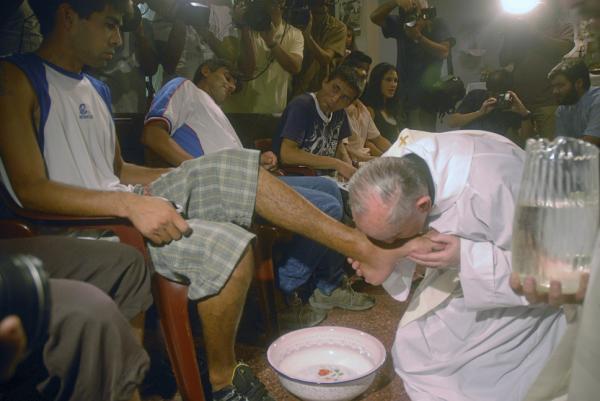
By MICHAEL WARREN March 14, 2013 5:47 PM
BUENOS AIRES, Argentina (AP) — It’s beyond dispute that Jorge Mario Bergoglio, like most other Argentines, failed to openly confront the 1976-1983 military junta as it kidnapped and killed thousands of people in a “dirty war” to eliminate leftist opponents.But human rights activists differ on how much responsibility Pope Francis personally deserves for the Argentine church’s dark history of supporting the murderous dictatorship. Continue reading New pope tied up in Argentina’s ‘dirty war’ debate

Read our report on conditions facing Guatemalans deported from the US.
(Information from August 2014)
Each week, an estimated 120 Guatemalan children, many unaccompanied, are arriving at the U.S. border. When they arrive in the U.S., they have already survived a long and perilous journey through Mexico, where extortion, kidnapping, rape, and murder are common; many survive these horrors only to die crossing the U.S. desert. Often these children make the journey north not by choice but because they face daily violence and life-threatening poverty; some are literally running for their lives. In a study by the UNHRC, almost 40% of Guatemalan children interviewed who had entered the U.S. unaccompanied and undocumented raised international protection concerns due to violence in society or abuse in the home; close to 30% spoke of deprivation.
In the face of this humanitarian crisis, the Guatemala Human Rights Commission/USA (GHRC) calls for the U.S. government to treat all migrants with dignity, and accept its legal and humanitarian responsibilities to protect refugee children and youth.
The root causes of forced migration in Guatemala are linked to a complex set of factors that include rampant violence, acute poverty, corruption and high rates of impunity — conditions long exacerbated by U.S. policies. GHRC condemns misguided or inhumane responses, such as expedited deportations, that will not only send children back to situations of dire violence, but will also contribute to a cycle of forced migration. Instead, the U.S. response must include deeper analysis of these root causes, including our own role in exacerbating forced migration.
GHRC calls for a humane U.S. response, in line with international protection obligations, to address the immediate needs of children and vulnerable populations.
GHRC calls for a long-term strategy that addresses the root causes of migration and focuses on helping people to stay in their communities, instead of a militarized or “mano dura” enforcement approach that will only provoke further fear and instability.
U.S. policies in the region have been a significant factor contributing to decades of forced migration from Guatemala.
GHRC has documented conditions in Guatemala for over three decades, during which time forced migration has been inextricably linked to social and political factors rooted in historic poverty, inequality and state-sponsored violence – conditions aggravated by U.S. policies, particularly over the last 60 years.
After backing a coup against Guatemala’s democratically elected president in 1954, the U.S. supported the reversal of democratic reforms for economic equality and, for the next forty years, funded, trained and supported the brutal violence unleashed against Guatemala’s civilian population. During Guatemala’s internal armed conflict, which reached the peak of brutality in the early 1980s, over one million people were forcibly displaced, and an estimated 200,000 fled to Mexico, the U.S. and other countries as war refugees.
The long-term legacy of this violence is complex and includes family and community disintegration, high rates of generalized violence, outmigration, and a myriad of related social problems. These challenges were not resolved with the signing of the 1996 Peace Accords and instead have become more acute over the past decade. A history of violence and impunity has also contributed to structural violence, as well as high levels of domestic violence, organized crime, corruption, and weak state institutions. These conditions often violate the universal right to life, liberty and security.
The U.S. response to post-war instability and violence in the region has in large part exacerbated the factors that contributed to forced migration.
1) The U.S. continues to fund security policies in Guatemala that have failed to reduce generalized violence in the region and, in some cases, has reduced Guatemalans’ sense of security. Bilateral and regional assistance has increased steadily from 2008 to today, including over 100 million dollars of security assistance to Guatemala through the Central American Regional Security Initiative (CARSI).
Over this same period, violent crime in the Northern Triangle (Guatemala, Honduras and El Salvador) has escalated and the region now has one of the highest homicide rates in the world. Guatemalan women suffer particularly high rates of domestic and sexual violence. In 2013 Guatemala registered the second highest rate of femicide [1]; over 50% of migrants from Guatemala that year were women [2] and GHRC has supported numerous asylum cases of women who fear persecution and violence if forced to return.
While U.S. support for the International Commission against Impunity in Guatemala (CICIG) has been important, aid to Guatemalan security forces has not succeeded in reducing overall levels of organized crime. Organized criminal networks continue to operate freely throughout Guatemala, trafficking drugs, guns, and human beings. Gangs control entire sections of Guatemala City and other urban areas through extortion, forced recruitment, and other acts of intimidation and violence.
Children are the most vulnerable of all. Every 17 hours a child or teen dies from gun violence. And every two hours a child younger than five years of age dies of preventable causes [3]. Children suffer widespread abuse, sexual exploitation, prostitution, and forced marriage [4]. Where gangs are present, children and youth are specifically targeted for forced recruitment and threatened with severe retaliation if they refuse to join gangs and perform criminal activities or serve as coerced sexual partners [5].
The Guatemalan government is often unable to offer its citizens protection from violence. Impunity for all crimes is one of the highest in the western hemisphere, and impunity for crimes committed against women, children and other vulnerable populations can reach 98%. The police are undertrained, understaffed, underpaid, and often corrupt. Rather than focus on reforming the civilian police, Guatemala has increasingly relied on the military for law enforcement, a strategy that has proven ineffective and, in many cases, counterproductive.
Moreover, there are credible allegations of collaboration between organized criminal groups and members of the Guatemalan military and police [6], as well as police and military involvement in serious crimes [7], exacerbating impunity and denying victims the right to security and justice. Such abuses are often not investigated or prosecuted.
The infiltration of Guatemala’s security forces by organized criminal networks also leads to concerns that ongoing U.S. aid to these institutions inadvertently strengthens the very groups it seeks to combat, and ultimately increases the risk of violence and human rights abuses against vulnerable populations.
2) U.S. economic policies have reinforced poverty and undermined employment opportunities, both of which continue to be important push factors for forced migration. According to the UNDP, more than 51% of Guatemalans live in poverty, with 17% surviving on less than US $1.25 per day [8]. Over half of children under age five suffer from stunting due to malnutrition and 23% of the entire Guatemalan population is undernourished. Chronic under-nutrition in indigenous areas reaches 70% [9].Guatemala continues to be one of the lowest spenders on social programs of any country in Central America, and many Guatemalans lack of access to basic healthcare, social services, and education.
U.S. economic policies such as the Central America-United States Free Trade Agreement (CAFTA) have further contributed to impoverishment and economic instability at the community level. CAFTA has failed to provide sustainable economic opportunity. Steady, long-term employment in many regions is few and far between; 75% of working people are employed in the informal sector, with no job benefits or security, and no guarantee of earning the minimum wage [10].
Many people in rural communities are heavily dependent on subsistence agriculture. CAFTA has increased the trade imbalance between the U.S. and Guatemala and imports of U.S. subsidized crops have undercut local markets [11], forcing people to find work elsewhere, including in the United States. Meanwhile, labor violations and abuse in the workplace are an ongoing reality for those employed in the textile and service sectors. The open CAFTA complaint against Guatemala, filed by U.S. and Guatemalan labor unions in 2009 for the government’s failure to address persistent and systematic labor rights violations, has not produced any results [12].
The U.S. has done little to address conflict in many rural and indigenous communities, which has spiked due to the rise of international investment in mining, hydroelectric power, petroleum extraction, and other large-scale commercial agriculture. These land-intensive projects create few jobs and leave immense environmental devastation in their wake. By means of community referendums Guatemalans have expressed their overwhelming opposition to this model of imposed “development,” yet the Guatemalan government has refused to recognize the results of these plebiscites and has even questioned their legitimacy. Meanwhile the government has neglected to carry out its own consultations with the indigenous populations affected by these projects, in direct violation of obligations under international law. Instead, the Guatemalan government has relied on repressive policies and, in some cases, martial law, to protect the economic interests of transnational companies rather than the safety of its citizens. Facing displacement, contaminated water, polluted environments, and repression from the government, Guatemalans may be forced to seek their livelihoods elsewhere.
3) The U.S. has not done enough to protect human rights defenders, many of whom are working to improve social and economic conditions at home. Those who seek to address root causes of migration – including violence, impunity, land rights and economic inequality – face defamation, persecution and targeted violence. In 2013, Human Rights Defenders Protection Unit of Guatemala documented 18 assassinations of human rights defenders. That same year, the International Trade Union Confederation called Guatemala the most dangerous country in the world to be a trade unionist, citing 68 documented assassinations of trade unionists since 2007. Suspects have been arrested in only one of the murder cases [13].
[1] UN Human Rights Council, Update Paper, World Model United Nations 2013. See also “Guatemala es el segundo país del mundo con más casos de femicidios, según ONU” lainformation.com, November 20, 2012. Available online at http://noticias.lainformacion.com/asuntos-sociales/conducta-abusiva/guatemala-es-el-segundo-pais-del-mundo-con-mas-casos-de-femicidios-segun-onu_qrUtoDkn9B83D3LYp9OGD7/.
[5]See, for example: Marked for Death: The Maras of Central America and those who Flee their Wrath, Jeffrey D. Corsetti, 20 Geo. Immigr. L.J. 407, 2005-2006. Available online at http://www.uscrirefugees.org/2010Website/5_Resources/5_3_For_Service_Providers/5_3_9_Gangs/MarkedForDeath_Part1.pdf
[6] Gonzalez, Rosmery Austria deniega permiso de venta de armas a gobierno de Otto Pérez, El Periodico, (May 2, 2014) available online at http://elperiodico.com.gt/es/20140502/pais/246662/
[7] U.S Department of State, Country Reports on Human Rights Practices for 2013
[8] UN Human Development Report 2013.
[9] World Food Program. “Guatemala.” 2013. Available at http://www.wfp.org/countries/guatemala
[10] Taken from World Bank at http://www.voxxi.com/latin-american-workers-swallowed-by-informal-employment-low-wages/
[11] See reports from the Stop CAFTA Coalition from 2006, 2007, 2008. Available online at http://www.ghrc-usa.org/resources/publications/other-publications/.
[12] See http://www.aflcio.org/Blog/Global-Action/Enforcement-Plan-Fails-to-End-Murders-Violence-Against-Trade-Unionists-in-Guatemala
[13] See http://es.panampost.com/marcela-estrada/2014/06/04/guatemala-tras-anos-de-impunidad-en-homicidios-de-68-sindicalistas-detienen-a-primeros-tres-sospechosos/
Source: ghrc-usa.org
STATISTICS ON BASIC CONDITIONS IN GUATEMALA:• Guatemala is one of the lowest spenders on social programs of any country in Central America: the national budget invests approximately 3% in education, 1% on health and 0.4% on housing.• Over 50% of children are chronically malnourished; chronic under-nutrition in indigenous communities is an estimated 70%.• 60% of the population lives on less than US $2/day. 26% of the population lives in multidimensional poverty.• 75% of working people are employed in the informal sector, with no job benefits or security, and no guarantee of earning the minimum wage.• The homicide rate of almost 40 murders per 100,000 inhabitants is one of the highest in the world.• 748 women suffered violent deaths in 2013, an average of 2 every day, which is a 10% increase from 2012. The impunity rate for these cases is 98%.• 68 labor activists have been killed since 2007, making Guatemala the most dangerous country in the world to be a trade unionist.• At least 54 drug trafficking organizations reportedly operate within the country.
Nueva York — El relato parece extraído de las historias de horror de Edgar Allan Poe, E.T. Hoffman, Guy de Maupassant o Bram Stoker.O más, de las transcripciones de los interrogatorios brutales en los campos nazis deconcentración de Dachau o Treblinka. Pero no lo es.
Tampoco es ficción de un literato dedicado a provocar estremecimientos de terror e insomnio en sus lectores. Es, simplemente, una página arran cada de la tragedia vivida en las ergástulas de las dictaduras militares de los años 70, instauradas, alegadamente, para defender la libertad y la democracia, amenazadas por la insurgencia de pueblos anhelantes de justicia social. La página siniestra vivida hace tres décadas por Luz de las Nieves Ayress Moreno, chilena, una activista comunitaria que reside desde hace 12 años en Nueva York, toma actualidad cuando una Comisión de la Verdad en Chile, acaba de entregar al presidente Ricardo Lagos un informe sobre la tortura ejercida por el régimen militar que encabezó por 17 años el general Augusto Pinochet Ugarte, quien, en una entrevista para una cadena de televisión hispana, en 2003, su autocalificó como “un ángel bueno”.
Lagos declaró sentirse “asqueado” de la lectura y el general Manuel Contreras, jefe la DINA, la policía política de Pinochet, dijo a los medios de prensa que “en la Dirección de Inteligencia Nacional no hubo ninguna política de tortura ni tampoco de detener gente para asesinarla, ni cosas por el estilo”.
Las reaccion es a esta declaración fueron desde la calificación de “cín i cas y perversas” hasta la de la ex ministra de Defensa, Michelle Bachelet, sobreviviente de las torturas en Villa Grimaldi, quien acusó a Contreras de ser “un cara de palo”.
Nieves Ayress tenía 23 años y era, según su relato, una joven estudiante que había sido influida, como casi todos los jóvenes de su generación, por la Revolución Cubana, el movimiento hippie, las reformas sociales, la guerra de Vietnam y los movimientos juveniles contestatarios de Francia que encabezaba Daniel Cohn Benditt o “Danny, el rojo”=. Lo que queríamos era un mundo más humano y igualitario, por eso me afilié al Ejército Nacional de Liberación en Bolivia en 1968 y trabajé con mujeres y niños en varias poblaciones pequeñas. Yo no maté a nadie, no robé, no cometí ningún delito. Mi pecado era ser joven, y apenas derrocado Allende los militares y los extremistas de derecha sospechaban de todo aquel que fuera joven” dice Nieves alinicio de su charla.
Su testimonio discurre fluido, haciendo difícil para su interlocutor conservar el pulso y la presión arterial normal al escuchar el lúgubre relato.
“El día del golpe yo estaba en casa. Sabíamos que la insurrección militar venía porque en mi familia se hacía política. Mis abuelos fueron los que junto a Recabarren fundaron los movimientos revolucionarios en Chile; mis padres, Virginia Moreno y Carlos Ayress, fundaron junto a Salvador Allende el Partido Socialista”.
“Mis cinco hermanos y yo pertenecimos siempre a movimientos sociales. El día 11 de septiembre de 1973 nos fuimos al barrio pobre de La Legua donde se produjeron enfrentamientos con los militares. Una semana después fui detenida por primera vez y llevada al Estadio Nacional. Estuve detenida por dos semanas y empecé a ser torturada. Permanecí enclaustrada en una torre, sola, y desde allí veía los golpes y las torturas a otros presos. Me pusieron en libertad sin darme ninguna explicación pero en enero de 1974 caí por segunda vez a órdenes de la DINA que dirigía el general Manuel Contreras.
Cuando me detuvieron yo estaba en la fábrica de mi padre. Me esposaron y me llevaron a la casa de nuestra familia en San Miguel y detuvieron también a mi padre, Carlos Ayress, y a mi hermano Tato. De allí me condujeron a un centro de torturas en el número 38 de la calle Londres, donde permanecí dos semanas sola e incomunicada y fui tratada salvajemente. Las torturas incluían golpes, choques eléctricos a las partes más sensibles del cuerpo como ojos, senos, ano, vagina, nariz, oídos y dedos. Un método muy común era el que ellos llamaban ‘pau de arara’, introducido por torturadores br
asileños que experimentaron con nosotros. Este consistía en amarrarnos de pies y manos y colgarnos cabeza abajo. En esa posición nos aplicaban choques eléctricos en el ano. Otra forma era ‘el teléfono’. Nos golpeaban con fuerza y simultáneamente los oídos. Desnuda y encapuchada fui torturada en presencia de mi padre y hermano e intentaron que tuviera relación sexual con ellos. También me obligaban a presenciar como torturaban a mi padre y de otros amigos que se encontraban presos. En los baños de la prisión de la calle Londres fui repetidamente violada”.
“Aunque no supe quienes eran mis torturadores en ese sitio, por sus voces pude entender que eran argentinos y paraguayos quienes me convencieron que estaba en Buenos Aires. En una sesión de torturas sufrí un colapso cardíaco. Los verdugos se asustaron y pidieron unas medicinas a un sitio de la calle Arturo Pratt. Fue así como supe que estaba en Santiago”. “Calculo que fue en febrero de 1974 cuando me llevaron a otra prisión en Tejas Verdes donde estuve incomunicada. Este era otro sitio de entrenamiento de torturadores y los recuerdos que tengo son de absoluta brutalidad. Me forzaron a realizar actos sexuales con un perro que había sido especialmente preparado para este tipo de abuso. También colocaban ratas dentro de mi vagina y luego me daban choques eléctricos. Las ratas, desesperadas, hundían sus garras en mi interior. Se orinaban y defecaban en mi cuerpo. Después me inocularon el virus de la toxoplasmósis. Fui violada constantemente y forzada a tener sexo oral con mis captores. Me cortaron las capas superficiales del vientre con un cuchillo y las orejas. Luego me ponían alcohol en las heridas y me aplicaban corriente eléctrica. Toda vía pueden verse las cicatrices en mi cuerpo. Me introdujeron botellas de Coca Cola por el ano y me gritaban ‘Esto es para que sientas el Imperio’”.
“El general Manuel Contreras ha declarado hace pocos días que en la DINA nunca se torturó a nadie. Yo puedo decir que en una ocasión fui torturada por el propio Manuel Contreras y una mujer alemana que estaba presa, de quien decían que nos parecíamos y debíamos ser hermanas. A Contreras lo pude ver porque la venda que cubría mis ojos estaba floja. Después lo reconocí en fotografías”. “Un ex agente. Samuel Fuenzalida Devia, declaró a un diario digital chileno que el general Manuel Contreras, quien acaba de ser condenado en su país a 12 años de prisión, supervisaba las torturas en Londres 38”.
“A las mujeres se les aplicaba corriente en los genitales y en los senos. También eran quemadas con cigarrillos”, dijo Fuenzalida y agregó que Contreras le dijo en una ocasión que “debía estar orgulloso de pertenecer a la DINA”.
“En abril de 1974, cuando había sido llevada a la Cárcel de Mujeres de la calle Vicuña Mackenna, que estaba administrada por una orden de monjas, caí en cuenta que estaba embarazada. Un doctor de apellido Mery, militar que ejercía en la Universidad Católica, me confirmó el embarazo y me dijo que yo debía estar orgullosa de tener ‘un hijo de la patria’, es decir un producto de violaciones de los militares. Mi situación causó una gran controversia internacional pues mi madre y toda mi familia había denunciado mi prisión y torturas. Fui entrevistada por la Cruz Roja Internacional, Amnistía Internacional, Comisión Kennedy, Comisión de Derechos Humanos de la OEA, el cardenal Silva Enríquez y esposas de los militares. Me ofrecieron la libertad si no denunciaba las violaciones y el embarazo. Las monjas ofrecieron ayudarme para pedir un permiso que me permitiera abortar. Tenía que elevar una solicitud al cardenal y éste elevarla al Papa. En Chile el aborto era penado por la ley y yo estaba en muy mala condición física, muy débil, así que decidí tener el hijo. Después de haber sobrevivido a tanto tiempo de detención y crueles maltratos, no iba a dar a los militares el gusto de morirme. Sin embargo en mayo tuve un aborto espontáneo pero no recibí atención médica ni medicinas”.
“De Vicuña Mackenna me llevaron a Tres Álamos, otro campo de concentración. Fui sometida nuevamente a violaciones, amenazas y hasta un simulacro de fusilamiento. En diciembre de 1976 salí expulsada de Chile junto a 17 presos políticos entre los que estaban mis compañeros Víctor Toro, Gladys Díaz, el doctor Luís Corbalán. El decreto de expulsión señalaba que no podíamos volver jamás a nuestra patria. Con la solidaridad de mucha gente conseguí quedarme a vivir en Berlín”.
“A fines de 1977 fui a Cuba. En el hospital Calixto García, sin tener que pagar un centavo, me trataron de la toxoplasmosis, me reconstruyeron la vagina y todo mi cuerpo para que pudiera engendrar, me trataron las infecciones vaginales, la descalcificación y la sordera provocada por ‘el teléfono’, me arreglaron las cicatrices del cuerpo y las orejas y me operaron los pies deformados por el maltrato. También me dieron terapia psicológica en una muestra de solidaridad de los cubanos imposible de pagar”.
“Pese a todo lo que me hicieron los sicarios de Pinochet pude sobrevivir. Tengo aún secuelas psicológicas por todo lo que me tocó vivir. Siento dolor permanente en el cuello, las manos, las rodillas y los pies; tengo marcas y cicatrices en todo mi cuerpo. Cuando veo una rata siento un dolor reflejo en la vagina. Siento ansiedad, pesadillas y depresión. He superado algunas de esas secuelas, por ejemplo el miedo al encierro surgido por las violaciones que sufrí en el baño de la prisión de la calle Londres, pero sigo siendo muy sensible emocionalmente. Mi familia fue dividida, destruida y toda mi vida cambió después del golpe militar”.
“Pero, al fin, yo estoy aquí, resucitada. Con mi esposo, Víctor Toro, preso y torturado igual que yo, tenemos una hija, Rosita, quien estudia en la Universidad de Nueva York. A los 21 años regresé a Chile con ella, y pude decir a mis torturadores militares: ¡Aquí estoy yo y aquí está mi hija. Me torturaron pero no me destruyeron, no me jodieron por que tuve una hija!”.
(*) Nieves Ayress enfatiza que su testimonio no persigue ninguna compasión. Sólo consignar
un ejemplo para que los sucesos de Chile, no se repitan nunca.
©CEME web productions 2005
Never forget these crimes. The devil walks the earth.
Because of the hardships on Iraqi children from the sanctions imposed on Iraq after the Persian Gulf War, beginning in 1996 Iraq was allowed to sell limited amounts of oil to finance the purchase of goods and medicines for humanitarian purposes. This Oil-for-Food program was supposed to be under tight UN supervision, but the UN was the fox guarding the chicken coop.
The UN collected a 2.2 percent commission on every barrel of oil to pay for overseeing a flow of funds that totaled at least $67 billion, a task administered by ten UN agencies employing 1,000 staff. That was just the start of the giant Oil-for-Food rip-off.
The evidence is now pouring in that more than $10 billion in bribes and kickbacks were siphoned off under the noses of the UN monitors. Oil-for-Food was a giant scam that allowed Saddam Hussein to divert that incredible sum to finance his lavish lifestyle and to buy friends to keep himself in power.
The UN had no effective mechanisms of accounting or disclosure, and there never was any audit. Everything was secret: the price and quantity of the oil and of the goods for relief, the identities of the oil buyers, the quality of the food and medicines, the bank statements, and all financial transactions.
General Tommy Franks called the program Oil-for-Palaces. Others called it UNScam. But Saddam’s personal pocketing of an estimated $5 billion was only part of the racket; the rest of the illegal money financed a system of bribes to buy international support for his corrupt regime.
Now we know why the UN, and especially France and Russia, opposed our goal of toppling Saddam. It wasn’t because they are anti-American; it was because they were the chief beneficiaries of these secret deals with Saddam and they didn’t want to turn off the money spigot.
From 1996 to 2002, Oil-for-Food was a cover that invited and sustained huge transfers of corruption-laden transactions between Iraq and major UN members, particularly Russia, France and China. Their profitable party would still be going on if the United States hadn’t kicked Saddam out of power.
Here is how the scam worked. Saddam selected individuals, corporations and political parties to receive oil allotments at steep price discounts, which were then sold at the market price. Their part of the deal was to kick back a generous percentage of the profits to Saddam and to help keep him in power by giving him political support in the UN and elsewhere.
UN Secretary General Kofi Annan was a chief negotiator with Saddam. Annan’s secretariat collected fees of $1.4 billion to monitor, administer and audit the program, keep the records, and interact with Saddam, plus another $500 million for weapons inspection.
Annan picked UN Assistant Secretary General Benon Sevan to be Oil-for-Food’s executive director and report directly to him. He served for six years.
The Iraq Oil Ministry has now released a list of 270 companies and politicians from 46 countries, especially Russia and France, that profited from this scheme. The list includes former Iraqi officials, a former French Cabinet minister, a British member of Parliament, Benon Sevan who ran the program, a company with which Kofi Annan’s son was associated, and other UN personnel who were supposed to be monitoring the contracts.
The smoking gun is a letter to the former Iraqi oil minister obtained by ABC News. It describes the specifics of one deal that would have generated a profit of $3.5 million.
Some of the food delivered, mostly from Russia, was unfit for humans, and medicines were often out of date. Saddam also handed out vouchers instead of cash for other goods imported illegally in violation of UN sanctions.
The excuse for this program was an alleged desire to provide for needs of Iraqi people, but the people had no say in who bought or sold goods or food, what was bought, how it was distributed, or anything else. The deal was between the UN and Saddam.
Five investigations of what is probably the biggest financial fraud in history are now in progress. Two are by the U.S. House, one by the Senate, one by the Iraqi Governing Council, and one authorized by the UN and headed by former Federal Reserve Chairman Paul Volcker. A UN Security Council resolution calls on the 191 UN countries “to cooperate fully,” but much cooperation is unlikely since Volcker has no subpoena power.
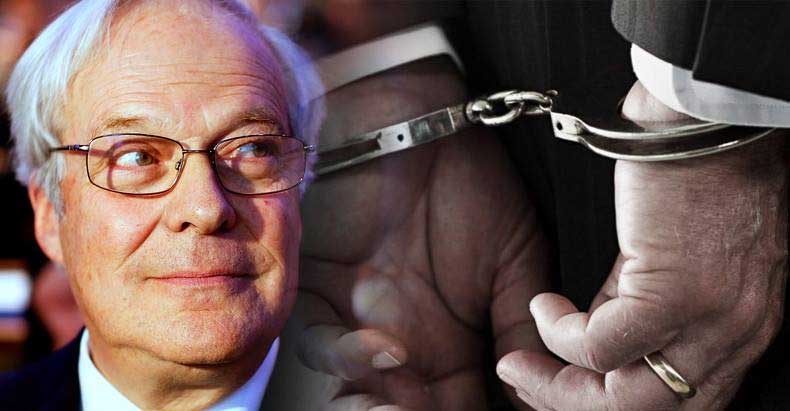
by Matt Agorist March 5, 2016
Last year, Baron David de Rothschild was indicted by the French government after he was accused of fraud in a scheme that allegedly embezzled large sums of money from British pensioners.
It has taken many years to bring this case against Rothschild and his company the Rothschild Financial Services Group, which trapped hundreds of pensioners in a bogus loan scheme between the years of 2005 and 2008. Continue reading Rothschild Bank Now Under Criminal Investigation After Baron David De Rothschild Indictment
By
European governments are bracing for a major humanitarian emergency in Greece amid rising panic that the EU’s fragmented efforts to cope with its migration crisis are nearing breakdown. Continue reading Europe braces for major ‘humanitarian crisis’ in Greece after row over refugees
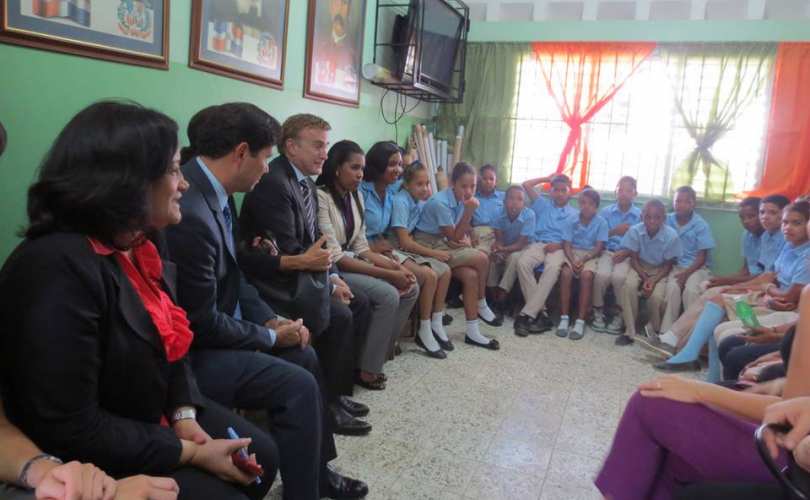
March 3, 2016 (LifeSiteNews) – Alexandria L. Panehal, Mission Director for USAID in the Dominican Republic, told reporters at a press conference yesterday in the capital of the Caribbean nation that the United States Agency for International Development will be spending $1 million to finance the promotion of the LGBT agenda, including contributions to LGBT politicians who wish to participate in the upcoming elections. Continue reading USAID is openly financing the campaigns of homosexual candidates in pro-family countries
“Serious failings” at the BBC allowed Jimmy Savile to sexually abuse 72 people without detection for decades, according to a damning report published on Thursday, which insisted that the corporation still had lessons to learn from the affair.
Dame Janet Smith, who started the independent inquiry in October 2012, found that despite what had happened with Savile, those worked at the BBC were still worried about reporting potential abuse and taking on the broadcaster’s stars.
She concluded that “an atmosphere of fear still exists today in the BBC possibly because obtaining work in the BBC is highly competitive and many people no longer have the security of an employment contract”.
It was incumbent on the BBC to examine its culture today, Smith added, particularly when it came to the continued fear of speaking out and its attitudes towards “the talent”, or on-screen presenters.
In total, Savile sexually assaulted 57 females and 15 boys. Three incidents of rape and attempted rape took place on BBC premises, Smith said, and the youngest victim to whom Smith spoke was eight years old at the time of the offence.
The report, which runs to is 372,400 words, made for “sorry reading” for the BBC, said Smith, a former court of appeal judge.
It examines sexual abuse perpetrated by Savile and Stuart Hall, who was released in December after serving half of a five-year jail term for historical indecent assaults against girls aged between nine and 17.
A “macho culture” of sexism and sexual harassment and an “atmosphere of fear” led many employees to keep quiet about concerns, she wrote. She found BBC staff “more worried about reputation than the safety of children”.
Regarding abuse by stars and others at the BBC, Smith concluded that the criminal behaviour was largely the fault of the perpetrators, the broadcaster could have stopped it but failed to do so.
However, the report ultimately concludes that there is no evidence that the BBC as a corporate body was aware of Savile’s conduct and therefore cannot be convicted of any offence.
It also concludes that BBC staff failed to report Hall indulging in “inappropriate sexual conduct” partly because he was seen as an “untouchable” celebrity, a report found.
Staff at BBC Manchester knew the former It’s a Knockout host was taking women into his dressing room for sex, although not that some of them were under age, a report by former high court judge Dame Linda Dobbs found.
The report said he had abused 21 female victims at the BBC, with the youngest aged 10, between 1967 and 1991, but no complaints were passed on to senior management.
In conclusion, Smith writes: “The delivery of these reports presents an opportunity for the BBC to take steps to ensure that history cannot repeat itself.”
In a final verdict which may disappoint campaigners for victims, her “overarching recommendation” was that the BBC should carry out a further review and subsequent audit of its current management.
After speaking to more than 800 people, Smith concluded:
Although largely completed a year ago, the report was delayed by the police investigations and sent to the BBC itself a week ago.
In the report, Smith says: “The BBC should examine its attitude towards ‘the talent’. I have reported that the BBC appeared at least in the past to be tolerant of inappropriate conduct by the stars because they were more valuable to the BBC than the BBC’s own values.
“The BBC should leave members of the talent in no doubt as to the standards of the behaviour expected of them.”
“The first reason for this is because of a deference or even adulation which was, and still can be, accorded to celebrity in our society,” she says.
The report found that one complainant was told to “keep your mouth shut; he is a VIP” while talent were “treated with kid gloves and rarely challenged”.
The review found that Savile would “gratify himself whenever the opportunity arose” and in “virtually every one of the BBC premises at which he worked”, which included BBC Television Theatre, Television Centre, Broadcasting House, Egton House, Lime Grove studios and studios in Leeds, Manchester and Glasgow.
“Savile had a voracious sexual appetite,” Smith writes. “He was obsessively interested in sex.”
Smith said Savile’s tactic with young girls was to invite them to watch him perform either on radio or television as a “form of grooming”.
“He used his celebrity status, his entree to the BBC and his connections with other stars as bait with which to draw young girls into his sphere.”
In addition to unnamed supervisors and technical staff who worked on shows like Top of the Pops, Smith lists other examples of people who knew or suspected Savile was behaving inappropriately or illegally.
Source: The Guardian

By Yoichi Shimatsu 3-27-14 BANGKOK
It is by no mere coincidence, when telltale evidence of a Mossad role in the MH370 hijack was starting to snowball, that Israel’s embassies and consulates were suddenly shut down due to a “strike by diplomatic staff”. This fork-tongued alibi was obviously meant to prevent law enforcement agencies across Asia and the Western world from questioning Israeli intelligence agents and military attaches about the whereabouts and fate of the hundreds of passengers.
The Jewish state’s diplomatic corps has retreated further into a tortoise shell, perhaps because of the hammer blow from investigative journalist Christopher Bollyn, who previously exposed Israel’s hand behind the 911 attacks. Based on eyewitness reports from a network of plane watchers in Europe and in Israel, Bollyn reports that an identical production model of the Malaysian Airlines Boeing 777 is being kept out of regular service inside a hangar at Tel Aviv Airport.
Seattle-based Boeing assembles aircraft in pairs as its standard practice, but the question is how one jet was leased by Malaysia’s national carrier while the matching plane was secretly turned over to the Israeli government without a purchase order from state-run El Al airlines.
Bollyn uncovered the fact that the two jets were delivered to a third-party company, whose top manager has a longtime connection with the George Soros. From the timeline of events, it is obvious that the plane transfers and subsequent electronic hijacking were part of a larger strategy, which was aimed at first, a planned false-flag attack involving mass murder of American citizens to be blamed on the two Iranians aboard MH370, in order to prompt the White House to order air strikes against Iran’s nuclear facilities and air defenses; and second, the blatant theft of key technology related to Freehold Semiconductor’s Kinesis microchip, the world’s tiniest microcontroller, for use in miniature weapons systems that will ensure Israeli military supremacy for decades to come.
Bait and Switch
Why do the Israeli false flaggers need to hijack the Malaysian sister-plane, when just one plane will suffice for the ruse? The mint-condition jet in Tel Aviv would be refitted with Stealth cloaking, state-of-air avionics (aviation electronics, DU-tipped munitions and high-temperature explosives, but fake evidence of Malaysian origins are needed to complete the ruse. Therefore, identifying metal tags and other identifying parts have to be removed from MH370, along with seat covers, crew uniforms and the bodies of the two Iranians, to be frozen in a morgue. The deception would, be complete with the transfer of the stripped Malaysian jet to El Al.
The cover story for TIME and the New York Times would fly as easily as a captured jetliner, running something like “The Iranian hijackers overcame the crew and flew the jet into a military airfield in Iran. Then the Revolutionary Guards loaded the plane with gasoline drums for a suicide mission against innocent civilians and our congressmen in Washington DC. We mourn the loss of the Capitol and the White House in the intense blaze that destroyed half of our beloved capital, but we face the future with courage and will deliver justice against that terrorist state. The last of the Axis of Evil will share the fate of its erstwhile partners. Now, from the Superdome, let’s hear Lady Gaga sing the Star-Spangled Banner.” Those are fighting words that can snap average Americans out of their antiwar malaise. Yes, propaganda is made for consumption by fools.
Going Boeing: We Know Why We’re Here
Boeing’s motto is precision perfect when it comes to MH370. No other aircraft manufacturer (think of McDonnel Douglas, for example, or long-gone Hughes) is closer to the US intelligence services. More than a business corporation, Boeing is a state unto itself, with a vast network of facilities around Seattle and at every major airport around the globe. Less visible are its connections with obscure airlines operating in remote islands, where it is routine to find amputated limbs of human-sacrifice victims floating into Puget Sound. The company provides for all of its powerful customers needs, desires and wildest fantasies, as expressed in its older slogan: Forever New Frontiers.
One of those frontiers is remote piloting of civilian aircraft, based on drone warfare technology, which Boeing developed from prototypes designed in Israel. The pair of 777s for Malaysia and Israel are new editions, and therefore rigged to fly by wireless.
Boeing delivered the twin jets to a middleman in October 2013, who delivered one to Malaysian Airlines in November. The timing coincides with the appointment of Joanne Magruire, a veteran Lockheed Martin Space Division executive, to the board of directors of Freescale Semiconductors, whose Kuala Lumpur staffers involved in the design of the Kinesis KL02 microchip were aboard MH370.
The plan went like clockwork.
Who is Abdol Moabery?
The twin Boeing jets were sold to GA Telesis, an aircraft leasing and servicing company, based in Fort Lauderdale, Florida. The owner of GAT is Abdol Moabery, the son of Iranian immigrants in the posh Woodlawn Hills suburb of Los Angeles.
Before and after September 2001, Moabery was executive manager of Skywatch, a company that supplied monitoring devices for the rooftops of office towers. The electronic device can spot as many as 300 flying objects in one sweep and single out the one flying toward the targeted property. Handy indeed to welcome your boss on the helipad in Manhattan and also to direct his pilot toward the right building.
One of the partners in Skywatch was New York City Mayor Rudolf Guiliani, who claimed his interest was solely in its potential application to monitor US borders against illegal immigrants. One immigrant who slipped past the Skywatch net was Mohamad Atta. Despite or perhaps because of Skywatch, the two jetliners flew into the Towers like Robin Hood’s arrows.
Six months after 911, Moabery left Skywatch to start up GA Telesis in Florida, a state then governed by fellow Republican Jeb Bush and where 911 suspects had extensive flight training.
Prior his term at Skywatch, Moabery served in the US Navy and then worked in executive positions for two Soros-owned aviation companies, Aviation Systems International and C-S Aviation. C-S stands for Chatterjee-Soros. Purnenda Chatterjee is a former Stanford Research Institute and McKinsey partner, whose Chatterjee Group funneled investment funds into West Bengal on behalf of his mentor Soros. In 2011, investors in North Carolina filed charges against Soros and his protege for fraud and embezzlement, an won the initial case by arguing that Soros concealed his ownership of the bankrupt company. Soros is not the Midas he pretends to be, often escaping out the back door leaving behind angry investors.
Moabery takes an interest in homeless children as founder of the charity called Kids in Distress.
Lord of the Skies and Depths
The Boeing corporate vice-president for Southeast Asia is Ralph “Skip” Boyce, the former US ambassador to Jakarta and Bangkok. The prize job came as reward for his past services to Boeing, black operations and the pedophile network. After his retirement from government service, Skip didn’t break his stride:
-Boyce had just sold dozens of Boeing civilian aircraft to a new airline controlled by the Indonesian military just before the “accidental” crash of a demonstration model of a lower-cost Sukhoi Super 100 passenger plane for inexplicable reasons into a mountain after takeoff from the joint U.S.-Indonesian Halim Air Force Base.
Some background on the business-savvy man from Boeing:
– Boyce was on duty during the Bali bombing. Then editor of Jakarta Post Robert Finnegan, a retired Marine and founder of the 5th Estate news site, found evidence of high explosives and nuclear materials at the bomb site, which pointed to a US intelligence role in the killing of Australians undercover agents and Indonesian civilians. The ambassador in response arranged his removal from his editorship.
– Ambassador “Boyz” was the de facto dean of American envoys in Southeast Asia when anti-pedophile activist Sean Parlaman jumped off his apartment balcony in Pattaya, Thailand, according to local police on the pedophile payroll. His protection of high-ranking pedophiles in the State Department and Congress coincided with the discovery of the skeletons of 500 Indonesian boys inside a cave in Bali and intimidation of a Cambodian orphanage as a recruiting ground for sex slaves whose average age was 10 years old.
Boeing is certainly out there on the frontiers.
Dolphins at Diego Garcia
Instead of flying to Iran immediately, MH370 presumably landed at the gateway to the Persian Gulf, Diego Garcia, the presumption being based on eyewitness accounts in nearly Maldives of a low-flying plane on descent toward that destination.
On the surface and from satellite images, Diego Garcia seems a barren atoll. That’s because most of the US Navy and Air Force bases are underground inside vast bunkers installed a decade ago. The island, part of the British-owned Chagos archipelago south of India, later made headlines as the storage site for hundreds of bunker-buster JDAM bombs for a joint Israel-US airstrike against Iran’s nuclear facilities and air defenses.
The Israeli military and intelligence presence on Diego Garcia is so massive that long-distance phone operators offer a special discount card for calls to Israel. The Israeli Navy’s nuclear-missile capable Dolphin submarines refuel and are serviced at Diego Garcia, saving the time and expense of going to Elat on the Red Sea.
An IDF Dolphin sub from Diego Garcia sank the South Korean frigate Choenan. The Dolphin crew, panicked by the unscheduled voyage, fired a smart torpedo at the frigate. On the following two days, South Korean naval divers rescued several Caucasians, including two drowning victims, from a sunken submarine. That Dolphin submarine, based at an underwater base south of Inchon, was later replaced with an IDF order for a new sub from HDW Germany. Cannon fire from the Choenan’s sister ship had hit the Dolphin after it sank the Choenan, following delivered nuclear-weapons material to the North Korean military.
Israel is neck-deep in intrigue across Asia, including nuclear deals with North Korea and Japan. As mentioned earlier in this series on MH370, Israeli-linked agents including Google and Facebook have monitored email servers across Southeast Asia and hacked into computers of Palestinian supporters.
The role of Israeli intelligence assets inside Muslim-dominated Malaysia is a long-running issue that involves strings of stay-behind agents left by the British colonial authority. These underground networks are descended from two strands of Jewish administrators and merchants in colonial Malaya. First are those who have origins in the Ottoman empire and migrated under Britain’s favorable policy toward the Donmeh Jews (hidden Jews inside the Islamic community across the Arab realm, Turkey and Iran) during the Ataturk period. Second are Baghdadi Jews involved in the opium trade. More recent recruits are ordinary bureaucrats and military officers who are in need of a handful of shekels to pay their gambling debts.
The spotting of increasing amounts of flotsam and jetsam off the Australian coast are meant to throw public attention off track. In actual flotation situations, there would be less debris with each passing day, as seats become waterlogged and life jackets deflate. Obviously, submarines from Diego Garcia are jettisoning pieces of aircraft through their missile hatches with blasts of compressed air. Bodies can be frozen in morgues with life jackets to be partially opened before dispatching them out the torpedo tubes.
Soros Gets More Than a Pound
The Malaysian jetliner, and its hidden sibling in Tel Aviv, are the instruments that should have guaranteed Zionist supremacy over the global economic and political order throughout this century. Instead, their grandiose design is collapsing under its own fabrications and delusions, as Israeli envoys scurry into the shadows like rats under spotlights. The FBI and Interpol have a monumental task ahead. Crush Israeli terrorist apparatus and hunt down their cells until world civilization is safe again.
“Thieves, murderers and liars” are mere words that can hardly describe the crafty criminality of the Israeli spy chiefs. But what about their paymaster, what does Soros get out of the deal? For one thing, the Mossad turns over the Kinesis microchip technology as thanks for his patriotism. Chips aside, what Soros really, really wants is the satisfaction of payback against Malaysia. Few things are more important than money, and that short list includes revenge.
The Hungarian Jew tycoon, who bought US citizenship after defrauding the Bank of England, has a die-hard grudge against Malaysia. During his cunning attempt to wreck the currencies of Southeast Asian, with the hidden agenda of buying assets and property on the cheap, Soros was slammed down by Malaysia’s then Prime Minister Muhammad Mahathir, who imposed a currency board to stop capital flight. That was back in 2008. (The Zionist-influenced Western media and Wall Street bankers quickly denounced Mahathir as “anti-semitic”, forgetting out of their dismal cultural ignorance that an Asian Muslim cannot be such since fellow believers across the Arab world are more Semitic than European Jews.)
If revenge is a dish best served cold, Soros has ice in his veins and waited till his dying days to gouge out a pound of flesh from Malaysia’s body politick.
At the risk of sounding as soft as Lady Portia with her aristocratic Venetian accent, let me suggest that the world community is to be governed with compassion for the poor and genuine democracy, and not by a top-down global order imposed with violence and greed from a self-appointed religious minority. So as the noose tightens on that little rogue state that would be king of our planet, let us mourn the victims of Flight 370 as much as we grieved over those who died inside the World Trade Center. Such bloodthirsty evil should never be allowed to strike again.
Yoichi Shimatsu, former editor with the Japan Times group in Tokyo, is a Hong Kong-based science writer.
Source: rense
| By Yoichi Shimatsu Exclusive To Rense.com 3-25-14 |
|
HONG KONG – The question tormenting millions of cyber-sleuths is Why? What could be the motive behind the elaborate plan for the midair capture of Malaysian Airlines flight 370? Among the 200-plus passengers bound for Beijing, the target group for the hijack is narrowing down to 20 tech employees working for Freescale Semiconductors, based in Austin, Texas. Among these programmers and systems designers are 12 Malaysians and 8 citizens of mainland China. The company is no newcomer but has long-time connections in East Asia, as the former design subsidiary of Motorola, which once dominated the Asian communications market in the postwar era. Freescale has design centers in Kuala Lumpur and in China, including Beijing, Tianjin, Shanghai, Chengdu and Suzhou. Besides its lucrative production of microchips for automotive components, Freescale has extensive contracts with the U.S. military, producing wafers and circuits for navigation, periscopes, electronic targeting, self-guided missiles and other weapons systems that require intelligence controls. Any defense-related company at the nerve center of Pentagon hardware is bound to attract the attention of weapons designers from both adversarial and allied nations upgrading their military capability. Japan, France and the UK, along with Russia, China and Iran, all want the leading edge that contractors like Freescale provide. What technological innovation would prompt the Pentagon’s military intelligence agencies to electronically interdict a civilian airliner in mid-flight, while disposing of the collateral passengers as shark bait? Ultra-small Microcontoller In February 2013, Freescale unveiled the Kinesis KL02, the world’s smallest microcontroller, measuring 1.9 mm by 2mm and containing RAM, ROM and a clock. The company brags that the device is so small that it can be swallowed for medical uses, such as releasing drugs according to prescription schedule or directing micro-surgery. Tiny though it may be, the micro-controller is the key to next-generation warfare based on self-guidance, tactical versatility and hierarchy of commands, in short, an adaptive thinking weapon that can outsmart foes. Potential applications include: – Drones smaller than a fly, either as remotes or autonomously, on surveillance missions or to deliver biowarfare packets, for example, lab-cloned viruses or toxic drugs. Their light weight means longer flying periods or even indefinite hovering time if solar-powered. – Injectable implants to insert a human-machine interface, for example, a targeting system attached to the optic nerve, rendering Google glasses obsolete. Bionic implants could be implanted in nerves of the limbs to control battery-powered prosthetics, realizing the Pentagon’s dream of a human-centered robotic warrior, known to anime fans as “meka”. – Maneuverable micro-satellites and mini-submarines that can be operated as drones or act independently to track and hunt larger weapons systems, spy satellites too small to be detected by ground telescopes, and orbiting warheads containing chemical, biological or nuclear materials. Strategic Versus Commercial Interest The series code of Kinesis KL02 stands for Version 2 made in Kuala Lumpur, which is the capital of Malaysia. This core of America’s next-gen weapons systems was developed overseas, in a Muslim-preponderant country economically allied with China, Russia and Japan and often at odds with US foreign policy. Therefore, an upcoming round of testing in China, and possible manufacture of Version 3 in Beijing, was a prospect that the Pentagon agencies, especially the NSA, the US Air Force’s Space Command and DARPA, had to stop by any means available. As Freescale Malaysia prepared to test Kinesis at its sister research labs in Beijing and Tianjin, alarm bells were sounding at the DARPA-funded Charles Stark Draper Laboratory in n Cambridge, Massachusetts. That leading weapons-research facility was created during World War II to build navigation systems and bomb sights stabilized against turning and vibrations by inertia. It has since moved on to microchips for every military application, including inertial guidance for ballistic missiles, communications, GPS, intelligent targeting systems, orbital piloting for the International Space Station and, under the cover of “biomedical”, the transhuman super-soldier program. The release of Kinesis exposed the Pentagon’s dilemma over dual-use technology, which can garner vast profits through civilian applications, as shown by GPS for cars and smartphones, yet threaten to wipe out America’s technological lead in warfare. The choice of whether to down on a new technology is not limited to Pentagon insiders and generals, since defense contractors and elite corporate executives are also involved. Dirty Work for Israel In the case of Freescale, the executive management and several veteran board members are connected with the Carlyle Group, which favors civilian commercialization of defense-related technologies to benefit its investment partners, including George Bush Senior and several retired defense secretaries. On the other hand, Freescale is financially contolled by private-equity group Blackstone, with major investors including the Rothschild banking family and several of its business partners. As top financiers behind the Zionist movement, the pro-Israeli interest is to prevent miniaturized robotic weapons from falling into the hands of Iran and its allies Hezbollah and Hamas. Micro-vehicles, self-guided and with tactical flexibility, swarming against Israeli cities, ports and airfields would be a nightmare for the Israel Defense Force. Therefore, the defenders of the Jewish state had to take action. Better to kill 200 Malaysian enemies and Chinese nobodies than to harm one hair on the head of any of the Chosen People. And thus, the order came down from the Red Shield, the House of Rothschild, to their neocon subordinates inside the Pentagon: Stop Flight 370 at any cost to America’s reputation. The New Boss Thus, in November, just a few months before the MH370 hijack, Freescale seated a new member on its Board of Directors. Joanne Maguire is an executive with three decades of experience in the Lockheed Martin Space Division. She studied electrical engineering at University of Michigan and UCLA, where she earned her master’s degree. She was invited to the Harvard Program for Senior Executives in National and International Security. Caltech honored her with the Karmann Wings Award and she received the Peter Teets Award from the National Defense Industrial Association. As the very embodiment of the Defense Advanced Research Projects Agency (DARPA), Maguire was the ideal choice to serve as watchdog against the corporate profiteers at Freescale. Hijacking the Truth There is no point in further disparagement of the pilot and co-pilot of the ill-fated flight, given their political connections with a compromised opposition beholden to the colonial past. The practicing with landing at Diego Garcia on the pilot’s flight simulator indicates a deep background with the Western intelligence services and probably Israeli espionage operating out of Singapore. Whatever the role of the plane crew, the NSA and US Air Force Space Command do not need manned piloting, except to maintain the appearance of normality at takeoff from Kuala Lumpur International Airport. As discussed in my earlier article, voice communication and navigational signals would have been disabled by a burst of powerful narrow-aperture radar used for electromagnetic warfare. The cockpit computer would then be reprogrammed, using Boeing’s own emergency piloting system, expanded with Pentagon and Israeli software. From the South China Sea to Diego Garcia in the Indian Ocean, the jetliner would be remote-controlled by a drone operator. Its unscheduled flight path would be tracked and subsequently remoted from data records by the NSA listening posts in Sri Lanka and the Jindalee eavesdropping facility in northwest Australia. Radar stations in the Maldives, installed under a US maritime accord, served to guide the jetliner to the southernmost atoll of the archipelago toward Diego Garcia, immediately to the south. The airliner’s descent over the Maldives, according to witnesses, went smoothly, for a safe landing on the long tarmac at the US Air Force Base on Diego Garcia Island, a CIA rendition center with underground hangars and prison used during the Iraq and Afghan wars. Upon arrival, the passengers would be herded into separate waiting areas, with the prize captives from Freespace sent to a debriefing facility, where their hard drives, laptops and smartphones would be confiscated and data downloaded, while the human intelligence assets were being questioned. The interrogators had a fairly easy task in telling the defenseless programmers: Join us or die with the rest. The cooperative would be given a new identity, and reintroduction into civilian life in a remote North American community after being administered memory-erasing drugs, similar to the ones first developed in the MK-ULTRA program. After vetting of all passengers, the uncooperative and high-risk suspects would be drowned and their corpses tossed near a phony “crash site”, off the coast of Western Australia, while US submarines discharge other bits of “evidence” into the cold waters. The crew of the plane was probably rewarded with a short walk off the plank into the jaws of waiting sharks. Anyone who puts their trust in imperial power deserves no less. Once the operation is completed and the media begin the mourning rituals, tearful American diplomats will attend memorial services for the missing victims of a tragic accident. Meanwhile, a cabal of Air Force officers and defense contractors will be clinking beer mugs with their former boss and guru, General Michael Hayden, the bureaucrat who militarize spaced and expanded the NSA into the global monstrosity that it has since become. MH370 will be remembered on the History Channel as an unsolved riddle wrapped in mystery, but no TV station will mention the other code involved in this dreadful affair – KL02 – cause of the untimely deaths and mangled memories of any survivors. Yoichi Shimatsu is a Hong Kong-based science writer, former editor of The Japan Times Weekly and a founding faculty member of journalism schools in Hong Kong and Beijing. |

This essay is about group manifestation and how the Christians are manifesting the Tribulation with their collective thoughts. God’s plan is NOT being made manifest – the Christian death cult is manifesting their collective thought energy and it is the conductor directing the destruction of the planet. I object to this extremely destruction Jewish derivative religion. I say that Christians are guilty of psychic warfare, they are willfully making hell on earth, and I say we hold them accountable. Continue reading Group Thought Manifesting the Apocalypse

2015-10-23 (Vatican Radio)
Archbishop Bernardito Auza, the Permanent Observer of the Holy See to the United Nations, on Thursday said it was the “grave duty” of the Vatican to remind the international community that “extremists are seeking to eradicate religions, ethnic groups and cultures” that have been in the Middle East “for millennia.” Continue reading Holy See: Extremists seek to eradicate religions and cultures

Every night, France’s chief weatherman has told the nation how much wind, sun or rain they can expect the following day.
Now Philippe Verdier, a household name for his nightly forecasts on France 2, has been taken off air after a more controversial announcement – criticising the world’s top climate change experts.
Continue reading France’s top weatherman sparks storm over book questioning climate change
#independentinvestigationkunduz
U.S. is guilty.
This is a WAR CRIME! Continue reading WAR CRIME -MSF Hospital Bombing Kunduz
Vatican City, 8 October 2015 (VIS) – Archbishop Paul Richard Gallagher, secretary for Relations with States, today spoke in Brescia, Italy during the meeting entitled “Dialogue between Peoples in the name of Paul VI”, which commemorated the 50th anniversary of Blessed Paul VI’s visit to the General Assembly of the United Nations on 4 October 1965. Continue reading Paul VI, champion of dialogue between peoples
Another Zionist Hoax Exposed by Dr. William L. Pierce
Tucked away on pages 119 and 122 of the October 6, 2015 issue of Der Spiegel, a weekly German news magazine comparable to Time or Newsweek, was a news item of considerable significance:
A scientific analysis of the manuscript purported to be the original diary of Anne Frank, a Jewish girl who died in a German concentration camp during the Second World War, has revealed that the manuscript could not have been written before 1951, six years after the end of the war.
The significance of Der Spiegel’s revelation of this fraud is twofold. First, the printing of the story in a mass-circulation publication constitutes a major break with past treatments of similar news.

Continue reading Anne Frank — the Jewish Girl That DIDN’T Write the Famous Auschwitz Diary












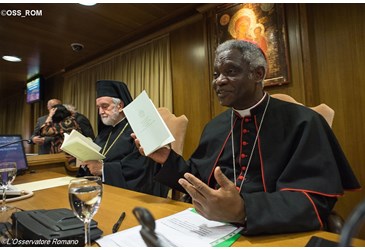




 The Loud Cry
You must be logged in to post a comment.