
And he said, Take heed that ye be not deceived: for many shall come in my name, saying, I am Christ; and the time draweth near: go ye not therefore after them.(Luk 21:8)

Thirty-Five Secrets the Government and the Media Aren’t Telling You about Measles and the Measles Vaccine
As measles outbreaks continue to surface — and as mainstream media weaponizes them for political gain — it’s increasingly difficult to separate fact from fiction.
Is this “public health emergency” truly something to fear? Are we and our children at risk?
To help answer these and many other pressing questions, Children’s Health Defense is offering a free digital download of “The Measles Book” for a limited time.

“The Measles Book: Thirty-Five Secrets the Government and the Media Aren’t Telling You about Measles and the Measles Vaccine” will help you determine whether this is just another example of media, government, and industry misinformation or whether we really have something to worry about.

“The Measles Book” presents reliable medical information from credible sources. Within the book’s pages, the reader will discover 35 secrets being kept from the general public about childhood vaccines, especially the measles vaccine, including:
Learn the other 31 secrets when you read “The Measles Book” by Children’s Health Defense, a nonprofit organization committed to the health of our children and challenging misinformation spread by Big Pharma, government and media. The information in “The Measles Book” helps parents make informed decisions for their children.


The USAID gave roughly $473 million to the “Internews Network,” a secretive global non-governmental organization that allegedly supported online censorship efforts, according to documents released by WikiLeaks.
This article was originally published by The Defender — Children’s Health Defense’s News & Views Website.
The U.S. Agency for International Development (USAID) gave roughly $473 million to a “secretive” nonprofit organization that supported efforts to censor social media users, according to documents released by WikiLeaks.
Continue reading USAID Bankrolled Secretive Nonprofit Global News Network With Alleged Ties to CensorshipAccording to documents obtained by Children’s Health Defense, reports of injuries and deaths following COVID-19 vaccines — including a child injured by the Pfizer vaccine during a clinical trial and a fatal vaccine-induced case of myocarditis — reached NIH researchers, Dr. Anthony Fauci and others in 2021 and 2022.
This article was originally published by The Defender — Children’s Health Defense’s News & Views Website.
Several adverse event reports from people injured by the COVID-19 vaccines reached National Institutes of Health (NIH) researchers in 2021 and 2022 — including a report of a child injured by the Pfizer-BioNTech vaccine during a clinical trial, according to documents obtained by Children’s Health Defense (CHD).
Continue reading 300 Pages of Emails Leave No Doubt: Fauci, NIH Knew Early on of Injuries, Deaths After COVID ShotsIt is time to stand up for what you believe in.
***There is some flashing imagery in this video***
Continue reading Pagan-Catholics & Lucifer
INTERNATIONAL DIPLOMACY &PUBLIC POLICY CENTER,LLC
U.N.Peacekeeping: Few Successes, Many Failures, Inherent Flaws
by Thomas W. Jacobson
President, International Diplomacy & Public Policy Center, LLC
Visiting Fellow for, and brief published by, the Center for Sovereignty & Security, a division of Freedom Alliance
March-‐April 2012
The United Nations Charter states that it was founded, in part, to
“to save succeeding generations from the scourge of war.”
Continue reading UN Peacekeeping – “The Contradiction”
Comments By Euronews and Associated Press • last updated: 22/10/2020 – 10:35
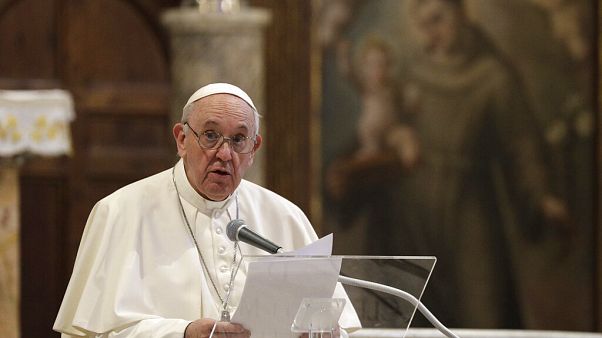
Pope Francis – Copyright Gregorio Borgia/AP
Pope Francis became the first pontiff to endorse same-sex civil unions on Wednesday, sparking cheers from gay Catholics and demands for clarification from conservatives given the Vatican’s official teaching on the issue. Continue reading Pope Francis gives landmark endorsement of same-sex civil unions
ENCYCLICAL LETTER
FRATELLI TUTTI
OF THE HOLY FATHER
FRANCIS
ON FRATERNITY AND SOCIAL FRIENDSHIP
1. “FRATELLI TUTTI”.[1] With these words, Saint Francis of Assisi addressed his brothers and sisters and proposed to them a way of life marked by the flavour of the Gospel. Of the counsels Francis offered, I would like to select the one in which he calls for a love that transcends the barriers of geography and distance, and declares blessed all those who love their brother “as much when he is far away from him as when he is with him”.[2] In his simple and direct way, Saint Francis expressed the essence of a fraternal openness that allows us to acknowledge, appreciate and love each person, regardless of physical proximity, regardless of where he or she was born or lives.
Continue reading FRATELLI TUTTI – Brothers All -POPE Francis
The Fourteenth Ordinary General Assembly of the Synod of Bishops will contain “a great part of the episcopate,” with many participating bishops being elected by their peers.[From Wikipedia, the free encyclopedia]
The Synod fathers include
| The Pope | |
|---|---|
 |
|
| Papacy began | 13 March 2013 |
| Predecessor | Benedict XVI |
| Orders | |
| Ordination | 13 December 1969 by Ramón José Castellano |
| Consecration | 27 June 1992 by Antonio Quarracino |
| Created Cardinal | 21 February 2001 by John Paul II |
| Personal details | |
| Birth name | Jorge Mario Bergoglio |
| Born | 17 December 1936 Buenos Aires, Argentina |
| Residence | Domus Sanctae Marthae |
| Previous post | Provincial superior of the Society of Jesus in Argentina (1973–1979) Auxiliary Bishop of Buenos Aires (1992–1997) Titular Bishop of Auca (1992–1997) Archbishop of Buenos Aires (1998–2013) Cardinal-Priest of San Roberto Bellarmino (2001–2013) Ordinary of the Ordinariate for the Faithful of the Eastern Rites in Argentina (1998–2013) President of the Argentine Episcopal Conference (2005–2011) |
| Motto | Miserando atque Eligendo[a] |
| Signature |  |
| Coat of arms |  |
Ecuador 7/7/15 Pope Francis told a large crowd, “I ask you to pray fervently for this intention,” the Pope continued, “so that Christ can take even what might seem to us impure, scandalous or threatening, and turn it into a miracle. Families today need miracles!”
Jesus’ miracle was simple, turn away from sin, and come follow me. There is nothing impure, scandalous or threatening about that. For Jesus is none of these. Families need love, charity, mutual respect for each other in Jesus.
However, what the Pope fails to mention is, people need to stop sinning, turn away from sin. There is the impurity, scandal and threat of the message – you need to do something in return- the Pope fails to mention the most important aspect of Jesus’ ministry.
Pope Francis explained his vision for evangelization and missionary activity in Ecuador July 7 2015
We evangelize not with grand words or complicated concepts, but with the joy of the gospel, that fills the hearts and lives of all who encounter Jesus. Continue reading Pope Francis & Evangelization
25/6/2014 Pope warns against DIY Christianity
“I believe in God, in Jesus, but the in church- I don’t care. How many times have we heard this? This is wrong. Continue reading Pope Francis & DIY Christianity
by Michael Salla
July 23, 2014
from Examiner Website
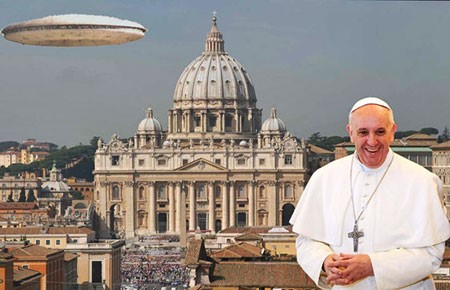
Pope Francis is reportedly preparing a major world statement about extra-terrestrial life and its theological implications. Continue reading Pope Francis & Aliens
updated 5/13/2008 3:57:50 PM ET
VATICAN CITY — The Vatican’s chief astronomer says that believing in aliens does not contradict faith in God. Continue reading Jose Gabriel Funes SJ
NEW YORK (RNS) With Christmas just around the corner, Brother Guy Consolmagno gets a lot of questions this time of year about the star of Bethlehem that led the Magi to Jesus in the manger.
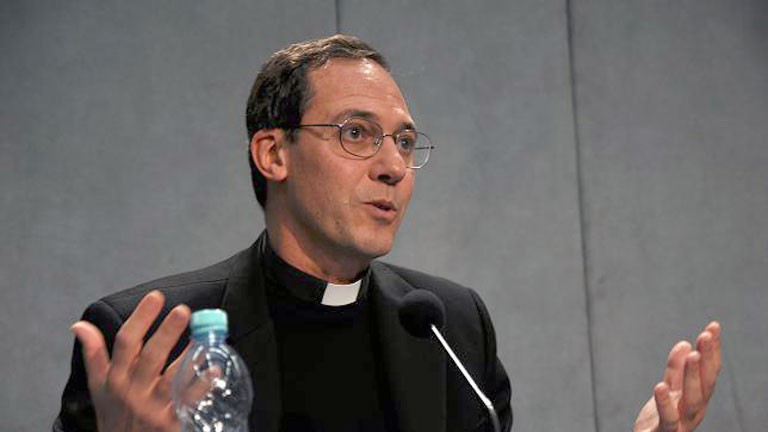
Christians will not immediately need to renounce their faith in God “simply on the basis of the reception of [this] new, unexpected information of a religious character from extraterrestrial civilizations.” Continue reading Father Giuseppe Tanzella-Nitti SJ
The United Nations (UN) is an intergovernmental organization to promote international co-operation. A replacement for the ineffective League of Nations, the organization was established on 24 October 1945 after World War II in order to prevent another such conflict. At its founding, the UN had 51 member states; there are now 193. The headquarters of the United Nations is in Manhattan, New York City, and experiences extraterritoriality. Further main offices are situated in Geneva, Nairobi and Vienna. The organization is financed by assessed and voluntary contributions from its member states. Its objectives include maintaining international peace and security, promoting human rights, fostering social and economic development, protecting the environment, and providing humanitarian aid in cases of famine, natural disaster, and armed conflict.
During the Second World War, US President Franklin D. Roosevelt initiated talks on a successor agency to the League of Nations, and the United Nations Charter was drafted at a conference in April–June 1945; this charter took effect 24 October 1945, and the UN began operation. The UN’s mission to preserve world peace was complicated in its early decades by the Cold War between the US and Soviet Union and their respective allies. The organization participated in major actions in Korea and the Congo, as well as approving the creation of the state of Israel in 1947. The organization’s membership grew significantly following widespread decolonization in the 1960s, and by the 1970s its budget for economic and social development programmes far outstripped its spending on peacekeeping. After the end of the Cold War, the UN took on major military and peacekeeping missions across the world with varying degrees of success.
The UN has six principal organs: the General Assembly (the main deliberative assembly); the Security Council (for deciding certain resolutions for peace and security); the Economic and Social Council (ECOSOC) (for promoting international economic and social co-operation and development); the Secretariat (for providing studies, information, and facilities needed by the UN); the International Court of Justice (the primary judicial organ); and the United Nations Trusteeship Council (inactive since 1994). UN System agencies include the World Bank Group, the World Health Organization, the World Food Programme, UNESCO, and UNICEF. The UN’s most prominent officer is the Secretary-General, an office held by South Korean Ban Ki-moon since 2007. Non-governmental organizations may be granted consultative status with ECOSOC and other agencies to participate in the UN’s work.
The organization won the Nobel Peace Prize in 2001, and a number of its officers and agencies have also been awarded the prize. Other evaluations of the UN’s effectiveness have been mixed. Some commentators believe the organization to be an important force for peace and human development, while others have called the organization ineffective, corrupt, or biased.
Source Wikipedia
For me:
the United Nations as an organization is ineffective, inept, corrupt and biased.
Too many atrocities have taken place, for which the UN has not held the appropriate parties to account due to it’s ineffectiveness, corruption & bias viz
Knights HospitallerFraternitas Hospitalaria
|
|
|---|---|
 |
|
| Active | c. 1099–present |
| Allegiance | Papacy |
| Type | Western Christianmilitary order |
| Headquarters | Jerusalem; later Rhodes, Malta, Rome |
| Nickname(s) | The Religion |
| Patron | Our Lady of Philermos,
Saint John the Baptist |
| Colors | Black & White, Red & White |
| Engagements | The Crusades
Siege of Ascalon (1153) Battle of Arsuf (1191) Battle of Lepanto (1571) Barbary Pirates (1607)Other service in European navies. |
| Website | http://www.orderofmalta.int/?lang=en |
| Commanders | |
| Notable
commanders |
Jean Parisot de Valette, Garnier de Nablus |
From Wikipedia, the free encyclopedia
The Order of the Knights of Saint John, also known as Order of Saint John, Order of Hospitallers, Knights Hospitaller, and the Hospitallers, were among the most famous of the Roman Catholicmilitary orders during the Middle Ages.The Hospitallers probably arose as a group of individuals who were associated with an Amalfitan hospital in the Muristan district of Jerusalem, which was dedicated to St John the Baptist and founded around 1023 by Blessed Gerard Thom to provide care for sick, poor or injured pilgrims coming to the Holy Land (Some scholars, however, consider that the Amalfitan order and Amalfitan hospital were different from Gerard’s order and its hospital.)[1] After the Latin Christian conquest of Jerusalem in 1099 during the First Crusade, the organisation became a religious and military order under its own Papal charter. It was charged with the care and defense of the Holy Land. Following the conquest of the Holy Land by Islamic forces, the Order operated from Rhodes, over which it was sovereign and later from Malta, where it administered a vassal state under the Spanish viceroy of Sicily.The Order was weakened in the Reformation, when rich commanderies of the Order in northern Germany and the Netherlands became Protestant (and largely separated from the Roman Catholic main stem, remain so to this day). The Order was disestablished in England, Denmark and elsewhere in northern Europe. The Roman Catholic order was further damaged by Napoleon‘s capture of Malta in 1798 and became dispersed throughout Europe. It regained strength during the early 19th century as it redirected itself toward humanitarian and religious causes. In 1834, the order, by this time known as the Sovereign Military Order of Malta (SMOM), acquired new headquarters in Rome where it has since been based.Five contemporary, state-recognised chivalric orders which claim modern inheritance of the Hospitaller tradition all assert that “The Sovereign Military Order of Malta is the original order.” Four non-Roman Catholic orders stem from the same root:[2]Protestant orders exist in Germany, the Netherlands and Sweden, and a non-denominational British revival is headquartered in the United Kingdom. The Knights Hospitaller was the smallest group ever to colonise parts of the Americas. At one point in the mid-1600s, they acquired four Caribbean islands, which they turned over to the French and Dutch in the 1660s.

In 603 AD, Pope Gregory I commissioned the Ravennate Abbot Probus, who was previously Gregory’s emissary at the Lombard court, to build a hospital in Jerusalem to treat and care for Christian pilgrims to the Holy Land.[3] In 800, Emperor Charlemagne enlarged Probus’ hospital and added a library to it. About 200 years later, in 1005, Caliph Al Hakim destroyed the hospital and three thousand other buildings in Jerusalem. In 1023, merchants from Amalfi and Salerno in Italy were given permission by the Caliph Ali az-Zahir of Egypt to rebuild the hospital in Jerusalem. The hospital, which was built on the site of the monastery of Saint John the Baptist, took in Christian pilgrims travelling to visit the Christian holy sites. It was served by Benedictine monks.
The monastic hospitaller order was founded following the First Crusade by the Blessed Gerard, whose role as founder was confirmed by a Papal bull of Pope Paschal II in 1113.[4] Gerard acquired territory and revenues for his order throughout the Kingdom of Jerusalem and beyond. Under his successor, Raymond du Puy de Provence, the original hospice was expanded to an infirmary[1] near the Church of the Holy Sepulchre in Jerusalem. Initially the group cared for pilgrims in Jerusalem, but the order soon extended to providing pilgrims with an armed escort, which soon grew into a substantial force. Thus the Order of St. John imperceptibly became military without losing its eleemosynary character.[1] The Hospitallers and the Knights Templar became the most formidable military orders in the Holy Land. Frederick Barbarossa, the Holy Roman Emperor, pledged his protection to the Knights of St. John in a charter of privileges granted in 1185.
The statutes of Roger de Moulins (1187) deal only with the service of the sick; the first mention of military service is in the statutes of the ninth grand master, Afonso of Portugal (about 1200). In the latter a marked distinction is made between secular knights, externs to the order, who served only for a time, and the professed knights, attached to the order by a perpetual vow, and who alone enjoyed the same spiritual privileges as the other religious. The order numbered three distinct classes of membership: the military brothers, the brothers infirmarians, and the brothers chaplains, to whom was entrusted the divine service.[1]
The order came to distinguish itself in battle with the Muslims, its soldiers wearing a black surcoat with a white cross. In 1248 Pope Innocent IV (1243–54) approved a standard military dress for the Hospitallers to be worn in battle. Instead of a closed cape over their armour (which restricted their movements), they should wear a red surcoat with a white cross emblazoned on it.[5]
Many of the more substantial Christian fortifications in the Holy Land were built by the Templars and the Hospitallers. At the height of the Kingdom of Jerusalem, the Hospitallers held seven great forts and 140 other estates in the area. The two largest of these, their bases of power in the Kingdom and in the Principality of Antioch, were the Krak des Chevaliers and Margat in Syria.[4] The property of the Order was divided into priories, subdivided into bailiwicks, which in turn were divided into commanderies.
As early as the late 12th century the order had begun to achieve recognition in the Kingdom of England and Duchy of Normandy. As a result, buildings such as St John’s Jerusalem and the Knights Gate, Quenington in England were built on land donated to the order by local nobility.[6] An Irish house was established at Kilmainham, near Dublin, and the Irish Prior was usually a key figure in Irish public life.


After the fall of the Kingdom of Jerusalem in 1291 (Jerusalem itself had fallen in 1187), the Knights were confined to the County of Tripoli and, when Acre was captured in 1291, the order sought refuge in the Kingdom of Cyprus. Finding themselves becoming enmeshed in Cypriot politics, their Master, Guillaume de Villaret, created a plan of acquiring their own temporal domain, selecting Rhodes to be their new home, part of the Byzantine empire. His successor, Fulkes de Villaret, executed the plan, and on 15 August 1309, after over two years of campaigning, the island of Rhodes surrendered to the knights. They also gained control of a number of neighbouring islands and the Anatolian port of Halicarnassus and the island of Megiste.

Pope Clement V dissolved the Hospitallers’ rival order, the Knights Templar, in 1312 with a series of papal bulls, including the Ad providam bull, which turned over much of their property to the Hospitallers. The holdings were organised into eight “tongues” (one each in Crown of Aragon, Auvergne, Castile, England, France, Germany, Italy and Provence). Each was administered by a Prior or, if there was more than one priory in the tongue, by a Grand Prior. At Rhodes and later Malta, the resident knights of each tongue were headed by a Bailli. The English Grand Prior at the time was Philip De Thame, who acquired the estates allocated to the English tongue from 1330 to 1358. In 1334, the Knights of Rhodes defeated Andronicus and his Turkish auxiliaries. In the 14th century, there were several other battles in which they fought.[7]
On Rhodes the Hospitallers,[8] by then also referred to as the Knights of Rhodes,[9] were forced to become a more militarised force, fighting especially with the Barbary pirates. They withstood two invasions in the 15th century, one by the Sultan of Egypt in 1444 and another by the Ottoman Sultan Mehmed II in 1480 who, after capturing Constantinople and defeating the Byzantine Empire in 1453, made the Knights a priority target.
In 1494 they created a stronghold on the peninsula of Halicarnassus (presently Bodrum). They used pieces of the partially destroyed Mausoleum, one of the Seven Wonders of the Ancient World, to strengthen their rampart, the Petronium.[10]
In 1522, an entirely new sort of force arrived: 400 ships under the command of Sultan Suleiman the Magnificent delivered 100,000 men to the island[11] (200,000 in other sources[12]). Against this force the Knights, under Grand Master Philippe Villiers de L’Isle-Adam, had about 7,000 men-at-arms and their fortifications. The siege lasted six months, at the end of which the surviving defeated Hospitallers were allowed to withdraw to Sicily. Despite the defeat, both Christians and Muslims seem to have regarded the conduct of Villiers de L’Isle-Adam as extremely valiant, and the Grand Master was proclaimed a Defender of the Faith by Pope Adrian VI.


After seven years of moving from place to place in Europe, the knights gained fixed quarters in 1530 when Charles I of Spain, as King of Sicily, gave them Malta,[13] Gozo and the North African port of Tripoli in perpetual fiefdom in exchange for an annual fee of a single Maltese falcon (the Tribute of the Maltese Falcon), which they were to send on All Souls Day to the King’s representative, the Viceroy of Sicily.[14][15] The Hospitallers continued their actions against the Muslims and especially the Barbary pirates. Although they had only a few ships they quickly drew the ire of the Ottomans, who were unhappy to see the order resettled. In 1565 Suleiman sent an invasion force of about 40,000 men to besiege the 700 knights and 8,000 soldiers and expel them from Malta and gain a new base from which to possibly launch another assault on Europe.[13]
At first the battle went as badly for the Hospitallers as Rhodes had: most of the cities were destroyed and about half the knights killed. On 18 August the position of the besieged was becoming desperate: dwindling daily in numbers, they were becoming too feeble to hold the long line of fortifications. But when his council suggested the abandonment of Birgu and Senglea and withdrawal to Fort St. Angelo, Grand Master Jean Parisot de Valette refused.
The Viceroy of Sicily had not sent help; possibly the Viceroy’s orders from Philip II of Spain were so obscurely worded as to put on his own shoulders the burden of the decision whether to help the Order at the expense of his own defences.[citation needed] A wrong decision could mean defeat and exposing Sicily and Naples to the Ottomans. He had left his own son with La Valette, so he could hardly be indifferent to the fate of the fortress. Whatever may have been the cause of his delay, the Viceroy hesitated until the battle had almost been decided by the unaided efforts of the knights, before being forced to move by the indignation of his own officers.

On 23 August came yet another grand assault, the last serious effort, as it proved, of the besiegers. It was thrown back with the greatest difficulty, even the wounded taking part in the defence. The plight of the Turkish forces, however, was now desperate. With the exception of Fort St. Elmo, the fortifications were still intact.[16] Working night and day the garrison had repaired the breaches, and the capture of Malta seemed more and more impossible. Many of the Ottoman troops in crowded quarters had fallen ill over the terrible summer months. Ammunition and food were beginning to run short, and the Ottoman troops were becoming increasingly dispirited by the failure of their attacks and their losses. The death on 23 June of skilled commander Dragut, a corsair and admiral of the Ottoman fleet, was a serious blow. The Turkish commanders, Piyale Pasha and Mustafa Pasha, were careless. They had a huge fleet which they used with effect on only one occasion. They neglected their communications with the African coast and made no attempt to watch and intercept Sicilian reinforcements.
On 1 September they made their last effort, but the morale of the Ottoman troops had deteriorated seriously and the attack was feeble, to the great encouragement of the besieged, who now began to see hopes of deliverance. The perplexed and indecisive Ottomans heard of the arrival of Sicilian reinforcements in Mellieħa Bay. Unaware that the force was very small, they broke off the siege and left on 8 September. The Great Siege of Malta may have been the last action in which a force of knights won a decisive victory.[17]

When the Ottomans departed, the Hospitallers had but 600 men able to bear arms. The most reliable estimate puts the number of the Ottoman army at its height at some 40,000 men, of whom 15,000 eventually returned to Constantinople. The siege is portrayed vividly in the frescoes of Matteo Perez d’Aleccio in the Hall of St. Michael and St. George, also known as the Throne Room, in the Grandmaster’s Palace in Valletta; four of the original modellos, painted in oils by Perez d’Aleccio between 1576 and 1581, can be found in the Cube Room of the Queen’s House at Greenwich, London. After the siege a new city had to be built: the present capital city of Malta, named Valletta in memory of the Grand Master who had withstood the siege.
In 1607, the Grand Master of the Hospitallers was granted the status of Reichsfürst (Prince of the Holy Roman Empire, even though the Order’s territory was always south of the Holy Roman Empire). In 1630, he was awarded ecclesiastic equality with cardinals, and the unique hybrid style His Most Eminent Highness, reflecting both qualities qualifying him as a true Prince of the Church.
Following the knights’ relocation on Malta, they had found themselves devoid of their initial reason for existence: assisting and joining the crusades in the Holy Land was now impossible, for reasons of military and financial strength along with geographical position. With dwindling revenues from European sponsors no longer willing to support a costly and meaningless organization, the knights turned to policing the Mediterranean from the increased threat of piracy, most notably from the threat of the Ottoman-endorsed Barbary Corsairs operating from the North African coastline. Boosted towards the end of the 16th century by an air of invincibility following the successful defence of their island in 1565 and compounded by the Christian victory over the Ottoman fleet in the Battle of Lepanto in 1571, the knights set about protecting Christian merchant shipping to and from the Levant and freeing the captured Christian slaves who formed the basis of the Barbary corsairs’ piratical trading and navies. This became known as the ‘corso’.[18]
Yet the Order soon struggled on a now reduced income. By policing the Mediterranean they augmented the assumed responsibility of the traditional protectors of the Mediterranean, the naval city states of Venice, Genoa, and Pisa. Further compounding their financial woes; over the course of this period the exchange rate of the local currencies against the ‘scudo’ that were established in the late 16th century gradually became outdated, meaning the knights were gradually receiving less at merchant factories.[19] Economically hindered by the barren island they now inhabited, many knights went beyond their call of duty by raiding Muslim ships.[20] More and more ships were plundered, from the profits of which many knights lived idly and luxuriously, taking local women to be their wives and enrolling in the navies of France and Spain in search of adventure, experience, and yet more money.[21]
The knights’ changing attitudes were coupled with the effects of the Reformation and Counter-Reformation and the lack of stability from the Roman Catholic Church. All this affected the knights strongly as the 16th and 17th centuries saw a gradual decline in the religious attitudes of many of the Christian peoples of Europe (and, concomitantly, the importance of a religious army), and thus in the Knights’ regular tributes from European nations.[22] That the knights, a chiefly Roman Catholic military order, pursued the readmittance of England as one of its member states — the Order there had been suppressed, along with monasteries, under King Henry VIII — upon the succession of the Protestant Queen Elizabeth I aptly demonstrates the new religious tolerance within the Order.[23] For a time, the Order even possessed a German tongue which was part Protestant or Evangelical and part Roman Catholic.[citation needed]
The perceived moral decline that the knights underwent over the course of this period is best highlighted by the decision of many knights to serve in foreign navies and become “the mercenary sea-dogs of the 14th to 17th centuries”, with the French Navy proving the most popular destination.[24] This decision went against the knights’ cardinal reason for existence, in that by serving a European power directly they faced the very real possibility that they would be fighting against another Roman Catholic force, as in the few Franco-Spanish naval skirmishes that occurred in this period.[25] The biggest paradox is the fact that for many years the French remained on amicable terms with the Ottoman Empire, the Knights’ greatest and bitterest foe and purported sole purpose for existence. Paris signed many trade agreements with the Ottomans and agreed to an informal (and ultimately ineffective) cease-fire between the two states during this period.[26] That the Knights associated themselves with the allies of their sworn enemies shows their moral ambivalence and the new commercial-minded nature of the Mediterranean in the 17th century. Serving in a foreign navy, in particular that of the French, gave the Knights the chance to serve the Church and for many, their King, to increase their chances of promotion in either their adopted navy or in Malta, to receive far better pay, to stave off their boredom with frequent cruises, to embark on the highly preferable short cruises of the French Navy over the long caravans favoured by the Maltese, and if the Knight desired, to indulge in some of the pleasures of a traditional debauched seaport.[27] In return, the French gained and quickly assembled an experienced navy to stave off the threat of the Spanish and their Habsburg masters. The shift in attitudes of the Knights over this period is ably outlined by Paul Lacroix who states:
“Inflated with wealth, laden with privileges which gave them almost sovereign powers … the order at last became so demoralised by luxury and idleness that it forgot the aim for which it was founded, and gave itself up for the love of gain and thirst for pleasure. Its covetousness and pride soon became boundless. The Knights pretended that they were above the reach of crowned heads: they seized and pillaged without concern of the property of both infidels and Christians”.[28]
With the knights’ exploits growing in fame and wealth, the European states became more complacent about the Order, and more unwilling to grant money to an institution that was perceived to be earning a healthy sum on the high seas. Thus a vicious cycle occurred, increasing the raids and reducing the grants received from the nation-states of Christendom to such an extent that the balance of payments on the island had become dependent on conquest.[21] The European powers lost interest in the knights as they focused their intentions largely on one another during the Thirty Years War. In February 1641 a letter was sent from an unknown dignitary in the Maltese capital of Valletta to the knights’ most trustworthy ally and benefactor, Louis XIV of France, stating the Order’s troubles:
“Italy provides us with nothing much; Bohemia and Germany hardly anything, and England and the Netherlands for a long time now nothing at all. We only have something to keep us going, Sire, in your own Kingdom and in Spain.”[29]
It is important to note that the Maltese authorities would neglect to mention the fact that they were making a substantial profit policing the seas and seizing “infidel” ships and cargoes. The authorities on Malta immediately recognised the importance of corsairing to their economy and set about encouraging it, as despite their vows of poverty, the Knights were granted the ability to keep a portion of the ‘spoglio’, which was the prize money and cargo gained from a captured ship, along with the ability to fit out their own galleys with their new wealth.[30]
The great controversy that surrounded the knights’ ‘corso’ was their insistence on their policy of ‘vista’. This enabled the Order to stop and board all shipping suspected of carrying Turkish goods and confiscate the cargo to be re-sold at Valletta, along with the ship’s crew, who were by far the most valuable commodity on the ship. Naturally many nations claimed to be victims of the knights’ over-eagerness to stop and confiscate any goods remotely connected to the Turks.[20] In an effort to regulate the growing problem, the authorities in Malta established a judicial court, the Consiglio del Mer, where captains who felt wronged could plead their case, often successfully. The practice of issuing privateering licenses and thus state endorsement, which had been in existence for a number of years, was tightly regulated as the island’s government attempted to haul in the unscrupulous knights and appease the European powers and limited benefactors. Yet these efforts were not altogether successful, as the Consiglio del Mer received numerous complaints around the year 1700 of Maltese piracy in the region. Ultimately, the rampant over-indulgence in privateering in the Mediterranean was to be the knights’ downfall in this particular period of their existence as they transformed from serving as the military outpost of a united Christendom to becoming another nation-state in a commercially oriented continent soon to be overtaken by the trading nations of the North Sea.[31]
 |
This section does not cite any references or sources. (February 2011) |

Having gained Malta, the knights stayed for 268 years, transforming what they called “merely a rock of soft sandstone” into a flourishing island with mighty defences and a capital city (Valletta) known as Superbissima, “Most Proud”, amongst the great powers of Europe. However, “the indigenous islanders had not particularly enjoyed the rule of the Knights of St John.” Most Knights were French and excluded the native islanders from important positions. They were especially loathed for the way they took advantage of the native women.[32]
In 1301, the Order was organized in seven Langues, by order of precedence: Provence, Auvergne, France, Aragon, Italy, England, and Germany. In 1462, the Langue of Aragon was divided into Castile-Portugal and Aragon-Navarre. The English Langue went into abeyance after the order’s properties were taken over by Henry VIII in 1540. In 1782, it was revived as the Anglo-Bavarian Langue, containing Bavarian and Polish priories. The structure of langues was replaced in the late 19th century by a system of national associations.
When the Knights first arrived, the natives were apprehensive about their presence and viewed them as arrogant intruders. The Maltese were excluded from serving in the order. The Knights were even generally dismissive of the Maltese nobility. However, the two groups coexisted peacefully, since the Knights boosted the economy, were charitable, and protected against Muslim attacks.[33]
Not surprisingly, hospitals were among the first projects to be undertaken on Malta, where French soon supplanted Italian as the official language (though the native inhabitants continued to speak Maltese among themselves).[34] The knights also constructed fortresses, watch towers, and naturally, churches. Its acquisition of Malta signalled the beginning of the Order’s renewed naval activity.
The building and fortification of Valletta, named for Grand Master la Valette, was begun in 1566, soon becoming the home port of one of the Mediterranean’s most powerful navies. Valletta was designed by Francesco Laparelli, a military engineer, and his work was then taken up by Ġlormu Cassar. The city was completed in 1571. The island’s hospitals were expanded as well. The main Hospital could accommodate 500 patients and was famous as one of the finest in the world. In the vanguard of medicine, the Hospital of Malta included Schools of Anatomy, Surgery and Pharmacy. Valletta itself was renowned as a centre of art and culture. The Church of Saint John the Baptist, completed in 1577, contains works by Caravaggio and others.
In Europe, most of the Order’s hospitals and chapels survived the Reformation, though not in Protestant or Evangelical countries. In Malta, meanwhile, the Public Library was established in 1761. The University was founded seven years later, followed, in 1786, by a School of Mathematics and Nautical Sciences. Despite these developments, some of the Maltese grew to resent the Order, which they viewed as a privileged class. This even included some of the local nobility, who were not admitted to the Order.
In Rhodes, the knights had been housed in auberges (inns) segregated by Langues. This structure was maintained in Birgu (1530–1571) and then Valletta (from 1571). The auberges in Birgu remain, mostly undistinguished 16th-century buildings. Valletta still has the auberges of Castile-León (1574; renovated 1741 by Grand Master de Vilhena, now the Prime Minister’s offices), Italy (renovated 1683 by Grand Master Carafa, now the Malta Tourism Authority), Aragon (1571, now Ministry for EU Affairs), Bavaria (former Palazzo Carnerio, purchased in 1784 for the newly formed Langue, now used as the Government Property Department) and Provence (now National Museum of Archaeology). In the Second World War, the auberge of Auvergne was damaged (and later replaced by Law Courts) and the auberge of France was destroyed.

In 1604, each Langue was given a chapel in the conventual church of St. John and the arms of the Langue appear in the decoration on the walls and ceiling:
Provence: St Michael, Jerusalem
Auvergne: St Sebastian, Azure a dolphin or
France: conversion of St Paul, France
Castile and León: St James the Lesser, Quarterly Castile and Leon
Aragon: St George [the church of the Langue is consecrated to Our Lady of the Pillar Per pale Aragon and Navarre]
Italy: St Catherine, Azure the word ITALIA in bend or
England: Flagellation of Christ, [no arms visible; in Rhodes the Langue used the arms of England, quarterly France and England]
Germany: Epiphany, Austria born by a double-headed eagle displayed sable
Even as it survived on Malta, the Order lost many of its European holdings during the reformation of Western Christendom. The property of the English branch was confiscated in 1540.[35] The German Bailiwick of Brandenburg became Lutheran in 1577, then more broadly Evangelical, but continued to pay its financial contribution to the Order until 1812, when the Protector of the Order in Prussia, King Frederick William III, turned it into an order of merit;[35] in 1852, his son and successor as Protector, King Frederick William IV, restored the Johanniterorden to its continuing place as the chief non-Roman Catholic branch of the Knights Hospitaller.
The Knights of Malta had a strong presence within the Imperial Russian Navy and the pre-revolutionary French Navy. When De Poincy was appointed governor of the French colony on St. Kitts in 1639, he was a prominent Knight of St. John and dressed his retinue with the emblems of the Order. In 1651, the knights bought from the Compagnie des Îles de l’Amérique the islands of Sainte-Christophe, Saint Martin, and Saint Barthélemy.[36] The Order’s presence in the Caribbean was eclipsed with De Poincy’s death in 1660. He had also bought the island of Saint Croix as his personal estate and deeded it to the Knights of St. John. In 1665, the order sold their Caribbean possessions to the French West India Company, ending the Order’s presence in that region.
The decree of the French National Assembly in 1789 abolishing feudalism in France also abolished the Order in France:
V. Tithes of every description, as well as the dues which have been substituted for them, under whatever denomination they are known or collected (even when compounded for), possessed by secular or regular congregations, by holders of benefices, members of corporations (including the Order of Malta and other religious and military orders), as well as those devoted to the maintenance of churches, those impropriated to lay persons and those substituted for the portion congrue, are abolished (…)[37]
The French Revolutionary Government seized the assets and properties of the Order in France in 1792.

Their Mediterranean stronghold of Malta was captured by Napoleon in 1798 during his expedition to Egypt.[16] Napoleon demanded from Grand Master Ferdinand von Hompesch zu Bolheim that his ships be allowed to enter the port and to take on water and supplies. The Grand Master replied that only two foreign ships could be allowed to enter the port at a time. Bonaparte, aware that such a procedure would take a very long time and would leave his forces vulnerable to Admiral Nelson, immediately ordered a cannon fusillade against Malta.[38] The French soldiers disembarked in Malta at seven points on the morning of 11 June and attacked. After several hours of fierce fighting, the Maltese in the west were forced to surrender.[39]
Napoleon opened negotiations with the fortress capital of Valletta. Faced with vastly superior French forces and the loss of western Malta, the Grand Master Ferdinand von Hompesch zu Bolheim negotiated a surrender to the invasion.[40] Hompesch left Malta for Trieste on 18 June.[41] He resigned as Grand Master on 6 July 1799.
The knights were dispersed, though the order continued to exist in a diminished form and negotiated with European governments for a return to power. The Russian Emperor, Paul I, gave the largest number of knights shelter in St. Petersburg, an action which gave rise to the Russian tradition of the Knights Hospitallers and the Order’s recognition among the Russian Imperial Orders.[42] The refugee knights in St Petersburg proceeded to elect Tsar Paul as their Grand Master – a rival to Grand Master von Hompesch until the latter’s abdication left Paul as the sole Grand Master. Grand Master Paul I created, in addition to the Roman Catholic Grand Priory, a “Russian Grand Priory” of no less than 118 Commanderies, dwarfing the rest of the Order and open to all Christians. Paul’s election as Grand Master was, however, never ratified under Roman Catholic canon law, and he was the de facto rather than de jure Grand Master of the Order.
By the early 19th century, the order had been severely weakened by the loss of its priories throughout Europe. Only 10% of the order’s income came from traditional sources in Europe, with the remaining 90% being generated by the Russian Grand Priory until 1810. This was partly reflected in the government of the Order being under Lieutenants, rather than Grand Masters, in the period 1805 to 1879, when Pope Leo XIII restored a Grand Master to the order. This signalled the renewal of the order’s fortunes as a humanitarian and religious organization.
In 1834, the order settled definitively in Rome.[43] Hospital work, the original work of the order, became once again its main concern. The Order’s hospital and welfare activities, undertaken on a considerable scale in World War I, were greatly intensified and expanded in World War II under the Grand Master Fra’ Ludovico Chigi Albani della Rovere (Grand Master 1931–1951).

The Sovereign Military Hospitaller Order of Saint John of Jerusalem, of Rhodes and of Malta, better known as the Sovereign Military Order of Malta (SMOM), is a Roman Catholic religious order and the world’s oldest surviving order of chivalry.[44] Its sovereign status is recognised by membership in numerous international bodies and observer status at the United Nations and others.[45]
The Order maintains diplomatic relations with 104 countries, with numerous ambassadors. It issues its own passports, currency, stamps and even vehicle registration plates. The Sovereign Military Order of Malta has a permanent presence in 120 countries, with 12 Grand Priories and Sub-Priories and 47 national Associations, as well as numerous hospitals, medical centres, day care centres, first aid corps, and specialist foundations, which operate in 120 countries. Its 13,000 members and 80,000 volunteers and over 20,000 medical personnel – doctors, nurses and paramedics – are dedicated to the care of the poor, the sick, the elderly, the disabled, the homeless, terminal patients, lepers, and all those who suffer. The Order is especially involved in helping victims of armed conflicts and natural disasters by providing medical assistance, caring for refugees, and distributing medicines and basic equipment for survival.
The Sovereign Military Order of Malta recently established a mission in Malta, after signing an agreement with the Maltese Government which granted the Order the exclusive use of Fort St. Angelo for a term of 99 years. Today, after restoration, the Fort hosts historical and cultural activities related to the Order of Malta.[46]
Following the Protestant Reformation, the German commanderies of the Order in the Margraviate of Brandenburg declared their continued adherence to the Order while accepting Protestant theology. As the Johanniterorden (Bailiwick of Brandenburg of the Chivalric Order of Saint John of the Hospital at Jerusalem), the order continues in Germany today, almost autonomous from the Roman Catholic order.
From Germany, this Protestant branch spread into other countries in Europe (Hungary, Poland, the Netherlands, Sweden, Finland, Denmark, Switzerland, France, Austria, Great Britain, and Italy among them), the Americas (including the United States, Canada, Mexico, Colombia, and Venezuela), and Africa (most notably in Namibia and South Africa), and to Australia.[47]
The Dutch and Swedish commanderies after World War II became independent orders under the protection of their respective monarchs. In the Johanniter Orde in Nederland, the Dutch monarch is an Honorary Commander; in the Johanniterorden i Sverige, the Swedish monarch is its High Protector.
All three branches (German, Dutch, Swedish) are in formalised co-operation with the Most Venerable Order of Saint John in the Alliance of the Orders of St. John of Jerusalem, just as there is extensive collaboration between these four Alliance Orders and the Order of Malta.
Almost all of the Order‘s property in the kingdom of England was confiscated by Henry VIII during the Dissolution of the Monasteries. Although never formally suppressed, this effectively caused the activities of the English Langue to come to an end; in neighbouring Scotland, however, a few Scottish knights remained in communion with the Order’s French Langue.[48]
In 1831, a British Order was founded by European aristocrats claiming (possibly without authority) to be acting on behalf of the Order.[49] This Order in time became known as the Most Venerable Order of St John of Jerusalem, receiving a Royal Charter from Queen Victoria in 1888, before expanding throughout the United Kingdom, the British Commonwealth and America; the British Order only received recognition from by the Sovereign Military Order of Malta in 1963.[50]
Nowadays, the Order of St John’s best known activities are its running St. John Ambulance Brigade and the St. John Eye Hospital in Jerusalem;[51] the Most Venerable Order has maintained a presence in Malta since the late 19th century.
Following the end of World War II, and taking advantage of the lack of State Orders in the Italian Republic, an Italian called himself a Polish Prince and did a brisk trade in Maltese Crosses as the Grand Prior of the fictitious “Grand Priory of Podolia” until successfully prosecuted for fraud. Another fraud claimed to be the Grand Prior of the Holy Trinity of Villeneuve, but gave up after a police visit, although the organisation resurfaced in Malta in 1975, and then by 1978 in the USA, where it still continues.[52]
The large passage fees collected by the American Association of “SMOM” in the early 1950s may well have tempted a man named Charles Pichel to create his own “Sovereign Order of St. John of Jerusalem, Knights Hospitaller” in 1956.[5] Pichel avoided the problems of being an imitation of “SMOM” by giving his organization a mythical history, claiming that the American organization he led had been founded within the Russian tradition of the Knights Hospitaller in 1908—a spurious claim, but which nevertheless misled many including some academics. In truth, the foundation of his organisation had no connection to the Russian tradition of the Knights Hospitaller. Once created, the attraction of Russian Nobles into membership of Pichel’s ‘Order’ lent some plausibility to his claims.
These organizations have led to scores of other self-styled orders.[5] Another self-styled Order, based in California, gained a substantial following under leadership of the late Robert Formhals, who for some years, and with the support of historical organisations such as The Augustan Society, claimed to be a Polish prince of the Sanguszko family.[5]
In August 2013, the Israel Antiquities Authority announced that the 150,000 square feet (14,000 m2) Hospitaller hospital, built between 1099 and 1291, with permission from the Muslim authorities, had been identified in the Christian Quarter of the Old City of Jerusalem. It was possible to accommodate up to 2,000 patients, who came from all religious groups, and Jewish patients received kosher food. It also served as an orphanage, with these children often becoming Hospitallers when adult. The remaining vaulted area was discovered during excavations for a restaurant, and the preserved building will be incorporated in the project.[53]
| List of Grand Masters of the Knights Hospitaller
Palace of the Grand Master of the Knights of Rhodes |
Fortifications |
|
|
THE ALLIANCE OF ORDERS
|

The first master of the original Order of the Hospital of St John of Jerusalem was Brother Gerard (whose origins remain a mystery). Although the original traditions may go further back, we believe that in about 1080, with the help of certain merchants and pilgrims, the Benedictine abbey of St Mary in Jerusalem, in which Gerard was probably a monk, established a hospice close to the Holy Sepulchre compound. Its aim was to tend to pilgrims visiting the city and the holy places nearby, as well as the poor and sick. In 1099, the First Crusade entered Jerusalem – and the fame of Blessed Gerard and his hospital soon spread. The hospital was independently endowed; and the number of brothers (and sisters) grew. Before long, the Brotherhood of Hospitallers, dedicated to St John the Baptist, assumed a military as well as a nursing character. The Knights, as well as tending to our lords the sick and the poor, served as armed guards for the Hospital and escorts for visiting pilgrims, in addition to fighting in support of the Crusader kings and princes.

The Order was formally recognised in 1113. Pope Paschal II issued a Bull in that year establishing it as an independent religious Order with a legal status recognised and approved by the Holy See. Members of the Order (knights, clerics and serving brothers) took vows of chastity, obedience and personal poverty. By the middle of the twelfth century members were wearing on their black robes the eight-pointed cross of St John. The eight points were soon linked to the eight Beatitudes in the Sermon on the Mount; but were later linked to the eight tongues, or divisions of the knights into groups defined by language. The Order flourished and soon spread widely throughout Europe, where it was organised into Bailiwicks, Priories and Grand Priories. Their chief purpose was to channel recruits and funds to the headquarters in the East. Those brothers serving at the headquarters came themselves to be organised along roughly linguistic lines into collegiate bodies called Tongues: Provence, Auvergne, France, Italy, Aragon, Castile, England and Germany. Meanwhile, the Order had shifted its headquarters from the Holy Land to Cyprus; and then to Rhodes and later Malta, which it ruled for two centuries (1530-1798) and from which it took the name, Sovereign Military Order of Malta, by which the Roman Catholic Order is still known today.
On June 13th, 1961, the four Evangelical orders of St. John active in Europe once again came together under the cross of Jesus Christ.
The Johanniter Orders listed below who have signed the Convention correspond to the historic “langues” of the Order. They see themselves as obligated to adhere to the traditional regulations of the Order and the objectives they intend to achieve. However, all of the orders are free, independent and autonomous institutions.
The signatory orders are
as well as the non-German commanderies affiliated with the Balley Brandenburg
The signatory Orders are of the conviction that their mutual history, their faith and their shared objectives demands that they stand unified.
The Alliance members consist of the four major protestant Orders of St John:
Balley Brandenburg (“Johanniterorden“)
Most Venerable Order of the Hospital of St John of Jerusalem
Johanniterorden I Sverige
Johanniter Orde in Nederland
and four non-German Commanderies of the Bailiwick of Brandenburg:
Swiss Commandery of the Order of St John
French Commandery of the Order of St John
Hungarian Commandery of the Order of St John
Finnish Commandery of the Order of St John
The German langue of the order consisted of the priories of Germany, Poland, Dacia (Denmark and Sweden) and Hungary. The history of the Bailiwick of Brandenburg within the German Priory, begins with the establishment of the oldest house of the Order, on the Elbe, in 1160. It had become largely self-dependent, taking over much property from the Templar Order, when that was dissolved in 1312. This greatly increased the assets of the Order in middle and eastern Germany. However, as had already occurred in 1366, the headquarters of the Order had probably sold still more Order estates on their borders to the neighbouring German Order because of the high costs of building defences in Rhodes.
With the 1382 Treaty of Heimbach between the German Grand Prior and the ‘Herrenmeister’, the Bailiwick of Brandenburg attained official autonomous status within the structure of the German Priories. The leaders of the prebends (commanderies) selected the head of the Bailiwick, who was then confirmed in his post by the German Prior. This procedure was confirmed in 1383 by the Chapter General of the Order in Valencia and later also by the Curia and by the Margrave of Brandenburg as head of State. Thus the Bailiwick of Brandenburg acquired special rights enjoyed by no other in the Order.
When the House of Hohenzollern, which had supplied the margraves and Kurfürsten of Brandenburg since 1415, turned to the teachings of Luther in 1538, a few commanders (Komtures) followed suit and later married. This would have made them more dependent on the State rulers. Following protests from the German Grand Prior, in 1551 one provincial Chapter ruled that married commanders should lose neither their honour nor their prebends. Measures to contest this by the Grand Master of Malta remained unsuccessful; and the Bailiwick of Brandenburg was still regarded as belonging to the Order. In the Treaties of Westphalia of 1648, the Kurfürst of Brandenburg was recognised as Protector of the Bailiwick of Brandenburg, a move which was to have far-reaching consequences. After 1693, the office of Herrenmeister was always filled by members of the House of Hohenzollern. In an Order of 1745, King Friedrich II of Prussia commanded that the cross of the Order should be added to the crown of the Prussian king; this is still shown in the Cross of Rechtsritter and Kommendators.
To repay the huge debts arising from the Prussian defeat by Napoleon, King Friedrich Wilhelm III commandeered all clerical estates including those of the Bailiwick of Brandenburg in 1810/11. The German Grand Priory had been dissolved in 1806 and the old Order of the Bailiwick of Brandenburg followed soon after. But as early as May 1812, Friedrich Wilhelm III had founded, in honourable memory of the old Bailiwick, a royal Prussian Order of St John as an honour for services, the decoration for which was the simple cross of the Order in the form of today’s Iron Cross. Members of the former Bailiwick were also admitted to this royal Order. King Friedrich Wilhelm IV of Prussia then reinstated the Bailiwick of Brandenburg of the Order of the Knights Hospitaller of St John of Jerusalem by a cabinet Decree of October 1852.
Eight knights had formed a Chapter from the old Bailiwick and elected as new Herrenmeister Prince Friedrich Carl Alexander of Prussia. Following the agreements in the Hambacher treaty of 1382, he reported his election to the representative of the Grand Master of the Sovereign Military Order of Malta in Rome, Count Colloredo-Mels, because since 1806 there had been no further German Grand Priors. As Protector, the King commanded that all members of the Royal Order of St John should be admitted as Honorary Knights in the Bailiwick and that they could also be named Rechtsritter.
In the spirit of the times, the Order dedicated itself to caring work. It opened hospitals, created the Institute of the Johanniter Sisters, and was also substantially involved in the founding of the International Red Cross in 1836. During the wars of 1864, 1866, 1870/1, as well as in World War 1, it was successfully involved (often together with the Order of Malta) in the running of military hospitals and in the transport of the wounded. During the Third Reich, the activities of the Order were greatly reduced. As active members of the Resistance, 14 Johanniter members sacrificed their lives.
Making a new start after 1945 was especially difficult because of the division of Germany. Nevertheless the Johanniter-Unfall-Hilfe (Johanniter Accident Aid) was set up in 1952; and the Johanniter Sisterhood and the Johanniter Community Aid enterprises followed. All three helped care for the suffering in the difficult conditions of that time. After the reunification of Germany, the Order once again faced great challenges which it has successfully tackled.
Today, the Johanniterorden is divided into 18 German Fellowships/Prebends along regional lines. In addition, it holds formal responsibility for five non-German Fellowships (commanderies) in Finland, Hungary, Austria, France and Switzerland. Outside Europe, the Order is also represented in the USA, Canada, the Baltic States, in parts of Latin America and Namibia. Current membership is around 3,400 Johanniter knights.
The head of the Order is the Herrenmeister. Since September 1999, this post has been filled by Oscar, Prince of Prussia. The Herrenmeister is represented by a Governor (Ordensstatthalter) when he cannot carry out his duties for an extended period. The Captain of the Order is responsible for all legal and honorary matters within the Order. Every Fellowship/Prebend is led by a Commander (Kommendator). The person at the head of the Order and the Kommendators make up the Chapter – the most important decision-making body. Its decisions are carried out by the Government of the Order under the Chancellor of the Order.
HRH Oscar, Prince of Prussia assumed his high office on 5 September 1999, as the sixth Herrenmeister since the re-introduction of the Johanniter Order in 1852. He took over from his father, HRH Wilhelm-Karl of Prussia who had been head of the Order for 41 years.
The English estates of the order were originally subject to the priory of St Gilles in southern France, but in 1185 the priory (later grand priory) of England was established with its headquarters in Clerkenwell. The Order had acquired the site in about 1140 and the modern Order still partly occupies it today. It flourished during the next four centuries; and the Gatehouse of the Priory headquarters was rebuilt in 1504. However, in 1540 the Order was suppressed by King Henry VIII. Despite a brief recovery under Queen Mary, the Order lost all its property although it was never formally dissolved.
In its present form, the Order in England traces its origins to the mediaeval Order through action by French Knights of Malta following 1798. The organ which emerged following that initiative was fostered partly by a movement in England which was inspired by the “age of chivalry”. The question remained how to link this movement with a desire to help the sick and needy, as the Hospitallers of old had done. By the middle of the century, public opinion was appalled by the number of accidents in the workplace, where casualties died or were unnecessarily injured through lack of skilled help. Gradually, this thought crystallised into the support for the teaching and practice of First Aid. First, the St John Ambulance Association was established in 1877 to teach First Aid to the public. Then, 10 years later (1887), followed the creation of the St John Ambulance Brigade, which provided well-trained volunteers to give First Aid cover at public events. These two Foundations are now merged under the title of “St John Ambulance”. Meanwhile, in 1882, thanks to the personal intervention of the Prince of Wales with the Sultan of Turkey, the Order set up a further Foundation: an ophthalmic hospital in Jerusalem – which remains there, doing invaluable work, to this day. All this persuaded Queen Victoria, in 1888, to grant a Royal Charter which affirmed the status of the Order in England. Since then, the reigning monarch, at present HM Queen Elizabeth II, has always been Sovereign Head of the Order, with a junior member of the Royal Family (for the last half century, the present Duke of Gloucester and his father) acting as Grand Prior. The Order is thus a fully recognised Crown Order of Chivalry in Britain.
Meanwhile, the Order, and particularly the work of its Foundations, soon spread throughout the former British Empire. Autonomous “priories” were established in Scotland (1947), Wales (1918), South Africa (1941), New Zealand (1943), Canada (1946), and Australia (1946). The United States of America became the seventh Priory in 1996. More than 30 other branches, called “National Councils” were also set up, mainly in what are now described as “developing Commonwealth countries”. In addition there are Commanderies in Northern Ireland (Ards) and Western Australia; and associated St John bodies in Hong Kong, and the Republic of Ireland.
In October 1999, the Order entered a new phase of its long history. Under the new constitution, which came into force then, the Grand Council became the central governing body of the Order. This now includes 8 Priories, the most recent being a new Priory of England (the original home of the Order). Relations with the Sovereign Military Order of Malta (Roman Catholic, with its Headquarters in Rome) are good; and in the UK, there has in recent years been excellent practical collaboration over providing homes for the elderly.
Brothers of the Order of St John arrived in Sweden around 1170 and founded before 1185 a monastery in Eskilstuna at the grave of the martyr St Eskil, 100km west of Stockholm. The monastery soon became a centre for the cure of the old and infirm. The Swedish Royal Houses and important noble families became generous donors to St John and Eskilstuna. During the 14th century a smaller monastery was founded in Stockholm where goods and other tributes were stored. From Stockholm, they were sent further to the headquarters of the Priory of Dacia. At the end of the Middle Ages, the Order also acquired a church in Stockholm and a monastery in the southeast of the country close to the town of Kalmar. In 1467 leading Swedish members of the Order had direct independent links with Rhodes. The reformation in 1527 ruled by King Gustav I resulted in the temporary extinction of the Order in Sweden.
During the last centuries, Swedish nobles became knights of the Bailiwick of Brandenburg. Among them a Swedish Commandery of the Order was founded in 1920 under the protection of King Gustav V and Queen Victoria; but the Commandery was formally still affiliated to the Bailiwick of Brandenburg until 1946.
In November 1946, Johanniterorden I Sverige was embodied by a Royal Charter with King Gustav V as its Herre och Mästare (Sire and Master). Today HM King Carl XVI Gustav is the High Patron and HM Queen Silvia the First Honorary Member of the Order. Its headquarters have been at the Riddarhuset in Stockholm. The Order has semi-official status, and has about 330 members of whom at least 50 are Knights of Justice. The Order aims to promote Christian values. Knights have to belong to the Swedish Church or another Christian Evangelical Church and acknowledge the Christian faith.
Kommendatorn (the Commander) is in charge of the Order, assisted by Konventet (the Chapter) with a maximum of twelve members. The highest decision-making body of the Order is Riddardagen (the Annual Meeting). Beneath the Chapter, the Order is organised in four regions: Southern, Western, Eastern and the Stockholm area.
Emblem, standard and decorations
The legally protected Emblem of the Order is the white Amalfi cross with sheaves connecting the arms of the cross. The Standard is in red and blue, white and gold, showing the white cross twice iterated on a red background and three open crowns (the coat of arms of Sweden) in gold on a blue background. The knights wear a breast cross and collar cross in white enamel. The collar cross worn on a black silk ribbon with white edged stripes, again has sheaves connecting the arms with the cross. For the knights of Justice, these are crowned by a royal crown in gold (also protected in law).
The full name of the Order is Johanniter Orde in Nederland, Nederlandse tak van de aloude Orde van het Hospitaal van Sint Jan te Jeruzalem (Order of St John in the Netherlands, Dutch branch of the ancient Order of the Hospital of St John of Jerusalem). The Hospitallers were mentioned in the Netherlands for the first time in 1122 in Utrecht as Jerosolimitani. The Bailiwick of Utrecht of the Hospitaller Order of St John had from that time hospitals and Commanderies in all other parts of the Netherlands. The Bailiwick was part of the German Langue. After the Reformation, the Dutch Johanniter Knights came under the Order’s Bailiwick of Brandenburg, after this Bailiwick became protestant (c.1550 – see above).
On the instigation of HRH Prince Hendrik of the Netherlands, consort of HM Queen Wilhelmina, a Dutch Commandery of the Bailiwick of Brandenburg was created called Commenderij Nederland, of which all Dutch Knights became part. It was instituted by Royal Decree of 30 April 1909. The Dutch branch became independent of the Bailiwick of Brandenburg by a Royal Decree of 5 March 1946.
The Order is ruled by the Chapter, headed by the Landcommandeur. H.R.H. the late Prince Bernhard of The Netherlands was till his death Landcommander. H.M. Queen Beatrix is Commander of Honour. Membership of the Order is limited to the Protestant Dutch nobility and is divided into three classes: Honorary Knights and Dames of the Chapter, Knights and Dames of Justice, and Knights and Dames of Grace. HRH the Prince of Orange, Crown Prince of the Netherlands, is Knight of Justice.
The Order continues its ancient charitable and Hospitaller mission supporting several hospitals and hospices. There is a close co-operation with the Dutch branch of the Sovereign Military Order of Malta: there are four joint Commanderies in the Netherlands together with them. A Joint Association for young aspirant Johanniter and Maltese Knights and Dames is also active.
At the beginning of the 1920s, about a dozen knights, Swiss and German, members of the Balley Brandenburg, were living around Bern. In 1937, with the approval of the “Herrenmeister” Oscar Prince of Prussia, they created an “Association of the knights of St John in Switzerland” as a part of the Balley Brandenburg. The “Swiss Society of the Order of St John” was set up in 1948 and became the “Swiss Commandery of the Order of St John” in 1975. Five other sub-commanderies have been created: Geneva (1959), Zurich (1961), Basel (1966), Neuchâtel (1971) and Vaud (1976). In 1962 a Relief Organization (Hilfswerk/Oeuvre d’Entraide) has been created, which since then has been active abroad as well as inside Switzerland. In the year 2000, the Swiss Commandery had about 100 members, as well as some 30 guest knights being mostly German and Hungarian nationals.
The French Commandery of the Order of St John originated with the nomination as Knight of Honour of General Hugues de Cabrol in 1957. A few other Knights were created shortly thereafter and founded the Association of the French Knights of the Order of St John. In the context of the reconciliation between France and Germany, with the help of the Swiss Commandery and the Sponsorship of the Sovereign Order of Malta, the Order was officially recognised by the Grand Chancery of the Legion of Honour by a Decree of 21 April 1960 and the French Commandery was founded and recognised that same year. Created originally with ten Knights, the French Commandery of the Order now counts over sixty members.
The Order is organised in France around two Associations: the Commanderie Française du Grand Baillage de Brandenbourg de l’Ordre des Chevaliers de Saint Jean de l’Hôpital de Jérusalem which groups the French Knights, and the Oeuvres de Saint Jean which develops charitable activity under the leadership of the Commandery and is open to all.
The earliest link between the Order of St John and Hungary dates back to 1135 when Petronilla, a Hungarian noble woman, established a hospice in the Holy Land for the use of pilgrims. Witness to this donation was Raymond du Puy, second grand Master of the Order of St John. In 1147, the second Crusade passed through Hungary and the first hospice of the Order was established by King Geza II of Hungary close to the city of Esztergom. For several centuries, the Order of St John maintained a number of hospices and fortresses scattered across the Kingdom of Hungary in its defence against the infidels. During the Turkish occupation of a large part of Hungary and the ever strengthening Habsburg rule, the Order lost progressively all its possessions and influence in Hungary.
By the beginning of the 20th century, 32 Hungarian protestant noblemen were members of the Bailiwick of Brandenburg (Johanniter Orden). In 1924, with permission from the Herrenmeister HRH Eitel-Friedrich of Prussia, the Hungarian knights established their own national and autonomous Commandery, the Johannitarend Magyar Tagozata. The Sovereign Military Order (catholic) set up direct diplomatic relations with the Kingdom of Hungary in 1925, before establishing a national association in 1928. Both organisations maintained significant hospices and charities before and during the war. After WWII, these associations continued their work in exile providing help to refugees. The Hungarian Johanniter Commandery was welcomed back officially to Hungary in 1990, where it maintains co-ordinated and fraternal relationships with its catholic brethren.
The roots of the Finnish Commandery of the Order of St John can be traced back to the Bailiwick of Brandenburg: in the 14th century this was granted an almost autonomous position within the Order which it retained until 1811. As noted on p.3 above, the Napoleonic wars placed a heavy burden on the northern parts of Germany; all the Bailiwick’s possessions were confiscated by the Prussian State in 1811. The Knights, however, were given as thanks and in memory of the Bailiwick, an Order of Merit granted by the newly created Royal Prussian Order of St John (founded for this purpose). But new winds started to blow. In 1852, the former Bailiwick of Brandenburg was re-instituted by King Fredrik Wilhelm IV, who summoned its surviving Knights to a meeting, where it was decided to resume the mediaeval Bailiwick’s activities. Large donations flowed from this decision, making it possible to resume charitable work on a significant scale.
The contemporary Finish branch of the Order of St John
A number of knights from the early 19th century, seem likely to have originated from the “Russian episode” in the history of the Sovereign Order of St John of Malta: i.e. knighthoods conferred by Tsar Paul I, who had declared himself Grand Master 1799-1801 (the Pope never confirmed him as Grand Master). Later, others were derived from the interim period of the Bailiwick (i.e. the Royal Prussian Order of St John, mentioned above). The first knight of the reborn Bailiwick of Brandenburg living in Finland, was Baron Anders Ramsay, born in 1799, who was made a Knight of Justice by the Herrenmeister in 1870. In 1923, the Finnish knights, by then a total of 15, organised themselves into a subchapter. This received the consent of the Chapter General of the Bailiwick of Brandenburg in 1925, and was reflected in statutes in 1935. By 1933 the subchapter had 19 members, but after the Second World War the number fell to 14. Since then, recruitment has been cautious but steady.
In 1949 permission was given for establishment of a separate Finnish Commandery. The members of the Commandery met together for the first time on 18 May 1950, by which time there were 47 knights. The first commander was Baron Ernst Fabian Wrede. He was succeeded in 1952 by Woldemar Fredrik Hackman (1952-1961), followed by Count Carl-Johan Georg Creutz (1961-1987), Professor Nils Christian Edgar Oker-Blom (1987-1995), and (since 1995) Magnus Gabriel von Bonsdorff.
Although the German Johanniter Order has opened its ranks to non-nobles, the Finnish Commandery remains limited to the Finnish nobility, proof of which is regulated by the Finnish House of Nobility. The Order has official recognition in Finland and its decorations can be worn on all occasions, including with military uniforms.
There are now 173 members, including two commanders (one serving, one formerly serving), one honorary commander, 16 knights of Justice and 154 knights of Honour. The Commandery is governed by a Chapter of nine members, consisting of the Commander, Judge (responsible for regulating statutes and membership), Director (Verkmästare responsible for the activities of the Commandery), Treasurer (responsible for the accounts), and the Secretary General (responsible for correspondence and keeping the minutes of meetings), and four Councillors. The Chaplain, Master of Ceremonies and Nurse (who is not a member of the Order) are not members of the Chapter.
The first statutes for the separate Finnish Commandery were drawn up and approved on 18 May 1950, before being confirmed by the Herrenmeister and enacted under Finnish law on 5 May 1951. They were amended on 6 February 1996, to allow for the Commander to be elected for a six-year term with the option of being re-elected for three years at a time. Members of the Chapter are elected for a three-year term with the options of being re-elected
| Most Venerable Order of the Hospital of Saint John of Jerusalem |
|
|---|---|
 |
|
| Breast star of Knight of Grace of the Order of St John |
|
| Awarded by Sovereign of the order | |
| Type | Order of chivalry |
| Motto | Pro Fide Pro Utilitate Hominum[1] |
| Day | 24 June[2] (Feast of John the Baptist) |
| Status | Currently constituted |
| First Sovereign | Victoria |
| Sovereign | Elizabeth II |
| Grand Prior | Prince Richard, Duke of Gloucester |
| Grades (w/ post-nominals) | Bailiff/Dame Grand Cross (GCStJ) Knight/Dame of Justice or Knight/Dame of Grace (KStJ/DStJ) Commander/Chaplain (CStJ/ChStJ) Officer (OStJ) Serving Brother/Sister (SBStJ/SSStJ) Esquire (EsqStJ) |
| Precedence | |
| Next (higher) | Dependent on State |
| Next (lower) | Dependent on State |
 |
|
| Ribbon of the order | |
From Wikipedia, the free encyclopedia: (Redirected from Venerable Order of Saint John)
The Order of St John,[3] formally the Most Venerable Order of the Hospital of Saint John of Jerusalem (French: l’ordre très vénérable de l’Hôpital de Saint-Jean de Jérusalem[n 1]) and also known as St John International,[4] is a royal order of chivalry first constituted as such by royal charter from Queen Victoria in 1888. It evolved from a faction of the Order of Malta that emerged in France in the 1820s and moved to Britain in the early 1830s, where, after operating under a succession of grand priors and different names, it became associated with the founding in 1882 of the St John Ophthalmic Hospital near the old city of Jerusalem and the St John Ambulance Brigade in 1887.
The order is found throughout the Commonwealth of Nations,[5] Hong Kong, the Republic of Ireland, and the United States of America,[6] with the world-wide mission “to prevent and relieve sickness and injury, and to act to enhance the health and well-being of people anywhere in the world.”[6] The order’s approximately 25,000 members, known as confrères,[5] are mostly of the Protestant faith, though those of other Christian denominations or other religions are accepted into the order. Except via appointment to certain government or ecclesiastical offices in some realms, membership is by invitation only and individuals may not petition for admission.
The Order of St John is perhaps best known through its service organisations, including St John Ambulance and St John Eye Hospital Group, the memberships and work of which are not constricted by denomination or religion. It is a constituent member of the Alliance of the Orders of St John of Jerusalem.
In 1823, the Council of the French Langues—a French state-backed and hosted faction[7] of the Order of Malta (Sovereign Military Hospitaller Order of St John of Jerusalem of Rhodes and of Malta)—sought to raise through private subscription sufficient money to restore a territorial base for the Order of Malta and aid the Greek War of Independence.[7] This was to be achieved by issuing bonds in London to form a mercenary army of demobilized British soldiers using readily available, cheap war surplus. A deal transferring various islands to the Order of Malta, including Rhodes when captured, was struck with the Greek rebels,[8] but, ultimately, the attempt to raise money failed when details leaked to the press, the French monarchy withdrew its backing of the council, and the bankers refused the loan.[8]
The council was reorganised and the Marquis de Sainte-Croix du Molay (previously number two of the council and a former Order of Malta administrator in Spain[7]) became its head. In June 1826, a second attempt was made to raise money to restore a Mediterranean homeland for the order when Philippe de Castellane, a French Knight of Malta, was appointed by the council to negotiate with supportive persons in Britain. Scotsman Donald Currie[9] was in 1827 given the authority to raise £240,000. Anyone who subscribed to the project and all commissioned officers of the mercenary army were offered the opportunity of being appointed knights of the order. Few donations were attracted, though, and the Greek War of Independence was won without the help of the knights of the Council of the French Langues. De Castellane and Currie were then allowed by the French Council to form the Council of the English Langue, which was inaugurated on 12 January 1831, under the executive control of Alejandro, conde de Mortara, a Spanish aristocrat. It was headquartered at what Mortara called the “Auberge of St. John”,[10] St John’s Gate, Clerkenwell.[11] This was the Old Jerusalem Tavern, a public house occupying what had once been a gatehouse to the ancient Clerkenwell Priory,[12][13] the medieval Grand Priory of the Knights Hospitaller, otherwise known as the Knights of Saint John. The creation of the langue has been regarded either as a revival of the Knights Hospitaller[14] or the establishment of a new order.[15][16][17]

The Reverend Sir Robert Peat, the absentee perpetual curate of St Lawrence, Brentford, in Middlesex, and one of the many former chaplains to Prince George (Prince Regent and later King George IV), had been recruited by the council as a member of the society in 1830. On 29 January 1831, in the presence of Philip de Castellane and the Agent-General of the French Langues, Peat was elected Prior ad interim.[18] He and other British members of the organisation, with the backing of the Council of the French Langues, then, on the grounds that he had been selling knighthoods, expelled Mortara, leading to two competing English chivalric groups between early 1832 and Mortara’s disappearance in 1837. On 24 February 1834, Peat, three years after becoming prior ad interim, in order to publicly reaffirm his claim to the office of prior and in the hope of reviving a charter of Queen Mary I dealing with the original English branch of the Order of Malta, took the oath de fideli administratione in the Court of the King’s Bench, before the Lord Chief Justice.[18][19] Peat was thus credited as being the first grand prior of the association, however, “W.B.H.” wrote in January 1919 to the journal Notes & Queries: “His name is not in the knights’ lists, and he was never ‘Prior in the Sovereign Order of St. John of Jerusalem’: he became an ordinary member of that Order on Nov. 11, 1830.”[20]

Sir Robert Peat died in April 1837 and Sir Henry Dymoke was appointed grand prior and re-established contact with the knights in France and Germany, into which the group had by that time expanded.[21] However, until the late 1830s, the British arm of the organisation had only considered itself to be a grand priory and langue of the Order of St John, having never officially been recognized as such by the established order. Dymoke sought to rectify this by seeking acknowledgement from the headquarters of the Roman Catholic Sovereign Military Order of Malta, but its then Lieutenant Grand Master, Philippe de Colloredo-Mansfeld, refused the request. In response to this rebuff, the British body declared itself to be the Sovereign Order of St John in the United Kingdom, under the title The Sovereign and Illustrious Order of Saint John of Jerusalem, Anglia, thereby emphasising the order’s independence and claim to direct and continuous succession from the Order of St John that was established in the 11th century. This new entity grew its membership over the ensuing three decades and, in 1861, the Duke of Manchester[22] agreed to become its grand prior. Additionally, an associated national hospitaller organisation was formed with a corps of ambulances.
In 1871, a new constitution brought about further changes to the order’s name, offering the more modest Order of Saint John of Jerusalem in England and, five years later, Princess Alexandra was appointed a Lady of Justice, followed by her husband, Albert, Prince of Wales (later Edward VII), as a Knight.[23] Sir Edmund Lechmere purchased St John’s Gate as the order’s headquarters two years later; the property was initially leased from Lechmere before the order acquired the freehold in 1887.[12] In 1877, the order established various St John Ambulance associations in major railway centres and mining districts, so that railway men and colliers could learn how to treat victims of accidents with first aid; in 1882, the Grand Priory founded a hospice and ophthalmic dispensary in Jerusalem (known today as the St John of Jerusalem Eye Hospital Group); and, by 1887, had established the St John Ambulance Brigade, which undertook practical and life-saving work.
The name given when first constituted in 1888 as the present order of chivalry by Queen Victoria’s royal charter was Grand Priory of the Order of the Hospital of Saint John of Jerusalem in England. This was changed by the royal charter in 1926 to the Grand Priory in the British Realm of the Venerable Order of the Hospital of Saint John of Jerusalem and further in 1936 to the Grand Priory in the British Realm of the Most Venerable Order of the Hospital of Saint John of Jerusalem.[24] In 1961 it played a role, together with the Protestant Continental branches of the original Order of Saint John (the “Johanniter Orders” in Germany, the Netherlands, Sweden, and elsewhere), in the establishment of the Alliance of the Orders of St John of Jerusalem and thereafter finally received through an agreement in 1963 collateral recognition by the Order of Malta. Its most recent royal charter was granted in 1955, with a supplemental charter issued in 1974,[25] recognizing the world-wide scope of the organisation by setting its present name. In 1999, the order received special consultative status from the United Nations Economic and Social Council.[6]

Queen Elizabeth II—the reigning monarch of the Commonwealth realms since 1952—is at the apex of the Order of Saint John as its Sovereign Head,[26] followed by the Grand Prior—since 1974, Prince Richard, Duke of Gloucester.[25][27][28] He, along with the four or five other Great Officers—the Lord Prior of St John, who acts as the lieutenant of and deputy to the Grand Prior; the Prelate, who is an Anglican bishop; the Deputy Lord Prior (or more than one depending on the Grand Prior’s needs), who acts accordingly as a lieutenant and deputy to the Lord Prior; and the Sub-Prelate, who has interests in the commanderies and associations of the organisation[29]—as well as the Priors and Chancellors of each of the order’s eight priories and the Hospitaller make up the Grand Council.[25][30][31] On recommendation of that body, the Grand Prior appoints all the Grand Officers, besides himself,[32] and may also appoint members of either Grade I or Grade II as other officers, known as the Principal Officers,[33] such as the Secretary-General and honorary officers, such as the Genealogist,[34] who all hold office for a period not exceeding three years.[35] The Grand Prior may also appoint a secretary of the order, who holds office at the pleasure of the Grand Prior or until resignation.[36] A subset of the Grand Council is the Honours and Awards Committee, which considers all recommendations for appointment or promotion into the grade of Bailiff or Dame Grand Cross, appointment or promotion into any grade of a person not resident within any priory’s territory, and advises the Grand Council in respect of the award of its Lifesaving Medal and Service Medal.[37]
Since the order’s royal charter of 1888, the Grand Prior has been appointed by the Sovereign Head and has always been a member of his or her family.
From 1888 until 1943, this position was named “Sub Prior” and from 1943 until 1950 it was named “Prior.”[39]
After the officers of the order follow members, who are divided into six hierarchical grades, all having accordant post-nominal letters.[40] Grade I is limited to only the members of the Grand Council plus no more than 21 others,[41] though royalty and heads of state of any country may be appointed as a Bailiff or Dame Grand Cross without counting towards the complement.[42] All Priors, should they not already be in the grade or higher, are made a Knight or Dame of Justice upon their assignment.[43] This formerly enabled them, along with all Bailiffs and Dames Grand Cross, to nominate two personal Esquires, just as each Knight or Dame of Grace could nominate one personal Esquire, subject to the Grand Council’s scrutiny.[44]
| Grade | Grade I | Grade II | Grade III | Grade IV | Grade V | Grade VI |
|---|---|---|---|---|---|---|
| Title (English) | Bailiff/Dame Grand Cross | Knights/Dames of Justice or Grace | Commander | Officer | Serving Brother/Sister | Esquire |
| Title (French)[n 1] | Bailli/Dame grand-croix | Chevallier/Dame de justice ou grâce | Commandeur | Officier | Membre | Ecuyer |
| Post-nominal letters | GCStJ | KStJ/DStJ | CStJ | OStJ | SBStJ/SSStJ | EsqStJ |

Knights and Dames receive the accolade from the grand prior when they are touched on the shoulder with a sword and are given their robes and insignia. However, post-nominal letters of the order are not used outside the organisation itself and a Knight and Dame may not use the prefix sir or dame,[45][46][47][48][49] though they may request from their local heraldic authority a personal coat of arms, should they not already be entitled to use one, and have it adorned with emblems of the Order of St John. Bailiffs and Dames Grand Cross additionally have the right to be granted heraldic supporters for life. Further, membership only grants precedence within the order, which is graded as follows:[50]
Precedence within each grade is dictated by date of appointment,[51] save for those in Grade I who are either a head of state or royal, in which case they all precede other members in their grade as follows:[50]

Following constitutional changes made in 1999, the Priory of England and The Islands was established (including the Commandery of Ards in Northern Ireland) alongside the existing Priories of Wales, Scotland, Canada, Australia (including the Commandery of Western Australia), New Zealand, South Africa, and the United States.[6] In 2013, the Priory of Kenya and in 2014 the Priory of Singapore were formed. Each is governed by a prior and a priory chapter. Commanderies, governed by a Knight or Dame Commander and a commandery chapter,[52] may exist within or wholly or partly without the territory of a priory, known as Dependent or Independent Commanderies, respectively.[53] Any country without a priory or commandery of its own is assumed into the “home priory” of England and The Islands, many of these being smaller Commonwealth of Nations states in which the order has only a minor presence.[n 2]
The Order of St John is said to have arrived in Canada in 1648, as the second Governor of New France, Charles de Montmagny, was a member of the original order, but it was not until 1883 that the first branch of the modern organisation was established in the Dominion, at Quebec City, growing to 12 branches by 1892.[54] The Order of St John today constitutes part of the Canadian national honours system and the priory, established in 1946 out of the Commandery of Canada, is the largest outside of the United Kingdom,[55] with some 6,000 members.[56] The governor general, serves as the prior and chief officer in Canada, while lieutenant governors act as the vice-priors, overseeing the administration of the order in their respective province.[55] These individuals thus automatically become Knights or Dames of Justice upon their assuming viceregal office.
An American Society of the Order of St John was established in 1957 as a foundation to assist the order with charitable work, after 1961 focusing its efforts specifically on the St John Ophthalmic Hospital in Jerusalem and some other organisations aiding the sick. This branch was successful enough that Queen Elizabeth II in 1996 officially created the Priory of the United States of America, the seventh priory at the time, with John R. Drexel as the first prior. By late 2000, the US Priory had approximately 1,100 members. As citizens of a country that did not have the sovereignty of the Order of St John vested in its head of state, American inductees who first joined the new priory were specifically asked to only “pay due obedience” to the governing authorities of the order “in all things consistent with your duty to your own country,” thus eliminating any question of loyalty to a foreign head of state superseding American postulants’ duties as US citizens.
Upon admission into the Order of St John, confrères are presented with appropriate insignia, each level and office being depicted by different emblems and robes for wear at important occasions for the order. Common for all members except Esquires is the badge, consisting of an eight-pointed Maltese Cross (embellished in the four principal angles alternately with two lions passant guardant and two unicorns passant).[57] That for the Sovereign Head is gold with arms of white enamel and the embellishments rendered in gold, all surmounted by a jeweled St Edward’s Crown, while those for the Officers of the order are the same save for the Grand Prior’s having the crown made only of gold; the Lord Prior’s having in place of the St Edward’s Crown the coronet in gold of Albert, Prince of Wales (later Edward VII); and the Prelate’s having instead a representation of a mitre in gold.[58] Thereafter, the badges are prescribed as follows:[59]

| Grade | Bailiffs/Dames Grand Cross | Knights/Dames of Justice | Knights/Dames of Grace | Commanders | Officers | Members |
|---|---|---|---|---|---|---|
| Insignia |  |
 |
 |
 |
 |
 |
| Diameter | 82.5 millimetres (3.25 in) 57.2 millimetres (2.25 in) suspended |
57.2 millimetres (2.25 in) | 57.2 millimetres (2.25 in) | 57.2 millimetres (2.25 in) | 44.4 millimetres (1.75 in) | 44.4 millimetres (1.75 in) |
| Material | Enamel | Enamel | Enamel | Enamel | Enamel | Silver |
| Backing and embellishments | Gold | Gold | Silver | Silver | Silver | Silver[n 3] |
All Bailiffs and Dames Grand Cross may wear their badges either at the left hip on a 101.6 millimetres (4.00 in) (for men) or 82.5 millimetres (3.25 in) (for women) wide, black watered silk ribbon over the right shoulder or from a 16.5 millimetres (0.65 in) wide black band at the collar. Male Knights Justice or Grace and Commanders wear their badges on a 16.5mm wide ribbon at the neck, while Officers and Members have theirs on a 38 millimetres (1.5 in) straight ribbon suspended from a medal bar on the left breast. Females in all grades have the option of wearing their insignia on a ribbon bow pinned at the left shoulder.[60] Bailiffs and Dames Grand Cross, Knights and Dames of Justice or Grace, and chaplains may all also wear a breast star,[61] which appears the same as their badges, only at a diameter of 88.9 millimetres (3.50 in) and without embellishments for those in Grade I and 76 millimetres (3.0 in) for those in Grade II.[62] Further, those in these groups are also given a button for wear on the lapel of non-formal civilian clothing, for events such as business meetings of the order.[63] In general, the insignia of the Order of St John may be worn at all occasions where other decorations are worn, not only those connected with the ceremonies of the order.[64]

All members of the order are also required to wear specific robes for formal occasions of the society, including a mantle, sopra vest, and hat. The mantles of the Sovereign Head and Grand Prior are all of black silk velvet and lined with white silk, the former’s differentiated by an additional train. Bailiffs and Dames Grand Cross and, before 1926, Knights of Justice formerly wore black silk robes with a lining of the same material and colour; these members now wear the same mantle as Commanders, Officers, and Esquires, which are made of black merino wool faced with black silk. The only other unique mantles are those of the Medical Officer of the St John Ophthalmic Hospital, which bears a special pattern,[65] and of chaplains, which is a black silk robe with full sleeves. Each cloak also bears on its left side a rendition of the order’s star in white silk: the Sovereign Head, Grand Prior, and those in the first two grades of the order all have a 300 millimetres (12 in) diameter emblem; the Sovereign’s and Grand Prior’s are of white silk with gold adornments, the former’s also surmounted by a St Edward’s Crown, while those for Bailiffs and Dames Grand Cross, Knights and Dames of Justice, and Knights and Dames of Grace are rendered in white linen, the first two groups having embellishments in gold silk, the latter in white silk. Similarly, the star for Commanders and Officers is of white linen with white silk ornamentation, though they are only 228.6 millimetres (9.00 in) and 152.4 millimetres (6.00 in) in diameter, respectively. The secretaries of the order, the priors and the commanders also wear the badge superimposed upon two goose quill pens embroidered saltire-wise in white silk.[65]
The sopra (or supra) vest is a long drape of thin, black cloth that buttons close down the neck and to one side, falling to the ankles and cut so as to entirely cover the body. It is similar to a cassock, though it is actually derived from the supra vesta—a black surcoat worn in the mid 13th century by the Knights of St John. Confrères in Grade I have a plain, white, 300mm diameter Maltese Cross on their sopra vests, while members of Grades II and III, plus chaplains, have a plain garment, though the wearer’s Order of St John insignia is displayed outside the vest, 152mm below the collar. Clerical inductees of the order may, when officiating, wear over their cassock and surplice a mozzetta of black with red lining, edging, and buttons, a 76mm wide star worn on the left breast and the accordant badge suspended at the neck.[66] When full mantles and sopra vests are worn a black velvet Tudor-style hat is included.[67]
The Sovereign Head confirms all appointments to the order as she, in her absolute discretion, shall think fit,[68] though the constitution does impose certain limitations: the maximum number of members is set at 35,000,[69] and appointees to the level of Esquire may not be under the age of 16, nor appointees to all other grades under the age of 18.[70] Recommendations are made by the Grand Council and those selected have generally acted in such a manner as to strengthen the spirit of mankind—as reflected in the order’s first motto, Pro Fide—and to encourage and promote humanitarian and charitable work aiding those in sickness, suffering, and/or danger—as reflected in the order’s other motto, Pro Utilate Hominum.[71][72]
To be inducted, new members must recite the organisation’s declaration:
Notwithstanding the order’s promotion of Christian values of charity and its official stance that the order has a “Christian character”, its Grand Council has since 1999 affirmed that “profession of the Christian Faith should not be a condition of membership of the Order.” The issue of the order’s Christian character and the issue of “inclusive membership” was dealt with in the Grand Council’s Pro Fide Report in 2005, wherein it was said that the order’s life is shaped by Christian faith and values, but that “[r]ather than the emphasis being primarily upon ‘spiritual beliefs or doctrine’ it is on works of mercy rendered through St. John”. Therefore, while the Great Officers are required to profess the Christian faith, the same is “not an essential condition of membership” and “[t]he onus is on the man or woman who is invited to the privilege of membership to decide whether he or she can with a good conscience promise to be faithful to the stated aims and purposes of this Christian lay order of chivalry.” On the subject of inclusive membership, the report stated “Christian hospitality is a criterion which can be applied to the Order’s relationships to persons of other religious faiths”, and “the Order needs to be characterized by a hospitable disposition towards other faith traditions while holding fast to its own origins and foundational identity in Christian faith.”[74]
As the Order of St John is international, its place of precedence varies from country to country. Unlike those of other hierarchical orders, all grades of the Order of St John rank between the order’s predecessor and successor. Some examples follow:
| Country | Preceding | Following |
|---|---|---|
 Australia AustraliaOrder of precedence |
Medal of the Order of Australia (OAM) | Distinguished Conduct Medal (DCM) (if awarded prior to 6 October 1992)[n 4] Conspicuous Service Medal (CSM)[n 5] |
 Canada CanadaOrder of precedence |
Member of the Royal Victorian Order (MVO) | Grand Officer of the National Order of Quebec (GOQ) |
 New Zealand New ZealandOrder of precedence |
Royal Red Cross (Class II) (ARRC) | Distinguished Conduct Medal (DCM)[76] |
 United Kingdom United Kingdom |
Royal Red Cross (Class II) (ARRC) | Distinguished Conduct Medal (DCM)[77] |
The Most Venerable Order of Saint John is listed in the Australian Honours Order of Wearing to indicate where any awards within the Order of St John should be worn; however, the Service Medal of the Order of St John should be worn as a Long Service Medal after all other Imperial Long Service awards. Post-nominals within the Order of St John are not recognised as notified in the Governor-General’s media release of 14 August 1982.[49]
| Organisation du Traité de l’Atlantique Nord | |

|
|

Member states of NATO
|
|
| Abbreviation | NATO, OTAN |
|---|---|
| Motto | Animus in consulendo liber[2] |
| Formation | 4 April 1949 |
| Type | Military alliance |
| Headquarters | Brussels, Belgium |
|
Membership
|
|
|
Official language
|
English French[3] |
| Philip M. Breedlove | |
| Jens Stoltenberg | |
| Petr Pavel | |
| Website | nato.int |
From Wikipedia, the free encyclopedia – This article is about the military alliance. For other uses, see NATO (disambiguation).
The North Atlantic Treaty Organization (NATO /ˈneɪtoʊ/; French: Organisation du traité de l’Atlantique Nord; OTAN), also called the North Atlantic Alliance, is an intergovernmental military alliance based on the North Atlantic Treaty which was signed on 4 April 1949. The organization constitutes a system of collective defence whereby its member states agree to mutual defense in response to an attack by any external party. NATO’s headquarters are located in Haren, Brussels, in which the always-American Supreme Allied Commander also resides. Belgium is one of the 28 member states across North America and Europe, the newest of which, Albania and Croatia, joined in April 2009. An additional 22 countries participate in NATO’s Partnership for Peace program, with 15 other countries involved in institutionalized dialogue programmes. The combined military spending of all NATO members constitutes over 70 percent of the global total.[4] Members’ defense spending is supposed to amount to 2 percent of GDP.[5]
NATO was little more than a political association until the Korean War galvanized the organization’s member states, and an integrated military structure was built up under the direction of two US supreme commanders. The course of the Cold War led to a rivalry with nations of the Warsaw Pact, which formed in 1955. Doubts over the strength of the relationship between the European states and the United States ebbed and flowed, along with doubts over the credibility of the NATO defence against a prospective Soviet invasion—doubts that led to the development of the independent French nuclear deterrent and the withdrawal of the French from NATO’s military structure in 1966 for 30 years. After the fall of the Berlin Wall in 1989, the organization was drawn into the breakup of Yugoslavia, and conducted its first military interventions in Bosnia from 1992 to 1995 and later Yugoslavia in 1999. Politically, the organization sought better relations with former Warsaw Pact countries, several of which joined the alliance in 1999 and 2004.
Article 5 of the North Atlantic treaty, requiring member states to come to the aid of any member state subject to an armed attack, was invoked for the first and only time after the 11 September 2001 attacks,[6] after which troops were deployed to Afghanistan under the NATO-led ISAF. The organization has operated a range of additional roles since then, including sending trainers to Iraq, assisting in counter-piracy operations[7] and in 2011 enforcing a no-fly zone over Libya in accordance with U.N. Security Council Resolution 1973. The less potent Article 4, which merely invokes consultation among NATO members, has been invoked five times: by Turkey in 2003 over the Iraq War; twice in 2012 by Turkey over the Syrian Civil War, after the downing of an unarmed Turkish F-4 reconnaissance jet, and after a mortar was fired at Turkey from Syria;[8] in 2014 by Poland, following the Russian intervention in Crimea;[9] and again by Turkey in 2015 after threats by the Islamic State to its territorial integrity.[10]

The Treaty of Brussels, signed on 17 March 1948 by Belgium, the Netherlands, Luxembourg, France, and the United Kingdom, is considered the precursor to the NATO agreement. The treaty and the Soviet Berlin Blockade led to the creation of the Western European Union‘s Defence Organization in September 1948.[11] However, participation of the United States was thought necessary both to counter the military power of the USSR and to prevent the revival of nationalist militarism, so talks for a new military alliance began almost immediately resulting in the North Atlantic Treaty, which was signed in Washington, D.C. on 4 April 1949. It included the five Treaty of Brussels states plus the United States, Canada, Portugal, Italy, Norway, Denmark and Iceland.[12] The first NATO Secretary General, Lord Ismay, stated in 1949 that the organization’s goal was “to keep the Russians out, the Americans in, and the Germans down.”[13] Popular support for the Treaty was not unanimous, and some Icelanders participated in a pro-neutrality, anti-membership riot in March 1949. The creation of NATO can be seen as the primary institutional consequence of a school of thought called Atlanticism which stressed the importance of trans-Atlantic cooperation.[14]
The members agreed that an armed attack against any one of them in Europe or North America would be considered an attack against them all. Consequently, they agreed that, if an armed attack occurred, each of them, in exercise of the right of individual or collective self-defence, would assist the member being attacked, taking such action as it deemed necessary, including the use of armed force, to restore and maintain the security of the North Atlantic area. The treaty does not require members to respond with military action against an aggressor. Although obliged to respond, they maintain the freedom to choose the method by which they do so. This differs from Article IV of the Treaty of Brussels, which clearly states that the response will be military in nature. It is nonetheless assumed that NATO members will aid the attacked member militarily. The treaty was later clarified to include both the member’s territory and their “vessels, forces or aircraft” above the Tropic of Cancer, including some Overseas departments of France.[15]
The creation of NATO brought about some standardization of allied military terminology, procedures, and technology, which in many cases meant European countries adopting US practices. The roughly 1300 Standardization Agreements (STANAG) codified many of the common practices that NATO has achieved. Hence, the 7.62×51 NATO rifle cartridge was introduced in the 1950s as a standard firearm cartridge among many NATO countries. Fabrique Nationale de Herstal‘s FAL, which used 7.62 NATO cartridge, was adopted by 75 countries, including many outside of NATO.[16] Also, aircraft marshalling signals were standardized, so that any NATO aircraft could land at any NATO base. Other standards such as the NATO phonetic alphabet have made their way beyond NATO into civilian use.
The outbreak of the Korean War in June 1950 was crucial for NATO as it raised the apparent threat of all Communist countries working together, and forced the alliance to develop concrete military plans.[17] Supreme Headquarters Allied Powers Europe (SHAPE) was formed to direct forces in Europe, and began work under Supreme Allied Commander Dwight D. Eisenhower in January 1951.[18] In September 1950, the NATO Military Committee called for an ambitious buildup of conventional forces to meet the Soviets, subsequently reaffirming this position at the February 1952 meeting of the North Atlantic Council in Lisbon. The Lisbon conference, seeking to provide the forces necessary for NATO’s Long-Term Defence Plan, called for an expansion to ninety-six divisions. However this requirement was dropped the following year to roughly thirty-five divisions with heavier use to be made of nuclear weapons. At this time, NATO could call on about fifteen ready divisions in Central Europe, and another ten in Italy and Scandinavia.[19][20] Also at Lisbon, the post of Secretary General of NATO as the organization’s chief civilian was created, and Lord Ismay was eventually appointed to the post.[21]

In September 1952, the first major NATO maritime exercises began; Exercise Mainbrace brought together 200 ships and over 50,000 personnel to practice the defence of Denmark and Norway.[22] Other major exercises that followed included Exercise Grand Slam and Exercise Longstep, naval and amphibious exercises in the Mediterranean Sea, Italic Weld, a combined air-naval-ground exercise in northern Italy, Grand Repulse, involving the British Army on the Rhine (BAOR), the Netherlands Corps and Allied Air Forces Central Europe (AAFCE), Monte Carlo, a simulated atomic air-ground exercise involving the Central Army Group, and Weldfast, a combined amphibious landing exercise in the Mediterranean Sea involving American, British, Greek, Italian and Turkish naval forces.[23]
Greece and Turkey also joined the alliance in 1952, forcing a series of controversial negotiations, in which the United States and Britain were the primary disputants, over how to bring the two countries into the military command structure.[18] While this overt military preparation was going on, covert stay-behind arrangements initially made by the Western European Union to continue resistance after a successful Soviet invasion, including Operation Gladio, were transferred to NATO control. Ultimately unofficial bonds began to grow between NATO’s armed forces, such as the NATO Tiger Association and competitions such as the Canadian Army Trophy for tank gunnery.[24][25]
In 1954, the Soviet Union suggested that it should join NATO to preserve peace in Europe.[26] The NATO countries, fearing that the Soviet Union’s motive was to weaken the alliance, ultimately rejected this proposal.
On 17 December 1954, the North Atlantic Council approved MC 48, a key document in the evolution of NATO nuclear thought. MC 48 emphasized that NATO would have to use atomic weapons from the outset of a war with the Soviet Union whether or not the Soviets chose to use them first. This gave SACEUR the same prerogatives for automatic use of nuclear weapons as existed for the commander-in-chief of the US Strategic Air Command.
The incorporation of West Germany into the organization on 9 May 1955 was described as “a decisive turning point in the history of our continent” by Halvard Lange, Foreign Affairs Minister of Norway at the time.[27] A major reason for Germany’s entry into the alliance was that without German manpower, it would have been impossible to field enough conventional forces to resist a Soviet invasion.[28] One of its immediate results was the creation of the Warsaw Pact, which was signed on 14 May 1955 by the Soviet Union, Hungary, Czechoslovakia, Poland, Bulgaria, Romania, Albania, and East Germany, as a formal response to this event, thereby delineating the two opposing sides of the Cold War.
Three major exercises were held concurrently in the northern autumn of 1957. Operation Counter Punch, Operation Strikeback, and Operation Deep Water were the most ambitious military undertaking for the alliance to date, involving more than 250,000 men, 300 ships, and 1,500 aircraft operating from Norway to Turkey.[29]

NATO’s unity was breached early in its history with a crisis occurring during Charles de Gaulle‘s presidency of France.[30] De Gaulle protested against America’s strong role in the organization and what he perceived as a special relationship between it and the United Kingdom. In a memorandum sent to President Dwight D. Eisenhower and Prime Minister Harold Macmillan on 17 September 1958, he argued for the creation of a tripartite directorate that would put France on an equal footing with the US and the UK.[31]
Considering the response to be unsatisfactory, de Gaulle began constructing an independent defence force for his country. He wanted to give France, in the event of an East German incursion into West Germany, the option of coming to a separate peace with the Eastern bloc instead of being drawn into a larger NATO–Warsaw Pact war.[32] In February 1959, France withdrew its Mediterranean Fleet from NATO command,[33] and later banned the stationing of foreign nuclear weapons on French soil. This caused the United States to transfer two hundred military aircraft out of France and return control of the air force bases that had operated in France since 1950 to the French by 1967.
Though France showed solidarity with the rest of NATO during the Cuban Missile Crisis in 1962, de Gaulle continued his pursuit of an independent defence by removing France’s Atlantic and Channel fleets from NATO command.[34] In 1966, all French armed forces were removed from NATO’s integrated military command, and all non-French NATO troops were asked to leave France. US Secretary of State Dean Rusk was later quoted as asking de Gaulle whether his order included “the bodies of American soldiers in France’s cemeteries?”[35] This withdrawal forced the relocation of SHAPE from Rocquencourt, near Paris, to Casteau, north of Mons, Belgium, by 16 October 1967.[36] France remained a member of the alliance, and committed to the defence of Europe from possible Warsaw Pact attack with its own forces stationed in the Federal Republic of Germany throughout the Cold War. A series of secret accords between US and French officials, the Lemnitzer–Ailleret Agreements, detailed how French forces would dovetail back into NATO’s command structure should East-West hostilities break out.[37]

During most of the Cold War, NATO’s watch against the Soviet Union and Warsaw Pact did not actually lead to direct military action. On 1 July 1968, the Nuclear Non-Proliferation Treaty opened for signature: NATO argued that its nuclear sharing arrangements did not breach the treaty as US forces controlled the weapons until a decision was made to go to war, at which point the treaty would no longer be controlling. Few states knew of the NATO nuclear sharing arrangements at that time, and they were not challenged. In May 1978, NATO countries officially defined two complementary aims of the Alliance, to maintain security and pursue détente. This was supposed to mean matching defences at the level rendered necessary by the Warsaw Pact’s offensive capabilities without spurring a further arms race.[38]

On 12 December 1979, in light of a build-up of Warsaw Pact nuclear capabilities in Europe, ministers approved the deployment of US GLCM cruise missiles and Pershing II theatre nuclear weapons in Europe. The new warheads were also meant to strengthen the western negotiating position regarding nuclear disarmament. This policy was called the Dual Track policy.[39] Similarly, in 1983–84, responding to the stationing of Warsaw Pact SS-20 medium-range missiles in Europe, NATO deployed modern Pershing II missiles tasked to hit military targets such as tank formations in the event of war.[40] This action led to peace movement protests throughout Western Europe, and support for the deployment wavered as many doubted whether the push for deployment could be sustained.
The membership of the organization at this time remained largely static. In 1974, as a consequence of the Turkish invasion of Cyprus, Greece withdrew its forces from NATO’s military command structure but, with Turkish cooperation, were readmitted in 1980. The Falklands War between the United Kingdom and Argentina did not result in NATO involvement because article 6 of the North Atlantic Treaty specifies that collective self-defense is only applicable to attacks on member state territories north of the Tropic of Cancer.[41] On 30 May 1982, NATO gained a new member when, following a referendum, the newly democratic Spain joined the alliance. At the peak of the Cold War, 16 member nations maintained an approximate strength of 5,252,800 active military, including as many as 435,000 forward deployed US forces, under a command structure that reached a peak of 78 headquarters, organized into four echelons.[42]
The Revolutions of 1989 and the dissolution of the Warsaw Pact in 1991 removed the de facto main adversary of NATO and caused a strategic re-evaluation of NATO’s purpose, nature, tasks, and their focus on the continent of Europe. This shift started with the 1990 signing in Paris of the Treaty on Conventional Armed Forces in Europe between NATO and the Soviet Union, which mandated specific military reductions across the continent that continued after the dissolution of the Soviet Union in December 1991.[43] At that time, European countries accounted for 34 percent of NATO’s military spending; by 2012, this had fallen to 21 percent.[44] NATO also began a gradual expansion to include newly autonomous Central and Eastern European nations, and extended its activities into political and humanitarian situations that had not formerly been NATO concerns.

The first post-Cold War expansion of NATO came with German reunification on 3 October 1990, when the former East Germany became part of the Federal Republic of Germany and the alliance. This had been agreed in the Two Plus Four Treaty earlier in the year. To secure Soviet approval of a united Germany remaining in NATO, it was agreed that foreign troops and nuclear weapons would not be stationed in the east, and there are diverging views on whether negotiators gave commitments regarding further NATO expansion east.[45] Jack Matlock, American ambassador to the Soviet Union during its final years, said that the West gave a “clear commitment” not to expand, and declassified documents indicate that Soviet negotiators were given the impression that NATO membership was off the table for countries such as Czechoslovakia, Hungary, or Poland.[46] In 1996, Gorbachev wrote in his Memoirs, that “during the negotiations on the unification of Germany they gave assurances that NATO would not extend its zone of operation to the east,”[47] and repeated this view in an interview in 2008.[48] According to Robert Zoellick, a State Department official involved in the Two Plus Four negotiating process, this appears to be a misperception, and no formal commitment regarding enlargement was made.[49]
As part of post-Cold War restructuring, NATO’s military structure was cut back and reorganized, with new forces such as the Headquarters Allied Command Europe Rapid Reaction Corps established. The changes brought about by the collapse of the Soviet Union on the military balance in Europe were recognized in the Adapted Conventional Armed Forces in Europe Treaty, which was signed in 1999. The policies of French President Nicolas Sarkozy resulted in a major reform of France’s military position, culminating with the return to full membership on 4 April 2009, which also included France rejoining the NATO Military Command Structure, while maintaining an independent nuclear deterrent.[37][50]

Between 1994 and 1997, wider forums for regional cooperation between NATO and its neighbors were set up, like the Partnership for Peace, the Mediterranean Dialogue initiative and the Euro-Atlantic Partnership Council. In 1998, the NATO-Russia Permanent Joint Council was established. On 8 July 1997, three former communist countries, Hungary, the Czech Republic, and Poland, were invited to join NATO, which each did in 1999. Membership went on expanding with the accession of seven more Central and Eastern European countries to NATO: Estonia, Latvia, Lithuania, Slovenia, Slovakia, Bulgaria, and Romania. They were first invited to start talks of membership during the 2002 Prague summit, and joined NATO on 29 March 2004, shortly before the 2004 Istanbul summit. In Istanbul, NATO launched the Istanbul Cooperation Initiative with four Persian Gulf nations.[51]
New NATO structures were also formed while old ones were abolished. In 1997, NATO reached agreement on a significant downsizing of its command structure from 65 headquarters to just 20.[52] The NATO Response Force (NRF) was launched at the 2002 Prague summit on 21 November, the first summit in a former Comecon country. On 19 June 2003, a further restructuring of the NATO military commands began as the Headquarters of the Supreme Allied Commander, Atlantic were abolished and a new command, Allied Command Transformation (ACT), was established in Norfolk, Virginia, United States, and the Supreme Headquarters Allied Powers Europe (SHAPE) became the Headquarters of Allied Command Operations (ACO). ACT is responsible for driving transformation (future capabilities) in NATO, whilst ACO is responsible for current operations.[53] In March 2004, NATO’s Baltic Air Policing began, which supported the sovereignty of Latvia, Lithuania and Estonia by providing fighters to react to any unwanted aerial intrusions. Four fighters are based in Lithuania, provided in rotation by virtually all the NATO states.[54]

The 2006 Riga summit was held in Riga, Latvia, and highlighted the issue of energy security. It was the first NATO summit to be held in a country that had been part of the Soviet Union. At the April 2008 summit in Bucharest, Romania, NATO agreed to the accession of Croatia and Albania and both countries joined NATO in April 2009. Ukraine and Georgia were also told that they could eventually become members.[55] The issue of Georgian and Ukrainian membership in NATO prompted harsh criticism from Russia, as did NATO plans for a missile defence system. Studies for this system began in 2002, with negotiations centered on anti-ballistic missiles being stationed in Poland and the Czech Republic. Though NATO leaders gave assurances that the system was not targeting Russia, both presidents Vladimir Putin and Dmitry Medvedev criticized it as a threat.[56]
In 2009, US President Barack Obama proposed using the ship based Aegis Combat System, though this plan still includes stations being built in Turkey, Spain, Portugal, Romania, and Poland.[57] NATO will also maintain the “status quo” in its nuclear deterrent in Europe by upgrading the targeting capabilities of the “tactical” B61 nuclear bombs stationed there and deploying them on the stealthier Lockheed Martin F-35 Lightning II.[58][59] Following the 2014 Crimean crisis, NATO committed to forming a new “spearhead” force of 5,000 troops at bases in Estonia, Lithuania, Latvia, Poland, Romania, and Bulgaria.[60][61]
No military operations were conducted by NATO during the Cold War. Following the end of the Cold War, the first operations, Anchor Guard in 1990 and Ace Guard in 1991, were prompted by the Iraqi invasion of Kuwait. Airborne Early Warning aircraft were sent to provide coverage of South Eastern Turkey, and later a quick-reaction force was deployed to the area.[62]

The Bosnian War began in 1992, as a result of the Breakup of Yugoslavia. The deteriorating situation led to United Nations Security Council Resolution 816 on 9 October 1992, ordering a no-fly zone over central Bosnia and Herzegovina, which NATO began enforcing on 12 April 1993 with Operation Deny Flight. From June 1993 until October 1996, Operation Sharp Guard added maritime enforcement of the arms embargo and economic sanctions against the Federal Republic of Yugoslavia. On 28 February 1994, NATO took its first wartime action by shooting down four Bosnian Serb aircraft violating the no-fly zone.[63]
On 10 and 11 April 1994, during the Bosnian War, the United Nations Protection Force called in air strikes to protect the Goražde safe area, resulting in the bombing of a Bosnian Serb military command outpost near Goražde by two US F-16 jets acting under NATO direction.[64] This resulted in the taking of 150 U.N. personnel hostage on 14 April.[65][66] On 16 April a British Sea Harrier was shot down over Goražde by Serb forces.[67] A two-week NATO bombing campaign, Operation Deliberate Force, began in August 1995 against the Army of the Republika Srpska, after the Srebrenica massacre.[68]
NATO air strikes that year helped bring the Yugoslav wars to an end, resulting in the Dayton Agreement in November 1995.[68] As part of this agreement, NATO deployed a UN-mandated peacekeeping force, under Operation Joint Endeavor, named IFOR. Almost 60,000 NATO troops were joined by forces from non-NATO nations in this peacekeeping mission. This transitioned into the smaller SFOR, which started with 32,000 troops initially and ran from December 1996 until December 2004, when operations where then passed onto European Union Force Althea.[69] Following the lead of its member nations, NATO began to award a service medal, the NATO Medal, for these operations.[70]

In an effort to stop Slobodan Milošević‘s Serbian-led crackdown on KLA separatists and Albanian civilians in Kosovo, the United Nations Security Council passed Resolution 1199 on 23 September 1998 to demand a ceasefire. Negotiations under US Special Envoy Richard Holbrooke broke down on 23 March 1999, and he handed the matter to NATO,[71] which started a 78-day bombing campaign on 24 March 1999.[72] Operation Allied Force targeted the military capabilities of what was then the Federal Republic of Yugoslavia. During the crisis, NATO also deployed one of its international reaction forces, the ACE Mobile Force (Land), to Albania as the Albania Force (AFOR), to deliver humanitarian aid to refugees from Kosovo.[73]
Though the campaign was criticized for high civilian casualties, including bombing of the Chinese embassy in Belgrade, Milošević finally accepted the terms of an international peace plan on 3 June 1999, ending the Kosovo War. On 11 June, Milošević further accepted UN resolution 1244, under the mandate of which NATO then helped establish the KFOR peacekeeping force. Nearly one million refugees had fled Kosovo, and part of KFOR’s mandate was to protect the humanitarian missions, in addition to deterring violence.[73][74] In August–September 2001, the alliance also mounted Operation Essential Harvest, a mission disarming ethnic Albanian militias in the Republic of Macedonia.[75] As of 1 December 2013, 4,882 KFOR soldiers, representing 31 countries, continue to operate in the area.[76]
The US, the UK, and most other NATO countries opposed efforts to require the U.N. Security Council to approve NATO military strikes, such as the action against Serbia in 1999, while France and some others claimed that the alliance needed UN approval.[77] The US/UK side claimed that this would undermine the authority of the alliance, and they noted that Russia and China would have exercised their Security Council vetoes to block the strike on Yugoslavia, and could do the same in future conflicts where NATO intervention was required, thus nullifying the entire potency and purpose of the organization. Recognizing the post-Cold War military environment, NATO adopted the Alliance Strategic Concept during its Washington summit in April 1999 that emphasized conflict prevention and crisis management.[78]

The September 11th attacks in the United States caused NATO to invoke Article 5 of the NATO Charter for the first time in the organization’s history. The Article says that an attack on any member shall be considered to be an attack on all. The invocation was confirmed on 4 October 2001 when NATO determined that the attacks were indeed eligible under the terms of the North Atlantic Treaty.[79] The eight official actions taken by NATO in response to the attacks included Operation Eagle Assist and Operation Active Endeavour, a naval operation in the Mediterranean Sea which is designed to prevent the movement of terrorists or weapons of mass destruction, as well as enhancing the security of shipping in general which began on 4 October 2001.[80]
The alliance showed unity: on 16 April 2003, NATO agreed to take command of the International Security Assistance Force (ISAF), which includes troops from 42 countries. The decision came at the request of Germany and the Netherlands, the two nations leading ISAF at the time of the agreement, and all nineteen NATO ambassadors approved it unanimously. The handover of control to NATO took place on 11 August, and marked the first time in NATO’s history that it took charge of a mission outside the north Atlantic area.[81]

ISAF was initially charged with securing Kabul and surrounding areas from the Taliban, al Qaeda and factional warlords, so as to allow for the establishment of the Afghan Transitional Administration headed by Hamid Karzai. In October 2003, the UN Security Council authorized the expansion of the ISAF mission throughout Afghanistan,[82] and ISAF subsequently expanded the mission in four main stages over the whole of the country.[83]
On 31 July 2006, the ISAF additionally took over military operations in the south of Afghanistan from a US-led anti-terrorism coalition.[84] Due to the intensity of the fighting in the south, in 2011 France allowed a squadron of Mirage 2000 fighter/attack aircraft to be moved into the area, to Kandahar, in order to reinforce the alliance’s efforts.[85] During its 2012 Chicago Summit, NATO endorsed a plan to end the Afghanistan war and to remove the NATO-led ISAF Forces by the end of December 2014.[86] ISAF was disestablished in December 2014 and replaced by the follow-on training Resolute Support Mission.
In August 2004, during the Iraq War, NATO formed the NATO Training Mission – Iraq, a training mission to assist the Iraqi security forces in conjunction with the US led MNF-I.[87] The NATO Training Mission-Iraq (NTM-I) was established at the request of the Iraqi Interim Government under the provisions of United Nations Security Council Resolution 1546. The aim of NTM-I was to assist in the development of Iraqi security forces training structures and institutions so that Iraq can build an effective and sustainable capability that addresses the needs of the nation. NTM-I was not a combat mission but is a distinct mission, under the political control of NATO’s North Atlantic Council. Its operational emphasis was on training and mentoring. The activities of the mission were coordinated with Iraqi authorities and the US-led Deputy Commanding General Advising and Training, who was also dual-hatted as the Commander of NTM-I. The mission officially concluded on 17 December 2011.[88]

Beginning on 17 August 2009, NATO deployed warships in an operation to protect maritime traffic in the Gulf of Aden and the Indian Ocean from Somali pirates, and help strengthen the navies and coast guards of regional states. The operation was approved by the North Atlantic Council and involves warships primarily from the United States though vessels from many other nations are also included. Operation Ocean Shield focuses on protecting the ships of Operation Allied Provider which are distributing aid as part of the World Food Programme mission in Somalia. Russia, China and South Korea have sent warships to participate in the activities as well.[89][90]
During the Libyan Civil War, violence between protestors and the Libyan government under Colonel Muammar Gaddafi escalated, and on 17 March 2011 led to the passage of United Nations Security Council Resolution 1973, which called for a ceasefire, and authorized military action to protect civilians. A coalition that included several NATO members began enforcing a no-fly zone over Libya shortly afterwards. On 20 March 2011, NATO states agreed on enforcing an arms embargo against Libya with Operation Unified Protector using ships from NATO Standing Maritime Group 1 and Standing Mine Countermeasures Group 1,[91] and additional ships and submarines from NATO members.[92] They would “monitor, report and, if needed, interdict vessels suspected of carrying illegal arms or mercenaries“.[91]

On 24 March, NATO agreed to take control of the no-fly zone from the initial coalition, while command of targeting ground units remained with the coalition’s forces.[93][94] NATO began officially enforcing the UN resolution on 27 March 2011 with assistance from Qatar and the United Arab Emirates.[95] By June, reports of divisions within the alliance surfaced as only eight of the 28 member nations were participating in combat operations,[96] resulting in a confrontation between US Defense Secretary Robert Gates and countries such as Poland, Spain, the Netherlands, Turkey, and Germany to contribute more, the latter believing the organization has overstepped its mandate in the conflict.[97][98][99] In his final policy speech in Brussels on 10 June, Gates further criticized allied countries in suggesting their actions could cause the demise of NATO.[100] The German foreign ministry pointed to “a considerable [German] contribution to NATO and NATO-led operations” and to the fact that this engagement was highly valued by President Obama.[101]
While the mission was extended into September, Norway that day announced it would begin scaling down contributions and complete withdrawal by 1 August.[102] Earlier that week it was reported Danish air fighters were running out of bombs.[103][104] The following week, the head of the Royal Navy said the country’s operations in the conflict were not sustainable.[105] By the end of the mission in October 2011, after the death of Colonel Gaddafi, NATO planes had flown about 9,500 strike sorties against pro-Gaddafi targets.[106][107] Following a coup d’état attempt in October 2013, Libyan Prime Minister Ali Zeidan requested technical advice and trainers from NATO to assist with ongoing security issues.[108]
| Map of NATO affiliations in Europe | Map of NATO partnerships globally | |||||||||||||||
|---|---|---|---|---|---|---|---|---|---|---|---|---|---|---|---|---|
 |
 |
|||||||||||||||
|
||||||||||||||||

NATO has twenty-eight members, mainly in Europe and North America. Some of these countries also have territory on multiple continents, which can be covered only as far south as the Tropic of Cancer in the Atlantic Ocean, which defines NATO’s “area of responsibility” under Article 6 of the North Atlantic Treaty. During the original treaty negotiations, the United States insisted that colonies like the Belgian Congo be excluded from the treaty.[109][110] French Algeria was however covered until their independence on 3 July 1962.[111] Twelve of these twenty-eight are original members who joined in 1949, while the other sixteen joined in one of seven enlargement rounds. Few members spend more than two percent of their gross domestic product on defense,[112] with the United States accounting for three quarters of NATO defense spending.[113]
From the mid-1960s to the mid-1990s, France pursued a military strategy of independence from NATO under a policy dubbed “Gaullo-Mitterrandism”.[citation needed] Nicolas Sarkozy negotiated the return of France to the integrated military command and the Defence Planning Committee in 2009, the latter being disbanded the following year. France remains the only NATO member outside the Nuclear Planning Group and unlike the United States and the United Kingdom, will not commit its nuclear-armed submarines to the alliance.[37][50]

New membership in the alliance has been largely from Central and Eastern Europe, including former members of the Warsaw Pact. Accession to the alliance is governed with individual Membership Action Plans, and requires approval by each current member. NATO currently has three candidate countries that are in the process of joining the alliance: Bosnia and Herzegovina, Montenegro, and the Republic of Macedonia.[114] Though Macedonia completed its requirements for membership at the same time as Croatia and Albania, NATO’s most recent members, its accession was blocked by Greece pending a resolution of the Macedonia naming dispute.[115] In order to support each other in the process, new and potential members in the region formed the Adriatic Charter in 2003.[116] Georgia was also named as an aspiring member, and was promised “future membership” during the 2008 summit in Bucharest,[117] though in 2014, US President Barack Obama said the country was not “currently on a path” to membership.[118]
Russia continues to oppose further expansion, seeing it as inconsistent with understandings between Soviet leader Mikhail Gorbachev and European and American negotiators that allowed for a peaceful German reunification.[46] NATO’s expansion efforts are often seen by Moscow leaders as a continuation of a Cold War attempt to surround and isolate Russia,[119] though they have also been criticised in the West.[120] Ukraine‘s relationship with NATO and Europe has been politically divisive, and contributed to “Euromaidan” protests that saw the ousting of pro-Russian President Viktor Yanukovych in 2014. In March 2014, Prime Minister Arseniy Yatsenyuk reiterated the government’s stance that Ukraine is not seeking NATO membership.[121] Ukraine’s president subsequently signed a bill dropping his nation’s nonaligned status in order to pursue NATO membership, but signaled that it would hold a referendum before seeking to join.[122] Ukraine is one of eight countries in Eastern Europe with an Individual Partnership Action Plan. IPAPs began in 2002, and are open to countries that have the political will and ability to deepen their relationship with NATO.[123]

The Partnership for Peace (PfP) programme was established in 1994 and is based on individual bilateral relations between each partner country and NATO: each country may choose the extent of its participation.[125] Members include all current and former members of the Commonwealth of Independent States.[126] The Euro-Atlantic Partnership Council (EAPC) was first established on 29 May 1997, and is a forum for regular coordination, consultation and dialogue between all fifty participants.[127] The PfP programme is considered the operational wing of the Euro-Atlantic Partnership.[125] Other third countries also have been contacted for participation in some activities of the PfP framework such as Afghanistan.[128]
The European Union (EU) signed a comprehensive package of arrangements with NATO under the Berlin Plus agreement on 16 December 2002. With this agreement the EU was given the possibility to use NATO assets in case it wanted to act independently in an international crisis, on the condition that NATO itself did not want to act—the so-called “right of first refusal.”[129] It provides a “double framework” for the EU countries that are also linked with the PfP programme. Additionally, NATO cooperates and discusses their activities with numerous other non-NATO members. The Mediterranean Dialogue was established in 1994 to coordinate in a similar way with Israel and countries in North Africa. The Istanbul Cooperation Initiative was announced in 2004 as a dialog forum for the Middle East along the same lines as the Mediterranean Dialogue. The four participants are also linked through the Gulf Cooperation Council.[130]
Political dialogue with Japan began in 1990, and since then, the Alliance has gradually increased its contact with countries that do not form part of any of these cooperation initiatives.[131] In 1998, NATO established a set of general guidelines that do not allow for a formal institutionalization of relations, but reflect the Allies’ desire to increase cooperation. Following extensive debate, the term “Contact Countries” was agreed by the Allies in 2000. By 2012, the Alliance had broadened this group, which meets to discuss issues such as counter-piracy and technology exchange, under the names “partners across the globe” or “global partners.”[132][133] Australia and New Zealand, both contact countries, are also members of the AUSCANNZUKUS strategic alliance, and similar regional or bilateral agreements between contact countries and NATO members also aid cooperation. In June 2013, Colombia and NATO signed an Agreement on the Security of Information to explore future cooperation and consultation in areas of common interest; Colombia became the first and only Latin American country to cooperate with NATO.[134]

The main headquarters of NATO is located on Boulevard Léopold III/Leopold III-laan, B-1110 Brussels, which is in Haren, part of the City of Brussels municipality.[135] A new €750 million headquarters building is, as of 2014, under construction across from the current complex, and is due for completion by 2016.[136] Problems in the current building stem from its hurried construction in 1967, when NATO was forced to moved its headquarters from Porte Dauphine in Paris, France following the French withdrawal.[137][36]
The staff at the Headquarters is composed of national delegations of member countries and includes civilian and military liaison offices and officers or diplomatic missions and diplomats of partner countries, as well as the International Staff and International Military Staff filled from serving members of the armed forces of member states.[138] Non-governmental citizens’ groups have also grown up in support of NATO, broadly under the banner of the Atlantic Council/Atlantic Treaty Association movement.
Like any alliance, NATO is ultimately governed by its 28-member states. However, the North Atlantic Treaty and other agreements outline how decisions are to be made within NATO. Each of the 28 members sends a delegation or mission to NATO’s headquarters in Brussels, Belgium.[139] The senior permanent member of each delegation is known as the Permanent Representative and is generally a senior civil servant or an experienced ambassador (and holding that diplomatic rank). Several countries have diplomatic missions to NATO through embassies in Belgium.
Together, the Permanent Members form the North Atlantic Council (NAC), a body which meets together at least once a week and has effective governance authority and powers of decision in NATO. From time to time the Council also meets at higher level meetings involving foreign ministers, defence ministers or heads of state or government (HOSG) and it is at these meetings that major decisions regarding NATO’s policies are generally taken. However, it is worth noting that the Council has the same authority and powers of decision-making, and its decisions have the same status and validity, at whatever level it meets. France, Germany, Italy, the United Kingdom and the United States are together referred to as the Quint, which is an informal discussion group within NATO. NATO summits also form a further venue for decisions on complex issues, such as enlargement.[140]
The meetings of the North Atlantic Council are chaired by the Secretary General of NATO and, when decisions have to be made, action is agreed upon on the basis of unanimity and common accord. There is no voting or decision by majority. Each nation represented at the Council table or on any of its subordinate committees retains complete sovereignty and responsibility for its own decisions.
|
|
|||||||||||||||||||||||||||||||||||||||||||||||||||||||||||||||||||||||||||||||||||||||||||||||||||||||||||||||||||||||||||||||||||||||||||||
| † Acting Secretary General | ||||||||||||||||||||||||||||||||||||||||||||||||||||||||||||||||||||||||||||||||||||||||||||||||||||||||||||||||||||||||||||||||||||||||||||||

The body that sets broad strategic goals for NATO is the NATO Parliamentary Assembly (NATO-PA) which meets at the Annual Session, and one other during the year, and is the organ that directly interacts with the parliamentary structures of the national governments of the member states which appoint Permanent Members, or ambassadors to NATO. The NATO Parliamentary Assembly is made up of legislators from the member countries of the North Atlantic Alliance as well as thirteen associate members. Karl A. Lamers, German Deputy Chairman of the Defence Committee of the Bundestag and a member of the Christian Democratic Union, became president of the assembly in 2010.[143] It is however officially a different structure from NATO, and has as aim to join together deputies of NATO countries in order to discuss security policies on the NATO Council.
The Assembly is the political integration body of NATO that generates political policy agenda setting for the NATO Council via reports of its five committees:
These reports provide impetus and direction as agreed upon by the national governments of the member states through their own national political processes and influencers to the NATO administrative and executive organizational entities.

NATO’s military operations are directed by the Chairman of the NATO Military Committee, and split into two Strategic Commands commanded by a senior US officer and a senior French officer[144] assisted by a staff drawn from across NATO. The Strategic Commanders are responsible to the Military Committee for the overall direction and conduct of all Alliance military matters within their areas of command.[53]
Each country’s delegation includes a Military Representative, a senior officer from each country’s armed forces, supported by the International Military Staff. Together the Military Representatives form the Military Committee, a body responsible for recommending to NATO’s political authorities those measures considered necessary for the common defence of the NATO area. Its principal role is to provide direction and advice on military policy and strategy. It provides guidance on military matters to the NATO Strategic Commanders, whose representatives attend its meetings, and is responsible for the overall conduct of the military affairs of the Alliance under the authority of the Council.[145] The Chairman of the NATO Military Committee is Petr Pavel of the Czech Republic, since 2015. Like the Council, from time to time the Military Committee also meets at a higher level, namely at the level of Chiefs of Defence, the most senior military officer in each nation’s armed forces. Until 2008 the Military Committee excluded France, due to that country’s 1966 decision to remove itself from NATO’s integrated military structure, which it rejoined in 1995. Until France rejoined NATO, it was not represented on the Defence Planning Committee, and this led to conflicts between it and NATO members.[146] Such was the case in the lead up to Operation Iraqi Freedom.[147] The operational work of the Committee is supported by the International Military Staff.
The NATO Command Structure evolved throughout the Cold War and its aftermath. An integrated military structure for NATO was first established in 1950 as it became clear that NATO would need to enhance its defenses for the longer term against a potential Soviet attack. In April 1951, Allied Command Europe and its headquarters (SHAPE) were established; later, four subordinate headquarters were added in Northern and Central Europe, the Southern Region, and the Mediterranean.[148]
From the 1950s to 2003, the Strategic Commanders were the Supreme Allied Commander Europe (SACEUR) and the Supreme Allied Commander Atlantic (SACLANT). The current arrangement is to separate responsibility between Allied Command Transformation (ACT), responsible for transformation and training of NATO forces, and Allied Command Operations (ACO), responsible for NATO operations worldwide.[149] Starting in late 2003 NATO has restructured how it commands and deploys its troops by creating several NATO Rapid Deployable Corps, including Eurocorps, I. German/Dutch Corps, Multinational Corps Northeast, and NATO Rapid Deployable Italian Corps among others, as well as naval High Readiness Forces (HRFs), which all report to Allied Command Operations.[150]
In early 2015, in the wake of the War in Donbass, meetings of NATO ministers decided that Multinational Corps Northeast would be augmented so as to develop greater capabilities, to, if thought necessary, prepare to defend the Baltic States, and that a new Multi-National Division Southeast would be established in Romania. Six NATO Force Integration Units would also be established to coordinate preparations for defence of new Eastern members of NATO.[151]
As a conspiracy theory, the term New World Order or NWO refers to the emergence of a totalitarian world government.[3][4][5][6][7]
The common theme in conspiracy theories about a New World Order is that a secretive power elite with a globalist agenda is conspiring to eventually rule the world through an authoritarian world government—which will replace sovereign nation-states—and an all-encompassing propaganda whose ideology hails the establishment of the New World Order as the culmination of history’s progress. Significant occurrences in politics and finance are speculated to be orchestrated by an unduly influential cabal that operates through many front organizations. Numerous historical and current events are seen as steps in an ongoing plot to achieve world domination through secret political gatherings and decision-making processes.[3][4][5][6][7]
Before the early 1990s, New World Order conspiracism was limited to two American countercultures, primarily the militantly anti-government right, and secondarily that part of fundamentalist Christianity concerned with the end-time emergence of the Antichrist.[8] Skeptics such as Michael Barkun and Chip Berlet observed that right-wing populist conspiracy theories about a New World Order had not only been embraced by many seekers of stigmatized knowledge but had seeped into popular culture, thereby inaugurating a period during the late 20th and early 21st centuries in the United States where people were actively preparing for apocalyptic millenarian scenarios.[4][6] Those political scientists were concerned that mass hysteria could have what they judged to be devastating effects on American political life, ranging from widespread political alienation to escalating lone-wolf terrorism.[4][6][9]
en-wikipedia-org httpen.wikipedia.org/wiki/NewWorldOrder_conspiracytheory.pdf
The term “new world order” has been used to refer to any new period of history evidencing a dramatic change in world political thought and the balance of power. Despite various interpretations of this term, it is primarily associated with the ideological notion of global governance only in the sense of new collective efforts to identify, understand, or address worldwide problems that go beyond the capacity of individual nation-states to solve.
One of the first and most well-known Western uses of the term was in Woodrow Wilson‘s Fourteen Points, and in a call for a League of Nations following the devastation of World War I. The phrase was used sparingly at the end of World War II when describing the plans for the United Nations and the Bretton Woods system, and partly because of its negative associations with the failed League of Nations. However, many commentators have applied the term retroactively to the order put in place by the World War II victors as a “new world order.”
The most widely discussed application of the phrase of recent times came at the end of the Cold War. Presidents Mikhail Gorbachev and George H. W. Bush used the term to try to define the nature of the post Cold War era, and the spirit of great power cooperation that they hoped might materialize. Gorbachev’s initial formulation was wide ranging and idealistic, but his ability to press for it was severely limited by the internal crisis of the Soviet system. Bush’s vision was, in comparison, much more circumscribed and realistic, perhaps even instrumental at times, and closely linked to the Gulf War.[citation needed]




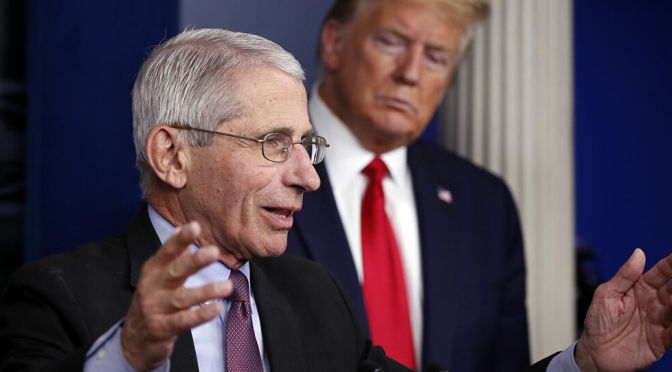


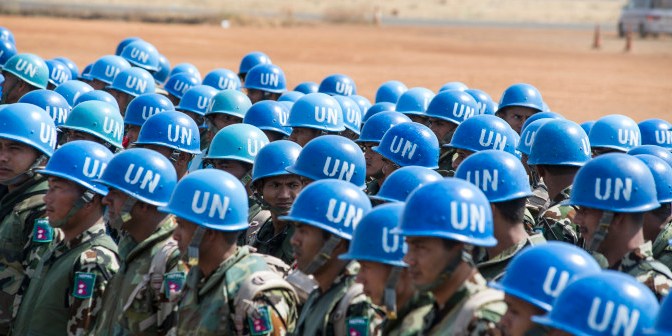

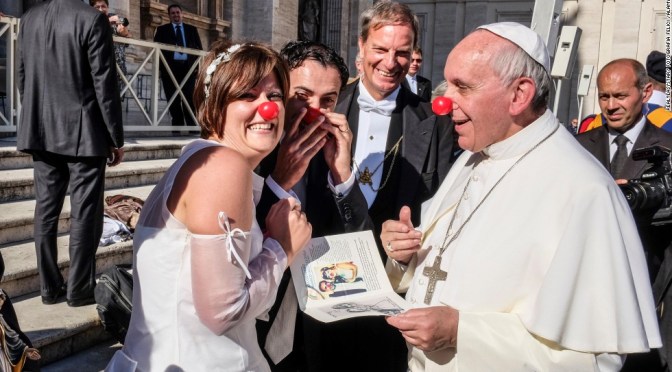

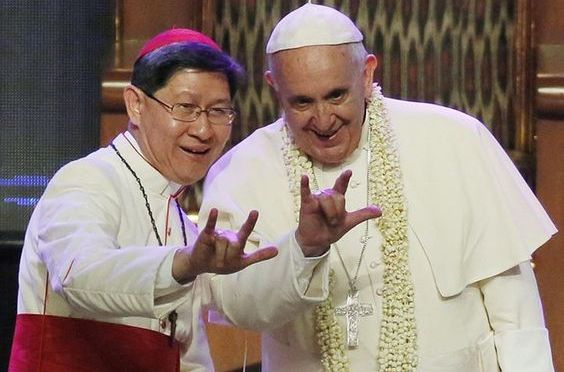


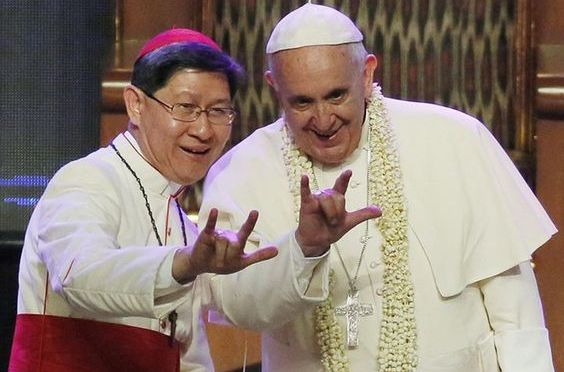


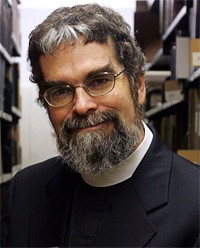


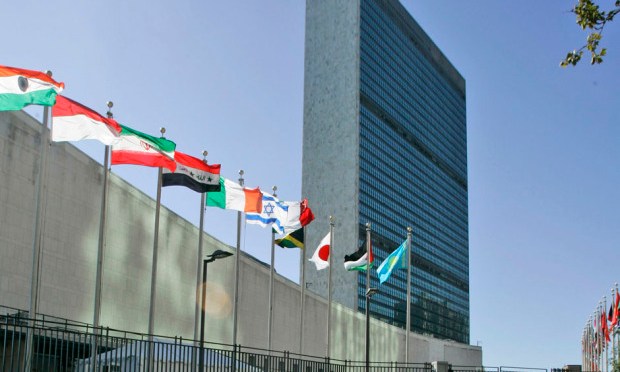


 The Loud Cry
You must be logged in to post a comment.