In a first-of-its-kind case, prosecutors in Pennsylvania announced charges on Tuesday against three Franciscan friars who they say facilitated the abuse of dozens of children.
Plenary Session on Evolving Concepts of Nature
24-28 October 2014
Casina Pio IV, Vatican City
Your Eminences,Dear Brothers in the Episcopate and in the Priesthood, Distinguished Ladies and Gentlemen!
A joyful emotion arose in my soul as the bust, which the Academics wished to have in the headquarters of the Pontifical Academy of Sciences as a sign of acknowledgment and gratitude, was unveiled. This bust of Benedict XVI brings dear Pope Ratzinger’s person and face back to the eyes of all. It also evokes his spirit: that of his teaching, of his example, of his opus, of his devotion to the Church, of his current “monastic” life. This spirit, far from crumbling over time, will appear from generation to generation ever greater and more powerful. Benedict XVI: a great Pope. Great in strength and intellectual insight, great in his significant contribution to theology, great in his love for the Church and for human beings, great in his virtue and his religiosity. As you well know, his love for the truth is not limited to theology and philosophy, but extends to science. His love for science spills over into regard for scientists, without distinction among race, nationality, culture or religion; care for the Academy, from the time St John Paul II appointed him a member. He knew how to honour the Academy with his presence and his words, and he appointed many of its members, including the current President, Werner Arber. Benedict XVI, for the first time, invited a president of this Academy, to participate in the Synod on the New Evangelization, cognizant of the importance of science in modern culture. It could certainly never be said of him that study and science withered his person and his love for God and neighbour; on the contrary, science, wisdom and prayer only expanded his heart and his spirit. Let us give thanks to God for the gift He gave to the Church and the world with the life and Pontificate of Pope Benedict. I thank everyone who so generously made this work of art and this event possible, especially the author of the bust, the sculptor Fernando Delia, your family, and all the Academics. I would like to thank all of you who are present here to honour this great Pope.
At the conclusion of your Plenary Session, dear Academics, I am glad to express my profound appreciation and my warm encouragement to move forward with scientific progress and the betterment of the standard of living of people, especially of those in the greatest poverty.
You are addressing the highly complex subject of the evolution of the concept of nature. I will not go into the scientific complexity, which you well understand, of this important and crucial question. I only want to underline that God and Christ are walking with us and are also present in nature, as the Apostle Paul stated in his discourse at the Areopagus: “In him we live and move and have our being” (Acts 17:28).
When we read the account of Creation in Genesis we risk imagining that God was a magician, complete with an all powerful magic wand.
But that was not so.
He created beings and he let them develop according to the internal laws with which He endowed each one, that they might develop, and reach their fullness.
He gave autonomy to the beings of the universe at the same time in which He assured them of his continual presence, giving life to every reality.
And thus Creation has been progressing for centuries and centuries, millennia and millennia, until becoming as we know it today, precisely because God is not a demiurge or a magician, but the Creator who gives life to all beings. The beginning of the world was not a work of chaos that owes its origin to another, but derives directly from a supreme Principle who creates out of love.
The Big Bang theory, which is proposed today as the origin of the world, does not contradict the intervention of a divine creator but depends on it. Evolution in nature does not conflict with the notion of Creation, because evolution presupposes the creation of beings who evolve.
As for man, however, there is a change and a novelty. When, on the sixth day in the account of Genesis, comes the moment of the creation of man, God gives the human being another autonomy, an autonomy different from that of nature, which is freedom. And he tells man to give a name to all things and to go forth through history.
He makes him the steward of Creation, even that he rule over Creation, that he develop it until the end of time.
Therefore the scientist, and especially
the approach of the Christian scientist is that of investigating the future of humanity and the earth, and, as a free and responsible being, to contribute to preparing it, to preserve it, and to eliminate any risks to the environment, both natural and manmade.
But, at the same time,
the scientist must be moved by the conviction that nature, in its evolutionary mechanisms, hides its potential which it leaves for intelligence and freedom to discover and actualize, in order to reach the development that is in the Creator’s design.
So then, no matter how limited,
the action of man partakes in the power of God and is capable of building a world adapted to his two-fold physical and spiritual life; to build a humane world for all human beings and not only for one group or one privileged class.
This hope and trust in God, the Creator of Nature, and in the capacity of the human spirit, are able to give the researcher a new impetus and profound peace. But it is also true that
the action of man, when his freedom becomes autonomy — which is not freedom, but autonomy — destroys Creation and man takes the place of the Creator.
And this is a grave sin against God the Creator.
I encourage you to continue your work and to carry out these happy theoretical and practical initiatives for the benefit of human beings, which do you honour.
It is with joy that I now consign the insignia, which Bishop Sánchez Sorondo will present to the new members. Thank you.
John Paul II refers to Pius XI’s hope that the Academy would become a Senatus scientificus. In relation to the origins of life and the universe the Pope asks: ‘How do the conclusions reached by the various scientific disciplines coincide with those contained in the message of Revelation? And if, at first sight, there are apparent contradictions, in what direction do we look for their solution?’ Continue reading Address to the Plenary Session on ‘The Origins and Early Evolution of Life’→
Just a very few years ago, Bill Gates publicly declared before a live audience that using vaccinations strategically may help reduce the world population by 15 percent. Many claimed it was a slip of tongue, like a verbal typo. The audience and mainstream media apparently ignored it.
Image: Bergoglio with Military Dictator General Jorge Videla
By Bill Van Auken, March 16, 2013
For over a week, the media has subjected the public to a tidal wave of euphoric banality on the Roman Catholic Church’s selection of a new pope.
This non-stop celebration of the dogma and ritual of an institution that for centuries has been identified with oppression and backwardness is stamped with a deeply undemocratic character. It is reflective of the rightward turn of the entire political establishment and its repudiation of the principles enshrined in the US Constitution, including the wall of separation between church and state.
Argentine President Cristina Fernández de Kirchner recently referred to Bergoglio as a relic of “medieval times and the Inquisition.” At the time, El Presidente was referring to the new Pope’s position on same sex marriage while serving as Archbishop of Buenos Aires back in 2010. But was that all she meant?
To understand, we need to go back to the time of the Dirty War in Argentina.
Cardinal Jorge Mario Bergoglio and Argentina’s “Dirty War”
By Prof Michel Chossudovsky, September 25, 2015
In the course of the last two years, Pope Francis has been portrayed in chorus by the Western media as an antiwar activist and a left leaning champion of “Liberation Theology” committed to World peace and global poverty alleviation. His September 24 speech to the US Congress was described as “stunning in the breadth, depth, and conviction of its progressivism.” “If President Barack Obama had delivered the text of Pope Francis’s speech to Congress Thursday [September 24, 2015] as a State of the Union address, he would have risked being denounced by Republicans as a socialist.” Continue reading “Washington’s Pope”? Who is Pope Francis?→
In this picture taken March 20, 2008 Argentina’s cardinal Jorge Bergoglio, right, kisses the feet of a man during a mass with youth trying to overcome drug addictions in Buenos Aires, Argentina. Bergoglio, who chose the name of Pope Francis, is the 266th pontiff of the Roman Catholic Church. The famous words uttered to announce that a leader of the Catholic Church has been chosen now have special resonance for Latin America, which had felt neglected by the Vatican and has finally produced the New World’s first pope.(AP Photo/Str )
By MICHAEL WARREN March 14, 2013 5:47 PM
BUENOS AIRES, Argentina (AP) — It’s beyond dispute that Jorge Mario Bergoglio, like most other Argentines, failed to openly confront the 1976-1983 military junta as it kidnapped and killed thousands of people in a “dirty war” to eliminate leftist opponents.But human rights activists differ on how much responsibility Pope Francis personally deserves for the Argentine church’s dark history of supporting the murderous dictatorship. Continue reading New pope tied up in Argentina’s ‘dirty war’ debate→
BUENOS AIRES, Dec. 13 -A Chilean judge ruled Monday that Gen. Augusto Pinochet was competent to stand trial for human rights abuses that occurred during his nearly 17 years as Chile’s dictator and immediately charged him with nine counts of kidnapping and one of murder.
Judge Juan Guzmán Tapia also ordered that General Pinochet, 89, be placed under house arrest and confined to his mansion on the outskirts of Santiago, the Chilean capital. The former dictator’s lawyer, Pablo Rodríguez, accused the judge of trampling on the general’s human rights and announced that he would appeal the decision. Later Monday, General Pinochet’s defense team filed an injunction with the Santiago Court of Appeals, effectively freezing the house arrest until the court rules on it, according to Chilean news accounts.. Continue reading Chilean Judge Says Pinochet Is Fit for Trial→
Each week, an estimated 120 Guatemalan children, many unaccompanied, are arriving at the U.S. border. When they arrive in the U.S., they have already survived a long and perilous journey through Mexico, where extortion, kidnapping, rape, and murder are common; many survive these horrors only to die crossing the U.S. desert. Often these children make the journey north not by choice but because they face daily violence and life-threatening poverty; some are literally running for their lives. In a study by the UNHRC, almost 40% of Guatemalan children interviewed who had entered the U.S. unaccompanied and undocumented raised international protection concerns due to violence in society or abuse in the home; close to 30% spoke of deprivation.
In the face of this humanitarian crisis, the Guatemala Human Rights Commission/USA (GHRC) calls for the U.S. government to treat all migrants with dignity, and accept its legal and humanitarian responsibilities to protect refugee children and youth.
The root causes of forced migration in Guatemala are linked to a complex set of factors that include rampant violence, acute poverty, corruption and high rates of impunity — conditions long exacerbated by U.S. policies. GHRC condemns misguided or inhumane responses, such as expedited deportations, that will not only send children back to situations of dire violence, but will also contribute to a cycle of forced migration. Instead, the U.S. response must include deeper analysis of these root causes, including our own role in exacerbating forced migration.
GHRC calls for a humane U.S. response, in line with international protection obligations, to address the immediate needs of children and vulnerable populations.
The U.S. should fully comply with international obligations and provide comprehensive screening for possible international protection needs. To do so, The U.S. should guarantee legal representation for migrants and refugees that arrive at the U.S. border, especially for vulnerable populations such as unaccompanied minors.
The U.S. should maintain protections under the Trafficking Victims Protection Reauthorization Act of 2008 (“TVPRA”) for Central American children.
The U.S. should base all decisions regarding the treatment of child migrants on the best interest of the child; family reunification in the U.S. should be top priority.
The U.S. should halt all deportations until a system is in place to provide both legal representation and screening for international protection needs for all migrants. This is important because the Guatemalan government does not have established programs to support the safe and effective reintegration of deported migrants, and does not have the capacity to receive large numbers of unaccompanied minors, particularly those at risk.
GHRC calls for a long-term strategy that addresses the root causes of migration and focuses on helping people to stay in their communities, instead of a militarized or “mano dura” enforcement approach that will only provoke further fear and instability.
The U.S. should halt security assistance to Guatemala’s police and military, both through the Central America Regional Security Initiative (CARSI) and other bilateral security assistance programs, until credible evidence shows they are protecting human rights and effectively combating internal corruption and links to organized criminal networks. If security assistance is provided, it should be contingent upon strict compliance with human rights conditions and should focus on prevention programs as well as services for at-risk populations such as women’s shelters and witness protection programs.
The U.S. should re-negotiate the Central American Free Trade Agreement (CAFTA) to create more balanced trade regulations and address ongoing poverty and inequality in the labor, textile, agricultural, and service sectors. USAID programs should prioritize support for local and community-based programs to alleviate poverty, and increase access to education, social services and employment opportunities. The U.S. should ensure that any assistance program meets priority needs identified by the local population. To address displacement due to large-scale extractive industry projects, the U.S. should also urge Guatemala to meet its obligation to indigenous communities of free, prior and informed consent before any development project is carried out.
The U.S. should continue to provide support to strengthen the judicial system and accountability mechanisms; this includes support for the high risk courts and the International Commission Against Impunity (CICIG) in Guatemala and efforts to increase judicial independence. The U.S. should also encourage full compliance with Guatemala’s human rights obligations under regional and international law.
The U.S. should support increased protections for human rights defenders, many of whom faced targeted threats and violence due to their work to improve social and economic conditions in Guatemala.
Background:
U.S. policies in the region have been a significant factor contributing to decades of forced migration from Guatemala.
GHRC has documented conditions in Guatemala for over three decades, during which time forced migration has been inextricably linked to social and political factors rooted in historic poverty, inequality and state-sponsored violence – conditions aggravated by U.S. policies, particularly over the last 60 years.
After backing a coup against Guatemala’s democratically elected president in 1954, the U.S. supported the reversal of democratic reforms for economic equality and, for the next forty years, funded, trained and supported the brutal violence unleashed against Guatemala’s civilian population. During Guatemala’s internal armed conflict, which reached the peak of brutality in the early 1980s, over one million people were forcibly displaced, and an estimated 200,000 fled to Mexico, the U.S. and other countries as war refugees.
The long-term legacy of this violence is complex and includes family and community disintegration, high rates of generalized violence, outmigration, and a myriad of related social problems. These challenges were not resolved with the signing of the 1996 Peace Accords and instead have become more acute over the past decade. A history of violence and impunity has also contributed to structural violence, as well as high levels of domestic violence, organized crime, corruption, and weak state institutions. These conditions often violate the universal right to life, liberty and security.
The U.S. response to post-war instability and violence in the region has in large part exacerbated the factors that contributed to forced migration.
1) The U.S. continues to fund security policies in Guatemala that have failed to reduce generalized violence in the region and, in some cases, has reduced Guatemalans’ sense of security. Bilateral and regional assistance has increased steadily from 2008 to today, including over 100 million dollars of security assistance to Guatemala through the Central American Regional Security Initiative (CARSI).
Over this same period, violent crime in the Northern Triangle (Guatemala, Honduras and El Salvador) has escalated and the region now has one of the highest homicide rates in the world. Guatemalan women suffer particularly high rates of domestic and sexual violence. In 2013 Guatemala registered the second highest rate of femicide [1]; over 50% of migrants from Guatemala that year were women [2] and GHRC has supported numerous asylum cases of women who fear persecution and violence if forced to return.
While U.S. support for the International Commission against Impunity in Guatemala (CICIG) has been important, aid to Guatemalan security forces has not succeeded in reducing overall levels of organized crime. Organized criminal networks continue to operate freely throughout Guatemala, trafficking drugs, guns, and human beings. Gangs control entire sections of Guatemala City and other urban areas through extortion, forced recruitment, and other acts of intimidation and violence.
Children are the most vulnerable of all. Every 17 hours a child or teen dies from gun violence. And every two hours a child younger than five years of age dies of preventable causes [3]. Children suffer widespread abuse, sexual exploitation, prostitution, and forced marriage [4]. Where gangs are present, children and youth are specifically targeted for forced recruitment and threatened with severe retaliation if they refuse to join gangs and perform criminal activities or serve as coerced sexual partners [5].
The Guatemalan government is often unable to offer its citizens protection from violence. Impunity for all crimes is one of the highest in the western hemisphere, and impunity for crimes committed against women, children and other vulnerable populations can reach 98%. The police are undertrained, understaffed, underpaid, and often corrupt. Rather than focus on reforming the civilian police, Guatemala has increasingly relied on the military for law enforcement, a strategy that has proven ineffective and, in many cases, counterproductive.
Moreover, there are credible allegations of collaboration between organized criminal groups and members of the Guatemalan military and police [6], as well as police and military involvement in serious crimes [7], exacerbating impunity and denying victims the right to security and justice. Such abuses are often not investigated or prosecuted.
The infiltration of Guatemala’s security forces by organized criminal networks also leads to concerns that ongoing U.S. aid to these institutions inadvertently strengthens the very groups it seeks to combat, and ultimately increases the risk of violence and human rights abuses against vulnerable populations.
2) U.S. economic policies have reinforced poverty and undermined employment opportunities, both of which continue to be important push factors for forced migration. According to the UNDP, more than 51% of Guatemalans live in poverty, with 17% surviving on less than US $1.25 per day [8]. Over half of children under age five suffer from stunting due to malnutrition and 23% of the entire Guatemalan population is undernourished. Chronic under-nutrition in indigenous areas reaches 70% [9].Guatemala continues to be one of the lowest spenders on social programs of any country in Central America, and many Guatemalans lack of access to basic healthcare, social services, and education.
U.S. economic policies such as the Central America-United States Free Trade Agreement (CAFTA) have further contributed to impoverishment and economic instability at the community level. CAFTA has failed to provide sustainable economic opportunity. Steady, long-term employment in many regions is few and far between; 75% of working people are employed in the informal sector, with no job benefits or security, and no guarantee of earning the minimum wage [10].
Many people in rural communities are heavily dependent on subsistence agriculture. CAFTA has increased the trade imbalance between the U.S. and Guatemala and imports of U.S. subsidized crops have undercut local markets [11], forcing people to find work elsewhere, including in the United States. Meanwhile, labor violations and abuse in the workplace are an ongoing reality for those employed in the textile and service sectors. The open CAFTA complaint against Guatemala, filed by U.S. and Guatemalan labor unions in 2009 for the government’s failure to address persistent and systematic labor rights violations, has not produced any results [12].
The U.S. has done little to address conflict in many rural and indigenous communities, which has spiked due to the rise of international investment in mining, hydroelectric power, petroleum extraction, and other large-scale commercial agriculture. These land-intensive projects create few jobs and leave immense environmental devastation in their wake. By means of community referendums Guatemalans have expressed their overwhelming opposition to this model of imposed “development,” yet the Guatemalan government has refused to recognize the results of these plebiscites and has even questioned their legitimacy. Meanwhile the government has neglected to carry out its own consultations with the indigenous populations affected by these projects, in direct violation of obligations under international law. Instead, the Guatemalan government has relied on repressive policies and, in some cases, martial law, to protect the economic interests of transnational companies rather than the safety of its citizens. Facing displacement, contaminated water, polluted environments, and repression from the government, Guatemalans may be forced to seek their livelihoods elsewhere.
3) The U.S. has not done enough to protect human rights defenders, many of whom are working to improve social and economic conditions at home. Those who seek to address root causes of migration – including violence, impunity, land rights and economic inequality – face defamation, persecution and targeted violence. In 2013, Human Rights Defenders Protection Unit of Guatemala documented 18 assassinations of human rights defenders. That same year, the International Trade Union Confederation called Guatemala the most dangerous country in the world to be a trade unionist, citing 68 documented assassinations of trade unionists since 2007. Suspects have been arrested in only one of the murder cases [13].
The Guatemala Human Rights Commission/USA | October 2014
An average of two ICE planes arrive every day at the Guatemala City airport carrying Guatemalans deported from the US; some individuals are detained in the desert a few days after crossing into the United States while others have lived in the US for years. An ICE official recently estimated that a total of 50,000 Guatemalans were deported from the US in FY 2014.
In order to stem the tide of children fleeing Central American countries, a situation that made headlines over the summer, the Obama Administration is aiming to deport unaccompanied children and families with children as soon as possible, including a “last in, first out” rapid deportation of recent arrivals.
However, Guatemala’s rampant corruption and poor social services call into question that country’s ability to safely and humanely absorb increasing numbers of its deported citizens, especially children. It is also unlikely to be a successful strategy in the long term, while the reasons underlying migration remain unchanged.
What is the Process for Return and Reintegration?
US officials have cited Guatemala as having a model intake process for deported migrants. In late August, GHRC staff observed the intake process for a plane of deportees that arrived from Brownsville, Texas. Over 100 people walked across the tarmac to a small building set up
to process returned migrants. The majority of people that deplaned were young men, many wearing
matching jeans and white t-shirts, but there were also about two dozen women.
Each person was briefly interviewed and allowed to make a local call and exchange money. Afterward, they were given a small mesh bag containing their personal effects,which in most cases appeared to be almost empty. In interviews conducted by GHRC staff, many deportees mentioned
being coerced into signing their deportation papers, including some that recounted a US border agent threatening to sign the papers for them if they didn’t sign voluntarily.
Women interviewed spoke of the lack of basic sanitary items such as toothbrushes in ICE detention,
and lack of access to showers for extended periods of time. One described an infant, lying on the
floor, blue from cold – workers at the facility would not give the baby milk or diapers, she explained.
Outside, a few NGOs had tables set up to provide resources on temporary migrant housing and to
offer international phone calls. After this intake process, we were told, deportees are taken to the central bus station and given bus tickets at least part-way to their home towns. No further services are provided.
What Happens to Unaccompanied Children?
Unaccompanied children deported to Guatemala are turned over to the Secretariat of Social Welfare. The Secretariat has two shelters to receive the children, and if they can’t be handed over to their families within a few days, they are sent to one of the permanent shelters the office runs. In a damning report from August 2013, Guatemala’s Human Rights Ombudsman’s Office wrote that these shelters were unhygienic and provided poor quality food, inadequate clothing, no recreational activities and poor healthcare. The facilities are overcrowded, with children sleeping
two to a bed, and understaffed.
Last year, a 14 year-old girl who was a resident of the Guatemala City shelter was murdered by two other girls after they were locked into a bathroom together and left there. According to an ICE official, there were 72 minors deported from the US to Guatemala between January and late August 2014. There is reportedly no risk assessment carried out before the child is turned over to a family member, and no follow-up with the children by the government. GHRC even received information that the government may have, in some cases, mistakenly handed children over to people who
are not family members, including individuals linked to human trafficking networks.
Violence is a Daily Fact of Life in Guatemala
Generalized Violence According to a UNHCR report on unaccompanied child migrants, the majority of unaccompanied children from Guatemala are from the Western Highlands, which has high rates of poverty and very few government services. The region doesn’t have the highest homicide
rates in the country, but other forms of violence are commonplace, particularly for women and children. Twenty-three percent of the unaccompanied children the UNHCR interviewed mentioned violence they suffered in the home. Guatemala City has a 70% rate of impunity for homicide (down from 98% just a few years ago); other violent crimes are very rarely reported and almost never successfully prosecuted. A further 20% talked with the UNCHR about violence in society as being a major cause for their migration. Organized criminal networks continue to operate freely throughout Guatemala, trafficking drugs, guns, and human beings. Gangs control entire sections of Guatemala City and other urban areas through extortion, forced recruitment, and other acts of intimidation and violence. Children and youth are specifically targeted for forced recruitment and threatened with severe retaliation if they refuse to join gangs and perform criminal activities or serve as coerced sexual partners.
Every 17 hours a child or teen dies from gun violence in Guatemala, and every two hours a child
younger than five years of age dies of preventable causes. The Guatemalan government is often
unable to offer its citizens protection from violence – especially those most vulnerable, such as children. Moreover, there are credible allegations of collaboration between organized criminal groups and members of the Guatemalan military and police, as well as police and military involvement in serious crimes, exacerbating impunity and denying victims the right to security
and justice. Such abuses are often not investigated or prosecuted.
Poverty and Deprivation, Upheld Through Violence
Twenty-nine percent of the children interviewed mentioned deprivation as a major factor in their decision to migrate. According to the UNDP, more than 51% of Guatemalans live in poverty, with 17% surviving on less than US $1.25 per day. Over half of children under age five suffer from stunting due to malnutrition and 23% of the entire Guatemalan population is undernourished.
According to a recent World Bank report, the poorest Guatemalans are only sinking deeper into poverty, largely due to extremely low rates of spending by the Guatemalan government, especially on social programs. This deprivation is more extreme in rural areas, where many people are
heavily dependent on subsistence agriculture. The Central American Free Trade Agreement, signed by Guatemala in 2006, has increased the trade imbalance between the US and Guatemala and imports of US subsidized crops have undercut local markets, forcing people to find work elsewhere, including in the United States.
Targeted Violence Against Activists and Community Leaders Working for Positive Change
Human rights defenders who advocate for policies that would reduce inequality and poverty
are killed with near impunity. For example, in 2013, the International Trade Union Confederation called Guatemala the most dangerous country in the world to be a trade unionist, citing 68 documented assassinations of unionists since 2007. Suspects have been arrested for only one of the murders. According to the Guatemala’s Human Rights Defenders Protection Unit, 18 defenders were killed last year for their work. The government’s reaction to social conflict has been increasingly
repressive. Across the country, communities have opposed the construction of mines and
hydroelectric dams; in response, the police and military have been mobilized in large numbers to
break up peaceful protests. Various military outposts have been opened in regions with ongoing conflicts over these “development” projects instead of in regions with the highest levels of violence, or identified as hotspots for organized crime. The Guatemalan government has also repeatedly used states of siege –similar to martial law – to suspend constitutional guarantees, raid homes, and detain community leaders.
In October of 2012, 15,000 indigenous protesters blocked Guatemala’s main highway demanding lower electricity prices and rejecting proposed reforms to teacher training and to Guatemala’s
constitution. Soldiers opened fire on the crowd, killing at least six people and injuring dozens of others. The soldiers and their commanding officers still have not been tried.
Flawed Proposals
As part of the Supplemental Budget Request, the Obama Administration asked Congress for $300 million to address the root causes of migration and to aid in reintegration. However, the proposed uses of these funds replicate US policies that in the past have deepened poverty and exacerbated inequality, or that have simply proven ineffective. In addition, President Obama asked for permission to waive protections granted to Central American children in order to deport them more quickly. However, according to the UN Office for the Coordination of Humanitarian Affairs, rapid deportation could threaten the wellbeing of returnee children given that adequate humanitarian attention and protection in their home countries are not guaranteed.
While in Washington, DC, Guatemalan President Otto Pérez Molina requested that $2 billion be invested in “Plan Central America,” along the lines of Plan Colombia and the Merida Initiative. However, many of the security policies carried out to date in Guatemala have served not to improve security, but to uphold entrenched inequality and poverty and thus contribute to reinforcing some of the very “push factors” that lead migrants to seek better opportunities in the US.
Recommendations
A Humane Response, in line with International Protection Obligations, to address the immediate needs of Children and Vulnerable Populations
1)The US should fully comply with international obligations and provide comprehensive screening for possible international protection needs. To do so, The US should guarantee legal representation for migrants and refugees that arrive at the US border, especially for vulnerable populationst such as unaccompanied minors.
2)The US should maintain protections under the Trafficking Victims Protection Reauthorization Act of 2008 for Central American children.
3)The US should base all decisions regarding the treatment of child migrants on the best interest of the child; family reunification in the US should be top priority.
4) The US should halt all deportations until a system is in place to provide both legal representation and screening for international protection needs for all migrants.
A Long-term Strategy that addresses the root causes of Migration and Focuses on Helping People to Stay in their communities, instead of a Militarized Enforcement Approach
1)The US should halt security assistance to Guatemala’s police and military, both through the Central America Regional Security Initiative and bilateral security assistance programs, until credible evidence shows they are protecting human rights and effectively combating internal corruption and links to organized criminal networks. If security assistance is provided, it should be contingent upon strict compliance with human rights conditions and should focus on prevention programs as well as services for at-risk populations such as women’s shelters and witness protection programs.
2)The US should re-negotiate the Central American Free Trade Agreement to create more balanced trade regulations and address ongoing poverty and inequality in the labor, textile, agricultural, and service sectors. USAID programs should prioritize support for local and community-based programs to alleviate poverty, and increase access to education, social services and employment opportunities. The US should ensure that any assistance program meets priority needs identified by the local population. To address displacement due to large-scale extractive industry projects, the US should also urge Guatemala to meet its obligation to indigenous communities of free, prior and informed consent before any development project is carried out.
3)The US should continue to provide support to strengthen the judicial system and accountability mechanisms; this includes support for the high risk courts and the International Commission Against Impunity in Guatemala and efforts to increase judicial independence. The US should also encourage full compliance with Guatemala’s human rights obligations under international law.
4)The US should support increased protections for human rights defenders, many of whom face targeted threats and violence due to their work to improve social and economic conditions in Guatemala.
STATISTICS ON BASIC CONDITIONS IN GUATEMALA:
• Guatemala is one of the lowest spenders on social programs of any country in Central America: the national budget invests approximately 3% in education, 1% on health and 0.4% on housing.
• Over 50% of children are chronically malnourished; chronic under-nutrition in indigenous communities is an estimated 70%.
• 60% of the population lives on less than US $2/day. 26% of the population lives in multidimensional poverty.
• 75% of working people are employed in the informal sector, with no job benefits or security, and no guarantee of earning the minimum wage.
• The homicide rate of almost 40 murders per 100,000 inhabitants is one of the highest in the world.
• 748 women suffered violent deaths in 2013, an average of 2 every day, which is a 10% increase from 2012. The impunity rate for these cases is 98%.
• 68 labor activists have been killed since 2007, making Guatemala the most dangerous country in the world to be a trade unionist.
• At least 54 drug trafficking organizations reportedly operate within the country.
El testimonio de Nieves Ayress Moreno se levanta con la fuerza de la Verdad frente a los cobardes que niegan la tortura en Chile.
Testimonio del horror: Nieves Ayress (*), exprisionera de la Dictadura en Chile
Nueva York — El relato parece extraído de las historias de horror de Edgar Allan Poe, E.T. Hoffman, Guy de Maupassant o Bram Stoker.O más, de las transcripciones de los interrogatorios brutales en los campos nazis deconcentración de Dachau o Treblinka. Pero no lo es.
Tampoco es ficción de un literato dedicado a provocar estremecimientos de terror e insomnio en sus lectores. Es, simplemente, una página arran cada de la tragedia vivida en las ergástulas de las dictaduras militares de los años 70, instauradas, alegadamente, para defender la libertad y la democracia, amenazadas por la insurgencia de pueblos anhelantes de justicia social. La página siniestra vivida hace tres décadas por Luz de las Nieves Ayress Moreno, chilena, una activista comunitaria que reside desde hace 12 años en Nueva York, toma actualidad cuando una Comisión de la Verdad en Chile, acaba de entregar al presidente Ricardo Lagos un informe sobre la tortura ejercida por el régimen militar que encabezó por 17 años el general Augusto Pinochet Ugarte, quien, en una entrevista para una cadena de televisión hispana, en 2003, su autocalificó como “un ángel bueno”.
Lagos declaró sentirse “asqueado” de la lectura y el general Manuel Contreras, jefe la DINA, la policía política de Pinochet, dijo a los medios de prensa que “en la Dirección de Inteligencia Nacional no hubo ninguna política de tortura ni tampoco de detener gente para asesinarla, ni cosas por el estilo”.
Las reaccion es a esta declaración fueron desde la calificación de “cín i cas y perversas” hasta la de la ex ministra de Defensa, Michelle Bachelet, sobreviviente de las torturas en Villa Grimaldi, quien acusó a Contreras de ser “un cara de palo”.
Nieves Ayress tenía 23 años y era, según su relato, una joven estudiante que había sido influida, como casi todos los jóvenes de su generación, por la Revolución Cubana, el movimiento hippie, las reformas sociales, la guerra de Vietnam y los movimientos juveniles contestatarios de Francia que encabezaba Daniel Cohn Benditt o “Danny, el rojo”=. Lo que queríamos era un mundo más humano y igualitario, por eso me afilié al Ejército Nacional de Liberación en Bolivia en 1968 y trabajé con mujeres y niños en varias poblaciones pequeñas. Yo no maté a nadie, no robé, no cometí ningún delito. Mi pecado era ser joven, y apenas derrocado Allende los militares y los extremistas de derecha sospechaban de todo aquel que fuera joven” dice Nieves alinicio de su charla.
Su testimonio discurre fluido, haciendo difícil para su interlocutor conservar el pulso y la presión arterial normal al escuchar el lúgubre relato.
“El día del golpe yo estaba en casa. Sabíamos que la insurrección militar venía porque en mi familia se hacía política. Mis abuelos fueron los que junto a Recabarren fundaron los movimientos revolucionarios en Chile; mis padres, Virginia Moreno y Carlos Ayress, fundaron junto a Salvador Allende el Partido Socialista”.
“Mis cinco hermanos y yo pertenecimos siempre a movimientos sociales. El día 11 de septiembre de 1973 nos fuimos al barrio pobre de La Legua donde se produjeron enfrentamientos con los militares. Una semana después fui detenida por primera vez y llevada al Estadio Nacional. Estuve detenida por dos semanas y empecé a ser torturada. Permanecí enclaustrada en una torre, sola, y desde allí veía los golpes y las torturas a otros presos. Me pusieron en libertad sin darme ninguna explicación pero en enero de 1974 caí por segunda vez a órdenes de la DINA que dirigía el general Manuel Contreras.
Cuando me detuvieron yo estaba en la fábrica de mi padre. Me esposaron y me llevaron a la casa de nuestra familia en San Miguel y detuvieron también a mi padre, Carlos Ayress, y a mi hermano Tato. De allí me condujeron a un centro de torturas en el número 38 de la calle Londres, donde permanecí dos semanas sola e incomunicada y fui tratada salvajemente. Las torturas incluían golpes, choques eléctricos a las partes más sensibles del cuerpo como ojos, senos, ano, vagina, nariz, oídos y dedos. Un método muy común era el que ellos llamaban ‘pau de arara’, introducido por torturadores br
asileños que experimentaron con nosotros. Este consistía en amarrarnos de pies y manos y colgarnos cabeza abajo. En esa posición nos aplicaban choques eléctricos en el ano. Otra forma era ‘el teléfono’. Nos golpeaban con fuerza y simultáneamente los oídos. Desnuda y encapuchada fui torturada en presencia de mi padre y hermano e intentaron que tuviera relación sexual con ellos. También me obligaban a presenciar como torturaban a mi padre y de otros amigos que se encontraban presos. En los baños de la prisión de la calle Londres fui repetidamente violada”.
“Aunque no supe quienes eran mis torturadores en ese sitio, por sus voces pude entender que eran argentinos y paraguayos quienes me convencieron que estaba en Buenos Aires. En una sesión de torturas sufrí un colapso cardíaco. Los verdugos se asustaron y pidieron unas medicinas a un sitio de la calle Arturo Pratt. Fue así como supe que estaba en Santiago”. “Calculo que fue en febrero de 1974 cuando me llevaron a otra prisión en Tejas Verdes donde estuve incomunicada. Este era otro sitio de entrenamiento de torturadores y los recuerdos que tengo son de absoluta brutalidad. Me forzaron a realizar actos sexuales con un perro que había sido especialmente preparado para este tipo de abuso. También colocaban ratas dentro de mi vagina y luego me daban choques eléctricos. Las ratas, desesperadas, hundían sus garras en mi interior. Se orinaban y defecaban en mi cuerpo. Después me inocularon el virus de la toxoplasmósis. Fui violada constantemente y forzada a tener sexo oral con mis captores. Me cortaron las capas superficiales del vientre con un cuchillo y las orejas. Luego me ponían alcohol en las heridas y me aplicaban corriente eléctrica. Toda vía pueden verse las cicatrices en mi cuerpo. Me introdujeron botellas de Coca Cola por el ano y me gritaban ‘Esto es para que sientas el Imperio’”.
“El general Manuel Contreras ha declarado hace pocos días que en la DINA nunca se torturó a nadie. Yo puedo decir que en una ocasión fui torturada por el propio Manuel Contreras y una mujer alemana que estaba presa, de quien decían que nos parecíamos y debíamos ser hermanas. A Contreras lo pude ver porque la venda que cubría mis ojos estaba floja. Después lo reconocí en fotografías”. “Un ex agente. Samuel Fuenzalida Devia, declaró a un diario digital chileno que el general Manuel Contreras, quien acaba de ser condenado en su país a 12 años de prisión, supervisaba las torturas en Londres 38”.
“A las mujeres se les aplicaba corriente en los genitales y en los senos. También eran quemadas con cigarrillos”, dijo Fuenzalida y agregó que Contreras le dijo en una ocasión que “debía estar orgulloso de pertenecer a la DINA”.
“En abril de 1974, cuando había sido llevada a la Cárcel de Mujeres de la calle Vicuña Mackenna, que estaba administrada por una orden de monjas, caí en cuenta que estaba embarazada. Un doctor de apellido Mery, militar que ejercía en la Universidad Católica, me confirmó el embarazo y me dijo que yo debía estar orgullosa de tener ‘un hijo de la patria’, es decir un producto de violaciones de los militares. Mi situación causó una gran controversia internacional pues mi madre y toda mi familia había denunciado mi prisión y torturas. Fui entrevistada por la Cruz Roja Internacional, Amnistía Internacional, Comisión Kennedy, Comisión de Derechos Humanos de la OEA, el cardenal Silva Enríquez y esposas de los militares. Me ofrecieron la libertad si no denunciaba las violaciones y el embarazo. Las monjas ofrecieron ayudarme para pedir un permiso que me permitiera abortar. Tenía que elevar una solicitud al cardenal y éste elevarla al Papa. En Chile el aborto era penado por la ley y yo estaba en muy mala condición física, muy débil, así que decidí tener el hijo. Después de haber sobrevivido a tanto tiempo de detención y crueles maltratos, no iba a dar a los militares el gusto de morirme. Sin embargo en mayo tuve un aborto espontáneo pero no recibí atención médica ni medicinas”.
“De Vicuña Mackenna me llevaron a Tres Álamos, otro campo de concentración. Fui sometida nuevamente a violaciones, amenazas y hasta un simulacro de fusilamiento. En diciembre de 1976 salí expulsada de Chile junto a 17 presos políticos entre los que estaban mis compañeros Víctor Toro, Gladys Díaz, el doctor Luís Corbalán. El decreto de expulsión señalaba que no podíamos volver jamás a nuestra patria. Con la solidaridad de mucha gente conseguí quedarme a vivir en Berlín”.
“A fines de 1977 fui a Cuba. En el hospital Calixto García, sin tener que pagar un centavo, me trataron de la toxoplasmosis, me reconstruyeron la vagina y todo mi cuerpo para que pudiera engendrar, me trataron las infecciones vaginales, la descalcificación y la sordera provocada por ‘el teléfono’, me arreglaron las cicatrices del cuerpo y las orejas y me operaron los pies deformados por el maltrato. También me dieron terapia psicológica en una muestra de solidaridad de los cubanos imposible de pagar”.
“Pese a todo lo que me hicieron los sicarios de Pinochet pude sobrevivir. Tengo aún secuelas psicológicas por todo lo que me tocó vivir. Siento dolor permanente en el cuello, las manos, las rodillas y los pies; tengo marcas y cicatrices en todo mi cuerpo. Cuando veo una rata siento un dolor reflejo en la vagina. Siento ansiedad, pesadillas y depresión. He superado algunas de esas secuelas, por ejemplo el miedo al encierro surgido por las violaciones que sufrí en el baño de la prisión de la calle Londres, pero sigo siendo muy sensible emocionalmente. Mi familia fue dividida, destruida y toda mi vida cambió después del golpe militar”.
“Pero, al fin, yo estoy aquí, resucitada. Con mi esposo, Víctor Toro, preso y torturado igual que yo, tenemos una hija, Rosita, quien estudia en la Universidad de Nueva York. A los 21 años regresé a Chile con ella, y pude decir a mis torturadores militares: ¡Aquí estoy yo y aquí está mi hija. Me torturaron pero no me destruyeron, no me jodieron por que tuve una hija!”.
(*) Nieves Ayress enfatiza que su testimonio no persigue ninguna compasión. Sólo consignar
un ejemplo para que los sucesos de Chile, no se repitan nunca.
__
Información disponible en el sitio ARCHIVO CHILE,Web del Centro Estudios
NOTA : El portal del CEME es un archivo histórico, social y político básicamente de Chie. No persigue ningún fin de lucro. La versión electrónica de documentos se provee únicamente con fines de información y preferentemente educativo culturales. Cualquier reproducción destinada a otros fines de berá obtener los permisos que correspondan, porque los documentos incluidos en el portal
son de propiedad intelectual de sus autores o editores. Los contenidos de cada fuente, son de responsabilidad de sus respect i vos autores.
Because of the hardships on Iraqi children from the sanctions imposed on Iraq after the Persian Gulf War, beginning in 1996 Iraq was allowed to sell limited amounts of oil to finance the purchase of goods and medicines for humanitarian purposes. This Oil-for-Food program was supposed to be under tight UN supervision, but the UN was the fox guarding the chicken coop.
The UN collected a 2.2 percent commission on every barrel of oil to pay for overseeing a flow of funds that totaled at least $67 billion, a task administered by ten UN agencies employing 1,000 staff. That was just the start of the giant Oil-for-Food rip-off.
The evidence is now pouring in that more than $10 billion in bribes and kickbacks were siphoned off under the noses of the UN monitors. Oil-for-Food was a giant scam that allowed Saddam Hussein to divert that incredible sum to finance his lavish lifestyle and to buy friends to keep himself in power.
The UN had no effective mechanisms of accounting or disclosure, and there never was any audit. Everything was secret: the price and quantity of the oil and of the goods for relief, the identities of the oil buyers, the quality of the food and medicines, the bank statements, and all financial transactions.
General Tommy Franks called the program Oil-for-Palaces. Others called it UNScam. But Saddam’s personal pocketing of an estimated $5 billion was only part of the racket; the rest of the illegal money financed a system of bribes to buy international support for his corrupt regime.
Now we know why the UN, and especially France and Russia, opposed our goal of toppling Saddam. It wasn’t because they are anti-American; it was because they were the chief beneficiaries of these secret deals with Saddam and they didn’t want to turn off the money spigot.
From 1996 to 2002, Oil-for-Food was a cover that invited and sustained huge transfers of corruption-laden transactions between Iraq and major UN members, particularly Russia, France and China. Their profitable party would still be going on if the United States hadn’t kicked Saddam out of power.
Here is how the scam worked. Saddam selected individuals, corporations and political parties to receive oil allotments at steep price discounts, which were then sold at the market price. Their part of the deal was to kick back a generous percentage of the profits to Saddam and to help keep him in power by giving him political support in the UN and elsewhere.
UN Secretary General Kofi Annan was a chief negotiator with Saddam. Annan’s secretariat collected fees of $1.4 billion to monitor, administer and audit the program, keep the records, and interact with Saddam, plus another $500 million for weapons inspection.
Annan picked UN Assistant Secretary General Benon Sevan to be Oil-for-Food’s executive director and report directly to him. He served for six years.
The Iraq Oil Ministry has now released a list of 270 companies and politicians from 46 countries, especially Russia and France, that profited from this scheme. The list includes former Iraqi officials, a former French Cabinet minister, a British member of Parliament, Benon Sevan who ran the program, a company with which Kofi Annan’s son was associated, and other UN personnel who were supposed to be monitoring the contracts.
The smoking gun is a letter to the former Iraqi oil minister obtained by ABC News. It describes the specifics of one deal that would have generated a profit of $3.5 million.
Some of the food delivered, mostly from Russia, was unfit for humans, and medicines were often out of date. Saddam also handed out vouchers instead of cash for other goods imported illegally in violation of UN sanctions.
The excuse for this program was an alleged desire to provide for needs of Iraqi people, but the people had no say in who bought or sold goods or food, what was bought, how it was distributed, or anything else. The deal was between the UN and Saddam.
Five investigations of what is probably the biggest financial fraud in history are now in progress. Two are by the U.S. House, one by the Senate, one by the Iraqi Governing Council, and one authorized by the UN and headed by former Federal Reserve Chairman Paul Volcker. A UN Security Council resolution calls on the 191 UN countries “to cooperate fully,” but much cooperation is unlikely since Volcker has no subpoena power.
Not only have its efforts to bring peace often been failures, but the organisation itself is riddled with waste, fraud and abuse.
AS THE United Nations approaches its fiftieth anniversary this year, Reader’s Digest assigned Roving Editor Dale Van Atta to examine U.N. operations and effectiveness. For four months he interviewed dozens of officials and poured over U.N. budget documents and confidential files. He found an institution in critical need of reform.
This article, on the U.N.’s peacekeeping operations; is the first of two reports. Part 2 will appear next month.
Sonja’s Kon-Tiki Café is a notorious Serbian watering hole ten kilometres north of Sarajevo. While Serb soldiers perpetrated atrocities in nearby Bosnian villages, local residents reported that U.N. peacekeepers from France, Ukraine, Canada and New Zealand regularly visited Sonja’s, drinking and eating with these very same soldiers — and sharing their women.
The women of Sonja’s, however, were actually prisoners of the Serb soldiers. As one soldier, Borislav Herak, would later confess, he visited Sonja’s several times a week, raping some of the 70 females present and killing two of them.
U.N. soldiers patronised Sonja’s even after a Sarajevo newspaper reported where the women were coming from. A U.N. spokesman excused the incident by saying no-one was assigned to read the newspaper. The U.N. soldiers who frequented Sonja’s also neglected to check out the neighbourhood. Just over 60 metres away, a concentration camp held Bosnian Muslims in inhuman conditions. Of 800 inmates processed, 250 disappeared and are presumed dead.
Tragically, Sonja’s Kon-Tiki illustrates much of what has plagued U.N. peacekeeping operations: incompetent commanders, undisciplined soldiers, alliances with aggressors, failure to prevent atrocities and at times even contributing to the horror. And the level of waste, fraud and abuse is overwhelming.
Until recently, the U.N. rarely intervened in conflicts. When it did, as in Cyprus during the 1960s and ’70s, it had its share of success. But as the Cold War ended, the U.N. became the world’s policeman, dedicated to nation building and peacekeeping. By the end of 1991, it was conducting 11 peacekeeping operations at an annual cost of $615 million. In three years, the numbers rose to 18 operations and $3.3 billion — with Australian taxpayers paying 1.5 per cent of the bill.
Have the results justified the steel cost? Consider the U.N.’s top four peacekeeping missions:
Bosnia In June 1991, Croatia declared its independence from Yugoslavia and was recognised by the U.N. The Serbian-dominated Yugoslav army invaded Croatia, ostensibly to protect its Serbian minority. After the Serbs agreed to a cease-fire, the U.N. sent in a 14,000-member U.N. Protection Force (UNPROFOR) to build a new nation. (The mission has since mushroomed to over 40,000 personnel, becoming the most extensive and expensive peacekeeping operation ever.)
After neighbouring Bosnia declared its independence in March 1992, the Serbs launched a campaign of “ethnic cleansing” against the Muslims and Croats who made up 61 per cent of the population. Rapidly the Serbs gained control of two-thirds of Bosnia, which they still hold.
Bosnian Serbs swept into Muslim and Croat villages and engaged in Europe’s worst atrocities since the Nazi Holocaust. Serbian thugs raped at least 20,000 women and girls. In barbed-wire camps, men, women and children were tortured and starved to death. Girls as young as six were raped while parents were forced to watch. In one case, three Muslim girls were chained to a fence, raped by Serb soldiers for three days, then drenched with petrol and set on fire.
While this was happening, the UNPROFOR troops stood by and did nothing to help. Designated military “observers” counted artillery shells — and the dead.
Meanwhile, evidence emerged that there was a serious corruption problem. Accounting procedures were so loose that the U.N. overpaid $2.3 million on a $28-million fuel contract. Kenyan peacekeepers stole 95,000 litres of fuel and sold it to the Serbs.
Corruption charges were routinely dismissed as unimportant by U.N. officials. Sylvana Foa, then spokesperson for the U.N. Human Rights Commission in Geneva, said it was no surprise that “out of 14,000 pimply 18-year-olds, a bunch of them should get up to hanky-panky” like blackmarket dealings and visiting brothels.
When reports persisted, the U.N. finally investigated. In November 1993 a special commission confirmed that some terrible but “limited” misdeeds had occurred. Four Kenyan and 19 Ukrainian soldiers were dismissed from the U.N. force.
The commission found no wrongdoing at Sonja’s Kon-Tiki, but its report, locked up at U.N. headquarters and never publicly released, is woefully incomplete. The Sonja’s Kon-Tiki incidents were not fully investigated, for example, because the Serbs didn’t allow U.N. investigators to visit the site, and the soldiers’ daily logbooks had been destroyed.
Meanwhile, Russian troop commanders collaborated with the Serb aggressors. According to U.N. personnel at the scene, Russian battalion commander Colonel Viktor Loginov and senior officer Colonel Aleksandr Khromchenkov attended lavish feasts hosted by a Serbian warlord called “Arkan,” widely regarded as one of the worst perpetrators of atrocities. It was also common knowledge that Russian officers directed that U.N. tankers unload petrol at Arkan’s barracks. During one cease-fire, when Serbian materiel was locked in a U.N. storage area, a Russian apparently gave the keys to the Serbs, who removed 51 tanks. Eventually, Khromchenkov was repatriated. Loginov, after finishing his tour of duty, joined Arkan’s Serbian forces.
Problems remained, however, under the leadership of another Russian commander, Major General Aleksandr Perelyakin. Belgian troops had been blocking the movement of Serb troops across a bridge in northeastern Croatia, as required by U.N. Security Council resolutions. Perelyakin ordered the Belgians to stand aside. Reluctantly they did so, permitting one of the largest movements of Serbian troops and equipment into the region since the 1991 cease-fire. According to internal U.N. reports, the U.N. spent eight months quietly trying to pressure Moscow to pull Perelyakin back, but the Russians refused. The U.N. finally dismissed him last April.
Cambodia In 1991, the China and the Soviet Union helped broker a peace treaty among three Cambodian guerrilla factions and the Vietnamese-installed Cambodian government, ending 21 years of civil war. To ease the transition to Cambodia’s first democratic government; the U.N. created the U.N. Transitional Authority in Cambodia, called UNTAC. In less than two years, about 20,000 U.N. peacekeepers and other personnel were dispatched at a cost of $2.4 billion.
Some of the Cambodian “peacekeepers” proved to be unwelcome guests — especially a Bulgarian battalion dubbed the “Vulgarians.” In northwest Cambodia, three Bulgarian soldiers were killed for “meddling” with local girls. One Bulgarian was treated for 17 different STDs. The troops’ frequent carousing once sparked a mortar-rifle battle with Cambodian soldiers at a brothel.
The Bulgarians were not the sole miscreants in Cambodia, as internal U.N. audits later showed. Requests from Phnom Penh included 6500 flak jackets — and 300,000 condoms. In the year after the U.N. peacekeepers arrived, the number of prostitutes in Phnom Penh more than tripled.
U.N. mission chief Yasushi Akashi waved off Cambodian complaints with a remark that “18-year-old hot-blooded soldiers” had the right to drink a few beers and chase “young beautiful beings.” Akashi did post an order: “Please do not park your U.N. vans near the nightclubs” (i.e., brothels). At least 150 U.N. peacekeepers got AIDS in Cambodia; 5000 of the troops came down with STDs. Meanwhile, more than 1000 generators were ordered, at least 330 of which, worth nearly $4 million, were never used for the mission. When U.N. personnel started spending the $300 million budgeted for “premises and accommodation,” rental costs became so inflated that locals could barely afford to live in their own country. Some $102 million was spent buying vehicles, including hundreds of surplus motorcycles and minibuses. When 100 12-seater minibuses were needed, 850 were purchased — an “administrative error,” UNTAC explained, that cost $10.6 million.
Despite the excesses, the U.N. points with pride to the free election that UNTAC sponsored in May 1993. Ninety per cent of Cambodia’s 4.7 million voters defied death threats from guerrilla groups and went to the polls.
Unfortunately, the election results have been subverted by the continued rule of the Cambodian People’s Party — the Vietnamese-installed communist government, which lost at the ballot box. In addition, the Khmer Rouge — the guerrilla group that butchered over a million countrymen in the 1970s — have refused to disarm and demobilise. So it was predictable that they would repeatedly break the cease-fire and keep up their killing. The U.N. has spent nearly $2.5 billion, but there is no peace in Cambodia.
Somalia When civil war broke out in this African nation, the resulting anarchy threatened 4.5 million Somalis — over half the population — with severe malnutrition and related diseases. U.N. Secretary General Boutros Boutros-Ghali, the first African (and Arab) to hold the position, argued eloquently for a U.N. peacekeeping mission to ensure safe delivery of food and emergency supplies. The U.N. Operation in Somalia (UNOSOM) was deployed to Mogadishu, the capital, in September 1992. It was quickly pinned down at the airport by Somali militiamen and was unable to complete its mission.
A U.S. task force deployed in December secured the Mogadishu area, getting supplies to the hungry and ill. After the Americans left, the U.N. took over in May 1993 with UNOSOM II. The $2.5-million-a-day operation transformed the former U.S. embassy complex into a 32hectare walled city boasting air-conditioned housing and a golf course. When U.N. officials ventured out of the compound, their “taxis” were helicopters that cost $640,000 a week.
The published commercial rate for Mogadishu—U.S. phone calls was $6.30 a minute, but the “special U.N. discount rate” was $10.78. Unauthorised personal calls totalled more than $2.5 million, but the U.N. simply picked up the tab and never asked the callers to pay.
Meanwhile, the peacekeeping effort disintegrated, particularly as warlord Mohammed Aidid harassed UNOSOM II troops. As the civil war continued, Somalis starved. But U.N. peacekeepers — on a food budget of from South America, beef from Australia and frozen fish from New Zealand and the Netherlands.
Thousands of metres of barbed wire arrived with no barbs; hundreds of light fixtures to illuminate the streets abutting the compound had no sockets for light bulbs. What procurement didn’t waste, pilferage often took care of. Peacekeeping vehicles disappeared with regularity. Egyptian U.N. troops were suspected of largescale black-marketing of minibuses.
But these losses were eclipsed in a single night by a thief who broke into a U.N. office in Mogadishu and took $5 million in cash. The office door was easy pickings: its lock could be jemmied with a credit card. The money, stored in a filing cabinet, had been easily visible to dozens of U.N. employees. While the case has not been solved, one administrator was dismissed and two others were disciplined. UNOSOM II itself was later shut down, leaving Somalia to the same clan warfare that existed when U.N. troops were first deployed two years before.
Rwanda Since achieving independence in 1962, Rwanda has erupted in violence between the majority Hutu tribe and minority Tutsis. The U.N. had a peacekeeping mission in that nation, but it fled as the Hutus launched a new bloodbath in April 1994. Only 270 U.N. troops stayed behind, not enough to prevent the butchery of at least 14 local Red Cross workers left exposed by the peacekeepers’ swift flight. The U.N. Security Council dawdled as the dead piled up, a daily horror of shootings, stabbings and machete hackings. The Hutus were finally driven out by a Tutsi rebel army in mid-1994.
Seven U.N. agencies and more than 100 international relief agencies rushed back. With a budget of some $256 million, the U.N. tried unsuccessfully to provide security over Hutu refugee camps in Rwanda and aid to camps in neighbouring Zaire.
The relief effort was soon corrupted when the U.N. let the very murderers who’d massacred half a million people take over the camps. Rather than seeking their arrest and prosecution, the U.N. made deals with Hutu thugs, who parlayed U.N. food, drugs and other supplies into millions of dollars on the black market.
Earlier this year the U.N. began to pull out of the camps. On April 22 at the Kibeho camp in Rwanda, the Tutsi-led military opened fire on Hutu crowds. Some 2000 Hutus were killed. Where was the U.N.? Overwhelmed by the presence of nearly 2000 Tutsi soldiers, the 200 U.N. peacekeepers did nothing. A U.N. spokesman informed Reader’s Digest, meekly, that the UN. was on the scene after the slaughter for cleanup and body burial.
With peacekeeping operations now costing over $3.8 billion a year, reform is long overdue. Financial accountability can be established only by limiting control by the Secretariat, which routinely withholds information about peacekeeping operations until the last minute — too late for the U.N.’s budgetary committee to exercise oversight. In December 1993, for example, the budget committee was given only one day to approve a $770-million budget that would extend peacekeeping efforts into 1994.
More fundamentally, the U.N. needs to re-examine its whole peacekeeping approach, for the experiment in nation building has been bloody and full of failure. Lofty ideas to bring peace everywhere in the world have run aground on reality: member states with competing interests in warring territories, the impossibility of lightly armed troops keeping at bay belligerent enemies, and the folly of moving into places without setting achievable goals.
“It has been a fundamental error to put U.N. peacekeepers in place where there is no peace to keep,” says Sam Nunn, a member of the US Senate Armed Services Committee.” We’ve seen very vividly that the U.N. is not equipped, organised or financed to intervene and fight wars.”
Pope Francis was born in Buenos Aires on 17 December 1936, the son of Italian immigrants.
His father Mario was an accountant employed by the railways and his mother Regina Sivori was a committed wife dedicated to raising their five children. He graduated as a chemical technician and then chose the path of the priesthood, entering the Diocesan Seminary of Villa Devoto. On 11 March 1958 he entered the novitiate of the Society of Jesus. He completed his studies of the humanities in Chile and returned to Argentina in 1963 to graduate with a degree in philosophy from the Colegio de San José in San Miguel. From 1964 to 1965 he taught literature and psychology at Immaculate Conception College in Santa Fé and in 1966 he taught the same subject at the Colegio del Salvatore in Buenos Aires. From 1967-70 he studied theology and obtained a degree from the Colegio of San José.
On 13 December 1969 he was ordained a priest by Archbishop Ramón José Castellano. He continued his training between 1970 and 1971 at the University of Alcalá de Henares, Spain, and on 22 April 1973 made his final profession with the Jesuits. Back in Argentina, he was novice master at Villa Barilari, San Miguel; professor at the Faculty of Theology of San Miguel; consultor to the Province of the Society of Jesus and also Rector of the Colegio Máximo of the Faculty of Philosophy and Theology.
On 31 July 1973 he was appointed Provincial of the Jesuits in Argentina, an office he held for six years. He then resumed his work in the university sector and from 1980 to 1986 served once again as Rector of the Colegio de San José, as well as parish priest, again in San Miguel. In March 1986 he went to Germany to write a doctoral thesis on Romano Guardini; his superiors then sent him to the Colegio del Salvador in Buenos Aires and next to the Jesuit Church in the city of Córdoba as spiritual director and confessor.
It was Cardinal Antonio Quarracino, Archbishop of Buenos Aires, who wanted him as a close collaborator. So, on 20 May 1992 Pope John Paul II appointed him titular Bishop of Auca and Auxiliary of Buenos Aires. On 27 May he received episcopal ordination from the Cardinal in the cathedral. He chose as his episcopal motto, miserando atque eligendo, and on his coat of arms inserted the ihs, the symbol of the Society of Jesus.
He gave his first interview as a bishop to a parish newsletter, Estrellita de Belém. He was immediately appointed Episcopal Vicar of the Flores district and on 21 December 1993 was also entrusted with the office of Vicar General of the Archdiocese. Thus it came as no surprise when, on 3 June 1997, he was raised to the dignity of Coadjutor Archbishop of Buenos Aires. Not even nine months had passed when, upon the death of Cardinal Quarracino, he succeeded him on 28 February 1998, as Archbishop, Primate of Argentina and Ordinary for Eastern-rite faithful in Argentina who have no Ordinary of their own rite.
Three years later at the Consistory of 21 February 2001, John Paul ii created him Cardinal, assigning him the title of San Roberto Bellarmino. He asked the faithful not to come to Rome to celebrate his creation as Cardinal but rather to donate to the poor what they would have spent on the journey. As Grand Chancellor of the Catholic University of Argentina, he is the author of the books: Meditaciones para religiosos (1982), Reflexiones sobre la vida apostólica (1992) and Reflexiones de esperanza (1992).
In October 2001 he was appointed General Relator to the 10th Ordinary General Assembly of the Synod of Bishops on the Episcopal Ministry. This task was entrusted to him at the last minute to replace Cardinal Edward Michael Egan, Archbishop of New York, who was obliged to stay in his homeland because of the terrorist attacks on September 11th. At the Synod he placed particular emphasis on “the prophetic mission of the bishop”, his being a “prophet of justice”, his duty to “preach ceaselessly” the social doctrine of the Church and also “to express an authentic judgement in matters of faith and morals”.
All the while Cardinal Bergoglio was becoming ever more popular in Latin America. Despite this, he never relaxed his sober approach or his strict lifestyle, which some have defined as almost “ascetic”. In this spirit of poverty, he declined to be appointed as President of the Argentine Bishops’ Conference in 2002, but three years later he was elected and then, in 2008, reconfirmed for a further three-year mandate. Meanwhile in April 2005 he took part in the Conclave in which Pope Benedict XVI was elected.
As Archbishop of Buenos Aires — a diocese with more than three million inhabitants — he conceived of a missionary project based on communion and evangelization. He had four main goals: open and brotherly communities, an informed laity playing a lead role, evangelization efforts addressed to every inhabitant of the city, and assistance to the poor and the sick. He aimed to re-evangelize Buenos Aires, “taking into account those who live there, its structure and its history”. He asked priests and lay people to work together. In September 2009 he launched the solidarity campaign for the bicentenary of the Independence of the country. Two hundred charitable agencies are to be set up by 2016. And on a continental scale, he expected much from the impact of the message of the Aparecida Conference in 2007, to the point of describing it as the “Evangelii Nuntiandi of Latin America”.
REUTERS/NASA – A nighttime view of Europe made possible by the ?day-night band? of the Visible Infrared Imaging Radiometer Suite (VIIRS) is seen in a global composite assembled from data acquired by the Suomi National Polar-orbiting Partnership (Suomi NPP) satellite in 2012 and released by NASA October 2, 2014 .
World leaders concluded three large agreements last year. Each represents a vision of how to change the world.
The Addis Ababa Action Agenda on financing for development agreed to move from “billions to trillions” of cross-border flows to developing countries.
There is a common thread to these agreements. They each reflect a new theory of how to change the world that is not made explicit but has evolved as a matter of practice. Understanding this new theory is crucial to successful implementation strategies of the three agreements. Continue reading Changing views of how to change the world→
Workshop 30 November – 1 December 2016 – One of the key issues today concerns the place of the human person in a growing digital environment of increasing complexity that not only expands the range of his or her capacities, but also may compete with them or even replace them. Over the past fifty years, robots and computers have progressively supplemented humans, initially only in relatively simple computational and manipulation tasks, but more recently in higher cognitive tasks that used to be the prerogative of the human brain, including language, mathematics, probabilistic reasoning and decision making. Continue reading Power and Limitations of Artificial Intelligence→
Last year, Baron David de Rothschild was indicted by the French government after he was accused of fraud in a scheme that allegedly embezzled large sums of money from British pensioners.
By Michelle Boorstein and Julie Zauzmer March 3 2016
A Catholic diocese in Pennsylvania announced Thursday that it will post the names online of priests credibly accused of sexually abusing children, a decision that came two days after a dramatic grand jury report alleged a decades-long cover-up.
Wally Brewster, US Ambassador to the Dominican Republic, visits a school with his homosexual ‘spouse.’Alexandria L. Panehal, Mission Director for USAID in the Dominican Republic
March 3, 2016 (LifeSiteNews) – Alexandria L. Panehal, Mission Director for USAID in the Dominican Republic, told reporters at a press conference yesterday in the capital of the Caribbean nation that the United States Agency for International Development will be spending $1 million to finance the promotion of the LGBT agenda, including contributions to LGBT politicians who wish to participate in the upcoming elections. Continue reading USAID is openly financing the campaigns of homosexual candidates in pro-family countries→
It is by no mere coincidence, when telltale evidence of a Mossad role in the MH370 hijack was starting to snowball, that Israel’s embassies and consulates were suddenly shut down due to a “strike by diplomatic staff”. This fork-tongued alibi was obviously meant to prevent law enforcement agencies across Asia and the Western world from questioning Israeli intelligence agents and military attaches about the whereabouts and fate of the hundreds of passengers.
The Jewish state’s diplomatic corps has retreated further into a tortoise shell, perhaps because of the hammer blow from investigative journalist Christopher Bollyn, who previously exposed Israel’s hand behind the 911 attacks. Based on eyewitness reports from a network of plane watchers in Europe and in Israel, Bollyn reports that an identical production model of the Malaysian Airlines Boeing 777 is being kept out of regular service inside a hangar at Tel Aviv Airport.
Seattle-based Boeing assembles aircraft in pairs as its standard practice, but the question is how one jet was leased by Malaysia’s national carrier while the matching plane was secretly turned over to the Israeli government without a purchase order from state-run El Al airlines.
Bollyn uncovered the fact that the two jets were delivered to a third-party company, whose top manager has a longtime connection with the George Soros. From the timeline of events, it is obvious that the plane transfers and subsequent electronic hijacking were part of a larger strategy, which was aimed at first, a planned false-flag attack involving mass murder of American citizens to be blamed on the two Iranians aboard MH370, in order to prompt the White House to order air strikes against Iran’s nuclear facilities and air defenses; and second, the blatant theft of key technology related to Freehold Semiconductor’s Kinesis microchip, the world’s tiniest microcontroller, for use in miniature weapons systems that will ensure Israeli military supremacy for decades to come.
Bait and Switch
Why do the Israeli false flaggers need to hijack the Malaysian sister-plane, when just one plane will suffice for the ruse? The mint-condition jet in Tel Aviv would be refitted with Stealth cloaking, state-of-air avionics (aviation electronics, DU-tipped munitions and high-temperature explosives, but fake evidence of Malaysian origins are needed to complete the ruse. Therefore, identifying metal tags and other identifying parts have to be removed from MH370, along with seat covers, crew uniforms and the bodies of the two Iranians, to be frozen in a morgue. The deception would, be complete with the transfer of the stripped Malaysian jet to El Al.
The cover story for TIME and the New York Times would fly as easily as a captured jetliner, running something like “The Iranian hijackers overcame the crew and flew the jet into a military airfield in Iran. Then the Revolutionary Guards loaded the plane with gasoline drums for a suicide mission against innocent civilians and our congressmen in Washington DC. We mourn the loss of the Capitol and the White House in the intense blaze that destroyed half of our beloved capital, but we face the future with courage and will deliver justice against that terrorist state. The last of the Axis of Evil will share the fate of its erstwhile partners. Now, from the Superdome, let’s hear Lady Gaga sing the Star-Spangled Banner.” Those are fighting words that can snap average Americans out of their antiwar malaise. Yes, propaganda is made for consumption by fools.
Going Boeing: We Know Why We’re Here
Boeing’s motto is precision perfect when it comes to MH370. No other aircraft manufacturer (think of McDonnel Douglas, for example, or long-gone Hughes) is closer to the US intelligence services. More than a business corporation, Boeing is a state unto itself, with a vast network of facilities around Seattle and at every major airport around the globe. Less visible are its connections with obscure airlines operating in remote islands, where it is routine to find amputated limbs of human-sacrifice victims floating into Puget Sound. The company provides for all of its powerful customers needs, desires and wildest fantasies, as expressed in its older slogan: Forever New Frontiers.
One of those frontiers is remote piloting of civilian aircraft, based on drone warfare technology, which Boeing developed from prototypes designed in Israel. The pair of 777s for Malaysia and Israel are new editions, and therefore rigged to fly by wireless.
Boeing delivered the twin jets to a middleman in October 2013, who delivered one to Malaysian Airlines in November. The timing coincides with the appointment of Joanne Magruire, a veteran Lockheed Martin Space Division executive, to the board of directors of Freescale Semiconductors, whose Kuala Lumpur staffers involved in the design of the Kinesis KL02 microchip were aboard MH370.
The plan went like clockwork.
Who is Abdol Moabery?
The twin Boeing jets were sold to GA Telesis, an aircraft leasing and servicing company, based in Fort Lauderdale, Florida. The owner of GAT is Abdol Moabery, the son of Iranian immigrants in the posh Woodlawn Hills suburb of Los Angeles.
Before and after September 2001, Moabery was executive manager of Skywatch, a company that supplied monitoring devices for the rooftops of office towers. The electronic device can spot as many as 300 flying objects in one sweep and single out the one flying toward the targeted property. Handy indeed to welcome your boss on the helipad in Manhattan and also to direct his pilot toward the right building.
One of the partners in Skywatch was New York City Mayor Rudolf Guiliani, who claimed his interest was solely in its potential application to monitor US borders against illegal immigrants. One immigrant who slipped past the Skywatch net was Mohamad Atta. Despite or perhaps because of Skywatch, the two jetliners flew into the Towers like Robin Hood’s arrows.
Six months after 911, Moabery left Skywatch to start up GA Telesis in Florida, a state then governed by fellow Republican Jeb Bush and where 911 suspects had extensive flight training.
Prior his term at Skywatch, Moabery served in the US Navy and then worked in executive positions for two Soros-owned aviation companies, Aviation Systems International and C-S Aviation. C-S stands for Chatterjee-Soros. Purnenda Chatterjee is a former Stanford Research Institute and McKinsey partner, whose Chatterjee Group funneled investment funds into West Bengal on behalf of his mentor Soros. In 2011, investors in North Carolina filed charges against Soros and his protege for fraud and embezzlement, an won the initial case by arguing that Soros concealed his ownership of the bankrupt company. Soros is not the Midas he pretends to be, often escaping out the back door leaving behind angry investors.
Moabery takes an interest in homeless children as founder of the charity called Kids in Distress.
Lord of the Skies and Depths
The Boeing corporate vice-president for Southeast Asia is Ralph “Skip” Boyce, the former US ambassador to Jakarta and Bangkok. The prize job came as reward for his past services to Boeing, black operations and the pedophile network. After his retirement from government service, Skip didn’t break his stride:
-Boyce had just sold dozens of Boeing civilian aircraft to a new airline controlled by the Indonesian military just before the “accidental” crash of a demonstration model of a lower-cost Sukhoi Super 100 passenger plane for inexplicable reasons into a mountain after takeoff from the joint U.S.-Indonesian Halim Air Force Base.
Some background on the business-savvy man from Boeing:
– Boyce was on duty during the Bali bombing. Then editor of Jakarta Post Robert Finnegan, a retired Marine and founder of the 5th Estate news site, found evidence of high explosives and nuclear materials at the bomb site, which pointed to a US intelligence role in the killing of Australians undercover agents and Indonesian civilians. The ambassador in response arranged his removal from his editorship.
– Ambassador “Boyz” was the de facto dean of American envoys in Southeast Asia when anti-pedophile activist Sean Parlaman jumped off his apartment balcony in Pattaya, Thailand, according to local police on the pedophile payroll. His protection of high-ranking pedophiles in the State Department and Congress coincided with the discovery of the skeletons of 500 Indonesian boys inside a cave in Bali and intimidation of a Cambodian orphanage as a recruiting ground for sex slaves whose average age was 10 years old.
Boeing is certainly out there on the frontiers.
Dolphins at Diego Garcia
Instead of flying to Iran immediately, MH370 presumably landed at the gateway to the Persian Gulf, Diego Garcia, the presumption being based on eyewitness accounts in nearly Maldives of a low-flying plane on descent toward that destination.
On the surface and from satellite images, Diego Garcia seems a barren atoll. That’s because most of the US Navy and Air Force bases are underground inside vast bunkers installed a decade ago. The island, part of the British-owned Chagos archipelago south of India, later made headlines as the storage site for hundreds of bunker-buster JDAM bombs for a joint Israel-US airstrike against Iran’s nuclear facilities and air defenses.
The Israeli military and intelligence presence on Diego Garcia is so massive that long-distance phone operators offer a special discount card for calls to Israel. The Israeli Navy’s nuclear-missile capable Dolphin submarines refuel and are serviced at Diego Garcia, saving the time and expense of going to Elat on the Red Sea.
An IDF Dolphin sub from Diego Garcia sank the South Korean frigate Choenan. The Dolphin crew, panicked by the unscheduled voyage, fired a smart torpedo at the frigate. On the following two days, South Korean naval divers rescued several Caucasians, including two drowning victims, from a sunken submarine. That Dolphin submarine, based at an underwater base south of Inchon, was later replaced with an IDF order for a new sub from HDW Germany. Cannon fire from the Choenan’s sister ship had hit the Dolphin after it sank the Choenan, following delivered nuclear-weapons material to the North Korean military.
Israel is neck-deep in intrigue across Asia, including nuclear deals with North Korea and Japan. As mentioned earlier in this series on MH370, Israeli-linked agents including Google and Facebook have monitored email servers across Southeast Asia and hacked into computers of Palestinian supporters.
The role of Israeli intelligence assets inside Muslim-dominated Malaysia is a long-running issue that involves strings of stay-behind agents left by the British colonial authority. These underground networks are descended from two strands of Jewish administrators and merchants in colonial Malaya. First are those who have origins in the Ottoman empire and migrated under Britain’s favorable policy toward the Donmeh Jews (hidden Jews inside the Islamic community across the Arab realm, Turkey and Iran) during the Ataturk period. Second are Baghdadi Jews involved in the opium trade. More recent recruits are ordinary bureaucrats and military officers who are in need of a handful of shekels to pay their gambling debts.
The spotting of increasing amounts of flotsam and jetsam off the Australian coast are meant to throw public attention off track. In actual flotation situations, there would be less debris with each passing day, as seats become waterlogged and life jackets deflate. Obviously, submarines from Diego Garcia are jettisoning pieces of aircraft through their missile hatches with blasts of compressed air. Bodies can be frozen in morgues with life jackets to be partially opened before dispatching them out the torpedo tubes.
Soros Gets More Than a Pound
The Malaysian jetliner, and its hidden sibling in Tel Aviv, are the instruments that should have guaranteed Zionist supremacy over the global economic and political order throughout this century. Instead, their grandiose design is collapsing under its own fabrications and delusions, as Israeli envoys scurry into the shadows like rats under spotlights. The FBI and Interpol have a monumental task ahead. Crush Israeli terrorist apparatus and hunt down their cells until world civilization is safe again.
“Thieves, murderers and liars” are mere words that can hardly describe the crafty criminality of the Israeli spy chiefs. But what about their paymaster, what does Soros get out of the deal? For one thing, the Mossad turns over the Kinesis microchip technology as thanks for his patriotism. Chips aside, what Soros really, really wants is the satisfaction of payback against Malaysia. Few things are more important than money, and that short list includes revenge.
The Hungarian Jew tycoon, who bought US citizenship after defrauding the Bank of England, has a die-hard grudge against Malaysia. During his cunning attempt to wreck the currencies of Southeast Asian, with the hidden agenda of buying assets and property on the cheap, Soros was slammed down by Malaysia’s then Prime Minister Muhammad Mahathir, who imposed a currency board to stop capital flight. That was back in 2008. (The Zionist-influenced Western media and Wall Street bankers quickly denounced Mahathir as “anti-semitic”, forgetting out of their dismal cultural ignorance that an Asian Muslim cannot be such since fellow believers across the Arab world are more Semitic than European Jews.)
If revenge is a dish best served cold, Soros has ice in his veins and waited till his dying days to gouge out a pound of flesh from Malaysia’s body politick.
At the risk of sounding as soft as Lady Portia with her aristocratic Venetian accent, let me suggest that the world community is to be governed with compassion for the poor and genuine democracy, and not by a top-down global order imposed with violence and greed from a self-appointed religious minority. So as the noose tightens on that little rogue state that would be king of our planet, let us mourn the victims of Flight 370 as much as we grieved over those who died inside the World Trade Center. Such bloodthirsty evil should never be allowed to strike again.
Yoichi Shimatsu, former editor with the Japan Times group in Tokyo, is a Hong Kong-based science writer.
HONG KONG – The question tormenting millions of cyber-sleuths is Why? What could be the motive behind the elaborate plan for the midair capture of Malaysian Airlines flight 370?
Among the 200-plus passengers bound for Beijing, the target group for the hijack is narrowing down to 20 tech employees working for Freescale Semiconductors, based in Austin, Texas. Among these programmers and systems designers are 12 Malaysians and 8 citizens of mainland China.
The company is no newcomer but has long-time connections in East Asia, as the former design subsidiary of Motorola, which once dominated the Asian communications market in the postwar era. Freescale has design centers in Kuala Lumpur and in China, including Beijing, Tianjin, Shanghai, Chengdu and Suzhou.
Besides its lucrative production of microchips for automotive components, Freescale has extensive contracts with the U.S. military, producing wafers and circuits for navigation, periscopes, electronic targeting, self-guided missiles and other weapons systems that require intelligence controls.
Any defense-related company at the nerve center of Pentagon hardware is bound to attract the attention of weapons designers from both adversarial and allied nations upgrading their military capability. Japan, France and the UK, along with Russia, China and Iran, all want the leading edge that contractors like Freescale provide.
What technological innovation would prompt the Pentagon’s military intelligence agencies to electronically interdict a civilian airliner in mid-flight, while disposing of the collateral passengers as shark bait?
Ultra-small Microcontoller
In February 2013, Freescale unveiled the Kinesis KL02, the world’s smallest microcontroller, measuring 1.9 mm by 2mm and containing RAM, ROM and a clock. The company brags that the device is so small that it can be swallowed for medical uses, such as releasing drugs according to prescription schedule or directing micro-surgery.
Tiny though it may be, the micro-controller is the key to next-generation warfare based on self-guidance, tactical versatility and hierarchy of commands, in short, an adaptive thinking weapon that can outsmart foes. Potential applications include:
– Drones smaller than a fly, either as remotes or autonomously, on surveillance missions or to deliver biowarfare packets, for example, lab-cloned viruses or toxic drugs. Their light weight means longer flying periods or even indefinite hovering time if solar-powered.
– Injectable implants to insert a human-machine interface, for example, a targeting system attached to the optic nerve, rendering Google glasses obsolete. Bionic implants could be implanted in nerves of the limbs to control battery-powered prosthetics, realizing the Pentagon’s dream of a human-centered robotic warrior, known to anime fans as “meka”.
– Maneuverable micro-satellites and mini-submarines that can be operated as drones or act independently to track and hunt larger weapons systems, spy satellites too small to be detected by ground telescopes, and orbiting warheads containing chemical, biological or nuclear materials.
Strategic Versus Commercial Interest
The series code of Kinesis KL02 stands for Version 2 made in Kuala Lumpur, which is the capital of Malaysia. This core of America’s next-gen weapons systems was developed overseas, in a Muslim-preponderant country economically allied with China, Russia and Japan and often at odds with US foreign policy. Therefore, an upcoming round of testing in China, and possible manufacture of Version 3 in Beijing, was a prospect that the Pentagon agencies, especially the NSA, the US Air Force’s Space Command and DARPA, had to stop by any means available.
As Freescale Malaysia prepared to test Kinesis at its sister research labs in Beijing and Tianjin, alarm bells were sounding at the DARPA-funded Charles Stark Draper Laboratory in n Cambridge, Massachusetts. That leading weapons-research facility was created during World War II to build navigation systems and bomb sights stabilized against turning and vibrations by inertia. It has since moved on to microchips for every military application, including inertial guidance for ballistic missiles, communications, GPS, intelligent targeting systems, orbital piloting for the International Space Station and, under the cover of “biomedical”, the transhuman super-soldier program.
The release of Kinesis exposed the Pentagon’s dilemma over dual-use technology, which can garner vast profits through civilian applications, as shown by GPS for cars and smartphones, yet threaten to wipe out America’s technological lead in warfare. The choice of whether to down on a new technology is not limited to Pentagon insiders and generals, since defense contractors and elite corporate executives are also involved.
Dirty Work for Israel
In the case of Freescale, the executive management and several veteran board members are connected with the Carlyle Group, which favors civilian commercialization of defense-related technologies to benefit its investment partners, including George Bush Senior and several retired defense secretaries.
On the other hand, Freescale is financially contolled by private-equity group Blackstone, with major investors including the Rothschild banking family and several of its business partners. As top financiers behind the Zionist movement, the pro-Israeli interest is to prevent miniaturized robotic weapons from falling into the hands of Iran and its allies Hezbollah and Hamas. Micro-vehicles, self-guided and with tactical flexibility, swarming against Israeli cities, ports and airfields would be a nightmare for the Israel Defense Force.
Therefore, the defenders of the Jewish state had to take action. Better to kill 200 Malaysian enemies and Chinese nobodies than to harm one hair on the head of any of the Chosen People. And thus, the order came down from the Red Shield, the House of Rothschild, to their neocon subordinates inside the Pentagon: Stop Flight 370 at any cost to America’s reputation.
The New Boss
Thus, in November, just a few months before the MH370 hijack, Freescale seated a new member on its Board of Directors. Joanne Maguire is an executive with three decades of experience in the Lockheed Martin Space Division. She studied electrical engineering at University of Michigan and UCLA, where she earned her master’s degree. She was invited to the Harvard Program for Senior Executives in National and International Security. Caltech honored her with the Karmann Wings Award and she received the Peter Teets Award from the National Defense Industrial Association.
As the very embodiment of the Defense Advanced Research Projects Agency (DARPA), Maguire was the ideal choice to serve as watchdog against the corporate profiteers at Freescale.
Hijacking the Truth
There is no point in further disparagement of the pilot and co-pilot of the ill-fated flight, given their political connections with a compromised opposition beholden to the colonial past. The practicing with landing at Diego Garcia on the pilot’s flight simulator indicates a deep background with the Western intelligence services and probably Israeli espionage operating out of Singapore.
Whatever the role of the plane crew, the NSA and US Air Force Space Command do not need manned piloting, except to maintain the appearance of normality at takeoff from Kuala Lumpur International Airport. As discussed in my earlier article, voice communication and navigational signals would have been disabled by a burst of powerful narrow-aperture radar used for electromagnetic warfare. The cockpit computer would then be reprogrammed, using Boeing’s own emergency piloting system, expanded with Pentagon and Israeli software.
From the South China Sea to Diego Garcia in the Indian Ocean, the jetliner would be remote-controlled by a drone operator. Its unscheduled flight path would be tracked and subsequently remoted from data records by the NSA listening posts in Sri Lanka and the Jindalee eavesdropping facility in northwest Australia. Radar stations in the Maldives, installed under a US maritime accord, served to guide the jetliner to the southernmost atoll of the archipelago toward Diego Garcia, immediately to the south.
The airliner’s descent over the Maldives, according to witnesses, went smoothly, for a safe landing on the long tarmac at the US Air Force Base on Diego Garcia Island, a CIA rendition center with underground hangars and prison used during the Iraq and Afghan wars.
Upon arrival, the passengers would be herded into separate waiting areas, with the prize captives from Freespace sent to a debriefing facility, where their hard drives, laptops and smartphones would be confiscated and data downloaded, while the human intelligence assets were being questioned. The interrogators had a fairly easy task in telling the defenseless programmers: Join us or die with the rest.
The cooperative would be given a new identity, and reintroduction into civilian life in a remote North American community after being administered memory-erasing drugs, similar to the ones first developed in the MK-ULTRA program.
After vetting of all passengers, the uncooperative and high-risk suspects would be drowned and their corpses tossed near a phony “crash site”, off the coast of Western Australia, while US submarines discharge other bits of “evidence” into the cold waters. The crew of the plane was probably rewarded with a short walk off the plank into the jaws of waiting sharks. Anyone who puts their trust in imperial power deserves no less.
Once the operation is completed and the media begin the mourning rituals, tearful American diplomats will attend memorial services for the missing victims of a tragic accident. Meanwhile, a cabal of Air Force officers and defense contractors will be clinking beer mugs with their former boss and guru, General Michael Hayden, the bureaucrat who militarize spaced and expanded the NSA into the global monstrosity that it has since become.
MH370 will be remembered on the History Channel as an unsolved riddle wrapped in mystery, but no TV station will mention the other code involved in this dreadful affair – KL02 – cause of the untimely deaths and mangled memories of any survivors.
Yoichi Shimatsu is a Hong Kong-based science writer, former editor of The Japan Times Weekly and a founding faculty member of journalism schools in Hong Kong and Beijing.
Rachel Mike, who won a settlement in a case involving Father Poole, at her confirmation in the summer of 1975. Behind her is Father George Endal, accused of raping or molesting several boys and allegedly walking in on another priest performing oral sex on a 6-year-old boy and doing nothing to stop it.
Alaska Natives are accusing the Catholic Church of using their remote villages as a “dumping ground” for child-molesting priests—and blaming the president of Seattle University for letting it happen.
by Brendan Kiley
Father James Poole in Nome, Alaska, with parish kids, in a photo taken sometime in the 1970s.The remote region in Alaska the lawsuit alleges was a molester priest “dumping ground.”
One spring afternoon in 1977, 15-year-old Rachel Mike tried to kill herself for the third time. An Alaska Native, Rachel was living in a tiny town called Stebbins on a remote island called St. Michael. She lived in a house with three bedrooms and nine siblings. Rachel was a drinker, depressed, and starving. “When my parents were drinking, we didn’t eat right,” she says. “I just wanted to get away from the drinking.”
Rachel walked to the bathroom to fetch the family rifle, propped in the bathtub with the dirty laundry (the house didn’t have running water). To make sure the gun worked, Rachel loaded a shell and blew a hole in her bedroom wall. Her father, passed out on his bed, didn’t hear the shot. Rachel walked behind their small house. Her arms were too short to put the rifle to her head, so she shot herself in her right leg instead.
Rachel was found screaming in a pool of blood by her Auntie Emily and flown 229 miles to a hospital in Nome. The doctor asked if she wanted to see a priest. She said yes. In walked Father James Poole—a popular priest, radio personality on KNOM, and, according to allegations in at least five lawsuits, serial child rapist. Father Poole has never been convicted of a crime, but the Jesuits have settled numerous sex-abuse claims against him since 2005, in excess of $5 million, according to an attorney involved in four of those five lawsuits. Exact figures aren’t available because some of the settlements involve confidentiality agreements. The Jesuits have never let a single case against Father Poole go to trial.
In a 2005 deposition, Rachel testified that she had been molested by Father Poole in 1975, while in Nome for her second suicide attempt, an attempted overdose of alcohol and pills. He’d come sit by her bed, put his hand under the hospital blanket, and fondle her, she said.
She traveled between Stebbins and Nome several times in the late 1970s, spending time in hospitals and receiving homes. By 1977, Rachel testified, Poole had given her gonorrhea, and by 1978 she was pregnant with his child. In an interview with The Stranger, she said Poole encouraged her to get an abortion and tell the doctors she had been raped by her father. She followed his advice. “He brainwashed me,” she said. “He messed up my head, man.”
Rachel Mike’s father died in 2004. A year later, she heard Elsie Boudreau, another survivor of Poole’s abuse, being interviewed on the radio. Listening to Boudreau, Rachel was moved to finally tell the truth.
“He’s gone, and I’ll never have a chance to tell him in person,” she said, talking about her father between heaving sobs. “I was scared. In a way he knew, but—he never even touched me.”
“This man,” says Anchorage-based attorney Ken Roosa, referring to Poole, “has left a trail of carnage behind him.”
The only reason Poole is not in jail, Roosa says, is the statute of limitations. And the reason he’s still a priest, being cared for by the church?
“Jim Poole is elderly,” answered Very Reverend Patrick J. Lee, head of the Northwest Jesuits, by e-mail. “He lives in a Jesuit community under an approved safety plan that includes 24-hour supervision.”
Roosa has another theory—that Poole knows too much. “They can’t put him on the street and take away his reason for keeping quiet,” Roosa says. “He knows all the secrets.”
Father James Poole’s story is not an isolated case in Alaska. On the morning of January 14 in Seattle, Ken Roosa and a small group Alaska Natives stood on the sidewalk outside Seattle University to announce a new lawsuit against the Jesuits, claiming a widespread conspiracy to dump pedophile priests in isolated Native villages where they could abuse children off the radar.
“They did it because there was no money there, no power, no police,” Roosa said to the assembled cameras and microphones. “It was a pedophile’s paradise.” He described a chain of poor Native villages where priests—many of them serial sex offenders—reigned supreme. “We are going to shine some light on a dark and dirty corner of the Jesuit order.”
The suit, filed in the superior court of Bethel, Alaska, the day before, accuses several priests of being offenders and conspirators. Among the alleged conspirators is Father Stephen Sundborg, who is the current president of Seattle University and was Provincial of the Oregon Province of Jesuits from 1990 through 1996. (The Oregon Province includes Washington, Oregon, Montana, Idaho, and Alaska; as Provincial, Sundborg was head of the entire province.) The suit alleges that while Sundborg was head of the Northwest Jesuits, he had access to the personnel files of several pedophile priests, including one named Father Henry Hargreaves, whom he allowed to remain in the ministry. “As a direct result of Father Sundborg’s decision,” the suit alleges, “Father Hargreaves was able to continue molesting children, including but not limited to James Doe 94, who was raped by Father Hargreaves in 1992, when James Doe was approximately 6 years old.”
Roosa and his associate Patrick Wall (a former Benedictine monk who once worked as a sex-abuse fixer for the Catholic Church) said they knew of 345 cases of molestation in Alaska by 28 perpetrators who came from at least four different countries.
This concentration of abuses is orders of magnitude greater than Catholic sex-abuse cases in other parts of the United States. Today, Roosa said, there are 17,000 Catholics in the diocese of Fairbanks, though there was a much smaller number during the peak of the abuse. Roosa compared this lawsuit to the famous Los Angeles suits of 2001, which claimed 550 victims of abuse in a Catholic population of 3.4 million.
These abusers in Alaska, Wall said, were specifically sent to Alaska “to get them off the grid, where they could do the least amount of damage” to the church’s public image.
One by one, the Alaska Natives—including Elsie Boudreau, the woman whom Rachel Mike had heard on the radio—took their turns before the cameras and microphones, talking softly and nervously and choking back tears. “I am Flo Kenny,” a woman with a gray ponytail and sunglasses said carefully. “I am 74 years old. And I’ve kept silent for 60 years. I am here for all the ones who cannot speak—who are dead, who committed suicide, who are homeless, who are drug addicts. There’s always been a time, an end of secrets. This is the time.”
Alphonsus Abouchuk, wearing a black leather jacket and sunglasses, talked about how poor his family was and how the priests used to give him quarters after abusing him.
Rena Abouchuk, his sister, cried while she read a letter to a Franciscan monk named Anton Smario (currently living in Concord, California) who taught her catechism classes. “You did so many evil things to young children,” she read, gripping her letter in one hand and an eagle feather tied to a small red sachet in the other. “God will never forgive you… You took a lot of lives.” Six of her cousins, she later said, committed suicide because of Brother Smario.
The lawsuit states that Brother Smario offered children food and juice to coax them to stay after class: “He then would unzip his pants, and completely expose his genitals to these children, and masturbate to ejaculation as he walked around the classroom. He would ask the girls to touch his penis and would rub his erect penis on their backs, necks, and arms. Sometimes he would wipe or rub his semen on the girls after he ejaculated.”
According to the allegations, Father Joseph Lundowski molested or raped James Does 29, 59–71, and 73–94, plus Janet Does 4–7—a total of 40 children—giving them “hard candy, money he stole from the collection plate, cooked food, baked goods, beer, sacramental wine, brandy, and/or better grades (silver, blue, or gold stars) on their catechism assignments in exchange for sexual favors.”
The lawsuit also alleges Father George Endal raped and molested several boys—and, as Smario and Lundowski’s boss, was the person who put Lundowski in charge of the boys dormitory in the Holy Rosary Mission School in Dillingham, Alaska, where catechism classes were split between Smario (in charge of the girls) and Lundowski (in charge of the boys). On separate occasions, Father Endal and another priest named Norman E. Donohue—who allegedly raped James Doe 69—walked in on Lundowski while he was molesting children and either quietly left the room or did nothing to stop it.
Father Francis Fallert, principal of the Copper Valley School and head of the all the Alaska Jesuits from 1976 to 1982, is accused of molesting Janet Doe 6.
The sheer concentration of known sex offenders in these isolated communities begins to look less like an accident than a plan. Their institutional protection looks less like an embarrassed cover-up than aiding and abetting. And the way the church has settled case after case across the country, refusing to let most of them go to trial for a public airing, is starting to look like an admission of guilt.
When Patrick Wall wore monk’s robes, he must’ve looked like Friar Tuck. A former all-state football lineman, Wall has broad shoulders, a brawny neck, short reddish hair, and a habit of calling people “bro.”
We met last week in Sea-Tac Airport’s Alaska Airlines Board Room—a two-story business lounge, just past the security check, with conference tables, ergonomic chairs next to computer stations, and free espresso. He and Ken Roosa were there to meet with a client. Wall lives in California, Roosa lives in Anchorage, and many of their clients are on the West Coast, so they’ve done a lot of business in the Board Room. “I like to spend the night at home,” Wall says, setting his airplane reading—The Name of the Rose—on the conference-room table.
Wall’s first call as a sex-abuse fixer knocked on his door one morning in 1991, while he was brushing his teeth. Wall was not yet a priest, just a monk studying at St. John’s University in Minnesota. The abbot came to his room before class with an urgent matter regarding another monk and said Wall would be moving into the boy’s prep-school dormitory—immediately. The other monk “had an incident with a 14-year-old in the shower.” Wall was to take his place.
Taken aback, Wall threw up every objection he could think of. He didn’t own a computer and used the communal ones in the monastery. “We’ll buy you a laptop.” He helped with mass at a local parish. “We’ll reassign you to campus ministry.” He was on call for the volunteer fire department. “Not anymore.” The abbot wouldn’t take no for an answer.
So Wall packed up, moved into the boys dormitory, quickly intuited who else on the floor had been abused (5 out of the 90 residents), and coaxed them into talking about what had happened. Those cases never became public and were settled out of court. “If you’re good,” Wall says, “the assignments build.” Wall was so good, he was ordained a year early and kept busy, working as many as 13 cases per month.
The job was harrowing and frustrating. “If you’re the cleaner, you rarely find out the resolution to these things,” Wall says. “Because survivors had to sign confidentiality agreements.” The ultimate objective, for a cleaner, was to keep things quiet so the details never became public or went to trial. Wall slowly came to believe that his superiors were more concerned with protecting their public image than caring for survivors. It was, he says, a dark time, not least because he was struggling with his own vows of celibacy. In 1998, he asked to be laicized. By 2001, he was married to a ballet dancer and had a newborn daughter. By 2002, he was hired as a full-time researcher for the law firm Manly and Stewart investigating clerical sex-abuse cases.
Since then, he and Roosa—who often collaborate on cases with attorney John Manly—have worked over 250 cases together, all of them settled without going to trial. “I would like to see any of these cases go to trial to expose the corruption of the system,” Wall says. But the church would rather pay the money than subject itself to public scrutiny, and survivors generally prefer to avoid the increased emotional turmoil of a trial. “There was one survivor who went through 11 days of questioning, of deposition,” Roosa says. “The defense lawyers can make it so painful.”
“If you bend a young plant, it grows at an angle,” Roosa says. “Child sex abuse bends the character and maturation of a person—the abuse isn’t the injury as much as the effect it has on people.”
Father Poole’s alleged abuses are particularly egregious, earning him a special place in Roosa’s and Wall’s hearts. He is their archetypal bad guy, their Dr. Mengele of the clerical sex-abuse world: Their clients have described, in sworn testimony, Poole pressing his erections against girls during junior-high dances, being caught by his own mother while masturbating in front of young girls, and much worse. “The defense lawyers have been so disgusted with Poole,” Roosa says, “that they’ve told me off the record, ‘anything you tell me about Poole, I’d believe.'”
According to a victim identified as Jane Doe 5 in a 2006 complaint, Poole first raped her during a private catechism class when she was 6 years old. From a direct transcript of her testimony:
He started fidget—finger—started to touch me digitally with his fingers. And at that time, when he started getting closer to me, I—there’s a picture—I’m on the desk, a picture to the left of me is a picture of Jesus who’s at the rock praying, and to my left I look at the picture to my left, and I look into James Poole’s eyes. I turned away from the picture, looked into his eyes, and asked ‘Not in front of Jesus, please.’… He kept telling me that in order to be a good little girl for God, I had to do this. That God wanted me to do this. And I remember a burning…
Then, she says, he raped her.
Roosa tells a story about Poole molesting a 9-year-old girl in Portland, Oregon, while simultaneously having an affair with the girl’s mother. Poole supposedly told the girl’s mother he would quit the priesthood and marry her, but abruptly returned to Alaska. The girl’s mother committed suicide. According to Wall and Roosa, that same girl says she was molested by another priest, one who has been listed in at least three settlements in cases that reach back to the 1960s. They say that, in one incident, this priest was called to a house in Yakima to administer last rites to a dying woman in 1989. “He raped the woman on her deathbed,” Roosa says. “He told the family to go into the other room, the husband heard a weird noise, went into the bedroom, and caught him raping his unconscious wife.”
The woman didn’t die, and by the time Roosa and Wall caught up with her family last May, the church had offered the family half a million dollars. The family said they’d file a legal complaint if Roosa and Wall could guarantee more than half a million dollars in compensation.
“No,” Wall said. “Take it, bro.”
Within hours of the press conference on the sidewalk in front of Seattle University on January 14—which essentially alleges that Father Stephen Sundborg allowed molester priests to minister freely as members of the Northwest Jesuits when it was his responsibility, as Provincial, to keep them away from children—Sundborg denied having any information about the Jesuit “dumping ground” in Northwest Alaska:
The allegations brought against me are false. I firmly deny them. I want the victims and the entire community to know that. The complaint filed by the plaintiffs’ lawyers represents an unprincipled and irresponsible attack on my reputation. Let me be clear—my commitment to justice and reconciliation for all victims remains steadfast.
On January 31, Father Sundborg, through his spokesperson, responded to questions from The Stranger with this statement:
I want to be very clear: As Provincial of the Oregon Province of the Society of Jesus, I would never have put a child at risk. I was never aware of any claim of child abuse concerning either Fr. James Poole or Fr. Henry Hargreaves.
As I have said repeatedly in the past, as a member of the Society of Jesus, I personally and sincerely apologize for the pain that has been suffered through the actions of some members of our order. I am disappointed that the plaintiffs’ attorneys are attempting to use falsehoods and innuendo to fuel a media campaign. Their attack on my reputation is unprincipled and irresponsible. Nonetheless, I remain firm in my resolve to seek justice and reconciliation for all victims.
With the exception of Father Hargreaves allegedly raping James Doe 94 in 1992, no abuses—at least none that have been reported—occurred while Sundborg was Provincial.
Still, Wall says, “Stevie has a little problem.”
Hargreaves, Poole, and other problem priests continued to work in the ministry during Sundborg’s tenure between 1990 and 1996 and, in Elsie Boudreau’s words, “We know that he knew.”
Father Poole came under scrutiny as early as 1961, when complaints about his behavior reached Rome and the Father-General of the Jesuits initiated an investigation.
In 1994, Poole was sent to the Servants of the Paraclete—a Jesuit-run psychiatric facility for troubled priests in Jemez Springs, New Mexico—where, he later testified in a 2004 deposition, he learned that he had boundary issues, that he “wasn’t this great king and lover,” and that “French-kissing” a 12-year-old girl is “wrong.”
Poole denies raping anyone but admits to “French-kissing” Boudreau—and emphatically denies that French-kissing her was in any way sexual. “With Elsie, I have never had any sexual impulse,” he said in the 2004 deposition, “never had any sexual temptation.” Later in this same testimony, John Manly asked Poole whether he had ever French-kissed his own niece.
“No,” Poole replied.
“Why?” Manly asked.
Poole hesitated.
“Why not?” Manly insisted. “I think I know the answer, but I want you to say it.”
“We were not that close, for one thing,” Poole replied. “My brother had always lived away from us.”
“Any other reason?” Manly asked.
“No,” Poole said.
Monthly progress reports were sent to Sundborg during Poole’s treatment in Jemez Springs. After his release, Poole continued to work as a hospital chaplain in Alaska until November of 2003, when Roosa threatened to sue the Bishop of Fairbanks over the childhood abuse of Elsie Boudreau. Poole retired shortly thereafter and was sent to Spokane, to live in an apartment near Gonzaga University. (Attempts to contact Father Poole for comment were unsuccessful.)
Father Sundborg testified in 2005 that he sent at least eight priests—including Father Poole, Father James Laudwein, and Father Craig Boly—for psychiatric evaluation by Dr. Stuart Greenberg, a leading consultant on clerical sex abuse for the Northwest Jesuits. After their visits with Dr. Greenberg, Poole, Laudwein, and Boly were returned to active ministry.
At the time of Sundborg’s 2005 testimony, Father Laudwein was a defendant in a sex-abuse suit that ended in 2007 with a $50 million settlement, according to the Anchorage Daily News. And, in 1992, Father Boly wrote an essay for a book called Jesuits in Profile: Alive and Well in the U.S. about his attraction to high-school girls:
I remember being reprimanded more than once for spending too much time with visiting coeds from other local high schools. My rationalization was that if attractive young women brought their problems to me, it must be an opportunity for apostolic service. What I neglected to consider was what needs of my own the interactions with the women students were meeting.
Sundborg also contributed an essay to Jesuits in Profile, but testified in 2005 that he had no recollection of reading the book.
Dr. Greenberg—the counselor to whom Sundborg had sent Poole, Laudwein, Boly, and others for evaluation—was arrested in the summer of 2007 for surreptitiously filming staff members and patients using the bathroom at his office and, according to Roosa, filming himself masturbating while watching the films. A few weeks later, he rented a room at a motel in Renton, where he committed suicide. Police found him with a bunch of bottles of prescription pills and two slashed wrists.
“I wish I could offer you some adequate explanation,” his suicide note read. “I just don’t know. I deeply and profoundly apologize.”
This isn’t Sundborg’s first go-around with fending off a sex-abuse case. In 2006, the Jesuits settled a $350,000 suit against Father Michael Toulouse, a philosophy professor at Seattle University accused of abusing a 12-year-old boy in his residence in 1968. At the time of the settlement, Father Sundborg argued that Seattle University wasn’t liable, even though the abuse happened on campus, because the abuse occurred outside of his official duties as a teacher—a rare Catholic argument for the separation of church and sex.
Complaints against Toulouse (who died in 1976) date from 1950, when a Spokane father threatened to shoot Toulouse, who was then teaching at Gonzaga High School. Toulouse was transferred to Seattle, where he allegedly molested several boys, including the son of a widow in 1967. The widow and another Jesuit wrote to the province in 1968 requesting action. (Father Toulouse continued teaching at Seattle University until 1976.) When the widow’s son sought compensation in 1993, Sundborg wrote back, according to the Seattle Times: “There is nothing about this matter in the provincial files, in the personnel files of Fr. Toulouse, or in the files of Seattle University.”
That may be. But Father Thomas Royce, Provincial of the Northwest Jesuits from 1980 to 1986, just four years before Sundborg became Provincial, has testified that similar information about Jesuits does exist in the personnel files—that they contain information that is “special,” “not public,” and “not good.”
He called them “the hell files.”
Elsie Bourdreau is a Yu’pik Eskimo with short brown hair, plump cheeks, and, when she is not testifying at grim press conferences, a radiant smile. As Janet Doe 1, Boudreau was the first person to speak publicly about being abused by Father Poole. She kept silent about her abuse until 2005, when her daughter turned 10. “I was 10 when the abuse started,” she says. “And I just couldn’t shield it from my consciousness anymore.” She’s now employed as a consultant to law firms pursuing clerical sex-abuse cases, including the firms where Wall and Roosa work.
When Boudreau was a child, the villages of Northwest Alaska were only accessible by plane, boat, or dog sled. Many still are. For the most part, they didn’t have public schools, cops, or telephones. Many of the houses were one room and lacked food and consistent heat in the below-zero weather. “The perps would soften up their victims with food and warmth,” Wall says, “because that’s what the kids didn’t have. ‘It was always warmer in the rectory,’ they say. ‘There was always food in the rectory. There was always candy.'”
In those villages, the priests had unusual authority. “In the village, our elders loved the church and the priests so much,” Boudreau says. “They were like honored guests in our land. The priest had the utmost power, power that historically the village shaman would have had.” If children complained about the priests, it was tantamount to complaining about the village shaman. “I’ve talked to hundreds of victims in Alaska,” Boudreau says, “and many were physically hurt by parents for speaking about this.”
The priests came to occupy the role of shamans by a weird confluence of history and microbiology. In the early 1900s, a Spanish-influenza epidemic ripped through Northwest Alaska, sometimes killing entire villages. They called it “the Big Sickness” or “the Big Death.”
Winton Weyapuk was a child in Wales, Alaska, and was orphaned by the epidemic. In an interview from 1997, he recalled that the flu came on a dog sled. The mailman, on his monthly delivery, brought the corpse of a man who’d died on the way to Wales. Curious villagers crowded around the corpse. “The men, women, and children who came to see this body went home, and many got sick and most of them died before the next morning.”
Weyapuk’s father died that first night, so the family moved into an uncle’s house. Most everyone in the uncle’s house died, and Weyapuk and his brother Dwight lived in a one-room sod house with four corpses until someone found them. He recalls seeing white men building tripods over the sod houses, using block and tackle to pull frozen bodies up through the skylights, then blasting holes in the frozen ground with dynamite for mass graves. Family sled dogs, neglected and starving, roamed the streets and fought over human remains.
The shamans, normally counted on as healers, were helpless. The population was decimated, and the social structure had to be created from nothing: Another Wales resident remembers that, in the aftermath, so many families had been destroyed that an official from Nome came to the village with a stack of notarized wedding licenses. He lined up all the surviving men, all the surviving women, and all the surviving children, and built families at random.
Catholic missionaries made major inroads into these communities in the aftermath of the Big Sickness. (Along with the Baptists and Orthodox churches. The major churches had a summit in Sitka years prior and divided up their geographical spheres of influence.) The missionaries brought flour and coffee, built orphanages and schools. “They looked at the shamans as evil and of the devil,” Boudreau says. A new social order was created. In the villages of Northwest Alaska, the Jesuits stepped into a tailor-made power vacuum.
The history of child molestation in the Catholic Church goes back centuries. The first official decree on the subject was written at the Council of Elvira, held around A.D. 305 near Granada, Spain. The precise history is complicated, but the council is traditionally believed to have set down 81 rules for behavior, the 71st of which is: “Those who sexually abuse boys may not commune even when death approaches.” It was the harshest one-strike policy: If you’re caught abusing a child, you are not only laicized, but permanently excommunicated—damned for all time.
The other major condemnation of clerical sex abuse was The Book of Gomorrah, completed by radical church reformer Father Peter Damian (a Benedictine monk, as it happens, who became a cardinal) in 1051. He appealed directly to the pope about the abuse of children, as well as consensual sex among clergy—in howling language: “O unheard of crime! O outrage to be mourned with a whole fountain of tears!… What fruitfulness can still be found in the flocks when the shepherd is so deeply sunk in the belly of the devil!”
In the 1930s, a priest-psychiatrist—and also a Benedictine—named Reverend Thomas Verner Moore researched the higher-than-usual rates of insanity and alcoholism among Catholic clergy. He suggested the church build an asylum for priests. The U.S. Catholic Bishops turned down his request in 1936. Father Moore became a Carthusian hermit.
In 1947, Father Gerald Fitzgerald founded the Servants of the Paraclete in Jemez, New Mexico—the same institution Father Poole was to visit almost 50 years later.
In a 1957 letter to the Bishop of Manchester, Father Fitzgerald wrote that predatory priests (who he euphemistically refers to as “schizophrenic”) cannot be effectively treated and should not be allowed to continue in the ministry:
Their repentance and amendment is superficial and, if not formally at least subconsciously, is motivated by a desire to be again in a position where they can continue their wonted activity. A new diocese means only green pastures… We are amazed to find how often a man who would be behind bars if he were not a priest is entrusted with the cura animarum [the cure, or care, of souls].
By the early 1960s, Father Fitzgerald had seen enough chronic pedophiles that he did not want to treat them and have them rereleased into the ministry, but, as he proposed in a letter to Archbishop Davis, to build an “island retreat… but even an island is too good for these vipers.”
In 16 centuries, church policy had evolved from one strike you’re out to 30 strikes and you’re sent to an island in the Caribbean.
In 1965, according to an affidavit from Fitzgerald successor Father Joseph McNamara: “Father Gerald purchased an island in [the Caribbean], near Carriacou, which had an abandoned hotel, damaged by fire, on it. This hotel was entirely removed from any civilization… This was to be Father Gerald’s long sought after ‘island refuge,’ but it did not come to be. As is described below, Archbishop Davis ordered Father Gerald to sell the island.”
Shortly thereafter, Father Fitzgerald was asked to step down. “It all became too public,” Wall says. “The Holy See would never be able to explain Father Fitzgerald’s leper island for pedophile priests.”
In 1985, two priests and a lawyer—Father Michael Peterson, Dominican Father Thomas Doyle, and Ray Mouton—presented a report to the National Conference of Catholic Bishops. The report, which reads more like concerned advice than a condemnation, warns that high rates of abuse and high rates of recidivism for “treated” priests could cost the church over $1 billion and a major loss of credibility in the coming decade.
Later that year, in the first highly publicized case of a pedophile priest in the United States, Father Gilbert Gauthe admitted to abusing 37 boys in Louisiana. He accepted a plea bargain, was sentenced to 20 years, and served 10. By 1997, according to the New York Times, he had moved to Texas, where he was “arrested for fondling a 3-year-old boy” and put on supervised probation. (According to the Times, “Texas authorities did not know of his criminal record in Louisiana.”) In April 2008, he was arrested again for failing to register as a sex offender.
In 1993, Canice Connors, the director of St. Luke’s, a psychiatric institute for troubled clergy, told the Los Angeles Times: “The Catholic Church in North America possesses the greatest data bank of evaluation and treatment of non-incarcerated pedophiles on the continent. That data should be analyzed scientifically and shared with others studying the problem.” He was in Milwaukee to present his findings to the U.S. Conference of Bishops.
In 2003, the Archdiocese of Boston agreed to pay out $85 million to 552 victims of clerical sex abuse.
Also in 2003, in the midst of negotiations to settle four claims of clerical sex abuse with the Diocese of Fairbanks, one of the church’s mediators told Ken Roosa that the dioceses didn’t want to offer more than $10,000. “They said they couldn’t offer more money to an Alaska Native because they’d just get drunk and hurt each other,” Roosa said. “And it would just encourage more victims to come forward. Unbelievable.”
In September 2005, former Cardinal Joseph Ratzinger—who’d just become the pope—asked the justice department of the Bush administration to grant him immunity from prosecution in sex-abuse cases in the United States. Ratzinger, the onetime head of the Vatican’s Congregation for the Doctrine of the Faith, was accused of “conspiring to cover up the sexual molestation of three boys by a seminarian” in Texas, according to the Associated Press. Ratzinger had “written in Latin to bishops around the world, explaining that ‘grave’ crimes such as the sexual abuse of minors would be handled by his congregation. The proceedings of special church tribunals handling the cases were subject to ‘pontifical secret,'” Ratzinger’s letter said. The Bush administration granted Ratzinger the immunity.
In 2007, the Archdiocese of Los Angeles agreed to pay $660 million to more than 500 victims of clerical sex abuse.
Why does the church keep sending these priests, who have come to be such a major liability, back into ministry? “It’s all about keeping the stores open, keeping the revenue rolling,” Wall says. The Alaskan provinces in particular, Wall says, were a source of revenue—not from the Native population living there, but from parishioners in the lower 48 who were encouraged to donate for the Native ministry up north. “You could raise thousands to fund a mission that cost very little to run,” Wall says. “The profit margin is huge.”
The lawsuits against the Northwest Jesuits regarding abuses of Alaska Natives are not over. Within the coming weeks, Roosa and Wall say, more claims will be filed, more press conferences will be held, and more stories will come out.
“We talk about how we feel like we’re doing God’s work,” says Boudreau. “It’s something bigger than all of us. We’re working to reveal the truth of what happened.”

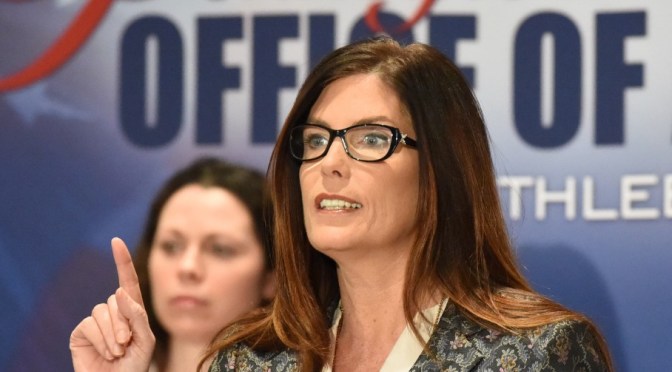







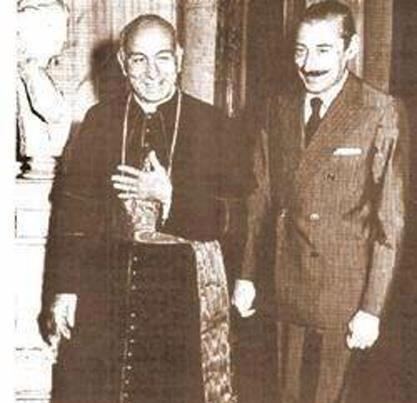


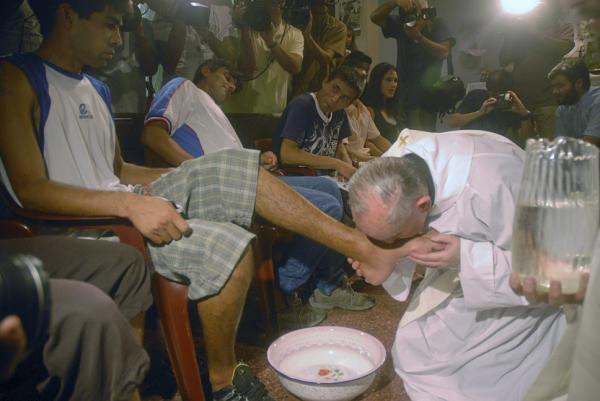








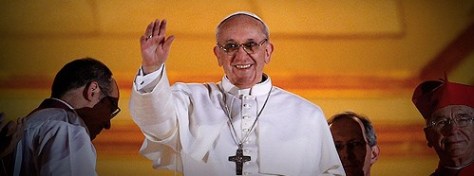









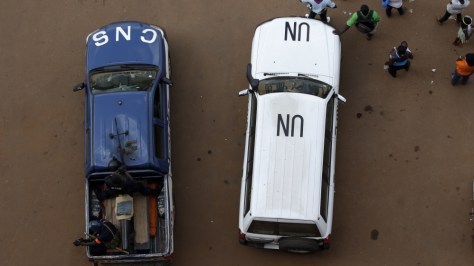


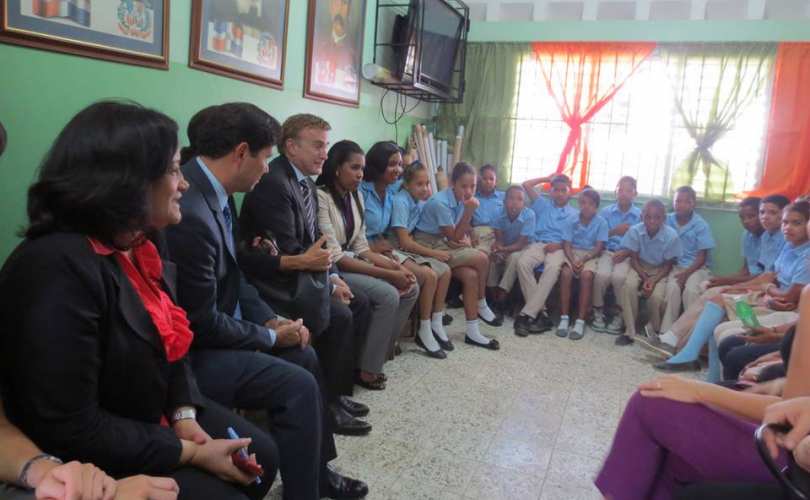
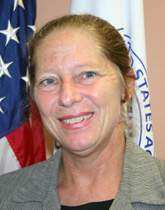

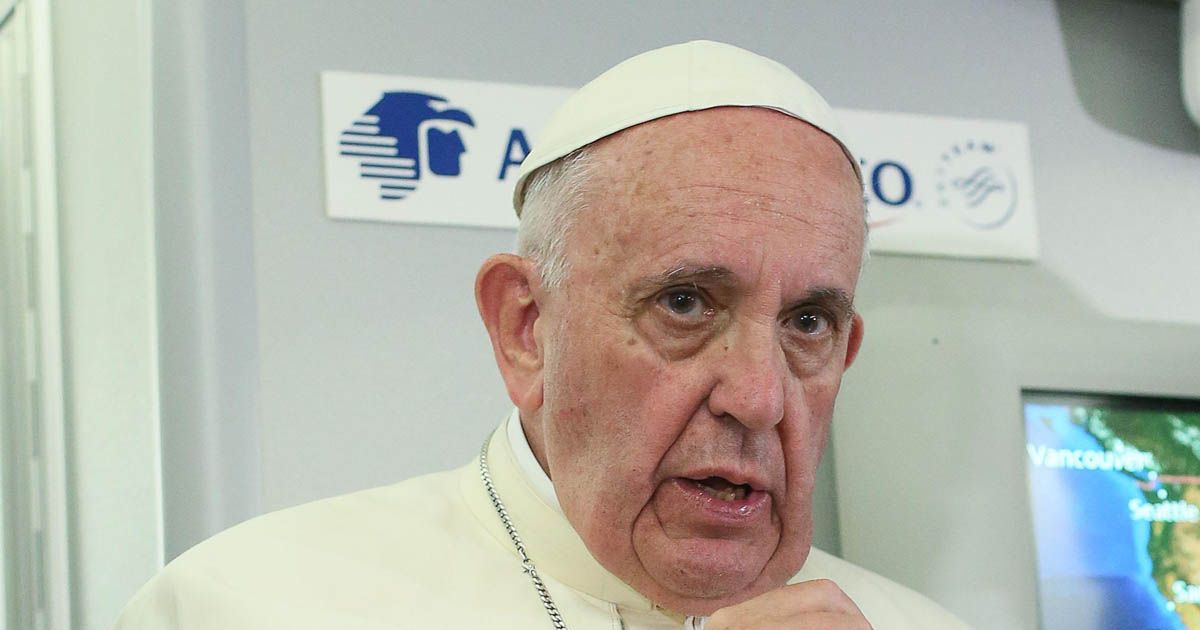




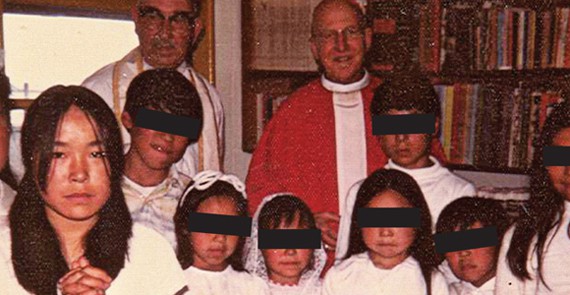
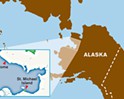


 The Loud Cry
You must be logged in to post a comment.