Category Archives: United Nations

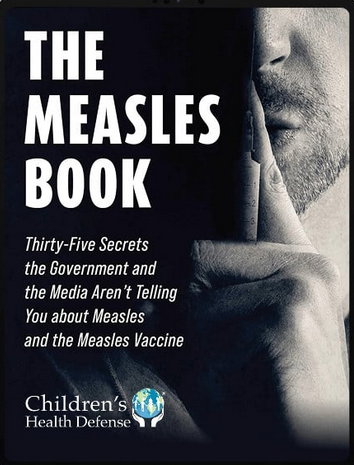
The Measles Book

Thirty-Five Secrets the Government and the Media Aren’t Telling You about Measles and the Measles Vaccine

As measles outbreaks continue to surface — and as mainstream media weaponizes them for political gain — it’s increasingly difficult to separate fact from fiction.

Is this “public health emergency” truly something to fear? Are we and our children at risk?

To help answer these and many other pressing questions, Children’s Health Defense is offering a free digital download of “The Measles Book” for a limited time.

35 secrets that the media, government and Big Pharma don’t want you to know about vaccines.

“The Measles Book: Thirty-Five Secrets the Government and the Media Aren’t Telling You about Measles and the Measles Vaccine” will help you determine whether this is just another example of media, government, and industry misinformation or whether we really have something to worry about.

“The Measles Book” presents reliable medical information from credible sources. Within the book’s pages, the reader will discover 35 secrets being kept from the general public about childhood vaccines, especially the measles vaccine, including:

  1. Vaccines are not safe for every child, and the government and pharmaceutical companies have known this for years.
  2. Some children will get injured or die from vaccines, and the government and pharmaceutical companies know this, too.
  3. Pharmaceutical companies have developed an incredible way to make money from vaccines and not be held accountable.
  4. When a child is injured or killed by a vaccine, the pharmaceutical company does not pay for the damage it caused — we do!

Learn the other 31 secrets when you read “The Measles Book” by Children’s Health Defense, a nonprofit organization committed to the health of our children and challenging misinformation spread by Big Pharma, government and media. The information in “The Measles Book” helps parents make informed decisions for their children.

Get your book here

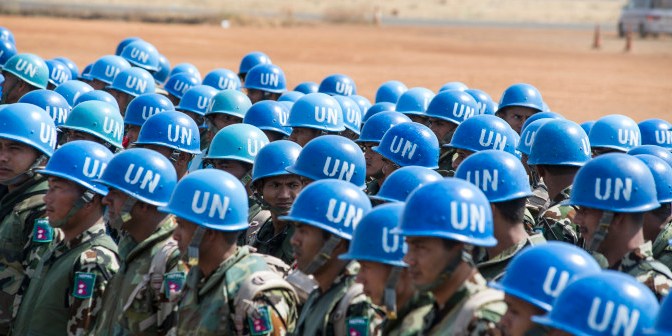
UN Peacekeeping – “The Contradiction”

INTERNATIONAL DIPLOMACY &PUBLIC POLICY CENTER,LLC

U.N.Peacekeeping: Few Successes, Many Failures, Inherent Flaws

by Thomas W. Jacobson

President, International Diplomacy & Public Policy Center, LLC

Visiting Fellow for, and brief published by, the Center for Sovereignty & Security, a division of Freedom Alliance

March-­‐April 2012

The United Nations Charter states that it was founded, in part, to

“to save succeeding generations from the scourge of war.”

Continue reading UN Peacekeeping – “The Contradiction”

United Nations

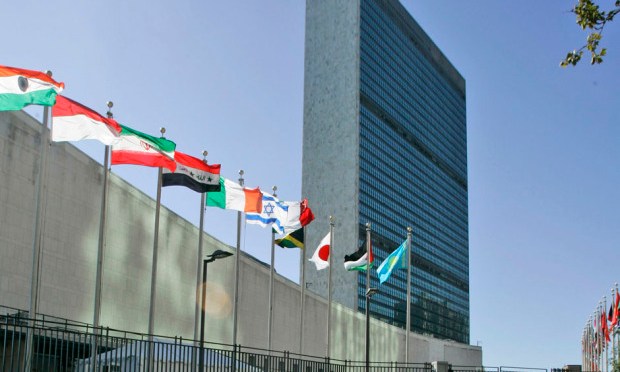
The United Nations (UN) is an intergovernmental organization to promote international co-operation. A replacement for the ineffective League of Nations, the organization was established on 24 October 1945 after World War II in order to prevent another such conflict. At its founding, the UN had 51 member states; there are now 193. The headquarters of the United Nations is in Manhattan, New York City, and experiences extraterritoriality. Further main offices are situated in Geneva, Nairobi and Vienna. The organization is financed by assessed and voluntary contributions from its member states. Its objectives include maintaining international peace and security, promoting human rights, fostering social and economic development, protecting the environment, and providing humanitarian aid in cases of famine, natural disaster, and armed conflict.

During the Second World War, US President Franklin D. Roosevelt initiated talks on a successor agency to the League of Nations, and the United Nations Charter was drafted at a conference in April–June 1945; this charter took effect 24 October 1945, and the UN began operation. The UN’s mission to preserve world peace was complicated in its early decades by the Cold War between the US and Soviet Union and their respective allies. The organization participated in major actions in Korea and the Congo, as well as approving the creation of the state of Israel in 1947. The organization’s membership grew significantly following widespread decolonization in the 1960s, and by the 1970s its budget for economic and social development programmes far outstripped its spending on peacekeeping. After the end of the Cold War, the UN took on major military and peacekeeping missions across the world with varying degrees of success.

The UN has six principal organs: the General Assembly (the main deliberative assembly); the Security Council (for deciding certain resolutions for peace and security); the Economic and Social Council (ECOSOC) (for promoting international economic and social co-operation and development); the Secretariat (for providing studies, information, and facilities needed by the UN); the International Court of Justice (the primary judicial organ); and the United Nations Trusteeship Council (inactive since 1994). UN System agencies include the World Bank Group, the World Health Organization, the World Food Programme, UNESCO, and UNICEF. The UN’s most prominent officer is the Secretary-General, an office held by South Korean Ban Ki-moon since 2007. Non-governmental organizations may be granted consultative status with ECOSOC and other agencies to participate in the UN’s work.

The organization won the Nobel Peace Prize in 2001, and a number of its officers and agencies have also been awarded the prize. Other evaluations of the UN’s effectiveness have been mixed. Some commentators believe the organization to be an important force for peace and human development, while others have called the organization ineffective, corrupt, or biased.

Source Wikipedia


For me:

the United Nations as an organization is ineffective, inept, corrupt and biased.

Too many atrocities have taken place, for which the UN has not held the appropriate parties  to account due to it’s ineffectiveness, corruption & bias viz

  • Israel;
  • genocide in Rwanda;
  • genocide in Balkan civil war of the 1990s to name a few.


Peacekeepers gone wild: How much more abuse will the UN ignore in Congo?

A UN Deputy Force Commander in Congo visits the area were M23 rebels fought with Congo government troops close to the eastern city of Goma on July 29, 2012. (JAMES AKENA/REUTERS)

Continue reading Peacekeepers gone wild: How much more abuse will the UN ignore in Congo?

Tuaregs – Open Letter to UN 2014

Open letter to UN May 2014

Assi walet Hitta, Tuareg political organizer and leader of the Azawad Women’s Association, has issued an open letter to Bert Koenders, Representative to the United Nations in Mali.

Continue reading Tuaregs – Open Letter to UN 2014

Tuaregs – Orphans of the Sahara

Who are the Tuareg people

The Tuareg people are Berber-speakers who trace their ancestry to the indigenous peoples of North Africa in ancient times. Continue reading Tuaregs – Orphans of the Sahara

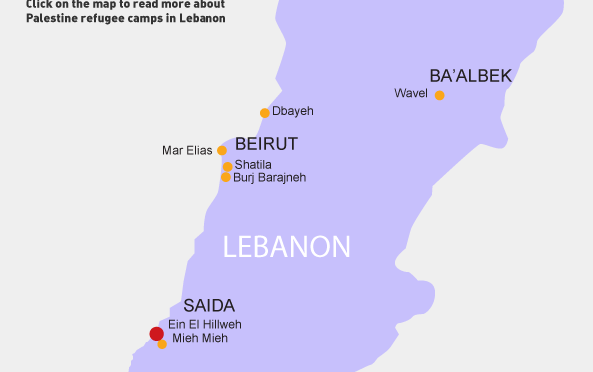
Palestinian Refugee Camps in Lebanon | UNRWA

Some 450,000 refugees are registered with UNRWA in Lebanon, with many living in the country’s 12 refugee camps.

Palestine refugees represent an estimated ten per cent of the population of Lebanon. They do not enjoy several important rights; for example, they cannot work in as many as 20 professions. Because they are not formally citizens of another state, Palestine refugees are unable to claim the same rights as other foreigners living and working in Lebanon. Among the five UNRWA fields, Lebanon has the highest percentage of Palestine refugees living in abject poverty.

Continue reading Palestinian Refugee Camps in Lebanon | UNRWA

FASCISM: Is real. Religious Politics

Fascism is being used by governments and religious institutions worldwide. Propaganda bombards us via the bought media selling us the false flags exercises that are being implemented to move hearts and minds. Meanwhile modern day ‘Dr Mengeles’ are funded to produce medical experiments from Ebola to Zika and HIV to cancer throughout the world. Continue reading FASCISM: Is real. Religious Politics

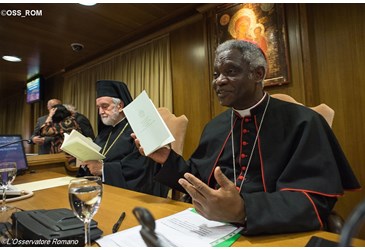
Fallacy and lies- “Cardinal Turkson on long term impact of Laudato Si'”

The article by Vatican Radio can be read below – but before that let’s put it in perpspective:

Copenhagen and Global Warming: Ten Facts and Ten Myths on Climate Change

Originally published by GR in 2009

Ten facts about climate change

1.     Climate has always changed, and it always will. The assumption that prior to the industrial revolution the Earth had a “stable” climate is simply wrong. The only sensible thing to do about climate change is to prepare for it.

2.    Accurate temperature measurements made from weather balloons and satellites since the late 1950s show no atmospheric warming since 1958.  In contrast, averaged ground-based thermometers record a warming of about 0.40 C over the same time period. Many scientists believe that the thermometer record is biased by the Urban Heat Island effect and other artefacts.

Continue reading Fallacy and lies- “Cardinal Turkson on long term impact of Laudato Si’”

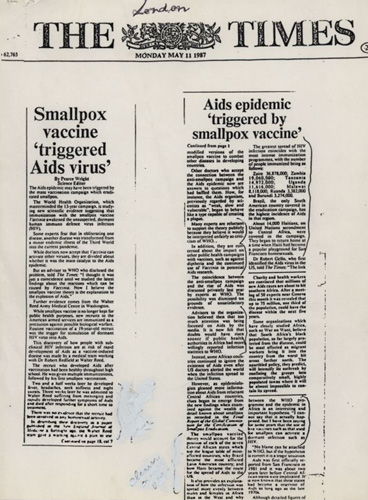
Cancer-causing Vaccines, Polio, AIDS, and Monkey Business

The Global Polio Eradication Program, supported by the United Nation’s World Health Organization (WHO), UNICEF, Rotary International, and the U.S. Centers for Disease Control (CDC), is planning to immunize 74 million African children in 22 countries in the coming months. The purpose is to stem a wild polio epidemic, the epicenter of which is oil-rich Nigeria, the most populous country in Africa.

The vaccine program hit a snag last Fall when Islamic clerics in the predominantly Muslim-populated areas of northern Nigeria claimed the WHO program was a plot by westerners to depopulate the area. Laboratory tests revealed estrogen and other female sex hormones in the polio vaccine, proof that the vaccines were contaminated with substances that could cause sterility. Furthermore, Nigerian officials became aware of internet reports suggesting the WHO vaccine might be contaminated with HIV (the AIDS virus) and other cancer-causing viruses. African blacks are as suspicious of government vaccines programs as American blacks. A 1990 survey of African-Americans in New York City showed 30% believed AIDS is an ethno-specific bioweapon designed in a laboratory to kill black people. Continue reading Cancer-causing Vaccines, Polio, AIDS, and Monkey Business

Gore’s Dual Role: Advocate and Investor

By JOHN M. BRODER NOV. 2, 2009

WASHINGTON — Former Vice President Al Gore thought he had spotted a winner last year when a small California firm sought financing for an energy-saving technology from the venture capital firm where Mr. Gore is a partner. Continue reading Gore’s Dual Role: Advocate and Investor

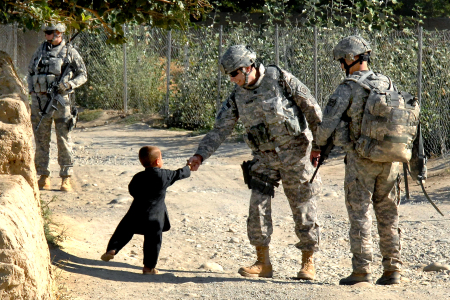
None So Brave – “De Oppresso Liber”

“De Oppresso Liber”

(To Liberate the Oppressed) ~~Motto of the U.S. Army Special Forces

A poignant Afghan proverb declares,

“Cowards cause harm to brave men.”

Continue reading None So Brave – “De Oppresso Liber”

31,487 Scientists say NO to Climate Change Alarmists

The Global Warming Petition project;
Started by Dr Art Robinson in response to the false alarm over CO2;
http://www.petitionproject.org/seitz_…
and Continue reading 31,487 Scientists say NO to Climate Change Alarmists

Worldwide humanitarian vaccination projects are for depopulation

Saturday, June 28, 2014 by: Paul Fassa

Just a very few years ago, Bill Gates publicly declared before a live audience that using vaccinations strategically may help reduce the world population by 15 percent. Many claimed it was a slip of tongue, like a verbal typo. The audience and mainstream media apparently ignored it.

However, actual worldwide events indicate that population control is part or the world vaccination agenda. Continue reading Worldwide humanitarian vaccination projects are for depopulation

The Guatemala Human Rights Commission Expresses Concern over U.S. Reaction to Child Migration Crisis

Read our report on conditions facing Guatemalans deported from the US.

(Information from August 2014)

Each week, an estimated 120 Guatemalan children, many unaccompanied, are arriving at the U.S. border. When they arrive in the U.S., they have already survived a long and perilous journey through Mexico, where extortion, kidnapping, rape, and murder are common; many survive these horrors only to die crossing the U.S. desert. Often these children make the journey north not by choice but because they face daily violence and life-threatening poverty; some are literally running for their lives. In a study by the UNHRC, almost 40% of Guatemalan children interviewed who had entered the U.S. unaccompanied and undocumented raised international protection concerns due to violence in society or abuse in the home; close to 30% spoke of deprivation.

In the face of this humanitarian crisis, the Guatemala Human Rights Commission/USA (GHRC) calls for the U.S. government to treat all migrants with dignity, and accept its legal and humanitarian responsibilities to protect refugee children and youth.

The root causes of forced migration in Guatemala are linked to a complex set of factors that include rampant violence, acute poverty, corruption and high rates of impunity — conditions long exacerbated by U.S. policies. GHRC condemns misguided or inhumane responses, such as expedited deportations, that will not only send children back to situations of dire violence, but will also contribute to a cycle of forced migration. Instead, the U.S. response must include deeper analysis of these root causes, including our own role in exacerbating forced migration.

GHRC calls for a humane U.S. response, in line with international protection obligations, to address the immediate needs of children and vulnerable populations.

  • The U.S. should fully comply with international obligations and provide comprehensive screening for possible international protection needs. To do so, The U.S. should guarantee legal representation for migrants and refugees that arrive at the U.S. border, especially for vulnerable populations such as unaccompanied minors.
  • The U.S. should maintain protections under the Trafficking Victims Protection Reauthorization Act of 2008 (“TVPRA”) for Central American children.
  • The U.S. should base all decisions regarding the treatment of child migrants on the best interest of the child; family reunification in the U.S. should be top priority.
  • The U.S. should halt all deportations until a system is in place to provide both legal representation and screening for international protection needs for all migrants. This is important because the Guatemalan government does not have established programs to support the safe and effective reintegration of deported migrants, and does not have the capacity to receive large numbers of unaccompanied minors, particularly those at risk.

GHRC calls for a long-term strategy that addresses the root causes of migration and focuses on helping people to stay in their communities, instead of a militarized or “mano dura” enforcement approach that will only provoke further fear and instability.

  • The U.S. should halt security assistance to Guatemala’s police and military, both through the Central America Regional Security Initiative (CARSI) and other bilateral security assistance programs, until credible evidence shows they are protecting human rights and effectively combating internal corruption and links to organized criminal networks. If security assistance is provided, it should be contingent upon strict compliance with human rights conditions and should focus on prevention programs as well as services for at-risk populations such as women’s shelters and witness protection programs.
  • The U.S. should re-negotiate the Central American Free Trade Agreement (CAFTA) to create more balanced trade regulations and address ongoing poverty and inequality in the labor, textile, agricultural, and service sectors. USAID programs should prioritize support for local and community-based programs to alleviate poverty, and increase access to education, social services and employment opportunities. The U.S. should ensure that any assistance program meets priority needs identified by the local population. To address displacement due to large-scale extractive industry projects, the U.S. should also urge Guatemala to meet its obligation to indigenous communities of free, prior and informed consent before any development project is carried out.
  • The U.S. should continue to provide support to strengthen the judicial system and accountability mechanisms; this includes support for the high risk courts and the International Commission Against Impunity (CICIG) in Guatemala and efforts to increase judicial independence. The U.S. should also encourage full compliance with Guatemala’s human rights obligations under regional and international law.
  • The U.S. should support increased protections for human rights defenders, many of whom faced targeted threats and violence due to their work to improve social and economic conditions in Guatemala.

Background:

U.S. policies in the region have been a significant factor contributing to decades of forced migration from Guatemala.

GHRC has documented conditions in Guatemala for over three decades, during which time forced migration has been inextricably linked to social and political factors rooted in historic poverty, inequality and state-sponsored violence – conditions aggravated by U.S. policies, particularly over the last 60 years.

After backing a coup against Guatemala’s democratically elected president in 1954, the U.S. supported the reversal of democratic reforms for economic equality and, for the next forty years, funded, trained and supported the brutal violence unleashed against Guatemala’s civilian population. During Guatemala’s internal armed conflict, which reached the peak of brutality in the early 1980s, over one million people were forcibly displaced, and an estimated 200,000 fled to Mexico, the U.S. and other countries as war refugees.

The long-term legacy of this violence is complex and includes family and community disintegration, high rates of generalized violence, outmigration, and a myriad of related social problems. These challenges were not resolved with the signing of the 1996 Peace Accords and instead have become more acute over the past decade. A history of violence and impunity has also contributed to structural violence, as well as high levels of domestic violence, organized crime, corruption, and weak state institutions. These conditions often violate the universal right to life, liberty and security.

The U.S. response to post-war instability and violence in the region has in large part exacerbated the factors that contributed to forced migration.

1) The U.S. continues to fund security policies in Guatemala that have failed to reduce generalized violence in the region and, in some cases, has reduced Guatemalans’ sense of security.  Bilateral and regional assistance has increased steadily from 2008 to today, including over 100 million dollars of security assistance to Guatemala through the Central American Regional Security Initiative (CARSI).

Over this same period, violent crime in the Northern Triangle (Guatemala, Honduras and El Salvador) has escalated and the region now has one of the highest homicide rates in the world. Guatemalan women suffer particularly high rates of domestic and sexual violence. In 2013 Guatemala registered the second highest rate of femicide [1]; over 50% of migrants from Guatemala that year were women [2] and GHRC has supported numerous asylum cases of women who fear persecution and violence if forced to return.

While U.S. support for the International Commission against Impunity in Guatemala (CICIG) has been important, aid to Guatemalan security forces has not succeeded in reducing overall levels of organized crime. Organized criminal networks continue to operate freely throughout Guatemala, trafficking drugs, guns, and human beings. Gangs control entire sections of Guatemala City and other urban areas through extortion, forced recruitment, and other acts of intimidation and violence.

Children are the most vulnerable of all. Every 17 hours a child or teen dies from gun violence. And every two hours a child younger than five years of age dies of preventable causes [3]. Children suffer widespread abuse, sexual exploitation, prostitution, and forced marriage [4]. Where gangs are present, children and youth are specifically targeted for forced recruitment and threatened with severe retaliation if they refuse to join gangs and perform criminal activities or serve as coerced sexual partners [5].

The Guatemalan government is often unable to offer its citizens protection from violence. Impunity for all crimes is one of the highest in the western hemisphere, and impunity for crimes committed against women, children and other vulnerable populations can reach 98%. The police are undertrained, understaffed, underpaid, and often corrupt. Rather than focus on reforming the civilian police, Guatemala has increasingly relied on the military for law enforcement, a strategy that has proven ineffective and, in many cases, counterproductive.

Moreover, there are credible allegations of collaboration between organized criminal groups and members of the Guatemalan military and police [6], as well as police and military involvement in serious crimes [7], exacerbating impunity and denying victims the right to security and justice. Such abuses are often not investigated or prosecuted.

The infiltration of Guatemala’s security forces by organized criminal networks also leads to concerns that ongoing U.S. aid to these institutions inadvertently strengthens the very groups it seeks to combat, and ultimately increases the risk of violence and human rights abuses against vulnerable populations.

2) U.S. economic policies have reinforced poverty and undermined employment opportunities, both of which continue to be important push factors for forced migration. According to the UNDP, more than 51% of Guatemalans live in poverty, with 17% surviving on less than US $1.25 per day [8]. Over half of children under age five suffer from stunting due to malnutrition and 23% of the entire Guatemalan population is undernourished. Chronic under-nutrition in indigenous areas reaches 70% [9].Guatemala continues to be one of the lowest spenders on social programs of any country in Central America, and many Guatemalans lack of access to basic healthcare, social services, and education.

U.S. economic policies such as the Central America-United States Free Trade Agreement (CAFTA) have further contributed to impoverishment and economic instability at the community level. CAFTA has failed to provide sustainable economic opportunity. Steady, long-term employment in many regions is few and far between; 75% of working people are employed in the informal sector, with no job benefits or security, and no guarantee of earning the minimum wage [10].

Many people in rural communities are heavily dependent on subsistence agriculture. CAFTA has increased the trade imbalance between the U.S. and Guatemala and imports of U.S. subsidized crops have undercut local markets [11], forcing people to find work elsewhere, including in the United States. Meanwhile, labor violations and abuse in the workplace are an ongoing reality for those employed in the textile and service sectors. The open CAFTA complaint against Guatemala, filed by U.S. and Guatemalan labor unions in 2009 for the government’s failure to address persistent and systematic labor rights violations, has not produced any results [12].

The U.S. has done little to address conflict in many rural and indigenous communities, which has spiked due to the rise of international investment in mining, hydroelectric power, petroleum extraction, and other large-scale commercial agriculture. These land-intensive projects create few jobs and leave immense environmental devastation in their wake. By means of community referendums Guatemalans have expressed their overwhelming opposition to this model of imposed “development,” yet the Guatemalan government has refused to recognize the results of these plebiscites and has even questioned their legitimacy. Meanwhile the government has neglected to carry out its own consultations with the indigenous populations affected by these projects, in direct violation of obligations under international law. Instead, the Guatemalan government has relied on repressive policies and, in some cases, martial law, to protect the economic interests of transnational companies rather than the safety of its citizens. Facing displacement, contaminated water, polluted environments, and repression from the government, Guatemalans may be forced to seek their livelihoods elsewhere.

3) The U.S. has not done enough to protect human rights defenders, many of whom are working to improve social and economic conditions at home. Those who seek to address root causes of migration – including violence, impunity, land rights and economic inequality – face defamation, persecution and targeted violence. In 2013, Human Rights Defenders Protection Unit of Guatemala documented 18 assassinations of human rights defenders. That same year, the International Trade Union Confederation called Guatemala the most dangerous country in the world to be a trade unionist, citing 68 documented assassinations of trade unionists since 2007. Suspects have been arrested in only one of the murder cases [13].


[1] UN Human Rights Council, Update Paper, World Model United Nations 2013. See also “Guatemala es el segundo país del mundo con más casos de femicidios, según ONU” lainformation.com, November 20, 2012. Available online at http://noticias.lainformacion.com/asuntos-sociales/conducta-abusiva/guatemala-es-el-segundo-pais-del-mundo-con-mas-casos-de-femicidios-segun-onu_qrUtoDkn9B83D3LYp9OGD7/.

[3] Oficina de Derechos Humanos del Arzobispado de Guatemala, Situación de la Niñez Guatemalteca, Informe 2012-2013

[4] U.S. Department of State, Country Reports on Human Rights Practices for 2013

[5]See, for example: Marked for Death: The Maras of Central America and those who Flee their Wrath, Jeffrey D. Corsetti, 20 Geo. Immigr. L.J. 407, 2005-2006. Available online at http://www.uscrirefugees.org/2010Website/5_Resources/5_3_For_Service_Providers/5_3_9_Gangs/MarkedForDeath_Part1.pdf

[6] Gonzalez, Rosmery Austria deniega permiso de venta de armas a gobierno de Otto Pérez, El Periodico, (May 2, 2014) available online at http://elperiodico.com.gt/es/20140502/pais/246662/

[7] U.S  Department of State, Country Reports on Human Rights Practices for 2013

[8] UN Human Development Report 2013.

[9] World Food Program. “Guatemala.” 2013. Available at http://www.wfp.org/countries/guatemala

[10] Taken from World Bank at http://www.voxxi.com/latin-american-workers-swallowed-by-informal-employment-low-wages/

[11] See reports from the Stop CAFTA Coalition from 2006, 2007, 2008. Available online at http://www.ghrc-usa.org/resources/publications/other-publications/.

[12] See http://www.aflcio.org/Blog/Global-Action/Enforcement-Plan-Fails-to-End-Murders-Violence-Against-Trade-Unionists-in-Guatemala

[13] See http://es.panampost.com/marcela-estrada/2014/06/04/guatemala-tras-anos-de-impunidad-en-homicidios-de-68-sindicalistas-detienen-a-primeros-tres-sospechosos/

Source: ghrc-usa.org

Conditions Facing Guatemalans Deported from the US

The Guatemala Human Rights Commission/USA | October 2014

An average of two ICE planes arrive every day at the Guatemala City airport carrying Guatemalans deported from the US; some individuals are detained in the desert a few days after crossing into the United States while others have lived in the US for years. An ICE official recently estimated that a total of 50,000 Guatemalans were deported from the US in FY 2014.
In order to stem the tide of children fleeing Central American countries, a situation that made headlines over the summer, the Obama Administration is aiming to deport unaccompanied children and families with children as soon as possible, including a “last in, first out” rapid deportation of recent arrivals.
However, Guatemala’s rampant corruption and poor social services call into question that country’s ability to safely and humanely absorb increasing numbers of its deported citizens, especially children. It is also unlikely to be a successful strategy in the long term, while the reasons underlying migration remain unchanged.
What is the Process for Return and Reintegration?
US officials have cited Guatemala as having a model intake process for deported migrants. In late August, GHRC staff observed the intake process for a plane of deportees that arrived from Brownsville, Texas. Over 100 people walked across the tarmac to a small building set up
to process returned migrants. The majority of people that deplaned were young men, many wearing
matching jeans and white t-shirts, but there were also about two dozen women.
Each person was briefly interviewed and allowed to make a local call and exchange money. Afterward, they were given a small mesh bag containing their personal effects,which in most cases appeared to be almost empty. In interviews conducted by GHRC staff, many deportees mentioned
being coerced into signing their deportation papers, including some that recounted a US border agent threatening to sign the papers for them if they didn’t sign voluntarily.
Women interviewed spoke of the lack of basic sanitary items such as toothbrushes in ICE detention,
and lack of access to showers for extended periods of time. One described an infant, lying on the
floor, blue from cold – workers at the facility would not give the baby milk or diapers, she explained.
Outside, a few NGOs had tables set up to provide resources on temporary migrant housing and to
offer international phone calls. After this intake process, we were told, deportees are taken to the central bus station and given bus tickets at least part-way to their home towns. No further services are provided.
What Happens to Unaccompanied Children?
Unaccompanied children deported to Guatemala are turned over to the Secretariat of Social Welfare. The Secretariat has two shelters to receive the children, and if they can’t be handed over to their families within a few days, they are sent to one of the permanent shelters the office runs. In a damning report from August 2013, Guatemala’s Human Rights Ombudsman’s Office wrote that these shelters were unhygienic and provided poor quality food, inadequate clothing, no recreational activities and poor healthcare. The facilities are overcrowded, with children sleeping
two to a bed, and understaffed.
Last year, a 14 year-old girl who was a resident of the Guatemala City shelter was murdered by two other girls after they were locked into a bathroom together and left there. According to an ICE official, there were 72 minors deported from the US to Guatemala between January and late August 2014. There is reportedly no risk assessment carried out before the child is turned over to a family member, and no follow-up with the children by the government. GHRC even received information that the government may have, in some cases, mistakenly handed children over to people who
are not family members, including individuals linked to human trafficking networks.
Violence is a Daily Fact of Life in Guatemala
Generalized Violence According to a UNHCR report on unaccompanied child migrants, the majority of unaccompanied children from Guatemala are from the Western Highlands, which has high rates of poverty and very few government services. The region doesn’t have the highest homicide
rates in the country, but other forms of violence are commonplace, particularly for women and children. Twenty-three percent of the unaccompanied children the UNHCR interviewed mentioned violence they suffered in the home. Guatemala City has a 70% rate of impunity for homicide (down from 98% just a few years ago); other violent crimes are very rarely reported and almost never successfully prosecuted. A further 20% talked with the UNCHR about violence in society as being a major cause for their migration. Organized criminal networks continue to operate freely throughout Guatemala, trafficking drugs, guns, and human beings. Gangs control entire sections of Guatemala City and other urban areas through extortion, forced recruitment, and other acts of intimidation and violence. Children and youth are specifically targeted for forced recruitment and threatened with severe retaliation if they refuse to join gangs and perform criminal activities or serve as coerced sexual partners.
Every 17 hours a child or teen dies from gun violence in Guatemala, and every two hours a child
younger than five years of age dies of preventable causes. The Guatemalan government is often
unable to offer its citizens protection from violence – especially those most vulnerable, such as children. Moreover, there are credible allegations of collaboration between organized criminal groups and members of the Guatemalan military and police, as well as police and military involvement in serious crimes, exacerbating impunity and denying victims the right to security
and justice. Such abuses are often not investigated or prosecuted.
Poverty and Deprivation, Upheld Through Violence
Twenty-nine percent of the children interviewed mentioned deprivation as a major factor in their decision to migrate. According to the UNDP, more than 51% of Guatemalans live in poverty, with 17% surviving on less than US $1.25 per day. Over half of children under age five suffer from stunting due to malnutrition and 23% of the entire Guatemalan population is undernourished.
According to a recent World Bank report, the poorest Guatemalans are only sinking deeper into poverty, largely due to extremely low rates of spending by the Guatemalan government, especially on social programs. This deprivation is more extreme in rural areas, where many people are
heavily dependent on subsistence agriculture. The Central American Free Trade Agreement, signed by Guatemala in 2006, has increased the trade imbalance between the US and Guatemala and imports of US subsidized crops have undercut local markets, forcing people to find work elsewhere, including in the United  States.
Targeted Violence Against Activists and Community Leaders Working for Positive Change
Human rights defenders who advocate for policies that would reduce inequality and poverty
are killed with near impunity. For example, in 2013, the International Trade Union Confederation called Guatemala the most dangerous country in the world to be a trade unionist, citing 68 documented assassinations of unionists since 2007. Suspects have been arrested for only one of the murders. According to the Guatemala’s Human Rights Defenders Protection Unit, 18 defenders were killed last year for their work. The government’s reaction to social conflict has been increasingly
repressive. Across the country, communities have opposed the construction of mines and
hydroelectric dams; in response, the police and military have been mobilized in large numbers to
break up peaceful protests. Various military outposts have been opened in regions with ongoing conflicts over these “development” projects instead of in regions with the highest levels of violence, or identified as hotspots for organized crime. The Guatemalan government has also repeatedly used states of siege –similar to martial law – to suspend constitutional guarantees, raid homes, and detain community leaders.
In October of 2012, 15,000 indigenous protesters blocked Guatemala’s main highway demanding lower electricity prices and rejecting proposed reforms to teacher training and to Guatemala’s
constitution. Soldiers opened fire on the crowd, killing at least six people and injuring dozens of others. The soldiers and their commanding officers still have not been tried.
Flawed Proposals
As part of the Supplemental Budget Request, the Obama Administration asked Congress for $300 million to address the root causes of migration and to aid in reintegration. However, the proposed uses of these funds replicate US policies that in the past have deepened poverty and exacerbated inequality, or that have simply proven ineffective. In addition, President Obama asked for permission to waive protections granted to Central American children in order to deport them more quickly. However, according to the UN Office for the Coordination of Humanitarian Affairs, rapid deportation could threaten the wellbeing of returnee children given that adequate humanitarian attention and protection in their home countries are not guaranteed.
While in Washington, DC, Guatemalan President Otto Pérez Molina requested that $2 billion be invested in “Plan Central America,” along the lines of Plan Colombia and the Merida Initiative. However, many of the security policies carried out to date in Guatemala have served not to improve security, but to uphold entrenched inequality and poverty and thus contribute to reinforcing some of the very “push factors” that lead migrants to seek better opportunities in the US.
Recommendations
A Humane Response, in line with International Protection Obligations, to address the immediate needs of Children and Vulnerable Populations
1)The US should fully comply with international obligations and provide comprehensive screening for possible international protection needs. To do so, The US should guarantee legal representation for migrants and refugees that arrive at the US border, especially for vulnerable populationst such as unaccompanied minors.
2)The US should maintain protections under the Trafficking Victims Protection Reauthorization Act of 2008 for Central American children.
3)The US should base all decisions regarding the treatment of child migrants on the best interest of the child; family reunification in the US should be top priority.
4) The US should halt all deportations until a system is in place to provide both legal representation and screening for international protection needs for all migrants.
A Long-term Strategy that addresses the root causes of Migration and Focuses on Helping People to Stay in their communities, instead of a Militarized Enforcement Approach
1)The US should halt security assistance to Guatemala’s police and military, both through the Central America Regional Security Initiative and bilateral security assistance programs, until credible evidence shows they are protecting human rights and effectively combating internal corruption and links to organized criminal networks. If security assistance is provided, it should be contingent upon strict compliance with human rights conditions and should focus on prevention programs as well as services for at-risk populations such as women’s shelters and witness protection programs.
2)The US should re-negotiate the Central American Free Trade Agreement to create more balanced trade regulations and address ongoing poverty and inequality in the labor, textile, agricultural, and service sectors. USAID programs should prioritize support for local and community-based programs to alleviate poverty, and increase access to education, social services and employment opportunities. The US should ensure that any assistance program meets priority needs identified by the local population. To address displacement due to large-scale extractive industry projects, the US should also urge Guatemala to meet its obligation to indigenous communities of free, prior and informed consent before any development project is carried out.
3)The US should continue to provide support to strengthen the judicial system and accountability mechanisms; this includes support for the high risk courts and the International Commission Against Impunity in Guatemala and efforts to increase judicial independence. The US should also encourage full compliance with Guatemala’s human rights obligations under international law.
4)The US should support increased protections for human rights defenders, many of whom face targeted threats and violence due to their work to improve social and economic conditions in Guatemala.
STATISTICS ON BASIC CONDITIONS IN GUATEMALA:
• Guatemala is one of the lowest spenders on social programs of any country in Central America: the national budget invests approximately 3% in education, 1% on health and 0.4% on housing.
• Over 50% of children are chronically malnourished; chronic under-nutrition in indigenous communities is an estimated 70%.
• 60% of the population lives on less than US $2/day. 26% of the population lives in multidimensional poverty.
• 75% of working people are employed in the informal sector, with no job benefits or security, and no guarantee of earning the minimum wage.
• The homicide rate of almost 40 murders per 100,000 inhabitants is one of the highest in the world.
• 748 women suffered violent deaths in 2013, an average of 2 every day, which is a 10% increase from 2012. The impunity rate for these cases is 98%.
• 68 labor activists have been killed since 2007, making Guatemala the most dangerous country in the world to be a trade unionist.
• At least 54 drug trafficking organizations reportedly operate within the country.
Source: The Guatemala Human Rights Commission/USA | http://www.ghrc-usa.org

Evidence That UN Secretary General Kofi Annan Betrayed The West For Money

‘Why The UN Isn’t A Solution’ by Phyllis Schlafly (May 26, 2004)
Cited by Persecution Of The Dutiful by P Atkinson

Because of the hardships on Iraqi children from the sanctions imposed on Iraq after the Persian Gulf War, beginning in 1996 Iraq was allowed to sell limited amounts of oil to finance the purchase of goods and medicines for humanitarian purposes. This Oil-for-Food program was supposed to be under tight UN supervision, but the UN was the fox guarding the chicken coop.

The UN collected a 2.2 percent commission on every barrel of oil to pay for overseeing a flow of funds that totaled at least $67 billion, a task administered by ten UN agencies employing 1,000 staff. That was just the start of the giant Oil-for-Food rip-off.

The evidence is now pouring in that more than $10 billion in bribes and kickbacks were siphoned off under the noses of the UN monitors. Oil-for-Food was a giant scam that allowed Saddam Hussein to divert that incredible sum to finance his lavish lifestyle and to buy friends to keep himself in power.

The UN had no effective mechanisms of accounting or disclosure, and there never was any audit. Everything was secret: the price and quantity of the oil and of the goods for relief, the identities of the oil buyers, the quality of the food and medicines, the bank statements, and all financial transactions.

General Tommy Franks called the program Oil-for-Palaces. Others called it UNScam. But Saddam’s personal pocketing of an estimated $5 billion was only part of the racket; the rest of the illegal money financed a system of bribes to buy international support for his corrupt regime.

Now we know why the UN, and especially France and Russia, opposed our goal of toppling Saddam. It wasn’t because they are anti-American; it was because they were the chief beneficiaries of these secret deals with Saddam and they didn’t want to turn off the money spigot.

From 1996 to 2002, Oil-for-Food was a cover that invited and sustained huge transfers of corruption-laden transactions between Iraq and major UN members, particularly Russia, France and China. Their profitable party would still be going on if the United States hadn’t kicked Saddam out of power.

Here is how the scam worked. Saddam selected individuals, corporations and political parties to receive oil allotments at steep price discounts, which were then sold at the market price. Their part of the deal was to kick back a generous percentage of the profits to Saddam and to help keep him in power by giving him political support in the UN and elsewhere.

UN Secretary General Kofi Annan was a chief negotiator with Saddam. Annan’s secretariat collected fees of $1.4 billion to monitor, administer and audit the program, keep the records, and interact with Saddam, plus another $500 million for weapons inspection.

Annan picked UN Assistant Secretary General Benon Sevan to be Oil-for-Food’s executive director and report directly to him. He served for six years.

The Iraq Oil Ministry has now released a list of 270 companies and politicians from 46 countries, especially Russia and France, that profited from this scheme. The list includes former Iraqi officials, a former French Cabinet minister, a British member of Parliament, Benon Sevan who ran the program, a company with which Kofi Annan’s son was associated, and other UN personnel who were supposed to be monitoring the contracts.

The smoking gun is a letter to the former Iraqi oil minister obtained by ABC News. It describes the specifics of one deal that would have generated a profit of $3.5 million.

Some of the food delivered, mostly from Russia, was unfit for humans, and medicines were often out of date. Saddam also handed out vouchers instead of cash for other goods imported illegally in violation of UN sanctions.

The excuse for this program was an alleged desire to provide for needs of Iraqi people, but the people had no say in who bought or sold goods or food, what was bought, how it was distributed, or anything else. The deal was between the UN and Saddam.

Five investigations of what is probably the biggest financial fraud in history are now in progress. Two are by the U.S. House, one by the Senate, one by the Iraqi Governing Council, and one authorized by the UN and headed by former Federal Reserve Chairman Paul Volcker. A UN Security Council resolution calls on the 191 UN countries “to cooperate fully,” but much cooperation is unlikely since Volcker has no subpoena power.

The Folly Of The United Nations (U.N.) Peacekeeping

by Dale Van Atta
Readers Digest, November, 1995

Not only have its efforts to bring peace often been failures, but the organisation itself is riddled with waste, fraud and abuse.

AS THE United Nations approaches its fiftieth anniversary this year, Reader’s Digest assigned Roving Editor Dale Van Atta to examine U.N. operations and effectiveness. For four months he interviewed dozens of officials and poured over U.N. budget documents and confidential files. He found an institution in critical need of reform.

This article, on the U.N.’s peacekeeping operations; is the first of two reports. Part 2 will appear next month.

Sonja’s Kon-Tiki Café is a notorious Serbian watering hole ten kilometres north of Sarajevo. While Serb soldiers perpetrated atrocities in nearby Bosnian villages, local residents reported that U.N. peacekeepers from France, Ukraine, Canada and New Zealand regularly visited Sonja’s, drinking and eating with these very same soldiers — and sharing their women.

The women of Sonja’s, however, were actually prisoners of the Serb soldiers. As one soldier, Borislav Herak, would later confess, he visited Sonja’s several times a week, raping some of the 70 females present and killing two of them.

U.N. soldiers patronised Sonja’s even after a Sarajevo newspaper reported where the women were coming from. A U.N. spokesman excused the incident by saying no-one was assigned to read the newspaper. The U.N. soldiers who frequented Sonja’s also neglected to check out the neighbourhood. Just over 60 metres away, a concentration camp held Bosnian Muslims in inhuman conditions. Of 800 inmates processed, 250 disappeared and are presumed dead.

Tragically, Sonja’s Kon-Tiki illustrates much of what has plagued U.N. peacekeeping operations: incompetent commanders, undisciplined soldiers, alliances with aggressors, failure to prevent atrocities and at times even contributing to the horror. And the level of waste, fraud and abuse is overwhelming.

Until recently, the U.N. rarely intervened in conflicts. When it did, as in Cyprus during the 1960s and ’70s, it had its share of success. But as the Cold War ended, the U.N. became the world’s policeman, dedicated to nation building and peacekeeping. By the end of 1991, it was conducting 11 peacekeeping operations at an annual cost of $615 million. In three years, the numbers rose to 18 operations and $3.3 billion — with Australian taxpayers paying 1.5 per cent of the bill.

Have the results justified the steel cost? Consider the U.N.’s top four peacekeeping missions:

Bosnia In June 1991, Croatia declared its independence from Yugoslavia and was recognised by the U.N. The Serbian-dominated Yugoslav army invaded Croatia, ostensibly to protect its Serbian minority. After the Serbs agreed to a cease-fire, the U.N. sent in a 14,000-member U.N. Protection Force (UNPROFOR) to build a new nation. (The mission has since mushroomed to over 40,000 personnel, becoming the most extensive and expensive peacekeeping operation ever.)

After neighbouring Bosnia declared its independence in March 1992, the Serbs launched a campaign of “ethnic cleansing” against the Muslims and Croats who made up 61 per cent of the population. Rapidly the Serbs gained control of two-thirds of Bosnia, which they still hold.

Bosnian Serbs swept into Muslim and Croat villages and engaged in Europe’s worst atrocities since the Nazi Holocaust. Serbian thugs raped at least 20,000 women and girls. In barbed-wire camps, men, women and children were tortured and starved to death. Girls as young as six were raped while parents were forced to watch. In one case, three Muslim girls were chained to a fence, raped by Serb soldiers for three days, then drenched with petrol and set on fire.

While this was happening, the UNPROFOR troops stood by and did nothing to help. Designated military “observers” counted artillery shells — and the dead.

Meanwhile, evidence emerged that there was a serious corruption problem. Accounting procedures were so loose that the U.N. overpaid $2.3 million on a $28-million fuel contract. Kenyan peacekeepers stole 95,000 litres of fuel and sold it to the Serbs.

Corruption charges were routinely dismissed as unimportant by U.N. officials. Sylvana Foa, then spokesperson for the U.N. Human Rights Commission in Geneva, said it was no surprise that “out of 14,000 pimply 18-year-olds, a bunch of them should get up to hanky-panky” like blackmarket dealings and visiting brothels.

When reports persisted, the U.N. finally investigated. In November 1993 a special commission confirmed that some terrible but “limited” misdeeds had occurred. Four Kenyan and 19 Ukrainian soldiers were dismissed from the U.N. force.

The commission found no wrongdoing at Sonja’s Kon-Tiki, but its report, locked up at U.N. headquarters and never publicly released, is woefully incomplete. The Sonja’s Kon-Tiki incidents were not fully investigated, for example, because the Serbs didn’t allow U.N. investigators to visit the site, and the soldiers’ daily logbooks had been destroyed.

Meanwhile, Russian troop commanders collaborated with the Serb aggressors. According to U.N. personnel at the scene, Russian battalion commander Colonel Viktor Loginov and senior officer Colonel Aleksandr Khromchenkov attended lavish feasts hosted by a Serbian warlord called “Arkan,” widely regarded as one of the worst perpetrators of atrocities. It was also common knowledge that Russian officers directed that U.N. tankers unload petrol at Arkan’s barracks. During one cease-fire, when Serbian materiel was locked in a U.N. storage area, a Russian apparently gave the keys to the Serbs, who removed 51 tanks. Eventually, Khromchenkov was repatriated. Loginov, after finishing his tour of duty, joined Arkan’s Serbian forces.

Problems remained, however, under the leadership of another Russian commander, Major General Aleksandr Perelyakin. Belgian troops had been blocking the movement of Serb troops across a bridge in northeastern Croatia, as required by U.N. Security Council resolutions. Perelyakin ordered the Belgians to stand aside. Reluctantly they did so, permitting one of the largest movements of Serbian troops and equipment into the region since the 1991 cease-fire. According to internal U.N. reports, the U.N. spent eight months quietly trying to pressure Moscow to pull Perelyakin back, but the Russians refused. The U.N. finally dismissed him last April.

Cambodia In 1991, the China and the Soviet Union helped broker a peace treaty among three Cambodian guerrilla factions and the Vietnamese-installed Cambodian government, ending 21 years of civil war. To ease the transition to Cambodia’s first democratic government; the U.N. created the U.N. Transitional Authority in Cambodia, called UNTAC. In less than two years, about 20,000 U.N. peacekeepers and other personnel were dispatched at a cost of $2.4 billion.

Some of the Cambodian “peacekeepers” proved to be unwelcome guests — especially a Bulgarian battalion dubbed the “Vulgarians.” In northwest Cambodia, three Bulgarian soldiers were killed for “meddling” with local girls. One Bulgarian was treated for 17 different STDs. The troops’ frequent carousing once sparked a mortar-rifle battle with Cambodian soldiers at a brothel.

The Bulgarians were not the sole miscreants in Cambodia, as internal U.N. audits later showed. Requests from Phnom Penh included 6500 flak jackets — and 300,000 condoms. In the year after the U.N. peacekeepers arrived, the number of prostitutes in Phnom Penh more than tripled.

U.N. mission chief Yasushi Akashi waved off Cambodian complaints with a remark that “18-year-old hot-blooded soldiers” had the right to drink a few beers and chase “young beautiful beings.” Akashi did post an order: “Please do not park your U.N. vans near the nightclubs” (i.e., brothels). At least 150 U.N. peacekeepers got AIDS in Cambodia; 5000 of the troops came down with STDs. Meanwhile, more than 1000 generators were ordered, at least 330 of which, worth nearly $4 million, were never used for the mission. When U.N. personnel started spending the $300 million budgeted for “premises and accommodation,” rental costs became so inflated that locals could barely afford to live in their own country. Some $102 million was spent buying vehicles, including hundreds of surplus motorcycles and minibuses. When 100 12-seater minibuses were needed, 850 were purchased — an “administrative error,” UNTAC explained, that cost $10.6 million.

Despite the excesses, the U.N. points with pride to the free election that UNTAC sponsored in May 1993. Ninety per cent of Cambodia’s 4.7 million voters defied death threats from guerrilla groups and went to the polls.

Unfortunately, the election results have been subverted by the continued rule of the Cambodian People’s Party — the Vietnamese-installed communist government, which lost at the ballot box. In addition, the Khmer Rouge — the guerrilla group that butchered over a million countrymen in the 1970s — have refused to disarm and demobilise. So it was predictable that they would repeatedly break the cease-fire and keep up their killing. The U.N. has spent nearly $2.5 billion, but there is no peace in Cambodia.

Somalia When civil war broke out in this African nation, the resulting anarchy threatened 4.5 million Somalis — over half the population — with severe malnutrition and related diseases. U.N. Secretary General Boutros Boutros-Ghali, the first African (and Arab) to hold the position, argued eloquently for a U.N. peacekeeping mission to ensure safe delivery of food and emergency supplies. The U.N. Operation in Somalia (UNOSOM) was deployed to Mogadishu, the capital, in September 1992. It was quickly pinned down at the airport by Somali militiamen and was unable to complete its mission.

A U.S. task force deployed in December secured the Mogadishu area, getting supplies to the hungry and ill. After the Americans left, the U.N. took over in May 1993 with UNOSOM II. The $2.5-million-a-day operation transformed the former U.S. embassy complex into a 32hectare walled city boasting air-conditioned housing and a golf course. When U.N. officials ventured out of the compound, their “taxis” were helicopters that cost $640,000 a week.

The published commercial rate for Mogadishu—U.S. phone calls was $6.30 a minute, but the “special U.N. discount rate” was $10.78. Unauthorised personal calls totalled more than $2.5 million, but the U.N. simply picked up the tab and never asked the callers to pay.

Meanwhile, the peacekeeping effort disintegrated, particularly as warlord Mohammed Aidid harassed UNOSOM II troops. As the civil war continued, Somalis starved. But U.N. peacekeepers — on a food budget of from South America, beef from Australia and frozen fish from New Zealand and the Netherlands.

Thousands of metres of barbed wire arrived with no barbs; hundreds of light fixtures to illuminate the streets abutting the compound had no sockets for light bulbs. What procurement didn’t waste, pilferage often took care of. Peacekeeping vehicles disappeared with regularity. Egyptian U.N. troops were suspected of largescale black-marketing of minibuses.

But these losses were eclipsed in a single night by a thief who broke into a U.N. office in Mogadishu and took $5 million in cash. The office door was easy pickings: its lock could be jemmied with a credit card. The money, stored in a filing cabinet, had been easily visible to dozens of U.N. employees. While the case has not been solved, one administrator was dismissed and two others were disciplined. UNOSOM II itself was later shut down, leaving Somalia to the same clan warfare that existed when U.N. troops were first deployed two years before.

Rwanda Since achieving independence in 1962, Rwanda has erupted in violence between the majority Hutu tribe and minority Tutsis. The U.N. had a peacekeeping mission in that nation, but it fled as the Hutus launched a new bloodbath in April 1994. Only 270 U.N. troops stayed behind, not enough to prevent the butchery of at least 14 local Red Cross workers left exposed by the peacekeepers’ swift flight. The U.N. Security Council dawdled as the dead piled up, a daily horror of shootings, stabbings and machete hackings. The Hutus were finally driven out by a Tutsi rebel army in mid-1994.

Seven U.N. agencies and more than 100 international relief agencies rushed back. With a budget of some $256 million, the U.N. tried unsuccessfully to provide security over Hutu refugee camps in Rwanda and aid to camps in neighbouring Zaire.

The relief effort was soon corrupted when the U.N. let the very murderers who’d massacred half a million people take over the camps. Rather than seeking their arrest and prosecution, the U.N. made deals with Hutu thugs, who parlayed U.N. food, drugs and other supplies into millions of dollars on the black market.

Earlier this year the U.N. began to pull out of the camps. On April 22 at the Kibeho camp in Rwanda, the Tutsi-led military opened fire on Hutu crowds. Some 2000 Hutus were killed. Where was the U.N.? Overwhelmed by the presence of nearly 2000 Tutsi soldiers, the 200 U.N. peacekeepers did nothing. A U.N. spokesman informed Reader’s Digest, meekly, that the UN. was on the scene after the slaughter for cleanup and body burial.

With peacekeeping operations now costing over $3.8 billion a year, reform is long overdue. Financial accountability can be established only by limiting control by the Secretariat, which routinely withholds information about peacekeeping operations until the last minute — too late for the U.N.’s budgetary committee to exercise oversight. In December 1993, for example, the budget committee was given only one day to approve a $770-million budget that would extend peacekeeping efforts into 1994.

More fundamentally, the U.N. needs to re-examine its whole peacekeeping approach, for the experiment in nation building has been bloody and full of failure. Lofty ideas to bring peace everywhere in the world have run aground on reality: member states with competing interests in warring territories, the impossibility of lightly armed troops keeping at bay belligerent enemies, and the folly of moving into places without setting achievable goals.

“It has been a fundamental error to put U.N. peacekeepers in place where there is no peace to keep,” says Sam Nunn, a member of the US Senate Armed Services Committee.” We’ve seen very vividly that the U.N. is not equipped, organised or financed to intervene and fight wars.”

Tip for the UN, the Pope & the World on sustainable development – NOW – not in 2030

How to solve the conflicts of the world by Michael reynolds

#WalkWithJesus

Are UN reforms enough to end sex abuse scandal?

The UN registered 99 sex abuse complaints against its peacekeeping forces in 2015 – a sharp rise from the year before.

Continue reading Are UN reforms enough to end sex abuse scandal?

Lectio Magistralis by Professor Jeffrey D. Sachs~how to achieve a holistic path to sustainable development.

1 July 2013

Source: Pontifical Academy of Sciences

EU calls on Israel to stop demolishing Palestinian homes

A Palestinian woman sits next to the remains of her home after it was demolished by Israeli bulldozers in a disputed military zone in the area of Musafir Jenbah, which includes several villages, south of the West Bank town of Hebron on February 2, 2016. (Hazem Bader/AFP)

Diplomatic wrangling ratchets up over European-funded prefab homes given to Palestinians in West Bank which Israel says are illegal

By AFP and Sue Surkes February 7, 2016, 4:03 am

BRUSSELS, Belgium – The European Union on Saturday called on Israel to halt the demolition of Palestinian housing, some of which was EU-funded, and reiterated its opposition to expanding Israeli settlements in the West Bank. Continue reading EU calls on Israel to stop demolishing Palestinian homes

UN chief ‘ashamed’ over stalled Mideast peace process

United Nations Secretary-General Ban Ki-moon speaks at press conference in the village of Gabcikovo near the border with Hungary and Slovakia, October 19, 2015. (AFP/Samuel Kubani)

Ban Ki-moon says Jerusalem, Ramallah ultimately responsible for ending conflict; stresses that ‘nothing can excuse terrorism’

By AFP and Times of Israel staff February 5, 2016, 7:21 pm

UN Secretary-General Ban Ki-moon said Friday he was “ashamed” at a lack of progress in the Israeli-Palestinian peace process.

“I feel guilty, ashamed of the lack of progress,” he told an event organized by foreign affairs think-tank Chatham House in London.“ Continue reading UN chief ‘ashamed’ over stalled Mideast peace process

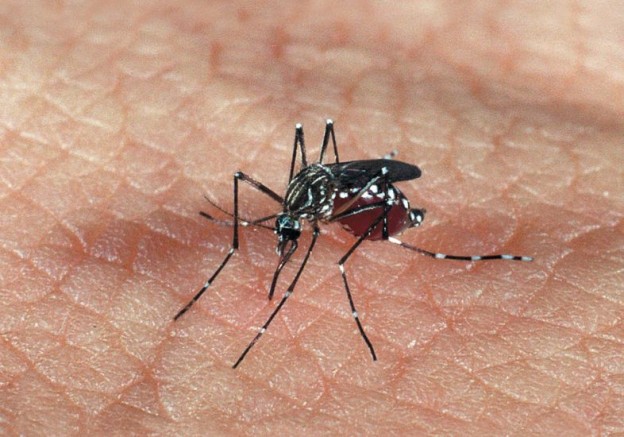
Are genetically engineered mosquitoes realistic solution to Zika?

Arvind Suresh | February 5, 2016

Earlier this week the Director of the World Health Organization Dr. Margaret Chan declared that the ongoing Zika outbreak was a ‘Public Health Emergency of International Concern.’ This was a significant move by the international body as it is the fourth time that the declaration has been made since such a designation was formally defined as a response to a public health crisis by the WHO in 2005, with the most recent one being for the Ebola outbreak. Continue reading Are genetically engineered mosquitoes realistic solution to Zika?

No, GM Mosquitoes Didn’t Start The Zika Outbreak

By Christie Wilcox | January 31, 2016 9:56 pm

A new ridiculous rumor is spreading around the Internets. According to conspiracy theorists, the recent outbreak of Zika can be blamed on the British biotech company Oxitec, which some are saying even intentionally caused the disease as a form of ethnic cleansing or population control. The articles all cite a lone Redditor who proposed the connection on January 25th to the Conspiracy subreddit. “There are no biological free lunches,” says one commenter on the idea. “Releasing genetically altered species into the environment could have disastrous consequences” another added. “Maybe that’s what some entities want to happen…?” Continue reading No, GM Mosquitoes Didn’t Start The Zika Outbreak

Climate

“Since I am no longer affiliated with any organization nor receiving any funding, I can speak quite frankly….As a scientist I remain skeptical.”

-Atmospheric Scientist Dr. Joanne Simpson, the first woman in the world to receive a PhD in meteorology and formerly of NASA who has authored more than 190 studies and has been called “among the most pre-eminent scientists of the last 100 years.”


“Inevitably in climate science, when data conflicts with models, a small coterie of scientists can be counted upon to modify the data…That the data should always need correcting to agree with models is totally implausible and indicative of a certain corruption within the climate science community.”

-Dr.Richard Lindzen, MIT


Warming fears are the “worst scientific scandal in the history…When people come to know what the truth is, they will feel deceived by science and scientists.”

-UNIPCC Japanese Scientist Dr.Kiminori Itoh, an award-winning PhD environmental physical chemist.


“The IPCC has actually become a closed circuit; it doesn’t listen to others. It doesn’t have open minds… I am really amazed that the Nobel Peace Prize has been given on scientifically incorrect conclusions by people who are not geologists,”

-Indian geologist Dr. Arun D. Ahluwalia at Punjab University and a board member of the UN-supported International Year of the Planet.


“Creating an ideology pegged to carbon dioxide is a dangerous nonsense…The present alarm on climate change is an instrument of social control, a pretext for major businesses and political battle. It became an ideology, which is concerning.”

– Environmental Scientist Professor Delgado Domingos of Portugal, the founder of the Numerical Weather Forecast group, has more than 150 published articles.


“The models and forecasts of the UN IPCC “are incorrect because they only are based on mathematical models and presented results at scenarios that do not include, for example, solar activity.”

– Victor Manuel Velasco Herrera, a researcher at the Institute of Geophysics of the National Autonomous University of Mexico


“It is a blatant lie put forth in the media that makes it seem there is only a fringe of scientists who don’t buy into anthropogenic global warming.”

– U.S Government Atmospheric Scientist Stanley B. Goldenberg of the Hurricane Research Division of NOAA.


“Even doubling or tripling the amount of carbon dioxide will virtually have little impact, as water vapour and water condensed on particles as clouds dominate the worldwide scene and always will.”

– Geoffrey G. Duffy, a professor in the Department of Chemical and Materials Engineering of the University of Auckland, NZ.


“After reading [UN IPCC chairman] Pachauri’s asinine comment [comparing skeptics to] Flat Earthers, it’s hard to remain quiet.”

– Climate statistician Dr. William M. Briggs, who specializes in the statistics of forecast evaluation, serves on the American Meteorological Society’s Probability and Statistics Committee and is an Associate Editor of Monthly Weather Review.

(Note: there really IS a Flat Earth Society, at http://www.theflatearthsociety…, whose president Daniel Shenton, thinks “the evidence suggests fossil fuel usage is contributing to global warming.” (See www.tinyurl.com/ozn2wfe. So much for Obama’s comment that “We don’t have time for a meeting of the Flat Earth Society.”


“For how many years must the planet cool before we begin to understand that the planet is not warming? For how many years must cooling go on?”

– Geologist Dr. David Gee the chairman of the science committee of the 2008 International Geological Congress who has authored 130 plus peer reviewed papers, and is currently at Uppsala University in Sweden.


“Gore prompted me to start delving into the science again and I quickly found myself solidly in the skeptic camp…Climate models can at best be useful for explaining climate changes after the fact.”

– Meteorologist Hajo Smit of Holland, who reversed his belief in man-made warming to become a skeptic, is a former member of the Dutch UN IPCC committee.


“Many [scientists] are now searching for a way to back out quietly (from promoting warming fears), without having their professional careers ruined.”

– Atmospheric physicist James A. Peden, formerly of the Space Research and Coordination Center in Pittsburgh.


“Creating an ideology pegged to carbon dioxide is a dangerous nonsense…The present alarm on climate change is an instrument of social control, a pretext for major businesses and political battle. It became an ideology, which is concerning.”

– Environmental Scientist Professor Delgado Domingos of Portugal, the founder of the Numerical Weather Forecast group, has more than 150 published articles.


“CO2 emissions make absolutely no difference one way or another….Every scientist knows this, but it doesn’t pay to say so…Global warming, as a political vehicle, keeps Europeans in the driver’s seat and developing nations walking barefoot.”

– Dr. Takeda Kunihiko, vice-chancellor of the Institute of Science and Technology Research at Chubu University in Japan.


“The [global warming] scaremongering has its justification in the fact that it is something that
generates funds.”

-Award-winning Paleontologist Dr. Eduardo Tonni, of the Committee for Scientific Research in Buenos Aires and head of the Paleontology Department at the University of La Plata.


“Climate is not responding to greenhouse gases in the way we thought it might. If increasing carbon dioxide is in fact increasing climate change, its impact is smaller than natural variation.”

-Prof Christopher de Freitas, of the University of Auckland, NZ said there was no evidence to suggest carbon dioxide was the major driver of climate change (see http://canadafreepress.com/ind…

(In 2003, Dr. de Freitas, who edits the journal Climate Research, had published a peer-reviewed article saying the recent warming is not unusual, relative to previous historical climate changes in the past 1,000 years. As you might suspect, Dr. de Freitas had to withstand multiple demands he be fired from his editorial job, as well as his university position.


“We’re not scientifically there yet. Despite what you may have heard in the media, there is nothing like a consensus of scientific opinion that this is a problem. Because there is natural variability in the weather, you cannot statistically know for another 150 years.”

— UN IPCC’s Tom Tripp, a member of the UN IPCC [Intergovernmental Panel on Climate Change] since 2004 and listed as one of the lead authors and serves as the Director of Technical Services & Development for U.S. Magnesium.


“The dysfunctional nature of the climate sciences is nothing short of a scandal. Science is too important for our society to be misused in the way it has been done within the Climate Science Community.” The global warming establishment “has actively suppressed research results presented by researchers that do not comply with the dogma of the [UN] IPCC.”

-Swedish Climatologist Dr. Hans Jelbring of the Paleogeophysics & Geodynamics Unit at Stockholm University.


“The whole idea of anthropogenic global warming is completely unfounded. There appears to have been money gained by Michael Mann, Al Gore and UN IPCC’s Rajendra Pachauri as a consequence of this deception, so it’s fraud.”

-South African astrophysicist Hilton Ratcliffe, a member of the Astronomical Society of Southern Africa (ASSA) and the Astronomical Society of the Pacific and a Fellow of the British Institute of Physics


“Please remain calm: The Earth will heal itself -Climate is beyond our power to control…Earth doesn’t care about governments or their legislation. You can’t find much actual global warming in present-day weather observations. Climate change is a matter of geologic time, something that the earth routinely does on its own without asking anyone’s permission or explaining itself.”

-Nobel Prize-Winning Stanford University Physicist Dr. Robert B. Laughlin, who won the Nobel Prize for physics in 1998, and was formerly a research scientist at Lawrence Livermore National Laboratory.


“I appreciate the opportunity to add my name to those who disagree that global warming is man made,” John Theon wrote to the Minority Office at the Environment and Public Works Committee on January 15, 2009. “I was, in effect, Hansen’s supervisor because I had to justify his funding, allocate his resources, and evaluate his results,”

-John Theon is former Chief of the Climate Processes Research Program at NASA


“Over the years, the IPCC has changed from a scientific institution that tries to be policy relevant to a political institution that pretends to be scientific. I regret that. There are already more than enough climate activists, while there are too few solid and neutral bodies that make down-to-earth and well-founded statements about climate change and climate policy.”

-Economist Richard Tol, in a prepared statement for the Dutch parliament examining climate-related controversies http://nofrakkingconsensus.blo…, or www.Climategate.nl


Sir Fred Hoyle –said about the climate modeling that keeps failing: “Understanding the Earth’s greenhouse effect does not require complex computer models in order to calculate useful numbers for debating the issue… To raise a delicate point, it is not very sensible to make approximations… and then perform a highly complicated computer calculation, while claiming arithmetical accuracy of the computer as the standard for the whole investigation.” [1] (In fact the famed W.C. Rontgen wrote in 1894 about models, noting “It is almost always possible to compare the results of thought processes with reality to provide the experimental scientist with the proof he needs. If the result does not agree with reality, the former in necessarily incorrect, even if the speculation that led to the result was ever so ingenious or fanciful.” – cited from A.N. Tschaeche of the Idaho National Engineering Laboratory, in Chemical Health and Safety, July/Aug. 1996)

David Legates of the University of Delaware College of Earth, Ocean, & Environment, who is skeptical of climate change predictions of catastrophe, realized years ago that his independent position means that he should not accept corporate money for research or speaking fees. “There’s a lot more money to be made by saying the world is coming to an end than to say that this is a bunch of hooey.”

[2]Professor Emeritus Friedrich Karl Ewert a geologist from Paderborn University noted the “evaluation of long-term temperature readings . . . disprove that we have man-made global warming,” and presented the results of his analysis at a CFACT meeting in 2011 that of over 1,100 temperature curves from around the world, concluding, “the final result is that in 74% of all stations of the world we had no warming.” While the UN has often been told there will be terrible consequences if the CO2 concentration in the atmosphere remains at or increases from the current 390 parts per million (ppm), Dr. Ewert pointed out that “in the geological past, we had the greatest glaciation of the earth (the glacier went down to 35 degrees north) when we have carbon dioxide content of the atmosphere of 1400 [ppm]. That means it was several times higher than today.” In other words, the historical evidence proves CO2 does not control earth’s climate. Dr. Ewert summarizes “It is necessary to conclude that the particular effect of man-made carbon dioxide production is not recognizable, in other words, does not exist.” [3]


“I am a skeptic on climate change. I know the climate is changing, and it always has been. I’ve studied this intensively over many years. I started what I call the Carbon Project here in British Columbia back in 1989 in order to bring everybody together to discuss this subject and figure out the facts behind it.

Since then, I have watched as hysteria has grown, as if the whole world is going to come to an end and civilization is going to die because of humans causing this climate change. I don’t buy that, and I certainly know we don’t have any proof of it. I’m not denying that we might be playing some role, but the natural factors that have always caused climate change have not suddenly disappeared. I’m very skeptical of the alarmist nature of climate campaigning.”

–Patrick Moore, co-founder of Greenpeace, http://www.theenergyreport.com…


“…hard data from ice cores, dripstones, tree rings and ocean or lake sediment cores reveal significant temperature changes of more than 1°C, with warm and cold phases alternating in a 1,000-year cycle. These include the Minoan Warm Period 3,000 years ago and the Roman Warm Period 2,000 years ago. During the Medieval Warm Phase around 1,000 years ago, Greenland was colonised and grapes for wine grew in England. The Little Ice Age lasted from the 15th to the 19th century.

All these fluctuations occurred before man-made CO2. Based on climate reconstructions from North Atlantic deep-sea sediment cores, Professor Gerard Bond discovered that the millennial-scale climate cycles ran largely parallel to solar cycles, including the Eddy Cycle which is – guess what – 1,000 years long. So it is really the Sun that shaped the temperature roller-coaster of the past 10,000 years… Furthermore, what is little known is that CO2 also requires a strong amplifier if it were to aggressively shape future climate as envisaged by the IPCC. CO2 alone, without so-called feedbacks, would only generate a moderate warming of 1.1°C per CO2 doubling”

–Fritz Vahrenholt, one of Germany’s earliest green energy investors and global warming supporters. http://www.telegraph.co.uk/com…


“On May 1, 2009, the American Physical Society (APS) Council decided to review its current climate statement via a high-level subcommittee of respected senior scientists. The decision was prompted after a group of over 80 prominent physicists petitioned the APS [to] revise its global warming position and more than 250 scientists urged a change in the group’s climate statement in 2010. The physicists wrote to APS governing board: “Measured or reconstructed temperature records indicate that 20th – 21st century changes are neither exceptional nor persistent, and the historical and geological records show many periods warmer than today.”

A former high-ranking Obama administration official, Dr. Steven Koonin, who served as Obama’s undersecretary for science in the Energy Department, and is the director of the Center for Urban Science and Progress at New York University says climate science and the implications of global warming are not “settled,” and has insisted such claims are “misguided” and stifle debate on the matter. Koonin also stated that group think among experts has been inhibiting “the scientific and policy discussions that we need to have about our climate future.” Story at http://www.Newsmax.com/Newsfro…


Dr. Caleb Rossiter, Adjunct professor, Department of Mathematics and Statistics and the School of International Service, American University, is a liberal Democrat, but accepts that science – as opposed to Al Gore’s conception – is science — no matter what your political persuasion. Says Rossiter about AGW:

“My blood simply boils too hot when I read the blather, daily, about climate catastrophe”and “Obama has long been delusional on this issue” and “Anyone who believes we are in a climate catastrophe I think is deluding themselves.”

Of course, for having the temerity to present his findings about the climate, Professor Rossiter was booted out of a 23 year association with the Institute for Policy Studies. This is the kind of retaliation academics who speak honestly about the climate have come to expect. More details on this at http://www.climatedepot.com/20…


“During the past 17 years global temperatures have not been rising, temperatures have stabilized. There has been no warming since 1997. The power of solar irradiance has decreased consistently since 1990 and is still rapidly declining. Since 1990, the Sun has not been warming the Earth as in the past,”

-Habibullo Abdussamatov, astrophysicist and head of space research at St. Petersburg’s Pulkovo Astronomical Observatory. According to Abdussamatov, our planet may enter what he calls “a mini-ice age” at the beginning of next year.  “The ‘mini-ice age’ is associated with a change in the power of solar output and has a quasi-period of some 200 years. Roughly speaking, two centuries, plus-minus 70 years,” as reported by RIA Novosti.


At one Congressional hearing, distinguished climatologist and professor Judith Curry testified that recent data

“calls into question the conclusion that humans are the dominant cause of recent climate change.”


“This is not about the weather. It’s not about climate. It’s not about science. Those things are being used to further another agenda.”

“And as someone who has loved (weather) all his life, it’s really disheartening to see this going on in my country.”

“It’s about destroying capitalism, destroying freedom as we know it,”

–Joe Bastardi, Accuweather meteorology, then WeatherBell Chief Forecaster. He also suggested climate science was “prostituted” by global warming activists. (see http://www.wnd.com/2014/09/wea…


[1] The Great Greenhouse Controversy. In: Emsley J (ed) The Global Warming Debate. European
Science and Environment Forum, London, 1996, pp 179-189

[2] http://townhall.com/columnists…

[3] Cited from CFACT email of June 8, 2011; video at http://unfccc2.meta-fusion.com…
Dr. Ewart’s credentials found at http://www.uni-paderborn.de/mi…

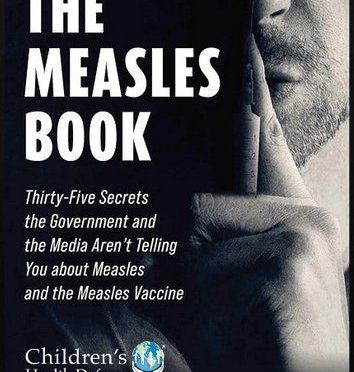
Israeli punitive demolitions of Palestinian homes violates international law

Israeli authorities demolished this residential structure in the Palestinian community of Al Jiftlik Abu Al Ajaj in Area C of the Occupied West Bank in April 2015. Photo: OCHA (file)

16 November 2015

While recognizing Israel’s “serious security challenges,” a senior United Nations official today called its punitive demolition of the homes of alleged attackers “inherently unjust” and against international law, noting that 20 Palestinians, eight of them children, were made homeless in the past three days. Continue reading Israeli punitive demolitions of Palestinian homes violates international law