Tag Archives: Humanity

SIIP – Speaker Identification Integrated Project

Funded by the European Commission, SIIP research project will develop a break-through Suspect Identification solution based on a novel Speaker Identification (SID) engine and Global Info Sharing Mechanism (GISM) which will identify unknown speakers that are captured in lawfully intercepted calls, in recorded crime or terror arenas and in any other type of speech medium and channel (including social-media).

SIIP advanced SID engine will fuse multiple speech analytic algorithms such as: Voiceprints recognition, Gender-ID, Age detection, Language& Accent ID, Keyword & Taxonomy Spotting and Voice cloning detection.

This fusion will result in highly reliable and confident detection, keeping the False-Positives & False-Negatives to the minimum and improving the judicial admissibility of the Speaker Identification Technology.

Source: siip

TPP and Access to Affordable Medicines

The Trans-Pacific Partnership would provide large pharmaceutical firms new rights and powers to increase medicine prices and limit consumers’ access to cheaper generic drugs. This would include extensions of monopoly drug patents that would allow drug companies to raise prices for more medicines and even allow monopoly rights over surgical procedures. For people in developing countries involved in the TPP, these rules could be deadly – denying consumers access to HIV/AIDS, tuberculosis and cancer drugs. Continue reading TPP and Access to Affordable Medicines

An ode to “Beauty Beyond Bones”

Before you were born, before you were you

God planted a seed of love; it developed and grew!

It took root in your being – deep down in your soul.

For He’d planned you’re way out of your ED hole.

Unbeknowns to you, when lost and alone

This sapling of hope was to be your new dawn,

In the silence of togetherness: love and soul-

God found a way to make you feel whole.

With strength and endeavour your branches reach out

God’s fulfillment of love has given you new sight.

The Mulberry tree of love which you share with delight

Is God’s grace reigning down on you, for He loves you without doubt!

-By I.J. Clark 2nd Apr 2016

dedicated to BeautyBeyondBones Blogger and recovered ED sufferer

#WalkWIthJesus

2 More Holistic Doctors Found Dead in Suspicious Circumstances — Total Number is Now 12

I chatted again with lead journalist Erin Elizabeth from HealthNutNews.com (video below) about the mysterious series of deaths of holistic/alternative doctors which began earlier this summer.

We’ve covered much of the story only to come up with more questions than answers.

Why are so many dying in such a small amount of time? Why are so many of them being called ‘suicides,’ against the good judgement of the close family members and friends of the deceased? Continue reading 2 More Holistic Doctors Found Dead in Suspicious Circumstances — Total Number is Now 12

Low Natality, Low Growth: The Economic Consequences of Fewer Babies

One more consequence of misguided population control policies

March 17, 2016 Fr. John Flynn

pixabay.com/en/elderly-people-pensioner-294088

With the world’s economy still struggling, the March-April edition of the magazine Foreign Affairs had a special section titled: “The World is Flat: Surviving Slow Growth.” Among the essays was one which centered on the demographic causes behind slow growth.

“The Demographics of Stagnation: Why People Matter for Economic Growth,” by Ruchir Sharma, acknowledged the multiplicity of theories that seek to explain why economic growth has not returned to its pre-recession levels. Continue reading Low Natality, Low Growth: The Economic Consequences of Fewer Babies

Rockefeller-Funded Anti-Fertility Vaccine Coordinated by WHO

By Jurriaan Maessen, September 04, 2010

In addition to the recent PrisonPlanet-exclusive Rockefeller Foundation Developed Vaccines For “Mass-Scale” Fertility Reduction — which outlines the Rockefeller Foundation’s efforts in the 1960s funding research into so-called “anti-fertility vaccines”– another series of documents has surfaced, proving beyond any doubt that the UN Population Fund, World Bank and World Health Organization picked up on it, further developing it under responsibility of a “Task Force on Vaccines for Fertility Regulation”. Continue reading Rockefeller-Funded Anti-Fertility Vaccine Coordinated by WHO

US: Missteps on Refugees Define Year | Human Rights Watch

Overreactions to Those Fleeing Syria, Central America

(Washington, DC) – United States policies toward people seeking refuge or reunification with their families in the US during 2015 have been ill-considered, discriminatory, and harmful, Human Rights Watch said today in its World Report 2016.

“The Obama administration is sending messages of detention, discrimination, and distrust to families fleeing violence and persecution at home,”

said Alison Parker, US program co-director at Human Rights Watch.

“US policymakers should reverse course and stop treating undocumented arrivals as criminals.”

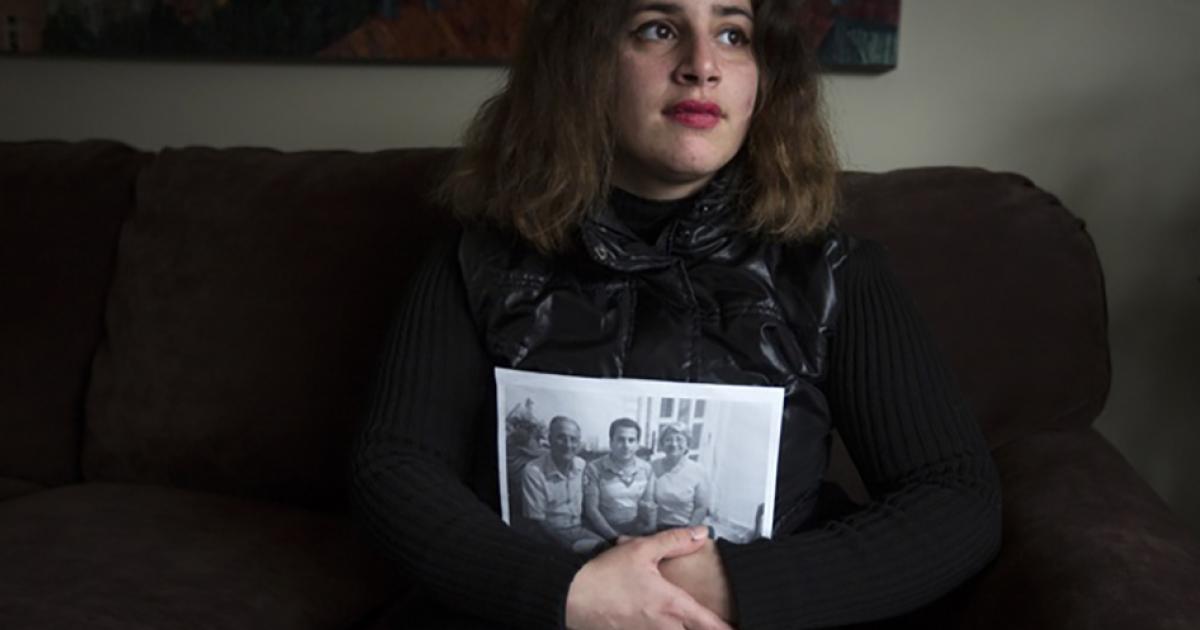
Recent refugee from Syria Sandy Khabbazeh poses for a portrait while holding a photo of her family who remain behind in Syria, in Oakland, New Jersey on November 22, 2015. © 2015 Reuters

In the 659-page World Report 2016, its 26th edition, Human Rights Watch reviews human rights practices in more than 90 countries. In his introductory essay, Executive Director Kenneth Roth writes that the spread of terrorist attacks beyond the Middle East and the huge flows of refugees spawned by repression and conflict led many governments to curtail rights in misguided efforts to protect their security. At the same time, authoritarian governments throughout the world, fearful of peaceful dissent that is often magnified by social media, embarked on the most intense crackdown on independent groups in recent times.

In December 2014, the US opened its largest lock-up for arriving migrant families, a detention facility slated to house more than 2,400 parents and children – primarily asylum seekers from Guatemala, Honduras, and El Salvador. A year earlier, the US had only 85 beds specifically dedicated to detaining families. This new policy of detaining families from Central America in large numbers was in response to an influx of arrivals seeking refuge from uncontrolled gang violence in their home countries.

The Obama administration is sending messages of detention, discrimination, and distrust to families fleeing violence and persecution at home. US policymakers should reverse course and stop treating undocumented arrivals as criminals.

Alison Parker

US program co-director

By year’s end, more than half of US governors had announced that they would oppose resettlement of refugees from Syria in their state, a reaction to the attacks in Paris in November. The US Congress subsequently debated several measures that would make it nearly impossible for Syrian and Iraqi refugees to be resettled in the US, despite a current system that involves multiple layers of vetting over a two-year period.

The US created a program in December 2014 to resettle refugee children from Central America directly from within their home countries with a parent legally residing in the US. Over 5,000 children applied for the program, but as of November 2015, only six Salvadoran children had qualified to enter the US, leaving thousands exposed to violence and persecution as they waited in their home countries to be processed under the program.

The Department of Homeland Security responded to several court rulings by announcing in June that it would end long-term detention for families that establish eligibility for asylum. However, it said it would continue to lock up many for an initial period of time, contrary to international standards restricting the detention of asylum seekers and children. At its borders, the US still used flawed expedited removal procedures that resulted in the return of many seeking protection.

The US continued to flout international law by indefinitely detaining without charge 107 men at Guantanamo Bay. The Obama administration transferred 20 detainees to their home or third countries in 2015, while Congress sought new legislative obstacles to such transfers and a complete ban on transfers to the US.

“President Obama has one more year to make good on his pledge to close down Guantanamo,” Parker said. “He should speed up the process despite congressional efforts to prolong the injustices at the facility.”

The US retained its status of holding the largest reported incarcerated population, with 2.3 million people in prisons and jails. About 12 million people annually cycle through US state and county jails.

There were several important human rights victories in the US in 2015, Human Rights Watch said. These include the US Supreme Court’s landmark recognition of same-sex marriage, which applies to every US state. Congress passed laws that reinforced the prohibition of torture and ended bulk collection of Americans’ phone records, though further reforms are necessary. Ending years of litigation, California has begun dismantling its use of indefinite solitary confinement.

“Deeply offensive and discriminatory comments on a range of issues by US presidential candidates point to renewed concern for human rights in the US in the coming year,” Parker said.

Source: Human Rights Watch


#WalkWithJesus

People of the World pay heed – Fascism is at work in the world: it never stopped.

United States [FASCISM]| Human Rights Watch

National Security

The practice of indefinite detention without charge or trial at Guantanamo Bay entered its 14th year; at time of writing, 107 detainees remained at the facility, 48 were cleared for release, and the Obama administration had in 2015 transferred 20 detainees to their homes or third countries.

Obama administration claims that legal obstacles prevent criminal investigations into torture by the Central Intelligence Agency (CIA) are unpersuasive, and risk leaving a legacy of torture as a policy option.

The administration continued to pursue cases before the fundamentally flawed military commissions at Guantanamo. In June, a federal appeals court overturned the 2008 conviction of Ali Hamza Ahmad Suliman al-Bahlul, the alleged Al-Qaeda “public relations director” who was found guilty of conspiracy, soliciting murder, and providing material support for terrorism. As a result of the decision, at least five of the eight convictions imposed by the military commissions are now no longer valid.

Some detainees continued hunger strikes to protest their detention, including Tariq Ba Odah, who has been force-fed by nasal tube for several years and whose lawyers and doctors say is near death. The Obama administration opposed Odah’s legal request for a court-ordered release, even though the administration had cleared him for release five years ago.

Congress and President Obama signed into law the annual National Defense Authorization Act (NDAA), which in recent years has included provisions on Guantanamo detentions. In 2015, the law tightened existing restrictions on the transfer of detainees out of Guantanamo. The provisions will make it more difficult, though not impossible, to transfer detainees home or to third countries, and maintains the complete ban on transfer of detainees to the US for detention or trial.

The release in December 2014 of a summary of a Senate Intelligence Committee report on the Central Intelligence Agency (CIA)’s detention and interrogation program uncovered new information on the methods and extent of torture and Bush administration efforts to avoid culpability. The summary sparked calls by Human Rights Watch and others for new Justice Department criminal investigations into CIA torture and other violations of federal law, and, should the US fail to act, for action by other governments, including renewed efforts in Europe where a number of cases related to CIA torture already have been filed.

In response to the Senate summary, Congress included a provision in the NDAA that requires all US government agencies except law enforcement entities to abide by rules in the Army Field Manual on interrogation, and provide the International Committee of the Red Cross with notification of, and prompt access to, all prisoners held by the US in any armed conflict. The provision will bolster existing bans on torture, but without credible criminal investigations into CIA torture it is unclear how effectively the provision will guard against future abuse.

In June, Congress took a first small step toward curbing the government’s mass surveillance practices by passing the USA Freedom Act. The law imposes limits on the scope of the collection of phone records permissible under section 215 of the USA Patriot Act. It also puts in place new measures to increase transparency and oversight of surveillance by the National Security Agency (NSA).

The law does not constrain surveillance under section 702 of the FISA Amendments Act or Executive Order 12333, the primary legal authorities used by the US government to justify mass violations of privacy of people outside US borders. The law also does not address many modern surveillance capabilities, from use of malware to interception of all mobile calls in a country.

US law enforcement officials continued to urge major US Internet and mobile phone companies to weaken the security of their services to facilitate surveillance in the course of criminal investigations. In May, the UN special rapporteur on freedom of expression

called on all countries, including the US, to refrain from weakening encryption and other online security measures because such tools are critical for the security of human rights defenders and activists worldwide.

Source: Human Rights Watch


#WlakWithJesus

Human Rights Watch is clearly telling us this is happening to people in the U.S. and in other parts of the world now. You are being surveilled no matter where you live in the world.


None So Brave – “De Oppresso Liber”

“De Oppresso Liber”

(To Liberate the Oppressed) ~~Motto of the U.S. Army Special Forces

A poignant Afghan proverb declares,

“Cowards cause harm to brave men.”

Continue reading None So Brave – “De Oppresso Liber”

Worldwide humanitarian vaccination projects are for depopulation

Saturday, June 28, 2014 by: Paul Fassa

Just a very few years ago, Bill Gates publicly declared before a live audience that using vaccinations strategically may help reduce the world population by 15 percent. Many claimed it was a slip of tongue, like a verbal typo. The audience and mainstream media apparently ignored it.

However, actual worldwide events indicate that population control is part or the world vaccination agenda. Continue reading Worldwide humanitarian vaccination projects are for depopulation

Human Rights Watch World Report 1995 – Bosnia-Hercegovina

Publisher Human Rights Watch
Publication Date 1 January 1995
Cite as Human Rights Watch, Human Rights Watch World Report 1995 – Bosnia-Hercegovina, 1 January 1995, available at: http://www.refworld.org/docid/467fcaab7.html %5Baccessed 11 March 2016]
Disclaimer This is not a UNHCR publication. UNHCR is not responsible for, nor does it necessarily endorse, its content. Any views expressed are solely those of the author or publisher and do not necessarily reflect those of UNHCR, the United Nations or its Member States.

Events of 1994

Human Rights Developments

Abuses against Bosnia’s three ethnic groups – Muslims, Serbs, and Croats – continued in late 1993 and early 1994 but the overwhelming majority continued to be perpetrated by Bosnian Serbs. Most of these abuses were associated with “ethnic cleansing,” whose main objective is the removal of an ethnic group from a given area through murder, population exchanges, forced displacement, and terrorization. Non-Serbs in northern Bosnia continued to be “cleansed” from their homes by Bosnian Serb authorities, while abuses between Bosnia’s Muslims and Croats noticeably decreased after the two groups ended their year-old war. Despite a lull in the fighting in Sarajevo, the city remained under siege by Bosnian Serb forces for much of 1994.

On February 5, a Bosnian Serb mortar attack killed sixty-three people in Sarajevo’s open market. By late February, a NATO ultimatum forced Bosnian Serb forces to pull back their weaponry around Sarajevo or place it under U.N. supervision and a weapons exclusion zone was established around the city. As a result, shelling in Sarajevo decreased and a general cease-fire remained in place until mid-year, although snipers continued to kill civilians in the city. By July, however, shelling and sniping increased in Sarajevo, and roads on Mount Igman, which had been open for commercial traffic since February, were once again too treacherous to transit.

In April, the Bosnian Serb army used indiscriminate and disproportionate force in retaliation against Bosnian army provocation in the Gorazde enclave, which had been designated as a “safe area” by the U.N. in 1993. Bosnian Serb forces eventually captured part of the Gorazde enclave and then prevented journalists and some U.N. personnel from entering the area to assess the material damage and loss of civilian life. In response to the Bosnian Serb attack, Muslim forces within Gorazde expelled some Serbs and placed under house arrest others who remained in the enclave. Bosnian Serb forces restricted access to the area throughout the year.

In October, a Bosnian army commando unit killed twenty Bosnian Serb soldiers and military medical personnel on Mount Igman, an area which had been declared a demilitarized zone by the U.N. in 1993. Soon after the attack, Bosnian Serb forces opened fire on a trolley car in Sarajevo, wounding eight civilians. The Bosnian army refused U.N. demands that it withdraw from Mount Igman, saying it would do so only if the U.N. guaranteed the opening of a road through which commercial traffic could enter Sarajevo. As of mid-November, a tunnel under the airport was Sarajevo’s primary link with the outside world.

Bosnian Serb forces were responsible for most of the attacks on humanitarian aid convoys throughout 1994. In October, they attacked a U.N. convoy and killed a U.N. driver near Gorazde. Bosnian Serb forces cut utilities to the Bosnian capital in mid-September and prevented opening of the Sarajevo airport in late September by refusing to guarantee the safety of U.N. relief flights.

“Ethnic cleansing” in Bosnian Serb-held areas continued during the early part of 1994 but decreased following international condemnation. However, in July, non-Serbs from the Bosanska Krajina and Bijeljina regions were once again expelled in large numbers and those who remained behind in Serbian-occupied territory were conscripted into work gangs and used as forced labor. Between July and October, more than 10,600 non-Serbs were expelled from northern Bosnia.

The war that raged between the mostly Muslim forces of the Bosnian army and the Bosnian Croat militia (HVO) after mid-1993 ended in late February 1994. On February 28 and March 1, the Bosnian Croats and the Bosnian government reconciled and formed a federation. At the same time, Bosnia and the Republic of Croatia, which supported the Bosnian Croats, also agreed to form a confederation. Following the formation of the federation, human rights abuses in central and southwestern Bosnia-Hercegovina decreased substantially. Despite the arrival of administrators from the European Union in mid-1994, abuses in the Croat-held part of Mostar continued, albeit to a lesser degree than in 1993. More than one-hundred Muslim families were evicted from Mostar after the signing of the Muslim-Croat federation. In an apparent assassination attempt on September 11, HVO soldiers launched a rocket-propelled grenade into the bedroom of Hans Koschnik, the E.U. administrator of Mostar. The Croatian authorities arrested four soldiers and removed the local police chief after the incident, but tensions between Muslims and Croats in the city remained high. Moreover, an ombudsman and court established by the federation to monitor human rights had not begun work as of early November. Repatriation of the displaced had not begun either, because minority populations in parts of the federation were not guaranteed safety.

Despite its past support for the Bosnian Serbs, Serbia closed its border with its Bosnian surrogates in September, following the Bosnian Serbs’ refusal to accept an internationally brokered peace plan. One hundred and thirty-five international observers were stationed along the Bosnia-Serbia border and, by mid-October, the Bosnian Serbs generally were denied fuel and military support from Serbia. As of this writing, no violations of international law by either Bosnian army or HVO forces during their latest offensives in the Bihac, Sarajevo or Kupres areas had been reported. However, thousands of Serbs fled the offensive and sought refuge in Serbian-held areas of Croatia and other parts of Bosnian Serb-held territory.

The Right To Monitor

The Bosnian government and Bosnian Croat officials generally did not impede human rights monitoring by domestic and international organizations, but the Bosnian Croats continue to reject U.N. efforts to rectify the eviction of Muslims from their homes in west Mostar.

By contrast, human rights monitoring was severely restricted in Bosnian Serb-held areas. International monitors and much of the international press were banned from entering, or their movements were severely restricted within, Bosnian Serb territory. In August, a Human Rights Watch/Helsinki researcher attempted to interview Serbs who had left or been forced to leave Bosnian government-controlled areas of Sarajevo. Upon her arrival on August 26 in Pale, the headquarters of the Bosnian Serb authorities, the researcher was told by the “state security forces” to leave on the next bus. An advisor to Bosnian Serb leader Radovan Karadzic overruled this order and advised her to stay. The next day, she was again ordered by a plainclothes police officer to leave; the officer also threatened and insulted the researcher and accused her of espionage. Hours later, the officer told her that she was welcome to stay. Finally, forty-eight hours after she had arrived in Pale, the researcher was placed under armed guard in a car and not told where she was being taken. Finally, at 1:00 A.M. she was brought to the border with Serbia and expelled from Bosnian Serb territory.

The Role of the International Community: U.S. Policy

With the notable exception of brokering a peace between Bosnia’s Muslims and Croats, the Clinton administration’s policy toward Bosnia was marked by indecision and policy reversals. Having distanced itself from the Bosnia crisis in late 1993, the U.S. reluctantly joined its allies in January 1994 calling on the NATO command to prevent the strangulation of Sarajevo and other U.N.-declared safe areas in Bosnia.

The Clinton administration’s major accomplishment in Bosnia during 1994 was the brokering of a peace agreement between Bosnian Croats and Muslims. In late September, the Clinton administration pledged $20 million in non-humanitarian aid to the federation. The aid was intended to rehabilitate housing and infrastructure primarily in central Bosnia. In late October, the U.S. announced that it would send approximately fifteen U.S. military officers to Bosnia to integrate the military alliance between Bosnian government forces and the HVO.

On March 30, Madeline Albright, U.S. representative to the U.N., and Gen. John Shalikashvili, chair of the Joint Chiefs of Staff, visited Sarajevo in a show of support for the Bosnian government. In a speech there, Ambassador Albright supported the sovereignty of Bosnia and announced that the U.S. would donate $10 million to the reconstruction of Sarajevo. The following day, however, the U.S. blocked passage of a U.N. Security Council resolution authorizing the deployment of 10,000 more peacekeeping troops to Bosnia, citing the financial strain of the U.N. field mission and the potential unwillingness of the U.S. Congress to approve the U.S. share of the bill. The U.S. sponsored instead a compromise resolution which approved an initial deployment of 3,500 peacekeepers and left the deployment of further troops for a later date.

The Clinton administration’s vacillations in the face of the Gorazde crisis in April were emblematic of U.S. policy toward Bosnia more generally. As Bosnian Serb forces began a new and vigorous offensive against the Bosnian government-controlled enclave of Gorazde, a U.N.-declared safe area, the Clinton administration faced the familiar situation of attempting to avoid military intervention while, at the same time, risking a potential loss of credibility as further Bosnian Serb abuses went unpunished. On April 3, following the start of the offensive against the encircled Bosnian town, U.S. Secretary of Defense William Perry stated that the U.S. would not use military power to prevent the fall of Gorazde. Perry’s statements seemed to jeopardize U.S. peace efforts in Bosnia by sending a “green light” to Bosnian Serb forces to do as they pleased. An embarrassed U.S. tried to provide a different impression of its intentions on April 7, when National Security Adviser Anthony Lake claimed that “neither the president nor any of his senior advisers rules out the use of NATO air power to help stop attacks such as those against Gorazde.”

On April 10, as Bosnian Serb troops stood on the verge of overrunning Gorazde, two U.S. jets flying a NATO mission attacked a Serbian command post outside the besieged town. The attack represented not simply the first NATO air strike of the Bosnian war, but the first air strike in NATO history. Bosnian Serb forces briefly halted their offensive, but by the next day they advanced once again. U.S. jets carried out a second mission, this time destroying a Bosnian Serb tank. On the same day, President Clinton announced that NATO would continue to use air power until the advancing forces withdrew from the Gorazde area.

The U.S.’s newfound resolve quickly dissipated. Faced with Russian criticism and dissension within U.N. ranks, NATO did not follow up on its first round of air strikes, even as Serb forces continued their offensive. Finally, on April 17, the Clinton administration announced that it would seek no new air strikes against Serb forces in Bosnia. Three days later, however, the administration endorsed a plan by which NATO would use air power to protect all six U.N.-declared safe areas in Bosnia as weapons-exclusion zones, which NATO had previously established in the Sarajevo area. A version of this plan became NATO policy on April 22.

In a major policy shift, U.S. officials signaled at the same time that they were ready to entertain European proposals gradually to phase out U.N.-imposed sanctions against Serbia in exchange for Serb cooperation in Bosnian talks. Previously, the Clinton administration had opposed any loosening of sanctions against Serbia and its surrogates in Bosnia and Croatia until, among other things, they demonstrated cooperation with the international tribunal established to adjudicate war crimes and crimes against humanity in the former Yugoslavia. Given the continuing assault on Gorazde, the apparent involvement of Yugoslav army troops from Serbia in that attack, and the Serbs’ unwillingness to accept the legitimacy of the tribunal, the Clinton administration’s new position on easing of sanctions against Serbia was particularly ill-timed.

On April 25, U.S., Russian, and British officials announced the establishment of a “contact group,” consisting of representatives from the U.S, the United Kingdom, Russia, Germany, and France, that would seek to broker an end to the Bosnian war. The contact group presented a map giving the Muslim-Croat federation control of 51 percent of Bosnia, and both the Bosnian government and the Bosnian Croats eventually accepted the proposal. Bosnian Serbs rejected the plan because it decreased their control of Bosnia from 70 percent to 49 percent. In light of Bosnian Serb rejection of the plan, Bosnian President Alija Izetbegovic withdrew his government’s support for the plan in late July. U.S. support for the contact group’s plan marked a departure from its long-articulated support for the territorial integrity of Bosnia. However, Viktor Jakovich, the U.S. Ambassador to Bosnia-Hercegovina, promised U.S. support for “an undivided Sarajevo and for a free and democratic Bosnia-Hercegovina within its internationally recognized borders” at the July 4 opening of the U.S. Embassy in Sarajevo.

The proposed plan focused solely on the territorial division of Bosnia; it offered no protection to minorities, particularly non-Serbs who continued to be persecuted in Bosnian Serb-held areas, nor was the right to repatriation mentioned. Though the contact group repeatedly threatened to adopt severe punitive measures against any party that refused to accept the proposed map, its members were far from united in their desire to punish the Bosnian Serb forces for their rejection of the plan. Indeed, in October, members of the contact group began considering new concessions to the Bosnian Serbs in exchange for their accession to the peace plan. In particular, Russia argued that the plan should be amended to allow the Bosnian Serbs to form a confederation with Serbia proper, as the Bosnians had done earlier in the year with Croatia.

For much of the year, the Clinton administration faced strong pressure from Congress to lift the arms embargo against the Bosnian government and confronted opposition to such action by the E.U. and Russia. Although President Clinton’s rhetoric signified his support for lifting the embargo, his public dithering on the issue and his vigorous campaign against Congressional initiatives showed that he was unwilling to differ with the European allies on the issue for much of the year.

On August 11, President Clinton declared that he would urge the U.N. Security Council to lift the arms embargo against the Bosnian government if the Bosnian Serbs failed to accept the contact group’s proposal by October 15. Despite E.U. rejection of such a proposal, the U.S. renewed calls for lifting the arms embargo in mid-October, this time saying it would consider lifting the arms embargo unilaterally.

Reportedly under pressure by the U.S., and in light of French and British threats to pull out their troops in Bosnia, Bosnian President Izetbegovic accepted a six-month postponement for lifting the arms embargo. Izetbegovic’s statement, made before the U.N. General Assembly on September 27, spared President Clinton the need to confront both the E.U. and the U.S. Congress. In late October, the Clinton administration introduced a resolution at the U.N. to lift the embargo in six months’ time unless the Bosnian Serbs accepted the contact group’s peace proposal by then. Then, in a decision bound to strain relations with NATO allies, the Clinton administration announced on November 10 that it had directed the U.S. military to stop enforcing the arms embargo against the Bosnian government as of November 12.

In 1994, the U.S. was forthcoming with humanitarian aid for victims of the war in Bosnia. In addition to the $10 million pledged for Sarajevo’s resconstruction and $20 million to support the Muslim-Croat federation, the U.S. gave a total of $387 million for humanitarian efforts in Bosnia-Hercegovina in the 1994 fiscal year.

The United Nations and NATO

In 1994, U.N. and NATO officials disagreed on their approach to Bosnian Serb violations of U.N. resolutions and NATO ultimatums: while NATO was generally willing to penalize Bosnian Serb violations, U.N. officials sought to accommodate Bosnian Serb demands.

Though existing Security Council resolutions mandated the use of force to protect peacekeepers and to ensure the delivery of humanitarian aid, military and civilian authorities of the U.N. Protection Force (UNPROFOR) were reluctant to exercise this option. This inaction drew criticism from two commanders of U.N. forces in Bosnia, one of whom was removed and the other resigned. On the occasions that the U.N. did use force, the action was typically marked by short-sightedness and lack of a broad-reaching strategy or goal. As a result, the U.N. suffered a devastating lack of credibility.

On January 19, a week after the NATO alliance had reasserted its willingness to carry out U.N.-requested air strikes, U.N. Secretary-General Bourtros Boutros-Ghali formally announced his opposition to air strikes in Bosnia, arguing that they would endanger the U.N. peacekeeping mission. Around the same time, the international press announced that both Britain and France were seriously considering withdrawing their troops from the U.N. mission in Bosnia.

Following the highly publicized February 5 marketplace massacre in Sarajevo, the international community responded to intense pressure to make good on its previous threats. On February 9, the NATO allies issued an ultimatum to the Bosnian Serb forces, demanding that by February 21 they either withdraw their heavy weaponry at least twenty kilometers from Sarajevo and place it under U.N. control, or face NATO air strikes. The ultimatum represented a bold new step in Western policy toward Bosnia, and, because the threat of military action seemed credible, Bosnian Serb troops complied with NATO’s demands.

By May 18, however, the U.N. was admitting to the presence of at least four Serb tanks and ten other heavy weapons within the NATO-declared weapons exclusion zone. Because NATO and the U.N. refused to enforce compliance with the weapons exclusion zone, Bosnian Serb leaders grew increasingly confident in their ability to test the world community’s resolve and resumed the siege of Sarajevo by mid-year.

On March 2, two U.S. aircraft under NATO command shot down four Serb jets near Banja Luka in northwestern Bosnia. Though an April 1993 U.N. resolution authorized the enforcement of a “no-fly zone” over Bosnia, the downing of the Serb jet represented the first enforcement after nearly 1,400 reported violations.

According to an April 22 NATO ultimatum, Bosnian Serb forces were ordered to immediately halt their attack on Gorazde, allow the free passage of displaced persons and relief personnel, and withdraw all troops from the town’s center. NATO threatened air strikes against Bosnian Serb heavy weaponry and other military targets found within a 12.4-mile radius of Gorazde’s center, and later extended the ultimatum to include the remaining U.N.-declared safe areas of Bihac, Srebrenica, Tuzla, and Zepa.

On April 24, when it appeared that Bosnian Serb forces were not complying with NATO demands, then-NATO Secretary-General Manfred Werner asked that the alliance begin conducting air strikes. After the U.N. extended their deadline, the Bosnian Serbs made significant strides in withdrawing its troops from the 1.9-mile zone, and both NATO and U.N. authorities stated that air strikes would not be necessary. NATO and U.N. leaders expressed satisfaction with the withdrawal, but a number of Serbian forces remained within the exclusion zone in violation of NATO’s demands.

In July, UNPROFOR forces found themselves under increasing attack by Bosnian Serb militias. On August 5, two U.S. war planes under NATO command bombed a Bosnian Serb antitank vehicle near Sarajevo after Serbian soldiers sneaked into a U.N. weapons collection point and removed heavy guns. In the fourth NATO attack in 1994, NATO war planes strafed and bombed an vacant Bosnian Serb tank near Sarajevo in retaliation for a Serb attack on French U.N. peacekeepers.

In October, Bosnian Serbs attacked a U.N. convoy and killed a U.N. driver, forcing British U.N. soldiers to return fire. The attack lasted two hours, but senior U.N. officials decided not to call for a NATO air strike for logistical reasons.

Throughout 1994, NATO and the U.N. were at odds over the use of force in Bosnia. NATO was more willing to use force when U.N. troops or safe areas were attacked, while the Russians and Lt. Gen. Sir Michael Rose, the commander of U.N. forces in Bosnia, were opposed to expanding the use of force or the role of NATO in the Balkans. On October 27, NATO and the U.N. reached a draft compromise that would allow unannounced air strikes when there is little danger of civilian casualties, and require warnings if the strikes could endanger civilians.

On August 15, South African Judge Richard Goldstone took office as prosecutor to the international war crimes tribunal established by the U.N. to adjudicate war crimes and crimes against humanity in Bosnia and Croatia. The prosecutor’s office began investigating specific cases of abuse in 1994 and, on November 8, it issued its first indictment against Dragan Nikolic, the former commander of the Bosnian Serb-run Susica camp. On the same day, the tribunal announced that it would ask Germany to extradite Dusko Tadic, a Serb accused of atrocities in the Omarska detention camp in 1992, who had been arrested in Munich in February. Other suspected war criminals from the former Yugoslavia had been apprehended in Denmark, Switzerland, and Austria by mid-November.

The Work of Human Rights Watch/Helsinki

Throughout 1994, Human Rights Watch/Helsinki continued monitoring and reporting on violations of the rules of war in Bosnia, with a view to identifying by name those responsible for such abuses. We also urged international negotiators to address human rights concerns as part of an overall peace settlement.

In April, we reported on, and identified persons responsible for, crimes in the northern Bosnian town of Bosanski Samac. In June, we issued a report about continuing human rights violations in the Banja Luka area and criticized international peace negotiators’ disregard for continued “ethnic cleansing.” Indeed, on June 28, prior to a meeting of the G-7 leaders (Canada, France, Germany, Italy, Japan, United Kingdom, and United States), Human Rights Watch/Helsinki issued a press release warning the G-7 not to endorse the contact group’s peace proposal partitioning Bosnia until human rights concerns were made part of an overall peace settlement; we sent a similar letter to President Clinton. In early September, we issued a press release calling on the contact group to use its influence with Bosnian Serb authorities to stop “ethnic cleansing” in Bijeljina and other parts of northern Bosnia. We continued calling on the international community to respond to continued “ethnic cleansing” in northern Bosnia in a November newsletter. In a March letter to Jose Ayala Lasso, U.N. high commissioner for human rights, we suggested improvements in the UNPROFOR mission in Croatia and Bosnia-Hercegovina.

Human Rights Watch/Helsinki sent a mission to Sarajevo in May and June and issued a newsletter in October reporting on past and present human rights violations in the city. In September and October, Human Rights Watch/Helsinki sent a mission to central and southwestern Bosnia to investigate the status of human rights and accountability for past crimes in the Muslim-Croat federation. We met with E.U. administrators of Mostar in the field and in Brussels. Also in the fall, we researched the campaign to “ethnically cleanse” eastern Bosnia of Muslims and to identify persons who planned or perpetrated abuses in the area in 1992.

Throughout the year, Human Rights Watch/Helsinki kept up pressure for the establishment and support of the international tribunal to adjudicate war crimes and crimes against humanity in Bosnia and Croatia. In February, Human Rights Watch/Helsinki issued The War Crimes Tribunal: One Year Later, which called for the appointment of a prosecutor to the international war crimes tribunal and for the tribunal to begin its work. We also advocated for proper funding and staffing of the tribunal, and on February 25 sent a letter to U.N. Secretary-General Boutros-Ghali expressing concern over the failure to provide adequate funding. In March, we urged U.N. budgetary bodies to allocate sufficient funds to the tribunal. Prior to and after the appointment of Judge Goldstone, representatives of Human Rights Watch maintained regular contact with the prosecutor’s office and forwarded our documentation to the tribunal’s staff.

Copyright notice: © Copyright, Human Rights Watch

Is Pope Francis a Relic of ‘Medieval Times and the Inquisition’?

March 14, 2013 by Samuel Warde

Argentine President Cristina Fernández de Kirchner recently referred to Bergoglio as a relic of “medieval times and the Inquisition.”  At the time, El Presidente was referring to the new Pope’s position on same sex marriage while serving as Archbishop of Buenos Aires back in 2010.  But was that all she meant?

To understand, we need to go back to the time of the Dirty War in Argentina.

Argentina’s Dirty Wars Continue reading Is Pope Francis a Relic of ‘Medieval Times and the Inquisition’?

“Washington’s Pope”? Who is Pope Francis?

Cardinal Jorge Mario Bergoglio and Argentina’s “Dirty War”

By Prof Michel Chossudovsky, September 25, 2015

In the course of the last two years, Pope Francis has been portrayed in chorus by the Western media as an antiwar activist and a left leaning champion of “Liberation Theology” committed to World peace and global poverty alleviation. His September 24 speech to the US Congress was described as “stunning in the breadth, depth, and conviction of its progressivism.” “If President Barack Obama had delivered the text of Pope Francis’s speech to Congress Thursday [September 24, 2015] as a State of the Union address, he would have risked being denounced by Republicans as a socialist.” Continue reading “Washington’s Pope”? Who is Pope Francis?

Chilean Judge Says Pinochet Is Fit for Trial

By LARRY ROHTER DEC. 14, 2004

BUENOS AIRES, Dec. 13 -A Chilean judge ruled Monday that Gen. Augusto Pinochet was competent to stand trial for human rights abuses that occurred during his nearly 17 years as Chile’s dictator and immediately charged him with nine counts of kidnapping and one of murder.

Judge Juan Guzmán Tapia also ordered that General Pinochet, 89, be placed under house arrest and confined to his mansion on the outskirts of Santiago, the Chilean capital. The former dictator’s lawyer, Pablo Rodríguez, accused the judge of trampling on the general’s human rights and announced that he would appeal the decision. Later Monday, General Pinochet’s defense team filed an injunction with the Santiago Court of Appeals, effectively freezing the house arrest until the court rules on it, according to Chilean news accounts.. Continue reading Chilean Judge Says Pinochet Is Fit for Trial

The Guatemala Human Rights Commission Expresses Concern over U.S. Reaction to Child Migration Crisis

Read our report on conditions facing Guatemalans deported from the US.

(Information from August 2014)

Each week, an estimated 120 Guatemalan children, many unaccompanied, are arriving at the U.S. border. When they arrive in the U.S., they have already survived a long and perilous journey through Mexico, where extortion, kidnapping, rape, and murder are common; many survive these horrors only to die crossing the U.S. desert. Often these children make the journey north not by choice but because they face daily violence and life-threatening poverty; some are literally running for their lives. In a study by the UNHRC, almost 40% of Guatemalan children interviewed who had entered the U.S. unaccompanied and undocumented raised international protection concerns due to violence in society or abuse in the home; close to 30% spoke of deprivation.

In the face of this humanitarian crisis, the Guatemala Human Rights Commission/USA (GHRC) calls for the U.S. government to treat all migrants with dignity, and accept its legal and humanitarian responsibilities to protect refugee children and youth.

The root causes of forced migration in Guatemala are linked to a complex set of factors that include rampant violence, acute poverty, corruption and high rates of impunity — conditions long exacerbated by U.S. policies. GHRC condemns misguided or inhumane responses, such as expedited deportations, that will not only send children back to situations of dire violence, but will also contribute to a cycle of forced migration. Instead, the U.S. response must include deeper analysis of these root causes, including our own role in exacerbating forced migration.

GHRC calls for a humane U.S. response, in line with international protection obligations, to address the immediate needs of children and vulnerable populations.

  • The U.S. should fully comply with international obligations and provide comprehensive screening for possible international protection needs. To do so, The U.S. should guarantee legal representation for migrants and refugees that arrive at the U.S. border, especially for vulnerable populations such as unaccompanied minors.
  • The U.S. should maintain protections under the Trafficking Victims Protection Reauthorization Act of 2008 (“TVPRA”) for Central American children.
  • The U.S. should base all decisions regarding the treatment of child migrants on the best interest of the child; family reunification in the U.S. should be top priority.
  • The U.S. should halt all deportations until a system is in place to provide both legal representation and screening for international protection needs for all migrants. This is important because the Guatemalan government does not have established programs to support the safe and effective reintegration of deported migrants, and does not have the capacity to receive large numbers of unaccompanied minors, particularly those at risk.

GHRC calls for a long-term strategy that addresses the root causes of migration and focuses on helping people to stay in their communities, instead of a militarized or “mano dura” enforcement approach that will only provoke further fear and instability.

  • The U.S. should halt security assistance to Guatemala’s police and military, both through the Central America Regional Security Initiative (CARSI) and other bilateral security assistance programs, until credible evidence shows they are protecting human rights and effectively combating internal corruption and links to organized criminal networks. If security assistance is provided, it should be contingent upon strict compliance with human rights conditions and should focus on prevention programs as well as services for at-risk populations such as women’s shelters and witness protection programs.
  • The U.S. should re-negotiate the Central American Free Trade Agreement (CAFTA) to create more balanced trade regulations and address ongoing poverty and inequality in the labor, textile, agricultural, and service sectors. USAID programs should prioritize support for local and community-based programs to alleviate poverty, and increase access to education, social services and employment opportunities. The U.S. should ensure that any assistance program meets priority needs identified by the local population. To address displacement due to large-scale extractive industry projects, the U.S. should also urge Guatemala to meet its obligation to indigenous communities of free, prior and informed consent before any development project is carried out.
  • The U.S. should continue to provide support to strengthen the judicial system and accountability mechanisms; this includes support for the high risk courts and the International Commission Against Impunity (CICIG) in Guatemala and efforts to increase judicial independence. The U.S. should also encourage full compliance with Guatemala’s human rights obligations under regional and international law.
  • The U.S. should support increased protections for human rights defenders, many of whom faced targeted threats and violence due to their work to improve social and economic conditions in Guatemala.

Background:

U.S. policies in the region have been a significant factor contributing to decades of forced migration from Guatemala.

GHRC has documented conditions in Guatemala for over three decades, during which time forced migration has been inextricably linked to social and political factors rooted in historic poverty, inequality and state-sponsored violence – conditions aggravated by U.S. policies, particularly over the last 60 years.

After backing a coup against Guatemala’s democratically elected president in 1954, the U.S. supported the reversal of democratic reforms for economic equality and, for the next forty years, funded, trained and supported the brutal violence unleashed against Guatemala’s civilian population. During Guatemala’s internal armed conflict, which reached the peak of brutality in the early 1980s, over one million people were forcibly displaced, and an estimated 200,000 fled to Mexico, the U.S. and other countries as war refugees.

The long-term legacy of this violence is complex and includes family and community disintegration, high rates of generalized violence, outmigration, and a myriad of related social problems. These challenges were not resolved with the signing of the 1996 Peace Accords and instead have become more acute over the past decade. A history of violence and impunity has also contributed to structural violence, as well as high levels of domestic violence, organized crime, corruption, and weak state institutions. These conditions often violate the universal right to life, liberty and security.

The U.S. response to post-war instability and violence in the region has in large part exacerbated the factors that contributed to forced migration.

1) The U.S. continues to fund security policies in Guatemala that have failed to reduce generalized violence in the region and, in some cases, has reduced Guatemalans’ sense of security.  Bilateral and regional assistance has increased steadily from 2008 to today, including over 100 million dollars of security assistance to Guatemala through the Central American Regional Security Initiative (CARSI).

Over this same period, violent crime in the Northern Triangle (Guatemala, Honduras and El Salvador) has escalated and the region now has one of the highest homicide rates in the world. Guatemalan women suffer particularly high rates of domestic and sexual violence. In 2013 Guatemala registered the second highest rate of femicide [1]; over 50% of migrants from Guatemala that year were women [2] and GHRC has supported numerous asylum cases of women who fear persecution and violence if forced to return.

While U.S. support for the International Commission against Impunity in Guatemala (CICIG) has been important, aid to Guatemalan security forces has not succeeded in reducing overall levels of organized crime. Organized criminal networks continue to operate freely throughout Guatemala, trafficking drugs, guns, and human beings. Gangs control entire sections of Guatemala City and other urban areas through extortion, forced recruitment, and other acts of intimidation and violence.

Children are the most vulnerable of all. Every 17 hours a child or teen dies from gun violence. And every two hours a child younger than five years of age dies of preventable causes [3]. Children suffer widespread abuse, sexual exploitation, prostitution, and forced marriage [4]. Where gangs are present, children and youth are specifically targeted for forced recruitment and threatened with severe retaliation if they refuse to join gangs and perform criminal activities or serve as coerced sexual partners [5].

The Guatemalan government is often unable to offer its citizens protection from violence. Impunity for all crimes is one of the highest in the western hemisphere, and impunity for crimes committed against women, children and other vulnerable populations can reach 98%. The police are undertrained, understaffed, underpaid, and often corrupt. Rather than focus on reforming the civilian police, Guatemala has increasingly relied on the military for law enforcement, a strategy that has proven ineffective and, in many cases, counterproductive.

Moreover, there are credible allegations of collaboration between organized criminal groups and members of the Guatemalan military and police [6], as well as police and military involvement in serious crimes [7], exacerbating impunity and denying victims the right to security and justice. Such abuses are often not investigated or prosecuted.

The infiltration of Guatemala’s security forces by organized criminal networks also leads to concerns that ongoing U.S. aid to these institutions inadvertently strengthens the very groups it seeks to combat, and ultimately increases the risk of violence and human rights abuses against vulnerable populations.

2) U.S. economic policies have reinforced poverty and undermined employment opportunities, both of which continue to be important push factors for forced migration. According to the UNDP, more than 51% of Guatemalans live in poverty, with 17% surviving on less than US $1.25 per day [8]. Over half of children under age five suffer from stunting due to malnutrition and 23% of the entire Guatemalan population is undernourished. Chronic under-nutrition in indigenous areas reaches 70% [9].Guatemala continues to be one of the lowest spenders on social programs of any country in Central America, and many Guatemalans lack of access to basic healthcare, social services, and education.

U.S. economic policies such as the Central America-United States Free Trade Agreement (CAFTA) have further contributed to impoverishment and economic instability at the community level. CAFTA has failed to provide sustainable economic opportunity. Steady, long-term employment in many regions is few and far between; 75% of working people are employed in the informal sector, with no job benefits or security, and no guarantee of earning the minimum wage [10].

Many people in rural communities are heavily dependent on subsistence agriculture. CAFTA has increased the trade imbalance between the U.S. and Guatemala and imports of U.S. subsidized crops have undercut local markets [11], forcing people to find work elsewhere, including in the United States. Meanwhile, labor violations and abuse in the workplace are an ongoing reality for those employed in the textile and service sectors. The open CAFTA complaint against Guatemala, filed by U.S. and Guatemalan labor unions in 2009 for the government’s failure to address persistent and systematic labor rights violations, has not produced any results [12].

The U.S. has done little to address conflict in many rural and indigenous communities, which has spiked due to the rise of international investment in mining, hydroelectric power, petroleum extraction, and other large-scale commercial agriculture. These land-intensive projects create few jobs and leave immense environmental devastation in their wake. By means of community referendums Guatemalans have expressed their overwhelming opposition to this model of imposed “development,” yet the Guatemalan government has refused to recognize the results of these plebiscites and has even questioned their legitimacy. Meanwhile the government has neglected to carry out its own consultations with the indigenous populations affected by these projects, in direct violation of obligations under international law. Instead, the Guatemalan government has relied on repressive policies and, in some cases, martial law, to protect the economic interests of transnational companies rather than the safety of its citizens. Facing displacement, contaminated water, polluted environments, and repression from the government, Guatemalans may be forced to seek their livelihoods elsewhere.

3) The U.S. has not done enough to protect human rights defenders, many of whom are working to improve social and economic conditions at home. Those who seek to address root causes of migration – including violence, impunity, land rights and economic inequality – face defamation, persecution and targeted violence. In 2013, Human Rights Defenders Protection Unit of Guatemala documented 18 assassinations of human rights defenders. That same year, the International Trade Union Confederation called Guatemala the most dangerous country in the world to be a trade unionist, citing 68 documented assassinations of trade unionists since 2007. Suspects have been arrested in only one of the murder cases [13].


[1] UN Human Rights Council, Update Paper, World Model United Nations 2013. See also “Guatemala es el segundo país del mundo con más casos de femicidios, según ONU” lainformation.com, November 20, 2012. Available online at http://noticias.lainformacion.com/asuntos-sociales/conducta-abusiva/guatemala-es-el-segundo-pais-del-mundo-con-mas-casos-de-femicidios-segun-onu_qrUtoDkn9B83D3LYp9OGD7/.

[3] Oficina de Derechos Humanos del Arzobispado de Guatemala, Situación de la Niñez Guatemalteca, Informe 2012-2013

[4] U.S. Department of State, Country Reports on Human Rights Practices for 2013

[5]See, for example: Marked for Death: The Maras of Central America and those who Flee their Wrath, Jeffrey D. Corsetti, 20 Geo. Immigr. L.J. 407, 2005-2006. Available online at http://www.uscrirefugees.org/2010Website/5_Resources/5_3_For_Service_Providers/5_3_9_Gangs/MarkedForDeath_Part1.pdf

[6] Gonzalez, Rosmery Austria deniega permiso de venta de armas a gobierno de Otto Pérez, El Periodico, (May 2, 2014) available online at http://elperiodico.com.gt/es/20140502/pais/246662/

[7] U.S  Department of State, Country Reports on Human Rights Practices for 2013

[8] UN Human Development Report 2013.

[9] World Food Program. “Guatemala.” 2013. Available at http://www.wfp.org/countries/guatemala

[10] Taken from World Bank at http://www.voxxi.com/latin-american-workers-swallowed-by-informal-employment-low-wages/

[11] See reports from the Stop CAFTA Coalition from 2006, 2007, 2008. Available online at http://www.ghrc-usa.org/resources/publications/other-publications/.

[12] See http://www.aflcio.org/Blog/Global-Action/Enforcement-Plan-Fails-to-End-Murders-Violence-Against-Trade-Unionists-in-Guatemala

[13] See http://es.panampost.com/marcela-estrada/2014/06/04/guatemala-tras-anos-de-impunidad-en-homicidios-de-68-sindicalistas-detienen-a-primeros-tres-sospechosos/

Source: ghrc-usa.org

Conditions Facing Guatemalans Deported from the US

The Guatemala Human Rights Commission/USA | October 2014

An average of two ICE planes arrive every day at the Guatemala City airport carrying Guatemalans deported from the US; some individuals are detained in the desert a few days after crossing into the United States while others have lived in the US for years. An ICE official recently estimated that a total of 50,000 Guatemalans were deported from the US in FY 2014.
In order to stem the tide of children fleeing Central American countries, a situation that made headlines over the summer, the Obama Administration is aiming to deport unaccompanied children and families with children as soon as possible, including a “last in, first out” rapid deportation of recent arrivals.
However, Guatemala’s rampant corruption and poor social services call into question that country’s ability to safely and humanely absorb increasing numbers of its deported citizens, especially children. It is also unlikely to be a successful strategy in the long term, while the reasons underlying migration remain unchanged.
What is the Process for Return and Reintegration?
US officials have cited Guatemala as having a model intake process for deported migrants. In late August, GHRC staff observed the intake process for a plane of deportees that arrived from Brownsville, Texas. Over 100 people walked across the tarmac to a small building set up
to process returned migrants. The majority of people that deplaned were young men, many wearing
matching jeans and white t-shirts, but there were also about two dozen women.
Each person was briefly interviewed and allowed to make a local call and exchange money. Afterward, they were given a small mesh bag containing their personal effects,which in most cases appeared to be almost empty. In interviews conducted by GHRC staff, many deportees mentioned
being coerced into signing their deportation papers, including some that recounted a US border agent threatening to sign the papers for them if they didn’t sign voluntarily.
Women interviewed spoke of the lack of basic sanitary items such as toothbrushes in ICE detention,
and lack of access to showers for extended periods of time. One described an infant, lying on the
floor, blue from cold – workers at the facility would not give the baby milk or diapers, she explained.
Outside, a few NGOs had tables set up to provide resources on temporary migrant housing and to
offer international phone calls. After this intake process, we were told, deportees are taken to the central bus station and given bus tickets at least part-way to their home towns. No further services are provided.
What Happens to Unaccompanied Children?
Unaccompanied children deported to Guatemala are turned over to the Secretariat of Social Welfare. The Secretariat has two shelters to receive the children, and if they can’t be handed over to their families within a few days, they are sent to one of the permanent shelters the office runs. In a damning report from August 2013, Guatemala’s Human Rights Ombudsman’s Office wrote that these shelters were unhygienic and provided poor quality food, inadequate clothing, no recreational activities and poor healthcare. The facilities are overcrowded, with children sleeping
two to a bed, and understaffed.
Last year, a 14 year-old girl who was a resident of the Guatemala City shelter was murdered by two other girls after they were locked into a bathroom together and left there. According to an ICE official, there were 72 minors deported from the US to Guatemala between January and late August 2014. There is reportedly no risk assessment carried out before the child is turned over to a family member, and no follow-up with the children by the government. GHRC even received information that the government may have, in some cases, mistakenly handed children over to people who
are not family members, including individuals linked to human trafficking networks.
Violence is a Daily Fact of Life in Guatemala
Generalized Violence According to a UNHCR report on unaccompanied child migrants, the majority of unaccompanied children from Guatemala are from the Western Highlands, which has high rates of poverty and very few government services. The region doesn’t have the highest homicide
rates in the country, but other forms of violence are commonplace, particularly for women and children. Twenty-three percent of the unaccompanied children the UNHCR interviewed mentioned violence they suffered in the home. Guatemala City has a 70% rate of impunity for homicide (down from 98% just a few years ago); other violent crimes are very rarely reported and almost never successfully prosecuted. A further 20% talked with the UNCHR about violence in society as being a major cause for their migration. Organized criminal networks continue to operate freely throughout Guatemala, trafficking drugs, guns, and human beings. Gangs control entire sections of Guatemala City and other urban areas through extortion, forced recruitment, and other acts of intimidation and violence. Children and youth are specifically targeted for forced recruitment and threatened with severe retaliation if they refuse to join gangs and perform criminal activities or serve as coerced sexual partners.
Every 17 hours a child or teen dies from gun violence in Guatemala, and every two hours a child
younger than five years of age dies of preventable causes. The Guatemalan government is often
unable to offer its citizens protection from violence – especially those most vulnerable, such as children. Moreover, there are credible allegations of collaboration between organized criminal groups and members of the Guatemalan military and police, as well as police and military involvement in serious crimes, exacerbating impunity and denying victims the right to security
and justice. Such abuses are often not investigated or prosecuted.
Poverty and Deprivation, Upheld Through Violence
Twenty-nine percent of the children interviewed mentioned deprivation as a major factor in their decision to migrate. According to the UNDP, more than 51% of Guatemalans live in poverty, with 17% surviving on less than US $1.25 per day. Over half of children under age five suffer from stunting due to malnutrition and 23% of the entire Guatemalan population is undernourished.
According to a recent World Bank report, the poorest Guatemalans are only sinking deeper into poverty, largely due to extremely low rates of spending by the Guatemalan government, especially on social programs. This deprivation is more extreme in rural areas, where many people are
heavily dependent on subsistence agriculture. The Central American Free Trade Agreement, signed by Guatemala in 2006, has increased the trade imbalance between the US and Guatemala and imports of US subsidized crops have undercut local markets, forcing people to find work elsewhere, including in the United  States.
Targeted Violence Against Activists and Community Leaders Working for Positive Change
Human rights defenders who advocate for policies that would reduce inequality and poverty
are killed with near impunity. For example, in 2013, the International Trade Union Confederation called Guatemala the most dangerous country in the world to be a trade unionist, citing 68 documented assassinations of unionists since 2007. Suspects have been arrested for only one of the murders. According to the Guatemala’s Human Rights Defenders Protection Unit, 18 defenders were killed last year for their work. The government’s reaction to social conflict has been increasingly
repressive. Across the country, communities have opposed the construction of mines and
hydroelectric dams; in response, the police and military have been mobilized in large numbers to
break up peaceful protests. Various military outposts have been opened in regions with ongoing conflicts over these “development” projects instead of in regions with the highest levels of violence, or identified as hotspots for organized crime. The Guatemalan government has also repeatedly used states of siege –similar to martial law – to suspend constitutional guarantees, raid homes, and detain community leaders.
In October of 2012, 15,000 indigenous protesters blocked Guatemala’s main highway demanding lower electricity prices and rejecting proposed reforms to teacher training and to Guatemala’s
constitution. Soldiers opened fire on the crowd, killing at least six people and injuring dozens of others. The soldiers and their commanding officers still have not been tried.
Flawed Proposals
As part of the Supplemental Budget Request, the Obama Administration asked Congress for $300 million to address the root causes of migration and to aid in reintegration. However, the proposed uses of these funds replicate US policies that in the past have deepened poverty and exacerbated inequality, or that have simply proven ineffective. In addition, President Obama asked for permission to waive protections granted to Central American children in order to deport them more quickly. However, according to the UN Office for the Coordination of Humanitarian Affairs, rapid deportation could threaten the wellbeing of returnee children given that adequate humanitarian attention and protection in their home countries are not guaranteed.
While in Washington, DC, Guatemalan President Otto Pérez Molina requested that $2 billion be invested in “Plan Central America,” along the lines of Plan Colombia and the Merida Initiative. However, many of the security policies carried out to date in Guatemala have served not to improve security, but to uphold entrenched inequality and poverty and thus contribute to reinforcing some of the very “push factors” that lead migrants to seek better opportunities in the US.
Recommendations
A Humane Response, in line with International Protection Obligations, to address the immediate needs of Children and Vulnerable Populations
1)The US should fully comply with international obligations and provide comprehensive screening for possible international protection needs. To do so, The US should guarantee legal representation for migrants and refugees that arrive at the US border, especially for vulnerable populationst such as unaccompanied minors.
2)The US should maintain protections under the Trafficking Victims Protection Reauthorization Act of 2008 for Central American children.
3)The US should base all decisions regarding the treatment of child migrants on the best interest of the child; family reunification in the US should be top priority.
4) The US should halt all deportations until a system is in place to provide both legal representation and screening for international protection needs for all migrants.
A Long-term Strategy that addresses the root causes of Migration and Focuses on Helping People to Stay in their communities, instead of a Militarized Enforcement Approach
1)The US should halt security assistance to Guatemala’s police and military, both through the Central America Regional Security Initiative and bilateral security assistance programs, until credible evidence shows they are protecting human rights and effectively combating internal corruption and links to organized criminal networks. If security assistance is provided, it should be contingent upon strict compliance with human rights conditions and should focus on prevention programs as well as services for at-risk populations such as women’s shelters and witness protection programs.
2)The US should re-negotiate the Central American Free Trade Agreement to create more balanced trade regulations and address ongoing poverty and inequality in the labor, textile, agricultural, and service sectors. USAID programs should prioritize support for local and community-based programs to alleviate poverty, and increase access to education, social services and employment opportunities. The US should ensure that any assistance program meets priority needs identified by the local population. To address displacement due to large-scale extractive industry projects, the US should also urge Guatemala to meet its obligation to indigenous communities of free, prior and informed consent before any development project is carried out.
3)The US should continue to provide support to strengthen the judicial system and accountability mechanisms; this includes support for the high risk courts and the International Commission Against Impunity in Guatemala and efforts to increase judicial independence. The US should also encourage full compliance with Guatemala’s human rights obligations under international law.
4)The US should support increased protections for human rights defenders, many of whom face targeted threats and violence due to their work to improve social and economic conditions in Guatemala.
STATISTICS ON BASIC CONDITIONS IN GUATEMALA:
• Guatemala is one of the lowest spenders on social programs of any country in Central America: the national budget invests approximately 3% in education, 1% on health and 0.4% on housing.
• Over 50% of children are chronically malnourished; chronic under-nutrition in indigenous communities is an estimated 70%.
• 60% of the population lives on less than US $2/day. 26% of the population lives in multidimensional poverty.
• 75% of working people are employed in the informal sector, with no job benefits or security, and no guarantee of earning the minimum wage.
• The homicide rate of almost 40 murders per 100,000 inhabitants is one of the highest in the world.
• 748 women suffered violent deaths in 2013, an average of 2 every day, which is a 10% increase from 2012. The impunity rate for these cases is 98%.
• 68 labor activists have been killed since 2007, making Guatemala the most dangerous country in the world to be a trade unionist.
• At least 54 drug trafficking organizations reportedly operate within the country.
Source: The Guatemala Human Rights Commission/USA | http://www.ghrc-usa.org

Morality Is The Basis Of Understanding

From ‘Role Of Morality’ a chapter of ‘A Study Of Our Decline’ by P Atkinson (January 2004)

Intelligence Is The Special Power Of Humanity

It is generally recognised that intelligence is the commodity that gives humanity its power over all other creatures, but what is not generally understood is the dependence of this facility upon a necessary foundation of unquestioned values. To grasp the meaning of any event requires using reason to apply our set of values to arrive at an interpretation of what occurred. That is, was a man’s death a good or a bad thing? Was the event an accident, a crime or the execution of justice? Our judgement must reflect our set of values. So all understanding arises from a basic set of values, or morality, which has to be part of every creature before they can understand anything.

Intelligence Allows Understanding But This Must Reflect A Morality

Because some values are supplied as part of all life, we forget that they are a value. Survive, eat, seem so obvious that such considerations seem part of the physical nature of life rather than a set of values, but this only emphasises the necessity of such values, for without them no life could exist. The combination of an ability to reason and a morality against which reason can be applied, is the essential requirements for perception.

Reason Needs Morality Like A Lever Needs A Fulcrum

Morality and reason are like a lever and a fulcrum; they can only function if they are both present. Just as a lever cannot be used to move anything unless there is a fulcrum to support the lever, reason cannot be applied unless there is a foundation of values to supply understanding. This makes the combination of reason and morality an essential part of all living things, including bacteria, insects and people.

A definition of life — “I think therefore I am alive

In other words all living things must have an understanding, which guides their behaviour, hence thinking is an essential part of being alive. The philosopher Reneé Descartes (1596-1650) stated “I think therefore I am” which is not quite correct. If a person dies and hence stops thinking, they still are, even if it is just as a corpse, and it is clear that things exist even though they do not think. Descartes words should have been “I think therefore I am alive“.

Morality Must Form Before Understanding

Morality must precede understanding because understanding can only develop after the underlying values have been formed. So the early values are the most important as they become the parent of all subsequent values; later additions though made with a more adult mind, must incorporate previous decisions as those prior decisions are beyond the force of reason. This arbitrary set of beliefs is the morality of the individual, beyond threat, promise or argument, and determines the way they see reality.

Morality Is Permanent

Morality cannot be changed by reason because to use your reason immediately means applying your values, which are your morality. This makes it impossible for people to change their founding morality. They may wish others to think they have changed their morality, but they are powerless to alter a single basic value, they cannot change their intentions, only their behaviour. A selfish person may wish to be thought unselfish but they can only form this desire if they are selfish, and nothing can reverse this crucial and early value.

Creating Human Values

In humans the set of values supplied at birth are extended by experience and upbringing; primitive instincts are built upon to form a sophisticated and complex set of beliefs. The strongest of these additions are formed in the first seven years of life (see “Early Warning On Character’ by Yvonne Martin The Sunday Mail, 16/5/1999”) and become the immutable foundations of personality.

Learnt Values Are Immutable

Imbuing values into children is like loading the software into a computer, however, unlike computers, with people it is an irreversible affair. Once the rules are set, they are set for life. Resulting behaviour may be changed, but not the driving motivations of the individual. Some people believe they can reverse a particular private value by reason or experience, but this is like claiming once the house is built the foundations can be changed; it is impossible but this myth is supported by the difficulty people have in realising their own basic values.

Our Own Basic Values Hard To Realise

My daughter was happy to inform me that a friend had just changed her mind about the death penalty. A sudden intimate association with violent crime had changed resistance into enthusiasm for capital punishment. Such a change in attitude, my offspring claimed, was experience moulding values, demonstrating that values could be altered. But in reality the initial declared value, opposing sentence of death, was incomplete. The girl had always believed that no one should be executed by the law unless private experience revealed crime posed a real threat to her own survival; the latter part of the belief being exposed only by events.

Simple Examples Of Immutable Values

An impression gained in early childhood that women cannot be trusted will not be changed by adult arguments that such a failing is only present in some women, or subsequent wide experience to the contrary. Mistrust will never be dispelled; the adult will merely expect their belief to be confirmed sooner or later. Much like being optimistic or pessimistic, the invariably random nature of events will have little lasting impact upon such attitudes; the optimist will keep expecting the best, and vice-versa. Just as those who buy lottery tickets cannot be dissuaded by rational explanation of the remoteness of success, nor by long experience of losing. They feel that next time they could well win. Personal beliefs—the morality of the individual—are not just the guiding forces of character and the interpreter of our experiences but they are immune to reason or experience.

Understanding Is Values + Reason

The combination of unchangeable values and reason are the mechanism of understanding for that is the way we recognise good and bad. Or as David Hume put it in his ‘Treatise on Human Understanding ‘:

So that when you pronounce any action or character to be [virtuous or] vicious, you mean nothing, but that from the constitution of your nature you have a feeling or sentiment of [approval or] blame from the contemplation of it. —(Bk iii, pt I, sect. I.)

And this is true not just for individuals but groups. It is the set of values (morality) adopted during infancy that dictate the nature of the adult understanding — the individual’s character; and the nature of the community’s understanding —its culture.

Basic Values Dictate The Strength Of An Understanding

As understanding is values and reason, and reason is mainly the exercise of a facility to connect cause and effect, which is almost mechanical, so reason must be considered the servant of values. Hence it is the set of values that control an understanding and so decide its strength. The significant difference between the understanding of the early Romans and their neighbours (a subject that so fascinated Polybius (200-118 B.C.) a Greek statesman, that he wrote a book The Rise Of The Roman Empire) was that of basic values (morality). The various peoples surrounding those ancient builders of civilization had the same ability to reason, access to the same technology and resources, but they became the vanquished as the Roman army conquered the world. The discipline and organisation allowed by Roman understanding created something that was superior to anything ever before seen in the world. The health, wealth and prosperity of humanity were hugely improved just by the appearance of the set of values making up Roman morality.

Roman Civilization Was Roman Understanding

Roman civilization was Roman understanding, which was founded upon Roman values. All civilizations are in effect a set of values, or morality. And like all civilizations, Ancient Rome thrived when it adhered to its basic values, it fell when it discarded them. Western Civilization is an understanding based upon the morality outlined in the bible, and it’s our adherence to this morality that controls the strength of our civilization.

Morality Is A Set Of Values Which Form The Basis Of An Understanding

There can be no intelligence, artificial or organic, that can exist without a set of values. It is an essential part of every creature’s mind, as it must be formed before that creature can use reason—understand. And this set of values is the Morality of the creature. Hence for us, Morality is not just a set of values, but a vital and permanent part of ourselves, formed in childhood before the age of reason, which dictates how we understand the world.

Evidence That UN Secretary General Kofi Annan Betrayed The West For Money

‘Why The UN Isn’t A Solution’ by Phyllis Schlafly (May 26, 2004)
Cited by Persecution Of The Dutiful by P Atkinson

Because of the hardships on Iraqi children from the sanctions imposed on Iraq after the Persian Gulf War, beginning in 1996 Iraq was allowed to sell limited amounts of oil to finance the purchase of goods and medicines for humanitarian purposes. This Oil-for-Food program was supposed to be under tight UN supervision, but the UN was the fox guarding the chicken coop.

The UN collected a 2.2 percent commission on every barrel of oil to pay for overseeing a flow of funds that totaled at least $67 billion, a task administered by ten UN agencies employing 1,000 staff. That was just the start of the giant Oil-for-Food rip-off.

The evidence is now pouring in that more than $10 billion in bribes and kickbacks were siphoned off under the noses of the UN monitors. Oil-for-Food was a giant scam that allowed Saddam Hussein to divert that incredible sum to finance his lavish lifestyle and to buy friends to keep himself in power.

The UN had no effective mechanisms of accounting or disclosure, and there never was any audit. Everything was secret: the price and quantity of the oil and of the goods for relief, the identities of the oil buyers, the quality of the food and medicines, the bank statements, and all financial transactions.

General Tommy Franks called the program Oil-for-Palaces. Others called it UNScam. But Saddam’s personal pocketing of an estimated $5 billion was only part of the racket; the rest of the illegal money financed a system of bribes to buy international support for his corrupt regime.

Now we know why the UN, and especially France and Russia, opposed our goal of toppling Saddam. It wasn’t because they are anti-American; it was because they were the chief beneficiaries of these secret deals with Saddam and they didn’t want to turn off the money spigot.

From 1996 to 2002, Oil-for-Food was a cover that invited and sustained huge transfers of corruption-laden transactions between Iraq and major UN members, particularly Russia, France and China. Their profitable party would still be going on if the United States hadn’t kicked Saddam out of power.

Here is how the scam worked. Saddam selected individuals, corporations and political parties to receive oil allotments at steep price discounts, which were then sold at the market price. Their part of the deal was to kick back a generous percentage of the profits to Saddam and to help keep him in power by giving him political support in the UN and elsewhere.

UN Secretary General Kofi Annan was a chief negotiator with Saddam. Annan’s secretariat collected fees of $1.4 billion to monitor, administer and audit the program, keep the records, and interact with Saddam, plus another $500 million for weapons inspection.

Annan picked UN Assistant Secretary General Benon Sevan to be Oil-for-Food’s executive director and report directly to him. He served for six years.

The Iraq Oil Ministry has now released a list of 270 companies and politicians from 46 countries, especially Russia and France, that profited from this scheme. The list includes former Iraqi officials, a former French Cabinet minister, a British member of Parliament, Benon Sevan who ran the program, a company with which Kofi Annan’s son was associated, and other UN personnel who were supposed to be monitoring the contracts.

The smoking gun is a letter to the former Iraqi oil minister obtained by ABC News. It describes the specifics of one deal that would have generated a profit of $3.5 million.

Some of the food delivered, mostly from Russia, was unfit for humans, and medicines were often out of date. Saddam also handed out vouchers instead of cash for other goods imported illegally in violation of UN sanctions.

The excuse for this program was an alleged desire to provide for needs of Iraqi people, but the people had no say in who bought or sold goods or food, what was bought, how it was distributed, or anything else. The deal was between the UN and Saddam.

Five investigations of what is probably the biggest financial fraud in history are now in progress. Two are by the U.S. House, one by the Senate, one by the Iraqi Governing Council, and one authorized by the UN and headed by former Federal Reserve Chairman Paul Volcker. A UN Security Council resolution calls on the 191 UN countries “to cooperate fully,” but much cooperation is unlikely since Volcker has no subpoena power.

The Folly Of The United Nations (U.N.) Peacekeeping

by Dale Van Atta
Readers Digest, November, 1995

Not only have its efforts to bring peace often been failures, but the organisation itself is riddled with waste, fraud and abuse.

AS THE United Nations approaches its fiftieth anniversary this year, Reader’s Digest assigned Roving Editor Dale Van Atta to examine U.N. operations and effectiveness. For four months he interviewed dozens of officials and poured over U.N. budget documents and confidential files. He found an institution in critical need of reform.

This article, on the U.N.’s peacekeeping operations; is the first of two reports. Part 2 will appear next month.

Sonja’s Kon-Tiki Café is a notorious Serbian watering hole ten kilometres north of Sarajevo. While Serb soldiers perpetrated atrocities in nearby Bosnian villages, local residents reported that U.N. peacekeepers from France, Ukraine, Canada and New Zealand regularly visited Sonja’s, drinking and eating with these very same soldiers — and sharing their women.

The women of Sonja’s, however, were actually prisoners of the Serb soldiers. As one soldier, Borislav Herak, would later confess, he visited Sonja’s several times a week, raping some of the 70 females present and killing two of them.

U.N. soldiers patronised Sonja’s even after a Sarajevo newspaper reported where the women were coming from. A U.N. spokesman excused the incident by saying no-one was assigned to read the newspaper. The U.N. soldiers who frequented Sonja’s also neglected to check out the neighbourhood. Just over 60 metres away, a concentration camp held Bosnian Muslims in inhuman conditions. Of 800 inmates processed, 250 disappeared and are presumed dead.

Tragically, Sonja’s Kon-Tiki illustrates much of what has plagued U.N. peacekeeping operations: incompetent commanders, undisciplined soldiers, alliances with aggressors, failure to prevent atrocities and at times even contributing to the horror. And the level of waste, fraud and abuse is overwhelming.

Until recently, the U.N. rarely intervened in conflicts. When it did, as in Cyprus during the 1960s and ’70s, it had its share of success. But as the Cold War ended, the U.N. became the world’s policeman, dedicated to nation building and peacekeeping. By the end of 1991, it was conducting 11 peacekeeping operations at an annual cost of $615 million. In three years, the numbers rose to 18 operations and $3.3 billion — with Australian taxpayers paying 1.5 per cent of the bill.

Have the results justified the steel cost? Consider the U.N.’s top four peacekeeping missions:

Bosnia In June 1991, Croatia declared its independence from Yugoslavia and was recognised by the U.N. The Serbian-dominated Yugoslav army invaded Croatia, ostensibly to protect its Serbian minority. After the Serbs agreed to a cease-fire, the U.N. sent in a 14,000-member U.N. Protection Force (UNPROFOR) to build a new nation. (The mission has since mushroomed to over 40,000 personnel, becoming the most extensive and expensive peacekeeping operation ever.)

After neighbouring Bosnia declared its independence in March 1992, the Serbs launched a campaign of “ethnic cleansing” against the Muslims and Croats who made up 61 per cent of the population. Rapidly the Serbs gained control of two-thirds of Bosnia, which they still hold.

Bosnian Serbs swept into Muslim and Croat villages and engaged in Europe’s worst atrocities since the Nazi Holocaust. Serbian thugs raped at least 20,000 women and girls. In barbed-wire camps, men, women and children were tortured and starved to death. Girls as young as six were raped while parents were forced to watch. In one case, three Muslim girls were chained to a fence, raped by Serb soldiers for three days, then drenched with petrol and set on fire.

While this was happening, the UNPROFOR troops stood by and did nothing to help. Designated military “observers” counted artillery shells — and the dead.

Meanwhile, evidence emerged that there was a serious corruption problem. Accounting procedures were so loose that the U.N. overpaid $2.3 million on a $28-million fuel contract. Kenyan peacekeepers stole 95,000 litres of fuel and sold it to the Serbs.

Corruption charges were routinely dismissed as unimportant by U.N. officials. Sylvana Foa, then spokesperson for the U.N. Human Rights Commission in Geneva, said it was no surprise that “out of 14,000 pimply 18-year-olds, a bunch of them should get up to hanky-panky” like blackmarket dealings and visiting brothels.

When reports persisted, the U.N. finally investigated. In November 1993 a special commission confirmed that some terrible but “limited” misdeeds had occurred. Four Kenyan and 19 Ukrainian soldiers were dismissed from the U.N. force.

The commission found no wrongdoing at Sonja’s Kon-Tiki, but its report, locked up at U.N. headquarters and never publicly released, is woefully incomplete. The Sonja’s Kon-Tiki incidents were not fully investigated, for example, because the Serbs didn’t allow U.N. investigators to visit the site, and the soldiers’ daily logbooks had been destroyed.

Meanwhile, Russian troop commanders collaborated with the Serb aggressors. According to U.N. personnel at the scene, Russian battalion commander Colonel Viktor Loginov and senior officer Colonel Aleksandr Khromchenkov attended lavish feasts hosted by a Serbian warlord called “Arkan,” widely regarded as one of the worst perpetrators of atrocities. It was also common knowledge that Russian officers directed that U.N. tankers unload petrol at Arkan’s barracks. During one cease-fire, when Serbian materiel was locked in a U.N. storage area, a Russian apparently gave the keys to the Serbs, who removed 51 tanks. Eventually, Khromchenkov was repatriated. Loginov, after finishing his tour of duty, joined Arkan’s Serbian forces.

Problems remained, however, under the leadership of another Russian commander, Major General Aleksandr Perelyakin. Belgian troops had been blocking the movement of Serb troops across a bridge in northeastern Croatia, as required by U.N. Security Council resolutions. Perelyakin ordered the Belgians to stand aside. Reluctantly they did so, permitting one of the largest movements of Serbian troops and equipment into the region since the 1991 cease-fire. According to internal U.N. reports, the U.N. spent eight months quietly trying to pressure Moscow to pull Perelyakin back, but the Russians refused. The U.N. finally dismissed him last April.

Cambodia In 1991, the China and the Soviet Union helped broker a peace treaty among three Cambodian guerrilla factions and the Vietnamese-installed Cambodian government, ending 21 years of civil war. To ease the transition to Cambodia’s first democratic government; the U.N. created the U.N. Transitional Authority in Cambodia, called UNTAC. In less than two years, about 20,000 U.N. peacekeepers and other personnel were dispatched at a cost of $2.4 billion.

Some of the Cambodian “peacekeepers” proved to be unwelcome guests — especially a Bulgarian battalion dubbed the “Vulgarians.” In northwest Cambodia, three Bulgarian soldiers were killed for “meddling” with local girls. One Bulgarian was treated for 17 different STDs. The troops’ frequent carousing once sparked a mortar-rifle battle with Cambodian soldiers at a brothel.

The Bulgarians were not the sole miscreants in Cambodia, as internal U.N. audits later showed. Requests from Phnom Penh included 6500 flak jackets — and 300,000 condoms. In the year after the U.N. peacekeepers arrived, the number of prostitutes in Phnom Penh more than tripled.

U.N. mission chief Yasushi Akashi waved off Cambodian complaints with a remark that “18-year-old hot-blooded soldiers” had the right to drink a few beers and chase “young beautiful beings.” Akashi did post an order: “Please do not park your U.N. vans near the nightclubs” (i.e., brothels). At least 150 U.N. peacekeepers got AIDS in Cambodia; 5000 of the troops came down with STDs. Meanwhile, more than 1000 generators were ordered, at least 330 of which, worth nearly $4 million, were never used for the mission. When U.N. personnel started spending the $300 million budgeted for “premises and accommodation,” rental costs became so inflated that locals could barely afford to live in their own country. Some $102 million was spent buying vehicles, including hundreds of surplus motorcycles and minibuses. When 100 12-seater minibuses were needed, 850 were purchased — an “administrative error,” UNTAC explained, that cost $10.6 million.

Despite the excesses, the U.N. points with pride to the free election that UNTAC sponsored in May 1993. Ninety per cent of Cambodia’s 4.7 million voters defied death threats from guerrilla groups and went to the polls.

Unfortunately, the election results have been subverted by the continued rule of the Cambodian People’s Party — the Vietnamese-installed communist government, which lost at the ballot box. In addition, the Khmer Rouge — the guerrilla group that butchered over a million countrymen in the 1970s — have refused to disarm and demobilise. So it was predictable that they would repeatedly break the cease-fire and keep up their killing. The U.N. has spent nearly $2.5 billion, but there is no peace in Cambodia.

Somalia When civil war broke out in this African nation, the resulting anarchy threatened 4.5 million Somalis — over half the population — with severe malnutrition and related diseases. U.N. Secretary General Boutros Boutros-Ghali, the first African (and Arab) to hold the position, argued eloquently for a U.N. peacekeeping mission to ensure safe delivery of food and emergency supplies. The U.N. Operation in Somalia (UNOSOM) was deployed to Mogadishu, the capital, in September 1992. It was quickly pinned down at the airport by Somali militiamen and was unable to complete its mission.

A U.S. task force deployed in December secured the Mogadishu area, getting supplies to the hungry and ill. After the Americans left, the U.N. took over in May 1993 with UNOSOM II. The $2.5-million-a-day operation transformed the former U.S. embassy complex into a 32hectare walled city boasting air-conditioned housing and a golf course. When U.N. officials ventured out of the compound, their “taxis” were helicopters that cost $640,000 a week.

The published commercial rate for Mogadishu—U.S. phone calls was $6.30 a minute, but the “special U.N. discount rate” was $10.78. Unauthorised personal calls totalled more than $2.5 million, but the U.N. simply picked up the tab and never asked the callers to pay.

Meanwhile, the peacekeeping effort disintegrated, particularly as warlord Mohammed Aidid harassed UNOSOM II troops. As the civil war continued, Somalis starved. But U.N. peacekeepers — on a food budget of from South America, beef from Australia and frozen fish from New Zealand and the Netherlands.

Thousands of metres of barbed wire arrived with no barbs; hundreds of light fixtures to illuminate the streets abutting the compound had no sockets for light bulbs. What procurement didn’t waste, pilferage often took care of. Peacekeeping vehicles disappeared with regularity. Egyptian U.N. troops were suspected of largescale black-marketing of minibuses.

But these losses were eclipsed in a single night by a thief who broke into a U.N. office in Mogadishu and took $5 million in cash. The office door was easy pickings: its lock could be jemmied with a credit card. The money, stored in a filing cabinet, had been easily visible to dozens of U.N. employees. While the case has not been solved, one administrator was dismissed and two others were disciplined. UNOSOM II itself was later shut down, leaving Somalia to the same clan warfare that existed when U.N. troops were first deployed two years before.

Rwanda Since achieving independence in 1962, Rwanda has erupted in violence between the majority Hutu tribe and minority Tutsis. The U.N. had a peacekeeping mission in that nation, but it fled as the Hutus launched a new bloodbath in April 1994. Only 270 U.N. troops stayed behind, not enough to prevent the butchery of at least 14 local Red Cross workers left exposed by the peacekeepers’ swift flight. The U.N. Security Council dawdled as the dead piled up, a daily horror of shootings, stabbings and machete hackings. The Hutus were finally driven out by a Tutsi rebel army in mid-1994.

Seven U.N. agencies and more than 100 international relief agencies rushed back. With a budget of some $256 million, the U.N. tried unsuccessfully to provide security over Hutu refugee camps in Rwanda and aid to camps in neighbouring Zaire.

The relief effort was soon corrupted when the U.N. let the very murderers who’d massacred half a million people take over the camps. Rather than seeking their arrest and prosecution, the U.N. made deals with Hutu thugs, who parlayed U.N. food, drugs and other supplies into millions of dollars on the black market.

Earlier this year the U.N. began to pull out of the camps. On April 22 at the Kibeho camp in Rwanda, the Tutsi-led military opened fire on Hutu crowds. Some 2000 Hutus were killed. Where was the U.N.? Overwhelmed by the presence of nearly 2000 Tutsi soldiers, the 200 U.N. peacekeepers did nothing. A U.N. spokesman informed Reader’s Digest, meekly, that the UN. was on the scene after the slaughter for cleanup and body burial.

With peacekeeping operations now costing over $3.8 billion a year, reform is long overdue. Financial accountability can be established only by limiting control by the Secretariat, which routinely withholds information about peacekeeping operations until the last minute — too late for the U.N.’s budgetary committee to exercise oversight. In December 1993, for example, the budget committee was given only one day to approve a $770-million budget that would extend peacekeeping efforts into 1994.

More fundamentally, the U.N. needs to re-examine its whole peacekeeping approach, for the experiment in nation building has been bloody and full of failure. Lofty ideas to bring peace everywhere in the world have run aground on reality: member states with competing interests in warring territories, the impossibility of lightly armed troops keeping at bay belligerent enemies, and the folly of moving into places without setting achievable goals.

“It has been a fundamental error to put U.N. peacekeepers in place where there is no peace to keep,” says Sam Nunn, a member of the US Senate Armed Services Committee.” We’ve seen very vividly that the U.N. is not equipped, organised or financed to intervene and fight wars.”

Top Ten Transhumanist Technologies

by Lifeboat Foundation Scientific Advisory Board member Michael Anissimov.

Overview

Transhumanists advocate the improvement of human capacities through advanced technology. Not just technology as in gadgets you get from Best Buy, but technology in the grander sense of strategies for eliminating disease, providing cheap but high-quality products to the world’s poorest, improving quality of life and social interconnectedness, and so on. Technology we don’t notice because it’s blended in with the fabric of the world, but would immediately take note of its absence if it became unavailable. (Ever tried to travel to another country on foot?) Technology needn’t be expensive — indeed, if a technology is truly effective it will pay for itself many times over. Transhumanists tend to take a longer-than-average view of technological progress, looking not just five or ten years into the future but twenty years, thirty years, and beyond. We realize that the longer you look forward, the more uncertain the predictions get, but one thing is quite certain: if a technology is physically possible and obviously useful, human (or transhuman!) ingenuity will see to it that it gets built eventually. As we gain ever greater control over the atomic structure of matter, our technological goals become increasingly ambitious, and their payoffs more and more generous. Sometimes new technologies even make us happier in a long-lasting way: the Internet would be a prime example. In the following list I take a look at what I consider the top ten transhumanist technologies. Continue reading Top Ten Transhumanist Technologies

Rothschild Bank Now Under Criminal Investigation After Baron David De Rothschild Indictment

by Matt Agorist March 5, 2016

Last year, Baron David de Rothschild was indicted by the French government after he was accused of fraud in a scheme that allegedly embezzled large sums of money from British pensioners.

It has taken many years to bring this case against Rothschild and his company the Rothschild Financial Services Group, which trapped hundreds of pensioners in a bogus loan scheme between the years of 2005 and 2008. Continue reading Rothschild Bank Now Under Criminal Investigation After Baron David De Rothschild Indictment

Lectio Magistralis by Professor Jeffrey D. Sachs~how to achieve a holistic path to sustainable development.

1 July 2013

Source: Pontifical Academy of Sciences

Europe braces for major ‘humanitarian crisis’ in Greece after row over refugees

© AP A child holds a Greek flag as riot police look on during a protest on a highway at Tempe valley near the city of Larissa, Greece.

By Ian Traynor

European governments are bracing for a major humanitarian emergency in Greece amid rising panic that the EU’s fragmented efforts to cope with its migration crisis are nearing breakdown. Continue reading Europe braces for major ‘humanitarian crisis’ in Greece after row over refugees

‘Payout chart’ for molestation: Secret archive held chilling details of clergy abuse

By Michelle Boorstein and Julie Zauzmer March 3 2016

A Catholic diocese in Pennsylvania announced Thursday that it will post the names online of priests credibly accused of sexually abusing children, a decision that came two days after a dramatic grand jury report alleged a decades-long cover-up.

Advocates hope that the grand jury report, which was announced just two days after the movie “Spotlight” focused national attention on child sexual abuse by winning the Oscar for Best Picture, will lead to new legislation permitting more prosecutions of abusive priests and those who supervised them. Continue reading ‘Payout chart’ for molestation: Secret archive held chilling details of clergy abuse

USAID is openly financing the campaigns of homosexual candidates in pro-family countries

Wally Brewster, US Ambassador to the Dominican Republic, visits a school with his homosexual ‘spouse.’
Alexandria L. Panehal, Mission Director for USAID in the Dominican Republic

March 3, 2016 (LifeSiteNews) – Alexandria L. Panehal, Mission Director for USAID in the Dominican Republic, told reporters at a press conference yesterday in the capital of the Caribbean nation that the United States Agency for International Development will be spending $1 million to finance the promotion of the LGBT agenda, including contributions to LGBT politicians who wish to participate in the upcoming elections. Continue reading USAID is openly financing the campaigns of homosexual candidates in pro-family countries

Tilray Announces a Clinical Trial Partnership in Australia

The Government of New South Wales, the University of Sydney, Chris O`Brien Lifehouse, and Tilray announced a groundbreaking research partnership today to develop a novel treatment for chemotherapy-induced nausea and vomiting (CINV). Tilray is providing a proprietary capsule formulation for the proposed trial, which will allow researchers to test an investigational product containing two active ingredients extracted from the cannabis plant, cannabidiol (CBD) and tetrahydrocannabinol (THC). Continue reading Tilray Announces a Clinical Trial Partnership in Australia

Dose-related neurocognitive effects of marijuana use

by K.I. Bolla PhD, K. Brown MPH, D. Eldreth BA, K. Tate BA and J.L. Cadet MD

doi: http:/​/​dx.​doi.​org/​10.​1212/​01.​WNL.​0000031422.​66442.​49

Neurology November 12, 2002 vol. 59 no. 9 1337-1343

Background: Although about 7 million people in the US population use marijuana at least weekly, there is a paucity of scientific data on persistent neurocognitive effects of marijuana use.

Objective: To determine if neurocognitive deficits persist in 28-day abstinent heavy marijuana users and if these deficits are dose-related to the number of marijuana joints smoked per week.

Methods: A battery of neurocognitive tests was given to 28-day abstinent heavy marijuana abusers.

Results: As joints smoked per week increased, performance decreased on tests measuring memory, executive functioning, psychomotor speed, and manual dexterity. When dividing the group into light, middle, and heavy user groups, the heavy group performed significantly below the light group on 5 of 35 measures and the size of the effect ranged from 3.00 to 4.20 SD units. Duration of use had little effect on neurocognitive performance.

Conclusions: Very heavy use of marijuana is associated with persistent decrements in neurocognitive performance even after 28 days of abstinence. It is unclear if these decrements will resolve with continued abstinence or become progressively worse with continued heavy marijuana use.

Source: neurology.org

Adverse health effects of non-medical cannabis use

By Prof Wayne Hall PhD, Prof Louisa Degenhardt PhD

For over two decades, cannabis, commonly known as marijuana, has been the most widely used illicit drug by young people in high-income countries, and has recently become popular on a global scale.
Epidemiological research during the past 10 years suggests that regular use of cannabis during adolescence and into adulthood can have adverse effects.
Epidemiological, clinical, and laboratory studies have established an association between cannabis use and adverse outcomes. We focus on adverse health effects of greatest potential public health interest—that is, those that are most likely to occur and to affect a large number of cannabis users.
The most probable adverse effects include
  • a dependence syndrome,
  • increased risk of motor vehicle crashes,
  • impaired respiratory function,
  • cardiovascular disease, and
  • adverse effects of regular use on adolescent psycho-social development and
  • mental health.

Source: The Lancet

Role of Israel and Soros Exposed by MH370 Twin Jet in Tel Aviv

MH370

By Yoichi Shimatsu 3-27-14 BANGKOK

It is by no mere coincidence, when telltale evidence of a Mossad role in the MH370 hijack was starting to snowball, that Israel’s embassies and consulates were suddenly shut down due to a “strike by diplomatic staff”. This fork-tongued alibi was obviously meant to prevent law enforcement agencies across Asia and the Western world from questioning Israeli intelligence agents and military attaches about the whereabouts and fate of the hundreds of passengers.

The Jewish state’s diplomatic corps has retreated further into a tortoise shell, perhaps because of the hammer blow from investigative journalist Christopher Bollyn, who previously exposed Israel’s hand behind the 911 attacks. Based on eyewitness reports from a network of plane watchers in Europe and in Israel, Bollyn reports that an identical production model of the Malaysian Airlines Boeing 777 is being kept out of regular service inside a hangar at Tel Aviv Airport.

Seattle-based Boeing assembles aircraft in pairs as its standard practice, but the question is how one jet was leased by Malaysia’s national carrier while the matching plane was secretly turned over to the Israeli government without a purchase order from state-run El Al airlines.

Bollyn uncovered the fact that the two jets were delivered to a third-party company, whose top manager has a longtime connection with the George Soros. From the timeline of events, it is obvious that the plane transfers and subsequent electronic hijacking were part of a larger strategy, which was aimed at first, a planned false-flag attack involving mass murder of American citizens to be blamed on the two Iranians aboard MH370, in order to prompt the White House to order air strikes against Iran’s nuclear facilities and air defenses; and second, the blatant theft of key technology related to Freehold Semiconductor’s Kinesis microchip, the world’s tiniest microcontroller, for use in miniature weapons systems that will ensure Israeli military supremacy for decades to come.

Bait and Switch

Why do the Israeli false flaggers need to hijack the Malaysian sister-plane, when just one plane will suffice for the ruse? The mint-condition jet in Tel Aviv would be refitted with Stealth cloaking, state-of-air avionics (aviation electronics, DU-tipped munitions and high-temperature explosives, but fake evidence of Malaysian origins are needed to complete the ruse. Therefore, identifying metal tags and other identifying parts have to be removed from MH370, along with seat covers, crew uniforms and the bodies of the two Iranians, to be frozen in a morgue. The deception would, be complete with the transfer of the stripped Malaysian jet to El Al.

The cover story for TIME and the New York Times would fly as easily as a captured jetliner, running something like “The Iranian hijackers overcame the crew and flew the jet into a military airfield in Iran. Then the Revolutionary Guards loaded the plane with gasoline drums for a suicide mission against innocent civilians and our congressmen in Washington DC. We mourn the loss of the Capitol and the White House in the intense blaze that destroyed half of our beloved capital, but we face the future with courage and will deliver justice against that terrorist state. The last of the Axis of Evil will share the fate of its erstwhile partners. Now, from the Superdome, let’s hear Lady Gaga sing the Star-Spangled Banner.” Those are fighting words that can snap average Americans out of their antiwar malaise. Yes, propaganda is made for consumption by fools.

Going Boeing: We Know Why We’re Here

Boeing’s motto is precision perfect when it comes to MH370. No other aircraft manufacturer (think of McDonnel Douglas, for example, or long-gone Hughes) is closer to the US intelligence services. More than a business corporation, Boeing is a state unto itself, with a vast network of facilities around Seattle and at every major airport around the globe. Less visible are its connections with obscure airlines operating in remote islands, where it is routine to find amputated limbs of human-sacrifice victims floating into Puget Sound. The company provides for all of its powerful customers needs, desires and wildest fantasies, as expressed in its older slogan: Forever New Frontiers.

One of those frontiers is remote piloting of civilian aircraft, based on drone warfare technology, which Boeing developed from prototypes designed in Israel. The pair of 777s for Malaysia and Israel are new editions, and therefore rigged to fly by wireless.

Boeing delivered the twin jets to a middleman in October 2013, who delivered one to Malaysian Airlines in November. The timing coincides with the appointment of Joanne Magruire, a veteran Lockheed Martin Space Division executive, to the board of directors of Freescale Semiconductors, whose Kuala Lumpur staffers involved in the design of the Kinesis KL02 microchip were aboard MH370.

The plan went like clockwork.

Who is Abdol Moabery?

The twin Boeing jets were sold to GA Telesis, an aircraft leasing and servicing company, based in Fort Lauderdale, Florida. The owner of GAT is Abdol Moabery, the son of Iranian immigrants in the posh Woodlawn Hills suburb of Los Angeles.

Before and after September 2001, Moabery was executive manager of Skywatch, a company that supplied monitoring devices for the rooftops of office towers. The electronic device can spot as many as 300 flying objects in one sweep and single out the one flying toward the targeted property. Handy indeed to welcome your boss on the helipad in Manhattan and also to direct his pilot toward the right building.

One of the partners in Skywatch was New York City Mayor Rudolf Guiliani, who claimed his interest was solely in its potential application to monitor US borders against illegal immigrants. One immigrant who slipped past the Skywatch net was Mohamad Atta. Despite or perhaps because of Skywatch, the two jetliners flew into the Towers like Robin Hood’s arrows.

Six months after 911, Moabery left Skywatch to start up GA Telesis in Florida, a state then governed by fellow Republican Jeb Bush and where 911 suspects had extensive flight training.
Prior his term at Skywatch, Moabery served in the US Navy and then worked in executive positions for two Soros-owned aviation companies, Aviation Systems International and C-S Aviation. C-S stands for Chatterjee-Soros. Purnenda Chatterjee is a former Stanford Research Institute and McKinsey partner, whose Chatterjee Group funneled investment funds into West Bengal on behalf of his mentor Soros. In 2011, investors in North Carolina filed charges against Soros and his protege for fraud and embezzlement, an won the initial case by arguing that Soros concealed his ownership of the bankrupt company. Soros is not the Midas he pretends to be, often escaping out the back door leaving behind angry investors.

Moabery takes an interest in homeless children as founder of the charity called Kids in Distress.

Lord of the Skies and Depths

The Boeing corporate vice-president for Southeast Asia is Ralph “Skip” Boyce, the former US ambassador to Jakarta and Bangkok. The prize job came as reward for his past services to Boeing, black operations and the pedophile network. After his retirement from government service, Skip didn’t break his stride:

-Boyce had just sold dozens of Boeing civilian aircraft to a new airline controlled by the Indonesian military just before the “accidental” crash of a demonstration model of a lower-cost Sukhoi Super 100 passenger plane for inexplicable reasons into a mountain after takeoff from the joint U.S.-Indonesian Halim Air Force Base.

Some background on the business-savvy man from Boeing:

– Boyce was on duty during the Bali bombing. Then editor of Jakarta Post Robert Finnegan, a retired Marine and founder of the 5th Estate news site, found evidence of high explosives and nuclear materials at the bomb site, which pointed to a US intelligence role in the killing of Australians undercover agents and Indonesian civilians. The ambassador in response arranged his removal from his editorship.

– Ambassador “Boyz” was the de facto dean of American envoys in Southeast Asia when anti-pedophile activist Sean Parlaman jumped off his apartment balcony in Pattaya, Thailand, according to local police on the pedophile payroll. His protection of high-ranking pedophiles in the State Department and Congress coincided with the discovery of the skeletons of 500 Indonesian boys inside a cave in Bali and intimidation of a Cambodian orphanage as a recruiting ground for sex slaves whose average age was 10 years old.

Boeing is certainly out there on the frontiers.

Dolphins at Diego Garcia

Instead of flying to Iran immediately, MH370 presumably landed at the gateway to the Persian Gulf, Diego Garcia, the presumption being based on eyewitness accounts in nearly Maldives of a low-flying plane on descent toward that destination.

On the surface and from satellite images, Diego Garcia seems a barren atoll. That’s because most of the US Navy and Air Force bases are underground inside vast bunkers installed a decade ago. The island, part of the British-owned Chagos archipelago south of India, later made headlines as the storage site for hundreds of bunker-buster JDAM bombs for a joint Israel-US airstrike against Iran’s nuclear facilities and air defenses.

The Israeli military and intelligence presence on Diego Garcia is so massive that long-distance phone operators offer a special discount card for calls to Israel. The Israeli Navy’s nuclear-missile capable Dolphin submarines refuel and are serviced at Diego Garcia, saving the time and expense of going to Elat on the Red Sea.

An IDF Dolphin sub from Diego Garcia sank the South Korean frigate Choenan. The Dolphin crew, panicked by the unscheduled voyage, fired a smart torpedo at the frigate. On the following two days, South Korean naval divers rescued several Caucasians, including two drowning victims, from a sunken submarine. That Dolphin submarine, based at an underwater base south of Inchon, was later replaced with an IDF order for a new sub from HDW Germany. Cannon fire from the Choenan’s sister ship had hit the Dolphin after it sank the Choenan, following delivered nuclear-weapons material to the North Korean military.

Israel is neck-deep in intrigue across Asia, including nuclear deals with North Korea and Japan. As mentioned earlier in this series on MH370, Israeli-linked agents including Google and Facebook have monitored email servers across Southeast Asia and hacked into computers of Palestinian supporters.

The role of Israeli intelligence assets inside Muslim-dominated Malaysia is a long-running issue that involves strings of stay-behind agents left by the British colonial authority. These underground networks are descended from two strands of Jewish administrators and merchants in colonial Malaya. First are those who have origins in the Ottoman empire and migrated under Britain’s favorable policy toward the Donmeh Jews (hidden Jews inside the Islamic community across the Arab realm, Turkey and Iran) during the Ataturk period. Second are Baghdadi Jews involved in the opium trade. More recent recruits are ordinary bureaucrats and military officers who are in need of a handful of shekels to pay their gambling debts.

The spotting of increasing amounts of flotsam and jetsam off the Australian coast are meant to throw public attention off track. In actual flotation situations, there would be less debris with each passing day, as seats become waterlogged and life jackets deflate. Obviously, submarines from Diego Garcia are jettisoning pieces of aircraft through their missile hatches with blasts of compressed air. Bodies can be frozen in morgues with life jackets to be partially opened before dispatching them out the torpedo tubes.

Soros Gets More Than a Pound

The Malaysian jetliner, and its hidden sibling in Tel Aviv, are the instruments that should have guaranteed Zionist supremacy over the global economic and political order throughout this century. Instead, their grandiose design is collapsing under its own fabrications and delusions, as Israeli envoys scurry into the shadows like rats under spotlights. The FBI and Interpol have a monumental task ahead. Crush Israeli terrorist apparatus and hunt down their cells until world civilization is safe again.

“Thieves, murderers and liars” are mere words that can hardly describe the crafty criminality of the Israeli spy chiefs. But what about their paymaster, what does Soros get out of the deal? For one thing, the Mossad turns over the Kinesis microchip technology as thanks for his patriotism. Chips aside, what Soros really, really wants is the satisfaction of payback against Malaysia. Few things are more important than money, and that short list includes revenge.

The Hungarian Jew tycoon, who bought US citizenship after defrauding the Bank of England, has a die-hard grudge against Malaysia. During his cunning attempt to wreck the currencies of Southeast Asian, with the hidden agenda of buying assets and property on the cheap, Soros was slammed down by Malaysia’s then Prime Minister Muhammad Mahathir, who imposed a currency board to stop capital flight. That was back in 2008. (The Zionist-influenced Western media and Wall Street bankers quickly denounced Mahathir as “anti-semitic”, forgetting out of their dismal cultural ignorance that an Asian Muslim cannot be such since fellow believers across the Arab world are more Semitic than European Jews.)

If revenge is a dish best served cold, Soros has ice in his veins and waited till his dying days to gouge out a pound of flesh from Malaysia’s body politick.

At the risk of sounding as soft as Lady Portia with her aristocratic Venetian accent, let me suggest that the world community is to be governed with compassion for the poor and genuine democracy, and not by a top-down global order imposed with violence and greed from a self-appointed religious minority. So as the noose tightens on that little rogue state that would be king of our planet, let us mourn the victims of Flight 370 as much as we grieved over those who died inside the World Trade Center. Such bloodthirsty evil should never be allowed to strike again.

Yoichi Shimatsu, former editor with the Japan Times group in Tokyo, is a Hong Kong-based science writer.

Source: rense