Tag Archives: Pope Francis

Argentine Abuse Victims Who Tried to Meet with Pope Francis – with “No Joy & No Love”

Pope Francis and Clergy Sexual Abuse in Argentina


Including a Database of Publicly Accused Argentine Clerics

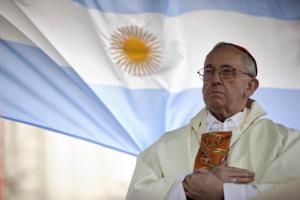
Jorge Mario Bergoglio was archbishop of Buenos Aires from 1998 to 2013 and president of the Argentine bishops’ conference from 2005 to 2011. During these years, as church officials in the US and Europe began addressing the catastrophe of child sexual abuse by clergy – and even as Popes John Paul II and Benedict made public statements – Bergoglio stayed silent about the crisis in Argentina.

He released no documents, no names of accused priests, no tallies of accused priests, no policy for handling abuse, not even an apology to victims.

In his many homilies and statements (archived on the Buenos Aires archdiocesan website), he attacked government corruption, wealth inequities, and human sex trafficking, but he said nothing about sexual violence by priests.

In On Heaven and Earth (first published in Spanish in 2010), a wide-ranging collection of conversations with Argentine rabbi Abraham Skorka, he suggested in fact that the problem did not exist in his archdiocese…..

The Pope is a Catholic – he wouldn’t tell a lie?

However, is the Pope a Christian, would he tell the truth? Continue reading Argentine Abuse Victims Who Tried to Meet with Pope Francis – with “No Joy & No Love”

Catholic bishops not obliged to report clerical child abuse, Vatican says

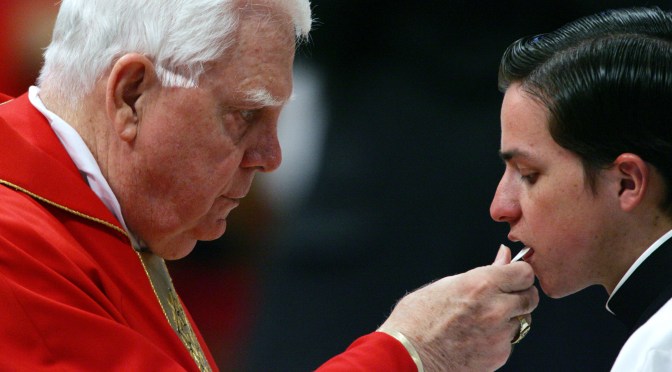
Cardinal Bernard Law, who was forced to resign over sexual abuse scandals in his Boston archdiocese, where 150 priests were accused of molesting children. Photograph: Thomas Coex/AFP/Getty

Vatican guide says ‘not necessarily’ bishop’s duty to report suspects to police despite Pope Francis’s vows to redress Catholic church’s legacy of child abuse.

by Stephanie Kirchgaessner in Rome Wednesday 10 February 2016

The Catholic church is telling newly appointed bishops that it is “not necessarily” their duty to report accusations of clerical child abuse and that only victims or their families should make the decision to report abuse to police. Continue reading Catholic bishops not obliged to report clerical child abuse, Vatican says

‘Unimaginable’ Access to Pope Francis Yields 68,000 Photos

For six months, National Geographic photographer Dave Yoder had extraordinary access to Pope Francis at the Vatican, an experience that he expects he will one day look back on as “surreal.”

Continue reading ‘Unimaginable’ Access to Pope Francis Yields 68,000 Photos

Why is Pope Francis so obsessed with the devil?

By the Rev. Thomas Rosica  July 20, 2015

Editor’s Note

“The Rev. Thomas Rosica is CEO of Canada’s Salt and Light Catholic Media Foundation and English-language media attache to the Holy See Press Office.”

(CNN)Pope Francis seems to be obsessed with the devil.His tweets and homilies about the devil, Satan, the Accuser, the Evil One, the Father of Lies, the Ancient Serpent, the Tempter, the Seducer, the Great Dragon, the Enemy and just plain “demon” are now legion.For Francis, the devil is not a myth, but a real person. Many modern people may greet the Pope’s insistence on the devil with a dismissive, cultural affectation, indifference, or at the most indulgent curiosity.

Yet Francis refers to the devil continually. He does not believe him to be a myth, but a real person, the most insidious enemy of the church. Several of my theologian colleagues have said that he has gone a bit overboard with the devil and hell! We may be tempted to ask, why in the devil is Pope Francis so involved with the prince of demons?

This intelligent Jesuit Pope is diving into deep theological waters, places where very few modern Catholic clerics wish to tread.

Francis’ seeming preoccupation with the devil is not a theological or eschatological question as much as a call to arms, an invitation to immediate action, offering very concrete steps to do combat with the devil and the reign of evil in the world today.

In his homilies, Francis warns people strongly to avoid discouragement, to seize hope, to move on with courage and not to fall prey to negativity or cynicism.

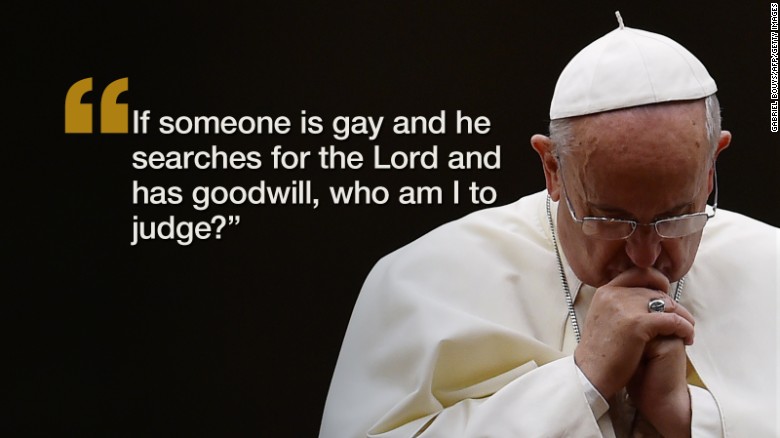
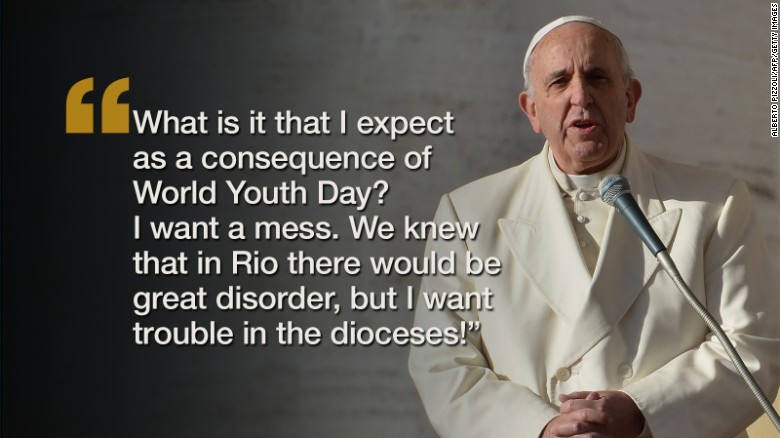
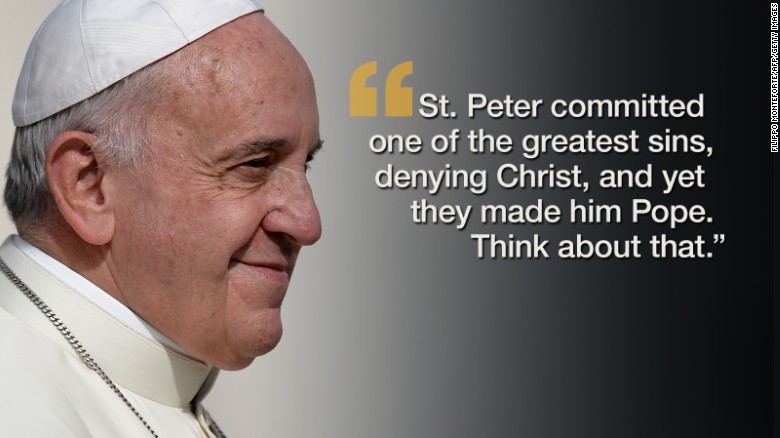
1 of 802 pope quote 02098 photos: The quotable Pope: Some of his more surprising sayings
2 of 803 pope quote 02098 photos: The quotable Pope: Some of his more surprising sayings
3 of 804 pope quote 02098 photos: The quotable Pope: Some of his more surprising sayings

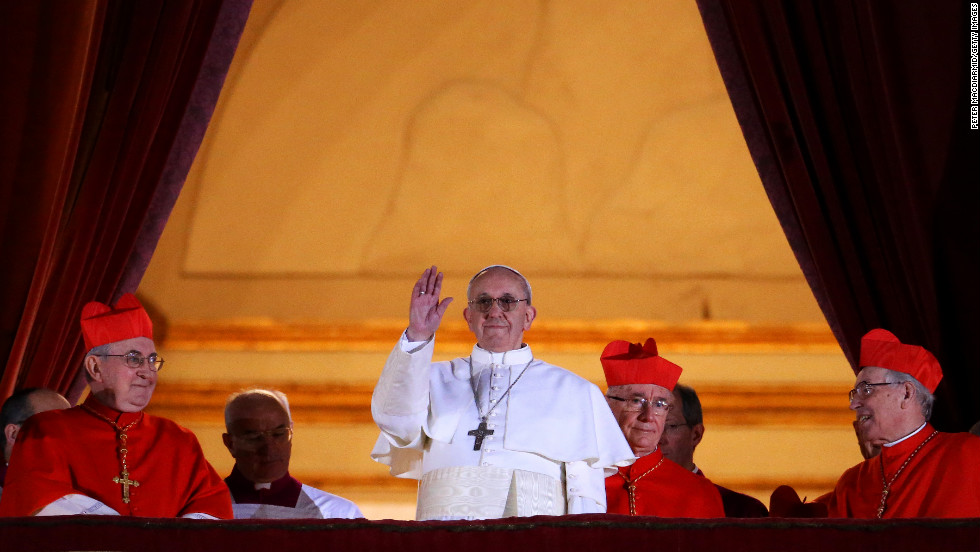
During the first months of Francis’ pontificate in 2013, the Evil One appeared frequently in his messages. In his first major address to the cardinals who elected him, the Argentine pontiff reminded them: “Let us never yield to pessimism, to that bitterness that the devil offers us every day.”

In several daily homilies in the chapel of the Vatican guest house, the Pope shared devilish stories with the small congregations rapt in attention as he homilized on taboo topics.

He has offered guidelines on how to rout the demon’s strategy: First, it is Jesus who battles the devil.

The second is that “we cannot obtain the victory of Jesus over evil and the devil by halves,” for as Christ said in the Gospel of Matthew, “who is not with me is against me, and he who does not gather with me scatters.”

The Pope has stressed that we must not be naive: “The demon is shrewd: he is never cast out forever, this will only happen on the last day.”

Francis has also issued calls to arms in his homilies: “The devil also exists in the 21st century, and we need to learn from the Gospel how to battle against him,” the Pope warned, adding that Christians should not be “naive” about the evil one’s ways. The devil is anything but a relic of the past, the pontiff said.

Acknowledging the devil’s shrewdness, Francis once preached: “The devil is intelligent, he knows more theology than all the theologians together.”

Before a crowd of people on Palm Sunday in 2013, the newly elected Pope even dared to say that when Christians face trials, Jesus is near, but so is “the enemy — the devil,” who “comes, often disguised as an angel and slyly speaks his word to us.”

Most recently, on July 12, in the prepared text he was to deliver (in typical fashion he instead gave a masterful, unscripted address to 600,000 young people at a rally in Paraguay), the Pope presented the job description of the devil:

“Friends: the devil is a con artist. He makes promises after promise, but he never delivers. He’ll never really do anything he says. He doesn’t make good on his promises. He makes you want things which he can’t give, whether you get them or not. He makes you put your hopes in things which will never make you happy.

“… He is a con artist because he tells us that we have to abandon our friends, and never to stand by anyone. Everything is based on appearances. He makes you think that your worth depends on how much you possess.”

Since the beginning of his papacy, Francis has been warning that whoever wants to follow Jesus must be aware of the reality of the devil. The life of every Christian is a constant battle against evil, just as Jesus during his life had to struggle against the devil and his many temptations.

For Francis, the spirit of evil ultimately does not want our holiness, he does not want our Christian witness, he does not want us to be disciples of Christ.

In all of these references to the devil and his many disguises, Pope Francis wishes to call everyone back to reality. The devil is so frequently active in our lives and in the church, drawing us into negativity, cynicism, despair, meanness of spirit, sadness and nostalgia.

We must react to the devil, Francis says, as did Jesus, who replied with the Word of God. With the prince of this world one cannot dialogue.

Dialogue is necessary among us, it is necessary for peace, it is an attitude that we must have among ourselves in order to hear each other, to understand each other. Dialogue is born from charity, from love.

But with the Dark Prince one cannot dialogue; one can only respond with the Word of God that defends us.

4 of 807 pope quote REDO 02098 photos: The quotable Pope: Some of his more surprising sayings
5 of 806 pope quotes 02098 photos: The quotable Pope: Some of his more surprising sayings
6 of 805 pope quote 02098 photos: The quotable Pope: Some of his more surprising sayings
7 of 810 pope quote 02098 photos: The quotable Pope: Some of his more surprising sayings
8 of 801 pope quote 02098 photos: The quotable Pope: Some of his more surprising sayings

The devil has made a comeback in this pontificate and is playing an important role in Francis’ ministry. Francis is dead serious about the devil! And he takes every opportunity he can to tell the devil to get the hell out of our lives and our world.

It’s not that Francis has been focusing on the evil one’s power, nor has he been mesmerized by the Harry Potter movies or by a desire to do sequels to the “Exorcist” movie: This Pope doesn’t watch TV!

All of the temptations Francis speaks about so often are the realistic flip side to the heart of the Argentine Jesuit Pope’s message about the world that is charged with the grandeur, mercy, presence and fidelity of God. Those powers are far greater than the devil’s antics.


Welcome, Wealthy. Francis Receives Them With Open Arms

And receives lavish donations from them. Name by name, all the magnates of finance and technocracy to whom the pope has given audience this year

by Sandro Magister

ROME, March 11, 2016 –Pope Francis is relentless against the rich gluttons who famish the poor Lazaruses, against what he calls the “economy that kills.”

And yet the richest men of the world and the moguls of high finance throng to be received by him. And he not only welcomes them with open arms, but he showers them with praise.

Christine Lagarde

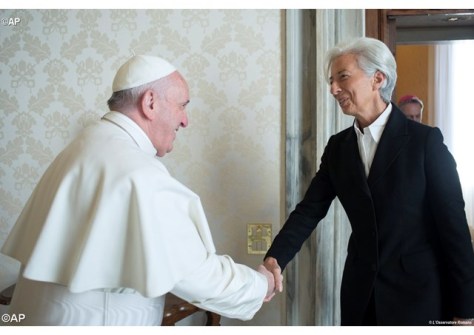
The latest to benefit from the pope’s appreciation was Christine Lagarde, received at the Vatican last January 18, who was reconfirmed in February as head of the International Monetary Fund and in early March was praised by Francis as

“an intelligent woman who maintains that money must be at the service of humanity, and not the other way around,”

in front of a group of stunned socialist French Catholics.

At the beginning of his pontificate Jorge Mario Bergoglio had surprised everyone, preaching a Church “poor and for the poor,” and at the same time calling in to advise the Vatican the most famous and expensive finance and management firms in the world, from McKinsey to Ernst & Young, from Promontory to KPMG.

But now the tune has changed. It is no longer the Vatican coffers that are paying the bills of these corporations, it is the great impresarios admitted to speak with the pope who are making him the offer of lavish donations.

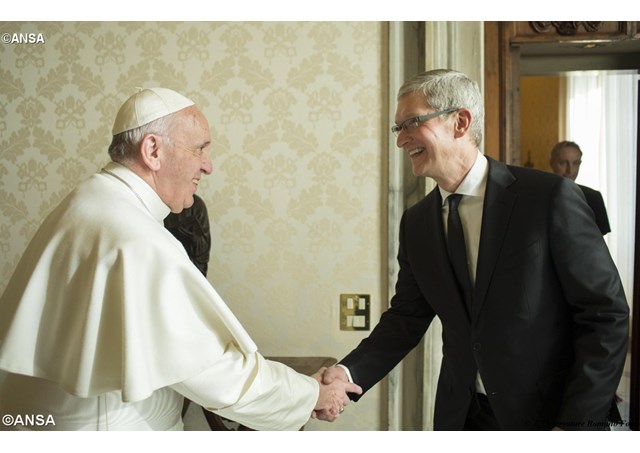
There are those who don’t talk about it and those who do. Tim Cook, CEO of Apple, made no mystery of having handed a contribution to Francis (see photo) during the audience that like others of its kind took place not in the prosaic residence of Santa Marta, but in the solemn papal library of the Apostolic Palace.

And on January 28 Leonardo Di Caprio did the same. In the video of the meeting he can be seen giving the pope an envelope with a check “for works of charity close to your heart.” More than as a film actor, Di Caprio had obtained an audience as the head of a foundation against global warming, in the name of which he had spoken a few days earlier at the World Economic Forum in Davos, where he received an award.

Pope Francis had also made his voice heard at the Forum in Davos, with a message in defense of creation and for an “integral” development of man. And to Di Caprio, as to many others, he gave a red-bound copy of his encyclical “Laudato Si’.”

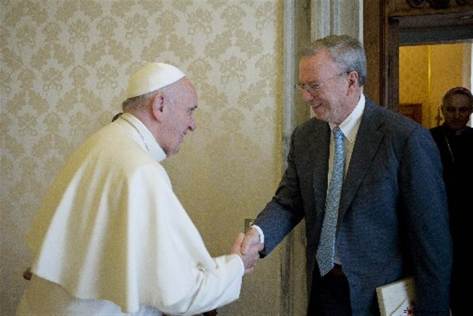
Nature and technocracy, this is the winning combination. Seven days before the audience with Tim Cook of Apple, Pope Bergoglio received the chief of Google, Eric Schmidt, accompanied by the head of Google Ideas, Jared Cohen, they too with a foundation engaged on the fronts of poverty, energy, and the environment, whose imperative is “Don’t be evil.”

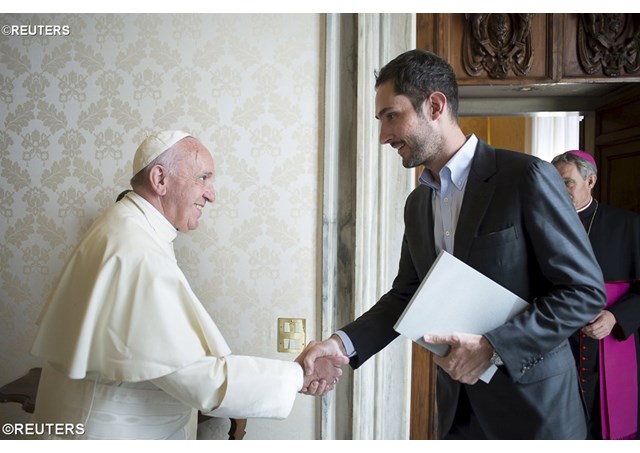
And at the end of February he received Kevin Systrom, founder and CEO of Instagram, the photo-based social network with 400 million users worldwide. Also in February, Pope Francis met with a delegation of the World Wildlife Fund for Nature, headed by global
president Yolanda Kakabadse.

But the biggest coup in this area was the film “son et lumière,” projected on the evening of December 8, the opening day of the Jubilee of Mercy, on the facade and dome of Saint Peter’s Basilica, a highly controversial film, a hymn to nature without the slightest reference to the Creator, and also very expensive but entirely offered to the pope by the World Bank, the Okeanos foundation, and Vulcan Inc. of Microsoft co-founder Paul Allen.

And Francis just narrowly missed receiving in audience Bill Gates himself, the absolute top dog of Microsoft, in addition to being the richest man in the world according to the Forbes ranking. The proposal was shot down by a pair of African cardinals, who reminded the pope that the Bill & Melinda Gates Foundation is highly active in promoting abortion in poor countries.

No objection, however, to the man in the second spot on the Forbes list, the Mexican Carlos Slim, a telecommunications magnate. The broadcasts and press centers for Francis’s journey to Mexico last February were entirely paid for by him.

_____________

This commentary was published in “L’Espresso” no. 11 of 2016 on newsstands as of March 11, on the opinion page entitled “Settimo cielo” entrusted to Sandro Magister.

Source: Chiesa


Google’s Eric Schmidt Meets With Pope Francis at the Vatican

by James Eng

Eric Schmidt, executive chairman of Google parent company Alphabet, had an unusual meeting on his calendar on Friday — a private sit-down with Pope Francis at the Vatican.Neither Google nor the Vatican would comment on what the two discussed during the meeting, said to have lasted 15 minutes.

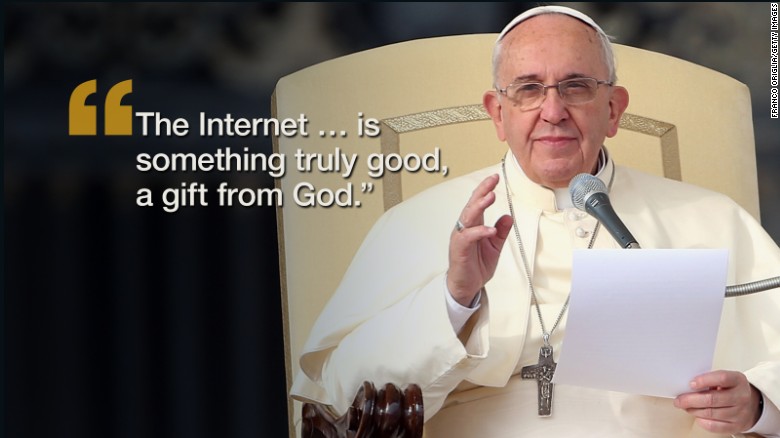
Related: Pope Francis Explains why the Internet is a ‘Gift from God’

A video report from the TV news agency Rome Reports showed the pontiff shaking hands with Schmidt and Jared Cohen, director of Google Ideas. Schmidt said to Francis, “I want to work with you to make these points. … We will make it happen.” The pope responded, “Pray for me. Don’t forget.” It’s not known what the two were referring to.

Although Francis has admitted he doesn’t know how to work a computer and has called the Internet a “gift from God,” he is no stranger to Google products. The 79-year-old pontiff has hosted two Google Hangouts from the Vatican, including one in which he confessed he’s a “dinosaur” when it comes to technology.

Pope Francis is also a social media star, racking up more than 8.4 million followers on Twitter.

Source: NBC News

Pope Francis meets with CEO of Instagram, Kevin Systrom

Pope Francis meets with , Kevin Systrom, the CEO and co-founder of Instagram, the photo-sharing social network – REUTERS

27/02/2016 15:04

(Vatican Radio) Pope Francis on Friday met with the CEO and co-founder of Instagram, Kevin Systrom. The photo-sharing social network was founded in 2010, and bought by Facebook in 2012. Over 300 million people use the service each month. Continue reading Pope Francis meets with CEO of Instagram, Kevin Systrom

Pope Francis meets with IMF’s Christine Lagarde

ap3260812_articolo

18/01/2016 14:19

(Vatican Radio) Pope Francis on Monday met in the Vatican with Christine Lagarde, the Managing Director of the International Monetary Fund.

The two also met in the Vatican on 10 December 2014.

The International Monetary Fund (IMF) is composed of 188 countries, was established in 1944 to help manage countries’ balance of payments. According to its website, it is

“working to foster global monetary cooperation, secure financial stability, facilitate international trade, promote high employment and sustainable economic growth, and reduce poverty around the world.”

Source: Vatican Radio

Pope Francis receives Apple CEO

Pope Francis shakes hands with Apple’s Tim Cook during a private audience in the Vatican on Friday , 22 January, 2016 – ANSA

22/01/2016 17:33

Pope Francis met with the CEO of Apple Inc., Tim Cook, on Friday. The private audience took place in the Apostolic Palace in the Vatican.

Source: Vatican Radio


Was this a religious meeting or was this the meeting of two CEOs?

Did the Pope explore with Tim Cook the need to move away from exploiting human beings with exposure to pornography and encourage him to take steps to manage this situation in line with Christian values?

The use of technology promoting, or indeed, encouraging human beings to sin is explicitly and directly opposed to the will of Almighty God.  Surely, the Pope, as an alleged moral and religious figure in the world, should be making the chasm between the promoters of “sin” wider, rather than narrower.

What is the Moral proclamation that the Pope gives to business leaders?

Does the Pope offer any Christian morality to business leaders? Is he displaying the moral characteristics representative and expected from supposed “Mosaic” leadership within the catholic church?

The answer to that is simply and sadly, no.

There should be condemnation of the business pursuits of companies like Apple and the likes and what they stand for -by the Pope and other religious leaders- but there is none.  There seems to be a lack of moral leadership in the catholic church.

There is no “Mosaic” proclamation – ‘Are you for God?’

So does this all come down to what the Pope might consider “prudence”.

It is what it is, and “this is the avenue,” on the back of which the teachings of the church will be promoted. Why? Because the Pope, the church and it’s ministers promote an indifferent message towards it’s[catholic church] buddy system established with the likes of Apple’s CEO.

Well if that is the case then the scarlet and red is using “sin” to create business – which is deplorable and must be abhorred.

Pope Francis calls Neocatechumenal Way to unity – Nonsense

2016-03-18 Vatican Radio

ANSA974340_LancioGrande(Vatican Radio)Pope Francis spoke to members of the Neocatacumenal Way on Friday in the Vatican’s Paul VI audience hall.

In his address, the Holy Father focused on three words: unity, glory, and world.

Below is a Vatican Radio English translation of the Holy Father’s prepared remarks:

Dear brothers and sisters, good morning!I’m glad to meet you and thank you for coming in such great numbers. I send a special greeting to those who are about to set off! You have accepted the call to evangelize: I bless the Lord for this, for the gift of the Way and for the gift of each of you. I would like to highlight three words that the Gospel has just handed you, as a mandate for the mission: unity, glory and world.

Unity.

Jesus prays to the Father so that his (followers) be ” brought to perfection as one” (Jn 17:23): he wants them to be “one” (v. 22), like Himself and the Father. It is his last request before the passion, the most heartfelt: that there be communion in the Church. Communion is essential. God’s and man’s enemy, the devil, is no match for the Gospel, cannot compete against the humble power of prayer and the Sacraments, but can do much harm to the Church by tempting our humanity. The devil provokes pride, being judgmental of others, he causes closures and divisions. He himself is “the divider” and often starts off by making us believe that we are good, perhaps better than others: thus the land is ready for the sowing of discord. It is the temptation of all communities and it can insinuate itself even in the most beautiful charism.

You have received a great charism for the baptismal renewal of life. Every charism is a grace of God to intensify communion. But this charism can deteriorate if you close in or if you boast about it, when you want to distinguish yourselves from the others. So we have to safeguard it. How? Following the main path: of humble and obedient unity. If there is this, the Holy Spirit continues to operate, just as it did in Mary, who was open, humble and obedient. It is always necessary to keep an eye on the charism, cleaning out the eventual human excesses through the search for unity with all and obedience to the Church. This is how to breathe in the Church and with the Church; this is how to stay docile children of the “Holy Mother Hierarchical Church” with a “soul which is prepared and ready” for the mission (cf. St. Ignatius of Loyola, Spiritual Exercises, 353).

I stress this point: the Church is our Mother. Just as children carry, imprinted in their faces, a similarity to their mother, we all look like our Mother, the Church. After Baptism we no longer live as isolated individuals, but we have become men and women of communion, and we are called to be operators of communion in the world. Because Jesus not only founded the Church for us, but he founded us as Church. From her we are born again, she feeds us the Bread of life, from her we receive words of life, and we are forgiven and accompanied home. This is the fruitfulness of the Church, who is Mother: not an organization that seeks followers, or a group that goes ahead following the logic of its ideas, but a mother who transmits the life received from Jesus.

This fruitfulness is expressed through the ministry and the guidance of Pastors. The institution is in fact a charisma, because rooted in the same source, which is the Holy Spirit. He is the living water, but the water can continue to give birth only if the plant is well maintained and pruned. Quench your thirst from the fountain, the Spirit, and take care, with delicacy and respect, of the whole ecclesial body, especially the most fragile parts, because all grow together, harmonious and fruitful.

The second word is: glory.

Before his Passion, Jesus foretells that He will be “glorified” on the cross: there his glory will appear (cf. Jn 17, 5). But it is a new glory: worldly glory manifests itself when one is important, admired, when one has assets and success. But God’s glory is revealed on the cross: it is love shines out and is spread. It is a paradoxical glory with clamour, no gain and no applause. This is the only glory that makes the Gospel fruitful. The Mother Church too is fruitful when it imitates the merciful love of God, that offers itself, it never imposes itself. It is humble, it’s like the rain on the earth, like the air we breathe, like a small seed that bears fruit in silence. Whoever proclaims that love can do so only with the same loving approach.

And the third word is world.

“God so loved the world” that He sent Jesus (cf. Jn 3:16). He who loves does not stay away, but comes towards. God is not attracted by worldliness, in fact, He detests it; but He loves the world he has created, and He loves His children in the world, just as they are, wherever they live, even if they are “far away.” Show the children the tender gaze of the Father and considered the realities you will encounter as a gift; become familiar with the cultures and the languages ​​and respect local customs, recognizing the seeds of grace which the Spirit has already spread. Without yielding to the temptation to transplant acquired models, spread the news:  “what is most beautiful, most grand, most appealing and at the same time most necessary” (Apost. Exhort. Evangelii Gaudium, 35). It is the good news that must always be in the forefront, otherwise faith risks becoming a cold and lifeless doctrine.  To evangelize as families, experiencing unity and simplicity, is already a proclamation of life, a beautiful witness, for which I thank you so much. I accompany you and encourage you, and I ask you, please, do not forget to pray for me.

Source: Vatican Radio


#WalkWithJesus

Let me first say with regard to Pope Francis, who am I to judge. God has his place ready -for sure.

When he misleads, misguides and misinterprets Holy Scripture with intent to undermine Jesus; when he uses language so abhorrent to put Jesus underfoot; when he clearly uses doublespeak-with outrageous comments- to continue his agenda, then I as a believer in Jesus Christ, true God and true man, will refute the words of his mouth – not for any self gain, but for the greater glory of God and the protection and saving of souls here on earth.

The article above is headed with the typical papal propaganda of the 21st century. This is not the way of a man who follows Jesus. This is the way of a regime who is trying to sell a message – which is the antithesis of Jesus – but is cleverly wrapped up in statements using doublespeak and propaganda. Why can’t everyone see it?

This is the secret of propaganda: The saturation of a group of people-with propagandist ideas without their noticing it. Of course it has a goal, but the goal must be so clever-and so brilliantly concealed- that the people who it influences don’t notice anything. – Goebbels(Hitler’s Henchman)

Pope Francis’ statement, typically, envelopes subtle – “brilliantly concealed” goals:

  • Following the main path: of humble and obedient unity – blind acceptance, but not to God – to man
  • keep an eye on the charism – monitor those around you, self-policing
  • cleaning out the eventual human excesses through the search for unity with all – root out the non-conformists
  • this is how to stay docile children – be easily managed or handled; readily trained or taught; teachable.
  • of the “Holy Mother Hierarchical Church” – “rule of a high priest”, from ἱεράρχης, know your place and do what you’re told. Accept it -don’t question, it’s the church
  • a “soul which is prepared and ready” for the mission – be ready to do what you’re told to do what ever the mission is that is imposed upon you
  • we are called to be operators of communion in the world – operators are generally managed and maintained
  • she feeds us the Bread of life – infers sustenance is only possible through the church
  • This is the fruitfulness of the Church, who is Mother: not an organization that seeks followers – yet Jesus told His apostles to go proclaim the good news
  • This is the fruitfulness of the Church, who is Mother: not a group that goes ahead following the logic of its ideas –  so what about the doctrine of the church?; theology?; what about the Word of God given in the Bible?
  • This is the fruitfulness of the Church, who is Mother: a mother who transmits the life received from Jesus. – this is the attempt at empowering an organization to become bigger than it’s founder and then remove the need for the founder. This sentence in this prepared statement is wholly ridiculous! And is not unlike many other sentences, here, and in many other statements.

These points above raise concerns about how Francis describes “what the  church is”, referencing Jesus, God and motherhood. But in essence the crux of the message, like any other propaganda, Jesus and God are used as the vehicle of concealment of the subtlety to be submissive; monitor and police those around you; give up the non-conformists; accept; don’t question; do your mission because you are the operator. The plan will be transmitted from the hierarchy. This was not the instructions that Jesus gave to the apostles. And His version of “church” would be no different from then til now.

It’s Interesting to note that Jesus doesn’t pray for the world. Jesus states clearly in His prayer to His, and the only Holy, Father:

“I am asking on their behalf. I am not asking on behalf of the world, but on behalf of those you gave me, because they are yours. All that is mine is yours, and what is yours is mine, and I have been glorified through them. I am no longer in the world, but they are in the world, and I am coming to you. Holy Father, protect them by your name, the name that you gave me, so that they may be one, as we are one. While I was with them, I protected them by the authority that you gave me. I guarded them, and not one of them became lost except the one who was destined for destruction, so that the Scripture might be fulfilled.
(Joh 17:9-12)

Jesus tells us that we are called to love.

God gives us the commandments

Jesus tells us that what eternal life is in His prayer

Jesus loves us, calls us to Him, asks us to repent and sin no more.

Jesus was Almighty God’s spokesman.

Therefore, this is what the LORD says: “If you repent, I’ll take you back and you will stand before me. If you speak what is worthwhile, instead of what is worthless, then you will be my spokesman. People will turn to you, but you aren’t to turn to them. I’ll make you a fortified wall of bronze to this people. They’ll fight against you, but they won’t prevail against you, for I am with you to save you and deliver you,” So I’ll deliver you from the hand of the wicked, and redeem you from the grasp of the ruthless.”
(Jer 15:19-21)

Sadly Pope Francis is not a spokesman of God, he speaks of what is worthless and he turns to the people. The prepared statement above is not Neocatechumenal, it is anti-Catholic and anti-Christian.

#WalkWithJesus and always stay close to Jesus in your personal prayer. Your personal relationship with Jesus will safeguard your soul from the evil one.

Pope: Jesus annihilates himself, defeats the evil serpent

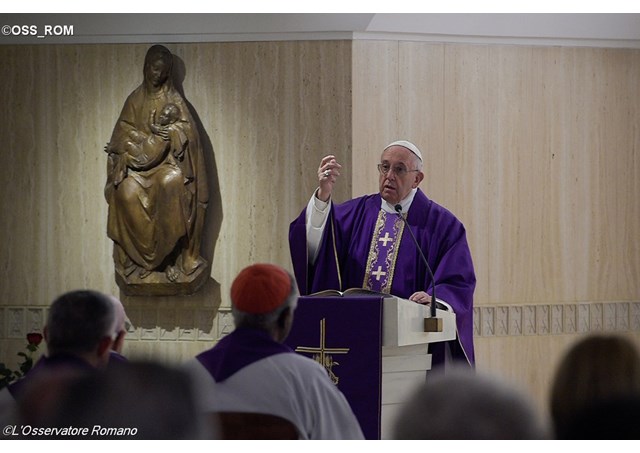
Pope Francis celebrating Mass – OSS_ROM

15/03/2016 13:01

Pope Francis said the story of God’s love for us can be found on the Cross where Jesus emptied himself of his divinity and dirtied himself with sin in order to save humanity. He said that the biblical story of salvation features the serpent, an animal he describes as both a powerful symbol of damnation and mysteriously of redemption as well. The Pope was speaking at his morning Mass on Tuesday at the Santa Marta Residence.

The mystery of the serpent

Using the day’s readings from the Book of Numbers and the gospel of St. John, Pope Francis’s homily reflected on the link between the meaning of Jesus’ annihilation of himself on the Cross and the story of how the people of Israel implored Moses to pray to God to take away the serpents that had been sent among them as punishment by the Lord.

Pope Francis pointed out that the symbol of the serpent features twice in this story from the Book of Numbers.“The Lord said to Moses: ‘make a bronze serpent and mount it on a pole and whoever looks at it after being bitten will live.’ It’s a mystery: God doesn’t kill the serpents but leaves them alone. But if one of these (serpents) harms a person, look at that bronze serpent and he will be healed.  Lift up the serpent.”

The Pope noted that this verb, ‘lift up’ is at the heart of the argument between Christ and the Pharisees described in the reading by the gospel of St. John. At a certain point, Jesus says: ‘When you lift up the Son of Man, then you will realise that I AM.” First of all, he explained, ‘I AM’ is also the name that God used to describe himself and gave to Moses for communicating with the people of Israel.  And, then there is that recurring expression: ‘Lift up the Son of Man…”

God’s annihilation

“The serpent is a symbol of sin. The serpent that kills but also a serpent that saves. And this is the Mystery of Christ.  Paul, when speaking about this mystery, said the Jesus emptied himself, humiliated himself and destroyed himself in order to save us.  And (what’s) even stronger, ‘he became sin.  Using this symbol, he became a serpent. This is the prophetic message of today’s reading. The Son of Man, who like a serpent, ‘became sin,’ is raised up to save us.”

Pope Francis went on to explain that this is “the story of our redemption, this is the story of God’s love. If we want to know God’s love, let us look at the Cross, a man tortured” a God, “emptied of his divinity,” “dirtied by sin.” But at the same time, he concluded, a God who through his self-annihilation, defeats forever the true name of evil, that Revelation calls ‘the ancient serpent.’

“Sin is the work of Satan and Jesus defeats Satan by “becoming sin” and from there he lifts up all of us. The Cross is not an ornament or a work of art with many precious stones as we see around us. The Cross is the Mystery of God’s annihilation for love.  And the serpent that makes a prophecy in the desert is salvation, it is raised up and whoever looks at it is healed.  And this is not done with a magic wand by a God who does these things: No! This is done through the suffering of the Son of Man, through the suffering of Jesus Christ.”

Listen to this report by Susy Hodges that includes clips of the Pope’s voice: 

Source: Vatican Radio


These are the words of a man who neither follows, loves nor even likes Jesus. This is an angel of satan.

Jesus was sinless.

Jesus conquered death.

Jesus didn’t become sin. Jesus didn’t become a serpent.

This man, francis, spouts lies, deliberately speaks in doublespeak and confuses Catholics. Please discern for yourself. But if you still don’t believe me – here are the words from the devil’s own mouth…


31,487 Scientists say NO to Climate Change Alarmists

The Global Warming Petition project;
Started by Dr Art Robinson in response to the false alarm over CO2;
http://www.petitionproject.org/seitz_…
and Continue reading 31,487 Scientists say NO to Climate Change Alarmists

Evolving Concepts of Nature

Pope Francis

Plenary Session on Evolving Concepts of Nature
24-28 October 2014
Casina Pio IV, Vatican City

Your Eminences,Dear Brothers in the Episcopate and in the Priesthood, Distinguished Ladies and Gentlemen!

A joyful emotion arose in my soul as the bust, which the Academics wished to have in the headquarters of the Pontifical Academy of Sciences as a sign of acknowledgment and gratitude, was unveiled. This bust of Benedict XVI brings dear Pope Ratzinger’s person and face back to the eyes of all. It also evokes his spirit: that of his teaching, of his example, of his opus, of his devotion to the Church, of his current “monastic” life. This spirit, far from crumbling over time, will appear from generation to generation ever greater and more powerful. Benedict XVI: a great Pope. Great in strength and intellectual insight, great in his significant contribution to theology, great in his love for the Church and for human beings, great in his virtue and his religiosity. As you well know, his love for the truth is not limited to theology and philosophy, but extends to science. His love for science spills over into regard for scientists, without distinction among race, nationality, culture or religion; care for the Academy, from the time St John Paul II appointed him a member. He knew how to honour the Academy with his presence and his words, and he appointed many of its members, including the current President, Werner Arber. Benedict XVI, for the first time, invited a president of this Academy, to participate in the Synod on the New Evangelization, cognizant of the importance of science in modern culture. It could certainly never be said of him that study and science withered his person and his love for God and neighbour; on the contrary, science, wisdom and prayer only expanded his heart and his spirit. Let us give thanks to God for the gift He gave to the Church and the world with the life and Pontificate of Pope Benedict. I thank everyone who so generously made this work of art and this event possible, especially the author of the bust, the sculptor Fernando Delia, your family, and all the Academics. I would like to thank all of you who are present here to honour this great Pope.

At the conclusion of your Plenary Session, dear Academics, I am glad to express my profound appreciation and my warm encouragement to move forward with scientific progress and the betterment of the standard of living of people, especially of those in the greatest poverty.

You are addressing the highly complex subject of the evolution of the concept of nature. I will not go into the scientific complexity, which you well understand, of this important and crucial question. I only want to underline that God and Christ are walking with us and are also present in nature, as the Apostle Paul stated in his discourse at the Areopagus: “In him we live and move and have our being” (Acts 17:28).

When we read the account of Creation in Genesis we risk imagining that God was a magician, complete with an all powerful magic wand.

But that was not so.

He created beings and he let them develop according to the internal laws with which He endowed each one, that they might develop, and reach their fullness.

He gave autonomy to the beings of the universe at the same time in which He assured them of his continual presence, giving life to every reality.

And thus Creation has been progressing for centuries and centuries, millennia and millennia, until becoming as we know it today, precisely because God is not a demiurge or a magician, but the Creator who gives life to all beings. The beginning of the world was not a work of chaos that owes its origin to another, but derives directly from a supreme Principle who creates out of love.

The Big Bang theory, which is proposed today as the origin of the world, does not contradict the intervention of a divine creator but depends on it. Evolution in nature does not conflict with the notion of Creation, because evolution presupposes the creation of beings who evolve.

As for man, however, there is a change and a novelty. When, on the sixth day in the account of Genesis, comes the moment of the creation of man, God gives the human being another autonomy, an autonomy different from that of nature, which is freedom. And he tells man to give a name to all things and to go forth through history.

He makes him the steward of Creation, even that he rule over Creation, that he develop it until the end of time.

Therefore the scientist, and especially

the approach of the Christian scientist is that of investigating the future of humanity and the earth, and, as a free and responsible being, to contribute to preparing it, to preserve it, and to eliminate any risks to the environment, both natural and manmade.

But, at the same time,

the scientist must be moved by the conviction that nature, in its evolutionary mechanisms, hides its potential which it leaves for intelligence and freedom to discover and actualize, in order to reach the development that is in the Creator’s design.

So then, no matter how limited,

the action of man partakes in the power of God and is capable of building a world adapted to his two-fold physical and spiritual life; to build a humane world for all human beings and not only for one group or one privileged class.

This hope and trust in God, the Creator of Nature, and in the capacity of the human spirit, are able to give the researcher a new impetus and profound peace. But it is also true that

the action of man, when his freedom becomes autonomy — which is not freedom, but autonomy — destroys Creation and man takes the place of the Creator.

And this is a grave sin against God the Creator.

I encourage you to continue your work and to carry out these happy theoretical and practical initiatives for the benefit of human beings, which do you honour.

It is with joy that I now consign the insignia, which Bishop Sánchez Sorondo will present to the new members. Thank you.

Source: Pontifical Academy of Sciences

Address to the Plenary Session on ‘The Origins and Early Evolution of Life’

22 October 1996

John Paul II refers to Pius XI’s hope that the Academy would become a Senatus scientificus. In relation to the origins of life and the universe the Pope asks: ‘How do the conclusions reached by the various scientific disciplines coincide with those contained in the message of Revelation? And if, at first sight, there are apparent contradictions, in what direction do we look for their solution?’ Continue reading Address to the Plenary Session on ‘The Origins and Early Evolution of Life’

Jorge Mario Bergoglio: The “Dirty War” Pope

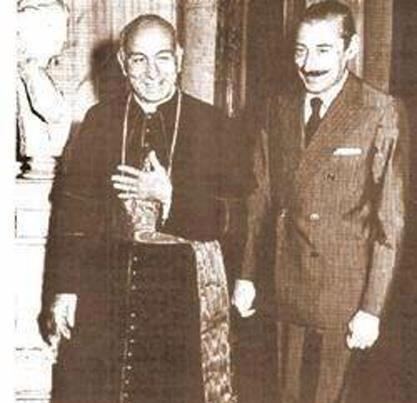
Image: Bergoglio with Military Dictator General Jorge Videla

By Bill Van Auken, March 16, 2013

For over a week, the media has subjected the public to a tidal wave of euphoric banality on the Roman Catholic Church’s selection of a new pope.

This non-stop celebration of the dogma and ritual of an institution that for centuries has been identified with oppression and backwardness is stamped with a deeply undemocratic character. It is reflective of the rightward turn of the entire political establishment and its repudiation of the principles enshrined in the US Constitution, including the wall of separation between church and state.

What a far cry from the political ideals that animated those who drafted that document. Continue reading Jorge Mario Bergoglio: The “Dirty War” Pope

Is Pope Francis a Relic of ‘Medieval Times and the Inquisition’?

March 14, 2013 by Samuel Warde

Argentine President Cristina Fernández de Kirchner recently referred to Bergoglio as a relic of “medieval times and the Inquisition.”  At the time, El Presidente was referring to the new Pope’s position on same sex marriage while serving as Archbishop of Buenos Aires back in 2010.  But was that all she meant?

To understand, we need to go back to the time of the Dirty War in Argentina.

Argentina’s Dirty Wars Continue reading Is Pope Francis a Relic of ‘Medieval Times and the Inquisition’?

“Washington’s Pope”? Who is Pope Francis?

Cardinal Jorge Mario Bergoglio and Argentina’s “Dirty War”

By Prof Michel Chossudovsky, September 25, 2015

In the course of the last two years, Pope Francis has been portrayed in chorus by the Western media as an antiwar activist and a left leaning champion of “Liberation Theology” committed to World peace and global poverty alleviation. His September 24 speech to the US Congress was described as “stunning in the breadth, depth, and conviction of its progressivism.” “If President Barack Obama had delivered the text of Pope Francis’s speech to Congress Thursday [September 24, 2015] as a State of the Union address, he would have risked being denounced by Republicans as a socialist.” Continue reading “Washington’s Pope”? Who is Pope Francis?

New pope tied up in Argentina’s ‘dirty war’ debate

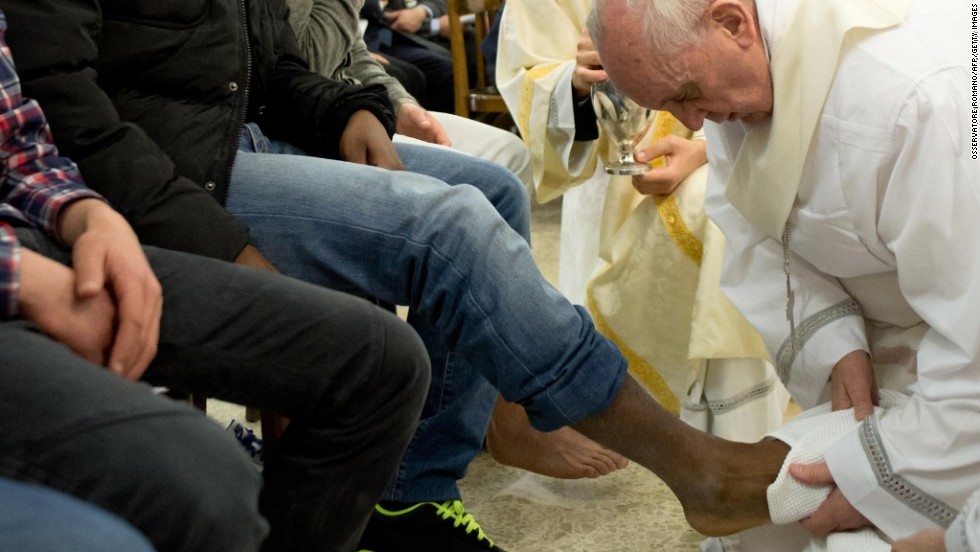
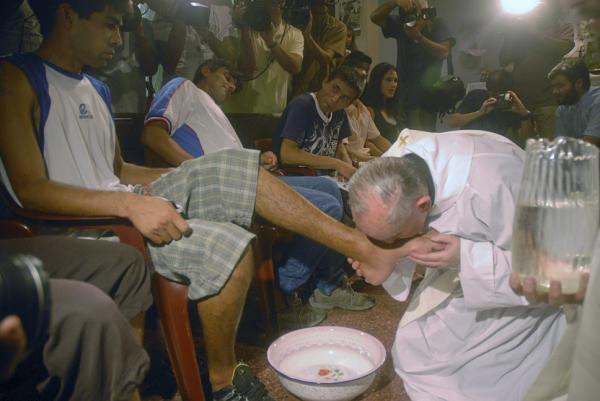
In this picture taken March 20, 2008 Argentina’s cardinal Jorge Bergoglio, right, kisses the feet of a man during a mass with youth trying to overcome drug addictions in Buenos Aires, Argentina. Bergoglio, who chose the name of Pope Francis, is the 266th pontiff of the Roman Catholic Church. The famous words uttered to announce that a leader of the Catholic Church has been chosen now have special resonance for Latin America, which had felt neglected by the Vatican and has finally produced the New World’s first pope.(AP Photo/Str )

By MICHAEL WARREN March 14, 2013 5:47 PM

BUENOS AIRES, Argentina (AP) — It’s beyond dispute that Jorge Mario Bergoglio, like most other Argentines, failed to openly confront the 1976-1983 military junta as it kidnapped and killed thousands of people in a “dirty war” to eliminate leftist opponents.But human rights activists differ on how much responsibility Pope Francis personally deserves for the Argentine church’s dark history of supporting the murderous dictatorship. Continue reading New pope tied up in Argentina’s ‘dirty war’ debate

Dirty War: La tortura en Chile

El testimonio de Nieves Ayress Moreno se levanta con la fuerza de la Verdad frente a los cobardes que niegan la tortura en Chile.

Testimonio del horror: Nieves Ayress (*), exprisionera de la Dictadura en Chile

Nueva York — El relato parece extraído de las historias de horror de Edgar Allan Poe, E.T. Hoffman, Guy de Maupassant o Bram Stoker.O más, de las transcripciones de los interrogatorios brutales en los campos nazis deconcentración de Dachau o Treblinka. Pero no lo es.

Tampoco es ficción de un literato dedicado a provocar estremecimientos de terror e insomnio en sus lectores. Es, simplemente, una página arran cada de la tragedia vivida en las ergástulas de las dictaduras militares de los años 70, instauradas, alegadamente, para defender la libertad y la democracia, amenazadas por la insurgencia de pueblos anhelantes de justicia social. La página siniestra vivida hace tres décadas por Luz de las Nieves Ayress Moreno, chilena, una activista comunitaria que reside desde hace 12 años en Nueva York, toma actualidad cuando una Comisión de la Verdad en Chile, acaba de entregar al presidente Ricardo Lagos un informe sobre la tortura ejercida por el régimen militar que encabezó por 17 años el general Augusto Pinochet Ugarte, quien, en una entrevista para una cadena de televisión hispana, en 2003, su autocalificó como “un ángel bueno”.

Lagos declaró sentirse “asqueado” de la lectura y el general Manuel Contreras, jefe la DINA, la policía política de Pinochet, dijo a los medios de prensa que “en la Dirección de Inteligencia Nacional no hubo ninguna política de tortura ni tampoco de detener gente para asesinarla, ni cosas por el estilo”.

Las reaccion es a esta declaración fueron desde la calificación de “cín i cas y perversas” hasta la de la ex ministra de Defensa, Michelle Bachelet, sobreviviente de las torturas en Villa Grimaldi, quien acusó a Contreras de ser “un cara de palo”.

Nieves Ayress tenía 23 años y era, según su relato, una joven estudiante que había sido influida, como casi todos los jóvenes de su generación, por la Revolución Cubana, el movimiento hippie, las reformas sociales, la guerra de Vietnam y los movimientos juveniles contestatarios de Francia que encabezaba Daniel Cohn Benditt o “Danny, el rojo”=. Lo que queríamos era un mundo más humano y igualitario, por eso me afilié al Ejército Nacional de Liberación en Bolivia en 1968 y trabajé con mujeres y niños en varias poblaciones pequeñas. Yo no maté a nadie, no robé, no cometí ningún delito. Mi pecado era ser joven, y apenas derrocado Allende los militares y los extremistas de derecha sospechaban de todo aquel que fuera joven” dice Nieves alinicio de su charla.

Su testimonio discurre fluido, haciendo difícil para su interlocutor conservar el pulso y la presión arterial normal al escuchar el lúgubre relato.

“El día del golpe yo estaba en casa. Sabíamos que la insurrección militar venía porque en mi familia se hacía política. Mis abuelos fueron los que junto a Recabarren fundaron los movimientos revolucionarios en Chile; mis padres, Virginia Moreno y Carlos Ayress, fundaron junto a Salvador Allende el Partido Socialista”.

“Mis cinco hermanos y yo pertenecimos siempre a movimientos sociales. El día 11 de septiembre de 1973 nos fuimos al barrio pobre de La Legua donde se produjeron enfrentamientos con los militares. Una semana después fui detenida por primera vez y llevada al Estadio Nacional. Estuve detenida por dos semanas y empecé a ser torturada. Permanecí enclaustrada en una torre, sola, y desde allí veía los golpes y las torturas a otros presos. Me pusieron en libertad sin darme ninguna explicación pero en enero de 1974 caí por segunda vez a órdenes de la DINA que dirigía el general Manuel Contreras.

Cuando me detuvieron yo estaba en la fábrica de mi padre. Me esposaron y me llevaron a la casa de nuestra familia en San Miguel y detuvieron también a mi padre, Carlos Ayress, y a mi hermano Tato. De allí me condujeron a un centro de torturas en el número 38 de la calle Londres, donde permanecí dos semanas sola e incomunicada y fui tratada salvajemente. Las torturas incluían golpes, choques eléctricos a las partes más sensibles del cuerpo como ojos, senos, ano, vagina, nariz, oídos y dedos. Un método muy común era el que ellos llamaban ‘pau de arara’, introducido por torturadores br
asileños que experimentaron con nosotros. Este consistía en amarrarnos de pies y manos y colgarnos cabeza abajo. En esa posición nos aplicaban choques eléctricos en el ano. Otra forma era ‘el teléfono’. Nos golpeaban con fuerza y simultáneamente los oídos. Desnuda y encapuchada fui torturada en presencia de mi padre y hermano e intentaron que tuviera relación sexual con ellos. También me obligaban a presenciar como torturaban a mi padre y de otros amigos que se encontraban presos. En los baños de la prisión de la calle Londres fui repetidamente violada”.

“Aunque no supe quienes eran mis torturadores en ese sitio, por sus voces pude entender que eran argentinos y paraguayos quienes me convencieron que estaba en Buenos Aires. En una sesión de torturas sufrí un colapso cardíaco. Los verdugos se asustaron y pidieron unas medicinas a un sitio de la calle Arturo Pratt. Fue así como supe que estaba en Santiago”. “Calculo que fue en febrero de 1974 cuando me llevaron a otra prisión en Tejas Verdes donde estuve incomunicada. Este era otro sitio de entrenamiento de torturadores y los recuerdos que tengo son de absoluta brutalidad. Me forzaron a realizar actos sexuales con un perro que había sido especialmente preparado para este tipo de abuso. También colocaban ratas dentro de mi vagina y luego me daban choques eléctricos. Las ratas, desesperadas, hundían sus garras en mi interior. Se orinaban y defecaban en mi cuerpo. Después me inocularon el virus de la toxoplasmósis. Fui violada constantemente y forzada a tener sexo oral con mis captores. Me cortaron las capas superficiales del vientre con un cuchillo y las orejas. Luego me ponían alcohol en las heridas y me aplicaban corriente eléctrica. Toda vía pueden verse las cicatrices en mi cuerpo. Me introdujeron botellas de Coca Cola por el ano y me gritaban ‘Esto es para que sientas el Imperio’”.

“El general Manuel Contreras ha declarado hace pocos días que en la DINA nunca se torturó a nadie. Yo puedo decir que en una ocasión fui torturada por el propio Manuel Contreras y una mujer alemana que estaba presa, de quien decían que nos parecíamos y debíamos ser hermanas. A Contreras lo pude ver porque la venda que cubría mis ojos estaba floja. Después lo reconocí en fotografías”. “Un ex agente. Samuel Fuenzalida Devia, declaró a un diario digital chileno que el general Manuel Contreras, quien acaba de ser condenado en su país a 12 años de prisión, supervisaba las torturas en Londres 38”.

“A las mujeres se les aplicaba corriente en los genitales y en los senos. También eran quemadas con cigarrillos”, dijo Fuenzalida y agregó que Contreras le dijo en una ocasión que “debía estar orgulloso de pertenecer a la DINA”.

“En abril de 1974, cuando había sido llevada a la Cárcel de Mujeres de la calle Vicuña Mackenna, que estaba administrada por una orden de monjas, caí en cuenta que estaba embarazada. Un doctor de apellido Mery, militar que ejercía en la Universidad Católica, me confirmó el embarazo y me dijo que yo debía estar orgullosa de tener ‘un hijo de la patria’, es decir un producto de violaciones de los militares. Mi situación causó una gran controversia internacional pues mi madre y toda mi familia había denunciado mi prisión y torturas. Fui entrevistada por la Cruz Roja Internacional, Amnistía Internacional, Comisión Kennedy, Comisión de Derechos Humanos de la OEA, el cardenal Silva Enríquez y esposas de los militares. Me ofrecieron la libertad si no denunciaba las violaciones y el embarazo. Las monjas ofrecieron ayudarme para pedir un permiso que me permitiera abortar. Tenía que elevar una solicitud al cardenal y éste elevarla al Papa. En Chile el aborto era penado por la ley y yo estaba en muy mala condición física, muy débil, así que decidí tener el hijo. Después de haber sobrevivido a tanto tiempo de detención y crueles maltratos, no iba a dar a los militares el gusto de morirme. Sin embargo en mayo tuve un aborto espontáneo pero no recibí atención médica ni medicinas”.

“De Vicuña Mackenna me llevaron a Tres Álamos, otro campo de concentración. Fui sometida nuevamente a violaciones, amenazas y hasta un simulacro de fusilamiento. En diciembre de 1976 salí expulsada de Chile junto a 17 presos políticos entre los que estaban mis compañeros Víctor Toro, Gladys Díaz, el doctor Luís Corbalán. El decreto de expulsión señalaba que no podíamos volver jamás a nuestra patria. Con la solidaridad de mucha gente conseguí quedarme a vivir en Berlín”.

“A fines de 1977 fui a Cuba. En el hospital Calixto García, sin tener que pagar un centavo, me trataron de la toxoplasmosis, me reconstruyeron la vagina y todo mi cuerpo para que pudiera engendrar, me trataron las infecciones vaginales, la descalcificación y la sordera provocada por ‘el teléfono’, me arreglaron las cicatrices del cuerpo y las orejas y me operaron los pies deformados por el maltrato. También me dieron terapia psicológica en una muestra de solidaridad de los cubanos imposible de pagar”.

“Pese a todo lo que me hicieron los sicarios de Pinochet pude sobrevivir. Tengo aún secuelas psicológicas por todo lo que me tocó vivir. Siento dolor permanente en el cuello, las manos, las rodillas y los pies; tengo marcas y cicatrices en todo mi cuerpo. Cuando veo una rata siento un dolor reflejo en la vagina. Siento ansiedad, pesadillas y depresión. He superado algunas de esas secuelas, por ejemplo el miedo al encierro surgido por las violaciones que sufrí en el baño de la prisión de la calle Londres, pero sigo siendo muy sensible emocionalmente. Mi familia fue dividida, destruida y toda mi vida cambió después del golpe militar”.

“Pero, al fin, yo estoy aquí, resucitada. Con mi esposo, Víctor Toro, preso y torturado igual que yo, tenemos una hija, Rosita, quien estudia en la Universidad de Nueva York. A los 21 años regresé a Chile con ella, y pude decir a mis torturadores militares: ¡Aquí estoy yo y aquí está mi hija. Me torturaron pero no me destruyeron, no me jodieron por que tuve una hija!”.

(*) Nieves Ayress enfatiza que su testimonio no persigue ninguna compasión. Sólo consignar
un ejemplo para que los sucesos de Chile, no se repitan nunca.

__
Información disponible en el sitio ARCHIVO CHILE,Web del Centro Estudios
“Miguel Enríquez”, CEME:http://www.archivo-chile.com
Si tienes documentación o información relacionada con este tema
u otros del sitio, agradecemos la enví espara publicarla.
(Documentos, testimonios,discursos, declaracioes,tésis, relatos caídos, información prensa, actividades de organizaciones sociales, fotos, afiches, grabaciones, etc.)
Envía:archivochileceme@yahoo.com
NOTA : El portal del CEME es un archivo histórico, social y político básicamente de Chie. No persigue ningún fin de lucro. La versión electrónica de documentos se provee únicamente con fines de información y preferentemente educativo culturales. Cualquier reproducción destinada a otros fines de berá obtener los permisos que correspondan, porque los documentos incluidos en el portal
son de propiedad intelectual de sus autores o editores. Los contenidos de cada fuente, son de responsabilidad de sus respect i vos autores.

©CEME web productions 2005


Never forget these crimes. The devil walks the earth.

I encourage you to #WalkWithJesus

Tip for the UN, the Pope & the World on sustainable development – NOW – not in 2030

How to solve the conflicts of the world by Michael reynolds

#WalkWithJesus
Francis

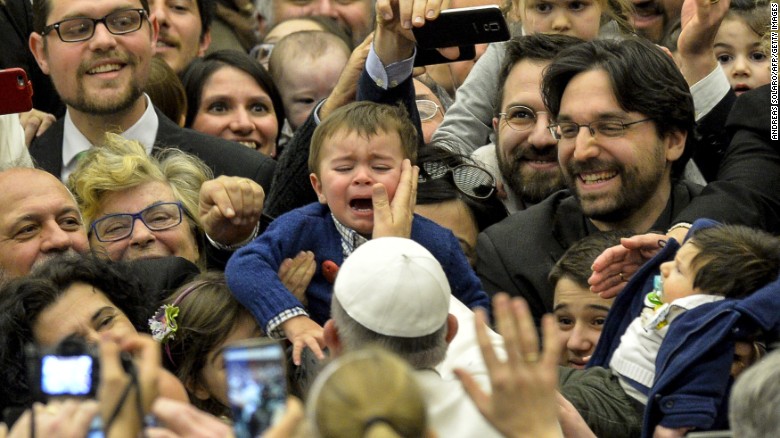
Pope Francis was born in Buenos Aires on 17 December 1936, the son of Italian immigrants.

His father Mario was an accountant employed by the railways and his mother Regina Sivori was a committed wife dedicated to raising their five children. He graduated as a chemical technician and then chose the path of the priesthood, entering the Diocesan Seminary of Villa Devoto. On 11 March 1958 he entered the novitiate of the Society of Jesus. He completed his studies of the humanities in Chile and returned to Argentina in 1963 to graduate with a degree in philosophy from the Colegio de San José in San Miguel. From 1964 to 1965 he taught literature and psychology at Immaculate Conception College in Santa Fé and in 1966 he taught the same subject at the Colegio del Salvatore in Buenos Aires. From 1967-70 he studied theology and obtained a degree from the Colegio of San José.

On 13 December 1969 he was ordained a priest by Archbishop Ramón José Castellano. He continued his training between 1970 and 1971 at the University of Alcalá de Henares, Spain, and on 22 April 1973 made his final profession with the Jesuits. Back in Argentina, he was novice master at Villa Barilari, San Miguel; professor at the Faculty of Theology of San Miguel; consultor to the Province of the Society of Jesus and also Rector of the Colegio Máximo of the Faculty of Philosophy and Theology.
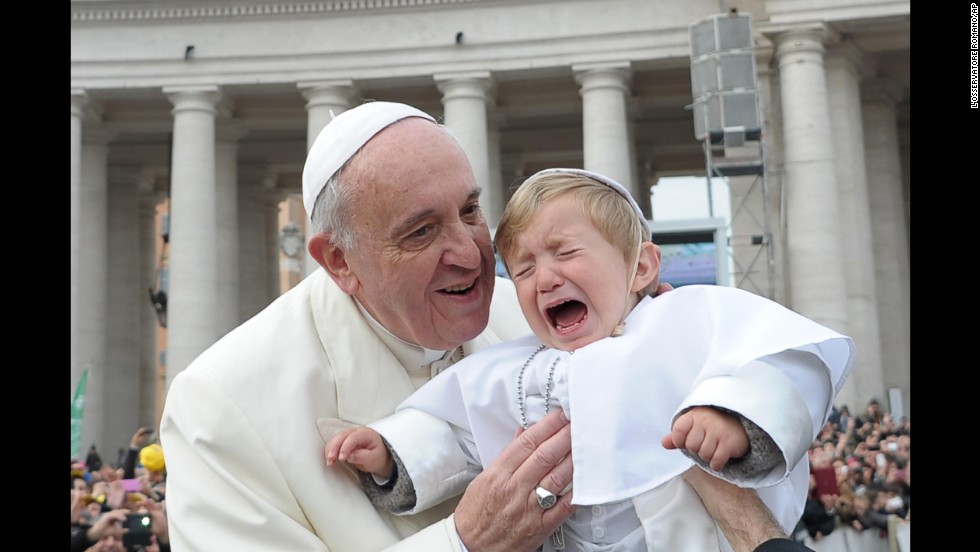
On 31 July 1973 he was appointed Provincial of the Jesuits in Argentina, an office he held for six years. He then resumed his work in the university sector and from 1980 to 1986 served once again as Rector of the Colegio de San José, as well as parish priest, again in San Miguel. In March 1986 he went to Germany to write a doctoral thesis on Romano Guardini; his superiors then sent him to the Colegio del Salvador in Buenos Aires and next to the Jesuit Church in the city of Córdoba as spiritual director and confessor.

It was Cardinal Antonio Quarracino, Archbishop of Buenos Aires, who wanted him as a close collaborator. So, on 20 May 1992 Pope John Paul II appointed him titular Bishop of Auca and Auxiliary of Buenos Aires. On 27 May he received episcopal ordination from the Cardinal in the cathedral. He chose as his episcopal motto, miserando atque eligendo, and on his coat of arms inserted the ihs, the symbol of the Society of Jesus.

He gave his first interview as a bishop to a parish newsletter, Estrellita de Belém. He was immediately appointed Episcopal Vicar of the Flores district and on 21 December 1993 was also entrusted with the office of Vicar General of the Archdiocese. Thus it came as no surprise when, on 3 June 1997, he was raised to the dignity of Coadjutor Archbishop of Buenos Aires. Not even nine months had passed when, upon the death of Cardinal Quarracino, he succeeded him on 28 February 1998, as Archbishop, Primate of Argentina and Ordinary for Eastern-rite faithful in Argentina who have no Ordinary of their own rite.
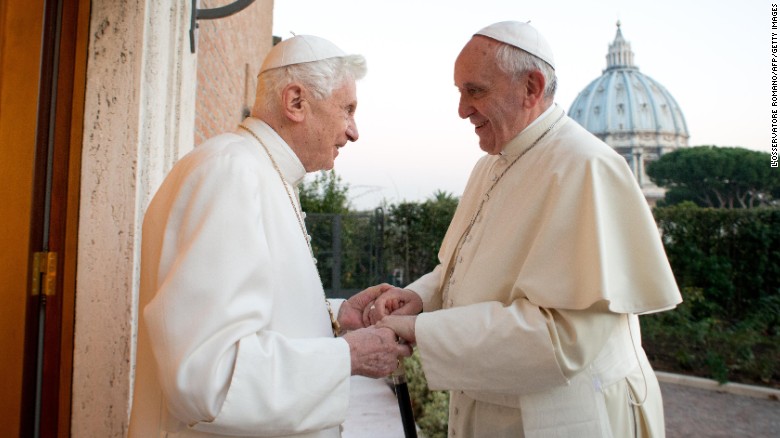
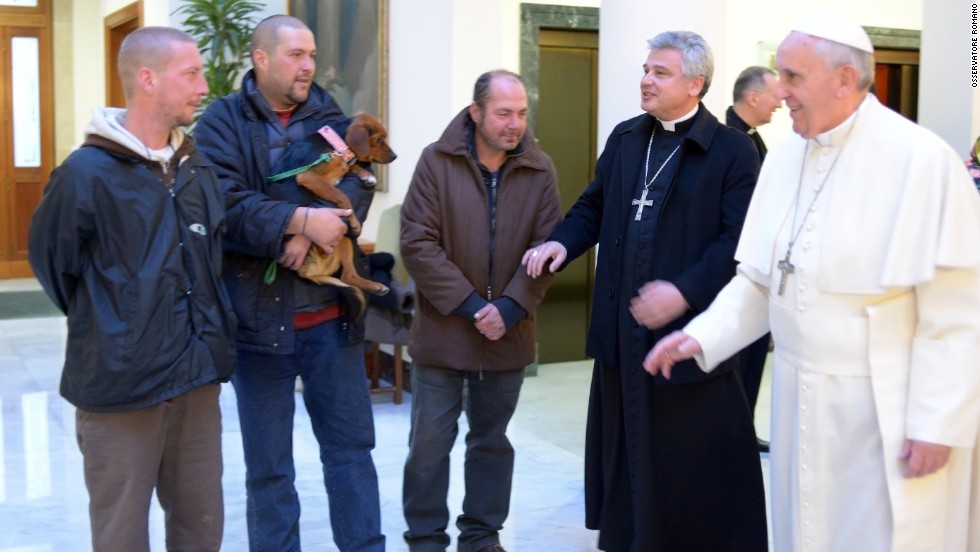
Three years later at the Consistory of 21 February 2001, John Paul ii created him Cardinal, assigning him the title of San Roberto Bellarmino. He asked the faithful not to come to Rome to celebrate his creation as Cardinal but rather to donate to the poor what they would have spent on the journey. As Grand Chancellor of the Catholic University of Argentina, he is the author of the books: Meditaciones para religiosos (1982), Reflexiones sobre la vida apostólica (1992) and Reflexiones de esperanza (1992).

In October 2001 he was appointed General Relator to the 10th Ordinary General Assembly of the Synod of Bishops on the Episcopal Ministry. This task was entrusted to him at the last minute to replace Cardinal Edward Michael Egan, Archbishop of New York, who was obliged to stay in his homeland because of the terrorist attacks on September 11th. At the Synod he placed particular emphasis on “the prophetic mission of the bishop”, his being a “prophet of justice”, his duty to “preach ceaselessly” the social doctrine of the Church and also “to express an authentic judgement in matters of faith and morals”.

All the while Cardinal Bergoglio was becoming ever more popular in Latin America. Despite this, he never relaxed his sober approach or his strict lifestyle, which some have defined as almost “ascetic”. In this spirit of poverty, he declined to be appointed as President of the Argentine Bishops’ Conference in 2002, but three years later he was elected and then, in 2008, reconfirmed for a further three-year mandate. Meanwhile in April 2005 he took part in the Conclave in which Pope Benedict XVI was elected.

As Archbishop of Buenos Aires — a diocese with more than three million inhabitants — he conceived of a missionary project based on communion and evangelization. He had four main goals: open and brotherly communities, an informed laity playing a lead role, evangelization efforts addressed to every inhabitant of the city, and assistance to the poor and the sick. He aimed to re-evangelize Buenos Aires, “taking into account those who live there, its structure and its history”. He asked priests and lay people to work together. In September 2009 he launched the solidarity campaign for the bicentenary of the Independence of the country. Two hundred charitable agencies are to be set up by 2016. And on a continental scale, he expected much from the impact of the message of the Aparecida Conference in 2007, to the point of describing it as the “Evangelii Nuntiandi of Latin America”.

Source: Pontifical Academy of Sciences

Pregnant secretary of Pope Francis found dead in her Rome apartment

Case: Pope Francis’ pregnant receptionist has been found dead.Getty pope francis

24 Feb 2016 By Hannah Roberts , Sam Webb

The Pope’s pregnant receptionist has been found dead in her apartment on the outskirts of the city.Miriam Wuolou, a 34-year-old of Eritrean origin, was seven-months pregnant when her body was discovered. Continue reading Pregnant secretary of Pope Francis found dead in her Rome apartment

Pope Francis and the Dirty War

Photograph: AFP/Getty.

The new Pope, Francis the Humble, as he perhaps would like to be known, is an Argentine with a cloudy past. Continue reading Pope Francis and the Dirty War

New pope’s role during Argentina’s military era disputed

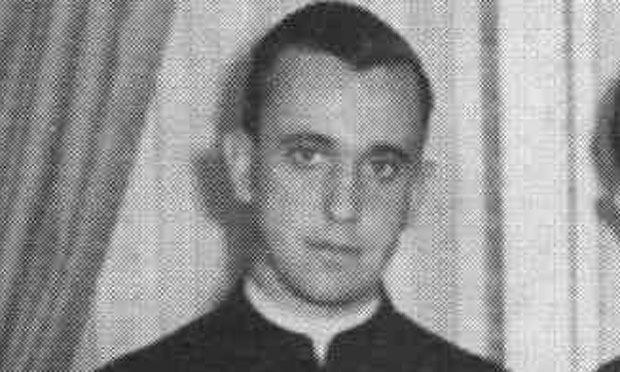
A~ young Jorge Mario Bergoglio pictured in Buenos Aires. Photograph: Argen press/Rex Features

By Jonathan Watts and Uki Goni in Buenos Aires

Friday 15 March 2013 08.17 GMT

Accusers draw ties between Catholic church and 70s junta, saying Jorge Bergoglio failed to shield two priests Continue reading New pope’s role during Argentina’s military era disputed

Pope Francis to release much anticipated Synod on the Family exhortation in March

by Pete Baklinski Thu Jan 28, 2016 – 12:41 pm

(LifeSiteNews) — A much anticipated document written by Pope Francis that some think could chart the future course of the barque of Peter through the waters of sexuality, marriage, and family is set to be released this coming March. Continue reading Pope Francis to release much anticipated Synod on the Family exhortation in March

Jubilee Rituals: of holy doors and holy hammers

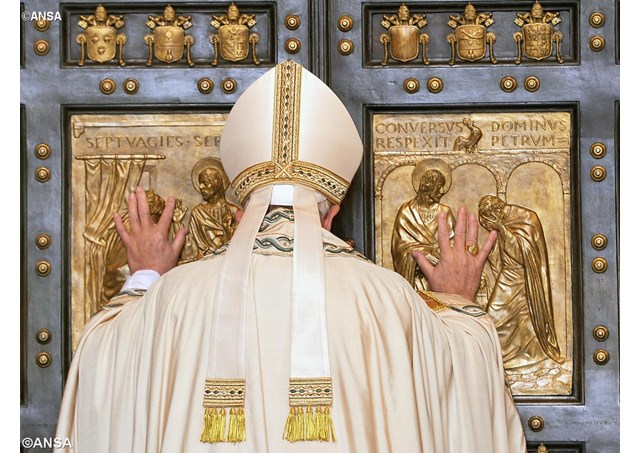
Pope Francis pushing open the Holy Door of Saint Peter’s – ANSA

09/12/2015 10:14 (Vatican Radio)

On the 8th of December, Feast of the Immaculate Conception, Pope Francis pushed open the Holy Door of Saint Peter’s Basilica. A symbolic gesture to mark the opening of the Extraordinary Holy Year dedicated to Mercy.

This Holy Year came as a surprise when the Pope first called for it on the 13th of March during a Penitential service in Saint Peter’s Basilica. Continue reading Jubilee Rituals: of holy doors and holy hammers

Don’t let Paris attacks stop COP21 climate change deal, pleads Obama

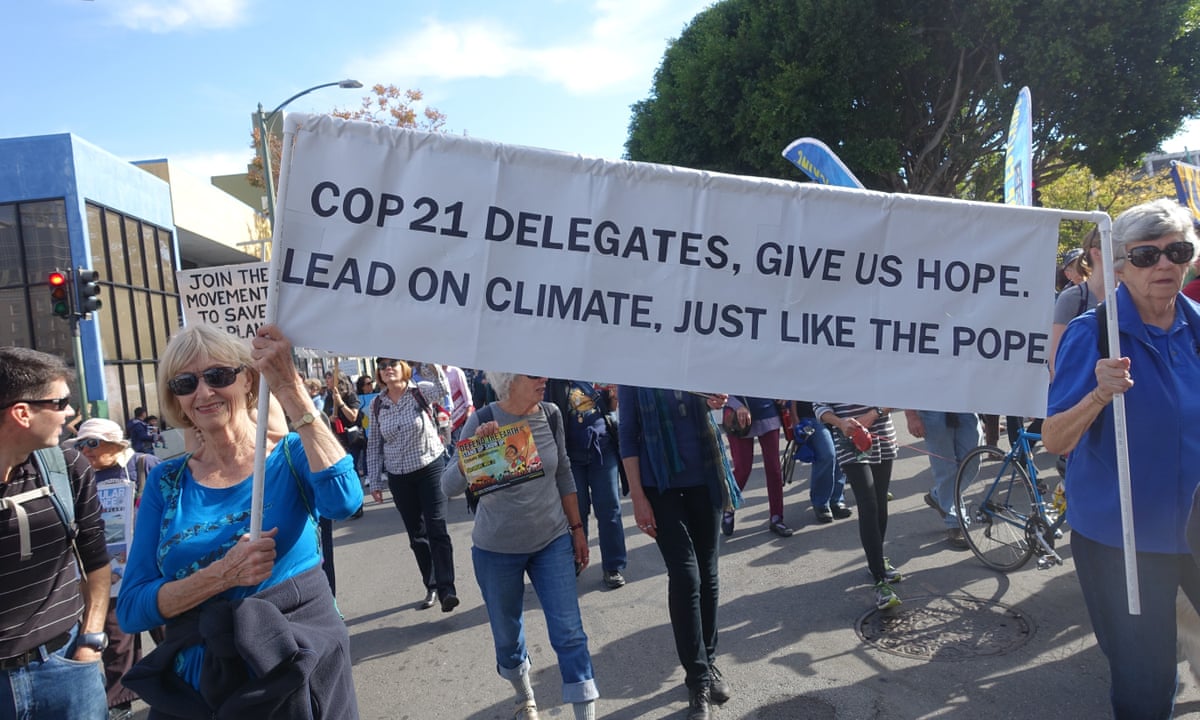
Climate activists in Oakland, California, march to send a message to world leaders preparing for the COP21 summit in PAris. Photograph: Steve Rhodes/Demotix/Corbis

US president seeks to shore up attendance at COP21 climate summit by saying world leaders had to show murderers ‘that we’re not afraid’

Barack Obama has moved to ensure that the Paris attacks do not sabotage a crucial climate change summit in the city next week, urging his fellow leaders to attend and strike a new deal on global warming. Continue reading Don’t let Paris attacks stop COP21 climate change deal, pleads Obama

Pope Francis: educate openness to transcendence, practice of mercy

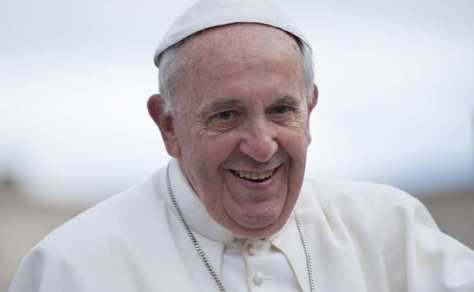
Pope Francis, Nov 21, 2015 – AP

21/11/2015 14:48 (Vatican Radio)

Pope Francis received the participants in a major international congress under the sponsorship of the Congregation for Catholic Education on Saturday morning. For four days this week, more than 2 thousand educators, administrators, students and teachers from around the world have been examining the challenges facing the mission of Catholic education in the 21st century, under the umbrella of Educating today and tomorrow: a passion renewed. Continue reading Pope Francis: educate openness to transcendence, practice of mercy

Pope Francis: Priests should not often be sad or nervous

Pope Francis meets participants of a conference on the Vatican II documents on the priesthood – OSS_ROM

20/11/2015 14:47 (Vatican Radio)

Pope Francis on Friday said a good priest “creates serenity,” and a priest “that is often sad, nervous, or has a hard character” is not good for himself or his people.

The Holy Father was addressing a Conference sponsored by the Congregation for the Clergy marking the fiftieth anniversary of the proclamation of the Vatican II decrees Presbyterorum ordinis [Decree on the Ministry and Life of Priests] and Optatam Totius [Decree on Priestly Training]. Continue reading Pope Francis: Priests should not often be sad or nervous

Pope Francis to German Bishops: Use Jubilee to revive Church

Pope Francis meets with German bishops in Rome on their ad limina visit. – REUTERS

2015-11-20 11:07 (Vatican Radio)

Pope Francis on Friday told the bishops of Germany the upcoming Jubilee of Mercy offers the opportunity to “rediscover the sacraments of Penance and the Eucharist.”

The bishops were meeting with the Holy Father during their ad limina visit to Rome.

In a speech handed to the bishops at the meeting,  Pope Francis noted a sharp decline in sacramental participation among the Catholics in Germany. Continue reading Pope Francis to German Bishops: Use Jubilee to revive Church